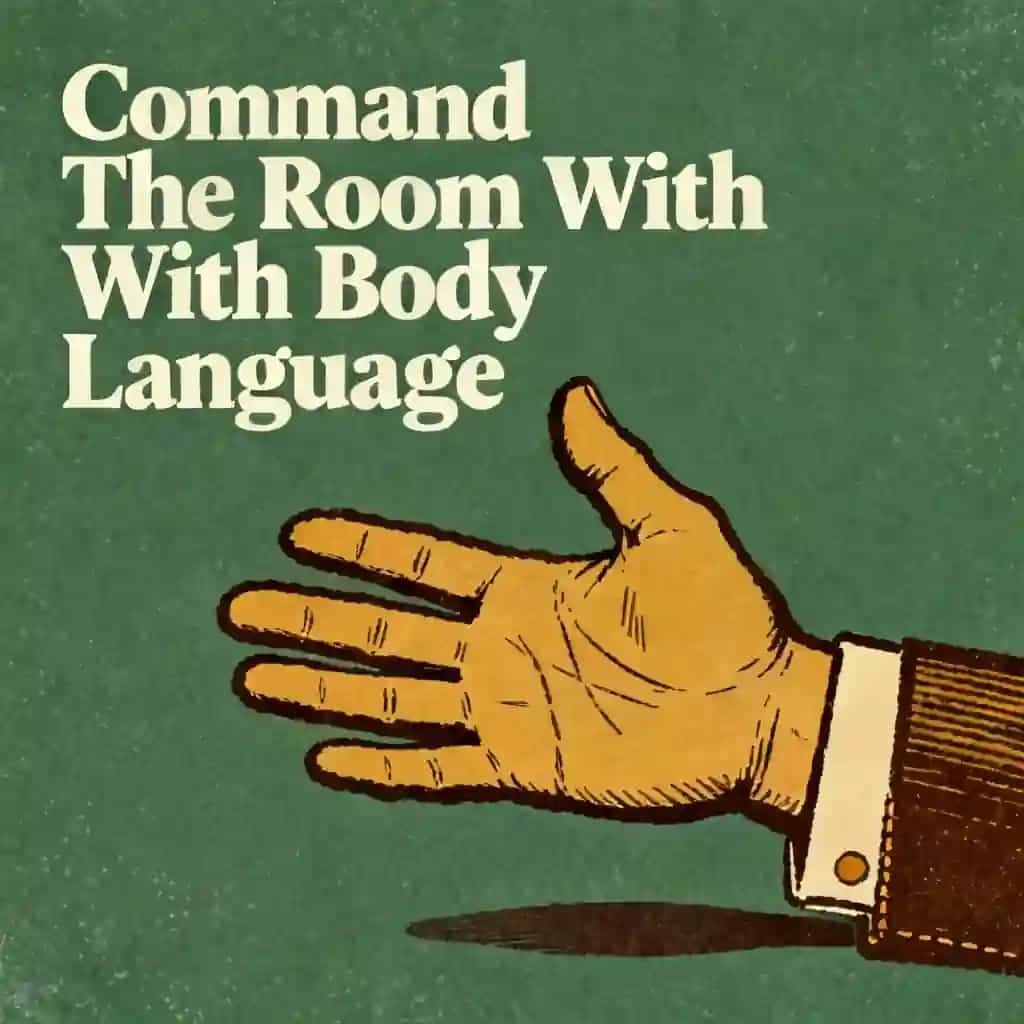
Body Language: The Silent Power Play
Discover how nonverbal cues can be used to influence others and how to recognize when someone is using body language to control a situation—plus ethical techniques to project confidence.

Meilleure citation de Body Language: The Silent Power Play
The most powerful influence comes from becoming someone others genuinely want to listen to and follow. When your body language aligns with genuine confidence and good intentions, it enhances communication.

Cette leçon audio a été créée par un membre de la communauté BeFreed
Body language and how to control people

Découvrir plus

Read Body Language to Understand People
In an era where much is left unsaid, mastering nonverbal cues provides a significant competitive advantage in both personal and professional settings. This plan is ideal for leaders, negotiators, and anyone looking to enhance their emotional intelligence and detect hidden social dynamics.

Develop strong body language
Body language accounts for over 50% of communication, yet most people remain unaware of the signals they send and receive daily. This learning plan helps professionals, leaders, and anyone seeking to improve their social intelligence decode nonverbal cues and strategically use body language to enhance their presence and influence.

The Silent Narrative: Reading Minds and Rooms
In high-stakes professional environments, what remains unsaid is often more important than the verbal exchange. This plan is essential for leaders, negotiators, and communicators who need to master non-verbal intelligence and emotional decoding to influence outcomes.

The Hidden Laws of Human Interaction
In an era of constant communication, understanding the underlying psychology of social cues is essential for leadership and collaboration. This plan is designed for professionals and leaders who want to master non-verbal communication and group dynamics to influence outcomes more effectively.

Strategic Self-Improvement & Body Language
This plan is designed for professionals and individuals seeking to bridge the gap between internal self-mastery and external social influence. It is ideal for leaders, negotiators, and anyone looking to enhance their interpersonal impact through a blend of behavioral psychology and nonverbal communication.

Master Charisma, Body Language & Confidence
In today's competitive landscape, technical skill is often secondary to how you project yourself and influence others. This plan is designed for professionals and aspiring leaders who want to bridge the gap between their inner potential and their external impact through psychological mastery and nonverbal communication.

Master the Unspoken Social Code
In a world where 93% of communication is non-verbal, mastering the subtle art of social dynamics is the ultimate competitive advantage. This plan is designed for professionals and individuals who want to replace social anxiety with charisma and turn every interaction into a meaningful opportunity.

Learn Psychology, Body Language & Attraction
This plan is essential for anyone looking to master the unspoken rules of social interaction and human connection. It is ideal for professionals, leaders, and individuals seeking to enhance their influence, read people accurately, and build authentic charisma.
Cree par des anciens de Columbia University a San Francisco
"Instead of endless scrolling, I just hit play on BeFreed. It saves me so much time."


"I never knew where to start with nonfiction—BeFreed’s book lists turned into podcasts gave me a clear path."


"Perfect balance between learning and entertainment. Finished ‘Thinking, Fast and Slow’ on my commute this week."
"Crazy how much I learned while walking the dog. BeFreed = small habits → big gains."
"Reading used to feel like a chore. Now it’s just part of my lifestyle."

"Feels effortless compared to reading. I’ve finished 6 books this month already."
"BeFreed turned my guilty doomscrolling into something that feels productive and inspiring."

"BeFreed turned my commute into learning time. 20-min podcasts are perfect for finishing books I never had time for."
"BeFreed replaced my podcast queue. Imagine Spotify for books — that’s it. 🙌"

"It is great for me to learn something from the book without reading it."
"The themed book list podcasts help me connect ideas across authors—like a guided audio journey."
"Makes me feel smarter every time before going to work"
Cree par des anciens de Columbia University a San Francisco
"Instead of endless scrolling, I just hit play on BeFreed. It saves me so much time."
"I never knew where to start with nonfiction—BeFreed’s book lists turned into podcasts gave me a clear path."
"Perfect balance between learning and entertainment. Finished ‘Thinking, Fast and Slow’ on my commute this week."
"Crazy how much I learned while walking the dog. BeFreed = small habits → big gains."
"Reading used to feel like a chore. Now it’s just part of my lifestyle."
"Feels effortless compared to reading. I’ve finished 6 books this month already."
"BeFreed turned my guilty doomscrolling into something that feels productive and inspiring."
"BeFreed turned my commute into learning time. 20-min podcasts are perfect for finishing books I never had time for."
"BeFreed replaced my podcast queue. Imagine Spotify for books — that’s it. 🙌"
"It is great for me to learn something from the book without reading it."
"The themed book list podcasts help me connect ideas across authors—like a guided audio journey."
"Makes me feel smarter every time before going to work"
"Instead of endless scrolling, I just hit play on BeFreed. It saves me so much time."
"I never knew where to start with nonfiction—BeFreed’s book lists turned into podcasts gave me a clear path."
"Perfect balance between learning and entertainment. Finished ‘Thinking, Fast and Slow’ on my commute this week."
"Crazy how much I learned while walking the dog. BeFreed = small habits → big gains."
"Reading used to feel like a chore. Now it’s just part of my lifestyle."
"Feels effortless compared to reading. I’ve finished 6 books this month already."
"BeFreed turned my guilty doomscrolling into something that feels productive and inspiring."
"BeFreed turned my commute into learning time. 20-min podcasts are perfect for finishing books I never had time for."
"BeFreed replaced my podcast queue. Imagine Spotify for books — that’s it. 🙌"
"It is great for me to learn something from the book without reading it."
"The themed book list podcasts help me connect ideas across authors—like a guided audio journey."
"Makes me feel smarter every time before going to work"
"Instead of endless scrolling, I just hit play on BeFreed. It saves me so much time."
"I never knew where to start with nonfiction—BeFreed’s book lists turned into podcasts gave me a clear path."
"Perfect balance between learning and entertainment. Finished ‘Thinking, Fast and Slow’ on my commute this week."
"Crazy how much I learned while walking the dog. BeFreed = small habits → big gains."
"Reading used to feel like a chore. Now it’s just part of my lifestyle."
"Feels effortless compared to reading. I’ve finished 6 books this month already."
"BeFreed turned my guilty doomscrolling into something that feels productive and inspiring."
"BeFreed turned my commute into learning time. 20-min podcasts are perfect for finishing books I never had time for."
"BeFreed replaced my podcast queue. Imagine Spotify for books — that’s it. 🙌"
"It is great for me to learn something from the book without reading it."
"The themed book list podcasts help me connect ideas across authors—like a guided audio journey."
"Makes me feel smarter every time before going to work"