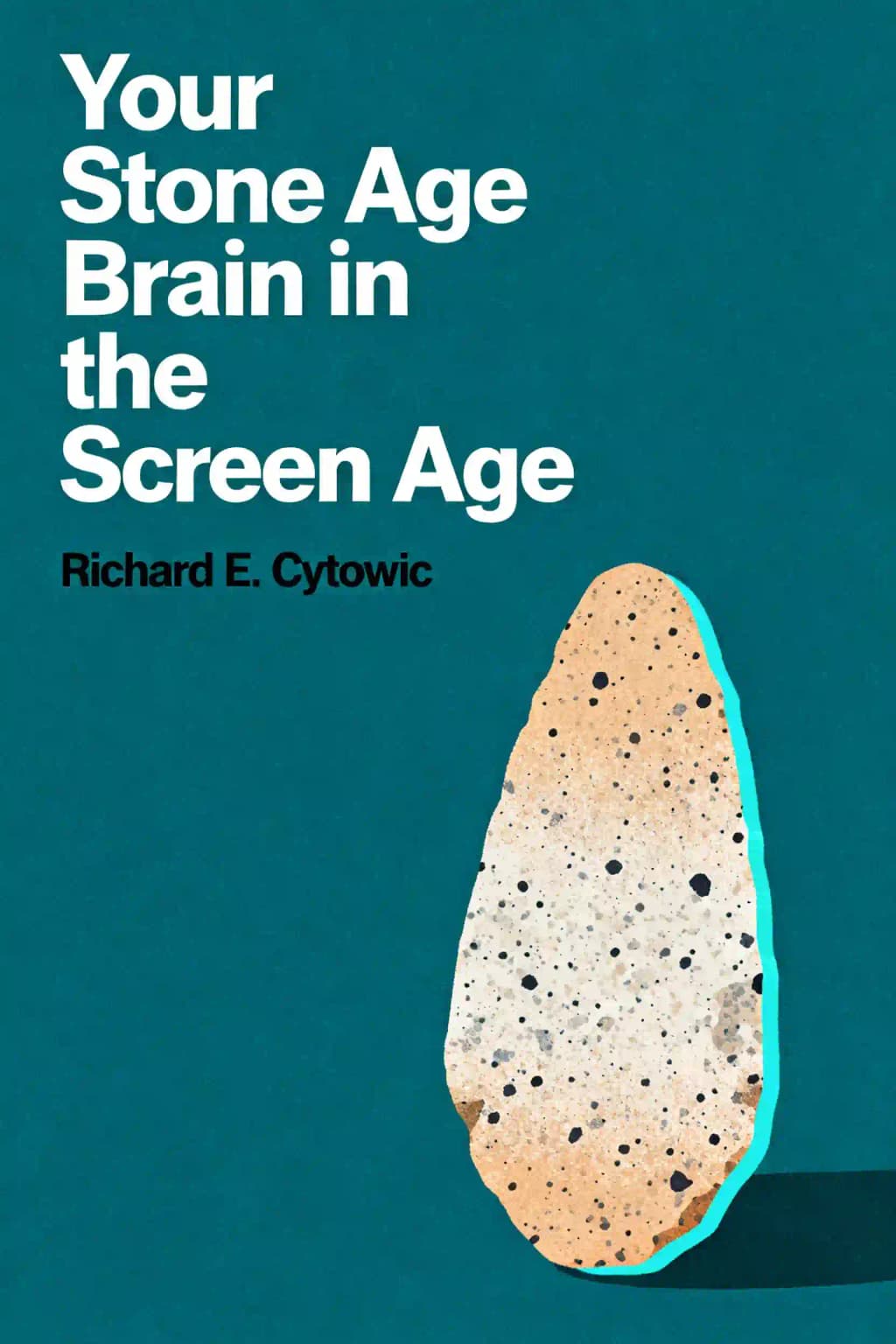
In "Your Stone Age Brain in the Screen Age," neurologist Richard Cytowic reveals why our prehistoric minds struggle with digital overload. Oliver Sacks praised how Cytowic "changed the way we think of the human brain." Can your ancient neural wiring ever adapt to endless notifications?
Ressentez le livre à travers la voix de l'auteur
Transformez les connaissances en idées captivantes et riches en exemples
Capturez les idées clés en un éclair pour un apprentissage rapide
Profitez du livre de manière ludique et engageante
Imagine picking up your phone 40,000 times a year-that's not science fiction, it's your reality. While tech executives strictly limit their own children's screen time, they've engineered products that keep the rest of us perpetually tethered to our devices. This isn't accidental. Our Stone Age brains-exquisitely tuned through 200,000 years of evolution to detect change and respond to rewards-have met their match in modern technology. That rustling bush that might have signaled danger to our ancestors has been replaced by the ping of a notification, triggering the same ancient survival circuits. The mismatch between our evolutionary programming and digital environments creates a perfect storm for attention capture and addiction-what former Google ethicist Tristan Harris calls "a race to the bottom of the brain stem." The brain's reward system didn't evolve for happiness but survival, driving us to constantly seek more through powerful dopamine pathways. While a smaller endorphin system provides brief satisfaction, the wanting never truly ends. This biological reality explains our compulsive phone-checking despite diminishing returns. Each notification triggers the same dopamine response that once rewarded finding food or avoiding danger. Social media platforms particularly exploit this mechanism through variable reward schedules-you never know which scroll will yield the dopamine-triggering "like," just as our ancestors never knew which berry bush would yield fruit.
Décomposez les idées clés de Your Stone Age Brain in the Screen Age en points faciles à comprendre pour découvrir comment les équipes innovantes créent, collaborent et grandissent.
Condensez Your Stone Age Brain in the Screen Age en indices de mémoire rapides mettant en évidence les principes clés de franchise, de travail d'équipe et de résilience créative.

Découvrez Your Stone Age Brain in the Screen Age à travers des récits vivants qui transforment les leçons d'innovation en moments mémorables et applicables.
Posez n'importe quelle question, choisissez la voix et co-créez des idées qui résonnent vraiment avec vous.

Cree par des anciens de Columbia University a San Francisco
"Instead of endless scrolling, I just hit play on BeFreed. It saves me so much time."
"I never knew where to start with nonfiction—BeFreed’s book lists turned into podcasts gave me a clear path."
"Perfect balance between learning and entertainment. Finished ‘Thinking, Fast and Slow’ on my commute this week."
"Crazy how much I learned while walking the dog. BeFreed = small habits → big gains."
"Reading used to feel like a chore. Now it’s just part of my lifestyle."
"Feels effortless compared to reading. I’ve finished 6 books this month already."
"BeFreed turned my guilty doomscrolling into something that feels productive and inspiring."
"BeFreed turned my commute into learning time. 20-min podcasts are perfect for finishing books I never had time for."
"BeFreed replaced my podcast queue. Imagine Spotify for books — that’s it. 🙌"
"It is great for me to learn something from the book without reading it."
"The themed book list podcasts help me connect ideas across authors—like a guided audio journey."
"Makes me feel smarter every time before going to work"
Cree par des anciens de Columbia University a San Francisco

Obtenez le resume de Your Stone Age Brain in the Screen Age en PDF ou EPUB gratuit. Imprimez-le ou lisez-le hors ligne a tout moment.