Chapitre 1
The Literary Heist That Shocked Publishing
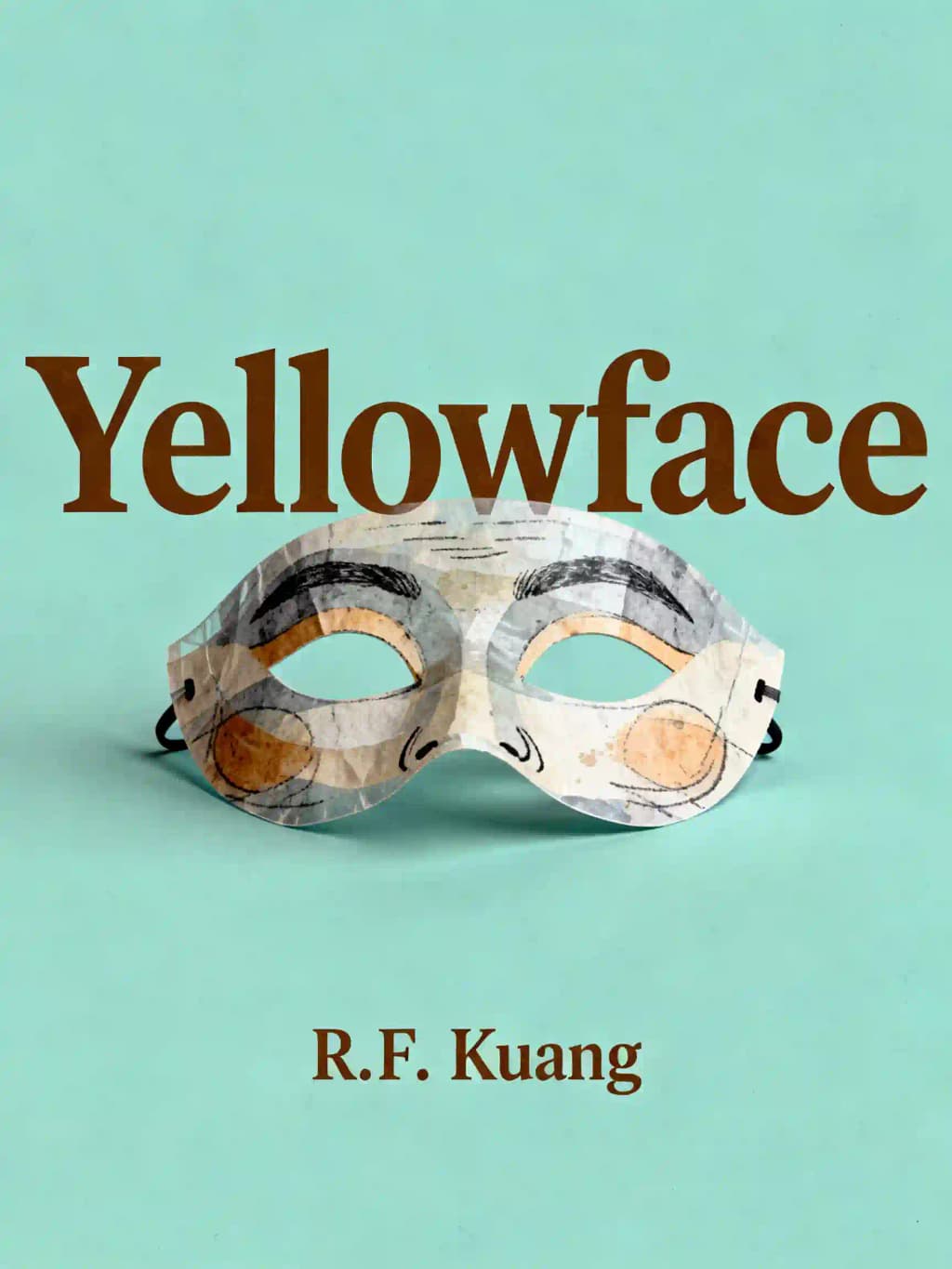
In the summer of 2023, R.F. Kuang's "Yellowface" exploded onto bestseller lists with its razor-sharp examination of cultural appropriation, literary theft, and racial identity in publishing. The novel quickly became a cultural phenomenon, sparking heated discussions across BookTok and literary Twitter. Reese Witherspoon selected it for her book club, calling it "a provocative page-turner that forces us to confront uncomfortable truths about creativity and authenticity." Even Stephen King tweeted his admiration: "Kuang doesn't just write novels; she detonates literary grenades." Beyond its commercial success, "Yellowface" earned critical acclaim for its unflinching portrayal of the publishing industry's racial dynamics and the lengths some will go to achieve literary fame. As one reviewer noted, "In an era obsessed with authenticity and representation, Kuang has crafted the perfect literary thriller for our times."
Chapitre 2
A Deadly Opportunity Emerges
June Hayward and Athena Liu represent two sides of the literary coin, a stark contrast in the cutthroat world of publishing. Both graduated from Yale's prestigious creative writing program with identical dreams, but their paths diverged dramatically in the decade since. Athena has everything that defines literary success - a lucrative multi-book deal with Penguin Random House, three critically acclaimed novels that grace bestseller lists, prestigious awards including a National Book Award nomination, and now a coveted Netflix adaptation. Her Instagram following numbers in the hundreds of thousands, and her events consistently sell out.
June, meanwhile, languishes in literary obscurity. After her small press folded mid-promotion of her debut novel "The Lunar Tides," she's struggled to maintain any momentum. Her teaching position at a community college barely pays the bills, and her agent's enthusiasm has waned with each rejected manuscript. Their friendship, maintained through monthly coffee meetings and occasional literary events, is superficial at best. Athena keeps June around like a safety net, someone who poses no threat to her meteoric success while providing the occasional ego boost.
The pivotal night begins at an overpriced Georgetown rooftop bar, celebrating Athena's latest triumph - a seven-figure Netflix deal. After too many signature cocktails, they stumble back to Athena's luxurious Dupont Circle apartment, a space that screams successful author with its floor-to-ceiling bookshelves and original artwork. There, June discovers Athena's latest manuscript, a historical epic about the forgotten Chinese Labour Corps in World War I. Skimming through the carefully crafted pages, June is devastated by its brilliance - the prose sings with a poetry she could never achieve, the research seamlessly woven into a narrative that would undoubtedly secure Athena's literary legacy.
As midnight approaches, they're in Athena's state-of-the-art kitchen making pandan pancakes, a recipe from Athena's grandmother, when disaster strikes. Athena begins choking violently on a piece of food. June's clumsy attempts at the Heimlich maneuver prove catastrophically inadequate, her own intoxication making her movements uncoordinated. She watches in horror as Athena struggles against what she later describes as a "lump of cement" in her throat, her designer heels drumming against the marble floor, perfectly manicured fingers clawing desperately at her neck. When Athena finally goes still, June is left alone with both a dead body and a masterpiece manuscript.
What follows is not the expected wave of grief but cold calculation. Unlike the suffocating loss she experienced when her father died from cancer three years prior, June feels only shock and a growing sense of possibility. Athena's unfinished manuscript represents more than just brilliant writing - it's an opportunity for reinvention. What begins as a seemingly innocent writing exercise - just trying to finish the beautiful prose left behind - transforms into a calculated literary theft. June meticulously copies the manuscript, erases all traces of Athena's involvement, and submits it to her agent Brett as if it were her own work, setting in motion a chain of events that will test not just her moral compass but her very identity.
Chapitre 3
The Intoxication of Stolen Success
The response to "The Last Front" is overwhelming-multiple publishers bid aggressively, culminating in Eden Press offering June more money than she'd ever dreamed of making. She quits her job at Veritas College and celebrates her sudden breakthrough. For the first time, June feels she's broken through publishing's glass ceiling.
The editing process becomes an exercise in transformation as June works with editor Daniella Woodhouse to make Athena's manuscript more commercially viable. They clarify confusing language, remove untranslated Chinese phrases, change character names, cut unnecessary backstory, soften racist language, and replace Athena's didactic ending with something more emotionally resonant. June convinces herself she's improving the novel, making it "commercial and compulsively readable yet still exquisitely literary" rather than "quirky, aloof, and erudite" like Athena's usual style.
"After three editorial rounds over four months, I can't distinguish between her words and mine," June reflects. "I've studied this novel more thoroughly than Athena herself, and some of my editor's favorite passages are ones I wrote."
The success transforms June's professional life completely. Where she was once ignored at literary events, she's now sought after-editors profess admiration, film agents offer cards, and authors who previously snubbed her act like old friends. At BookCon, June finds herself in an elite circle with Daniella and bestselling authors who gossip about young debut writers with condescending amusement. June participates eagerly, relieved to be among the successful rather than the "unfortunate masses" they pity.
The intoxication of success blinds June to the moral implications of her theft. When asked about her interest in the Chinese Labour Corps, she fabricates a story about discovering it in a Yale course, claiming she wanted to fill a gap in the literary canon. The lie comes easily, reinforced by the validation and attention she receives.
Chapitre 4
Cultural Identity as Literary Currency
To protect herself from suspicion, June takes calculated steps to establish her credibility. The marketing team decides to position her as "worldly," highlighting her nomadic childhood and Peace Corps experience. They suggest she publish as "Juniper Song" instead of June Hayward for a "clean start," never explicitly mentioning how "Song" might be perceived as Chinese. June writes an article for Electric Lit explaining her name change as honoring her background and mother's influence.
"I never actually lie about being Chinese or invent experiences," June rationalizes. "We're just 'suggesting the right credentials' so readers take my story seriously. If people make assumptions, isn't that their problem?"
This strategic ambiguity about her identity highlights publishing's uncomfortable relationship with diversity. June observes that Athena, despite her advocacy for Asian American representation on Twitter, lived a privileged life in expensive apartments, never experiencing the suffering she profited from. When Athena once visited a Korean War exhibit at the Smithsonian, June watched her interview an elderly veteran about his painful memories, collecting true narratives of pain "like seashells, polished them off, and presented them, sharp and gleaming, to horrified and entranced readers."
The novel explores how publishing commodifies cultural identity and trauma. When June meets with Greenhouse Productions about adapting "The Last Front," they reveal troubling priorities: expanding a minor British character for "crossover appeal" with a "heartthrob" like Benedict Cumberbatch, casting Tom Holland, and finding a Chinese pop star who won't have "shit English." Though uncomfortable, June surrenders creative control, telling herself accessibility matters for American audiences.
This commodification reaches its peak when June visits the Chinese American Social Club of Rockville. An awkward misunderstanding reveals Susan Lee, the organizer, thought June was Chinese because of her middle name "Song." Despite this tension, the reading goes surprisingly well until June meets Mr. James Lee, whose uncle actually served in the Chinese Labour Corps. As he thanks her with tears in his eyes for telling this forgotten story, June confesses quietly, "I don't know if I was the right person to tell this story."
Mr. Lee clasps her hands tighter, insisting she was exactly right: "We need you. My English, it is not so good. Your generation has very good English. You can tell them our story. Make sure they remember us." His kindness only deepens her shame as she realizes she's an outsider basking in their love under false pretenses.
Chapitre 5
The Fragility of Literary Fame
Despite her meteoric rise, June discovers that literary fame is remarkably fragile and double-edged. As "The Last Front" climbs bestseller lists and garners mainstream attention, the criticism grows proportionally intense. While most Goodreads reviews award five stars, praising the book's "masterful storytelling" and "profound historical insight," the one-star reviews strike with particular venom, calling her work "uninspired colonizer trash" and "white woman exploitation." These reviews often extend beyond critiquing the work itself to make assumptions about June's character and intentions.
The most devastating critique comes from respected critic Adele Sparks-Sato in the Los Angeles Review of Books, who writes a scathing 3,000-word essay accusing June of using "the suffering of thousands of Chinese laborers as a site for melodrama and white redemption." She methodically places the novel alongside other controversial works like "The Help" and "The Good Earth" as prime examples of "historical exploitation novels." The essay goes viral within literary circles, spawning dozens of response pieces and think pieces about cultural appropriation in historical fiction.
These criticisms transform into a full-blown scandal when a Twitter account called @AthenaLiusGhost begins methodically questioning June's authorship. The account posts daily threads analyzing June's background, writing style, and public statements. Soon, thousands of users call her out for publishing as "June Song" instead of Hayward-declaring it "the literal definition of yellowface." Critics post her Instagram photos alongside Scarlett Johansson's controversial Ghost in the Shell casting with cruel comparisons. Self-appointed literary detectives dissect "The Last Front" page by page for "red flags," like descriptions of "almond eyes" (which, ironically, Athena wrote, not June) and "orientalist tropes."
June finds herself unable to stop obsessively checking every platform-Twitter, Reddit, YouTube, TikTok, Goodreads, and even LinkedIn-where book bloggers and social media influencers post increasingly sensational content titled "Spilling the tea on Juniper 'Song'!" or "The TRUTH about June Song's Cultural Appropriation." People begin fabricating increasingly absurd rumors: that she pays for fake Goodreads reviews, that she creates sock puppet accounts to harass critics, that she fetishizes Asian culture because she once tweeted about enjoying Japanese video game characters and Korean dramas.
The harassment intensifies until June feels permanently marked, her name forever associated with controversy. She bitterly observes that certain authors-particularly white male writers like Isaac Asimov or David Foster Wallace-seem to weather multiple scandals with their reputations relatively intact, while female authors face disproportionate scrutiny. Every moment online feels like thousands of strangers are forensically examining her personal information, looking for new angles to mock or potentially endanger her. Twitter isn't just a virtual space anymore-it's become the primary arena where publishing reputations are built, destroyed, and permanently altered, often with real-world consequences for authors' careers and mental health.
Chapitre 6
Haunted by Authenticity
As suspicions grow about June's authorship, she becomes increasingly paranoid. After publishing a novella called "Mother Witch" that receives positive reviews, June briefly believes she's escaped Athena's shadow. The New York Times declares, "If there were any suspicions that Juniper Song does not produce her own work, let Mother Witch settle those fears: this girl can write."
This peace proves devastatingly temporary. Two weeks after "Mother Witch's" release, Adele Sparks-Sato publishes a damning blog post titled "Mother Witch Is Also Plagiarized, and I've Fucking Had It with June Hayward." The post includes irrefutable evidence proving that the novella's opening lines were stolen directly from an unpublished Athena Liu story workshopped at the Asian American Writers' Collective in 2018.
June responds with eerie calm, perhaps because she knows denial is futile. She disconnects from social media as she hemorrhages followers and faces public condemnation. Her Wikipedia page is edited to label her a "serial plagiarizer," and she watches her professional relationships disintegrate in real time.
Despite maintaining financial stability-her sales actually double as she becomes the alt-right's poster child against "cancel culture"-June contemplates quitting writing altogether. Law school or consulting offers stability where being white is an advantage rather than a liability. But she can't abandon the one thing that gives her life meaning: "Writing has been my identity since childhood-my magic, my salvation after Dad died and Mom withdrew. Despite the misery it sometimes brings, it's what keeps me alive."
June's creative block becomes paralyzing. She browses Wikipedia looking for Chinese historical events she could fictionalize, then questions her own fixation on China when she could write about other cultures. Seeking "authentic" stories, she visits DC's Chinatown until she's recognized as "that girl who stole Athena Liu's work" and asked to leave a restaurant.
When Brett suggests IP work-writing to someone else's outline for Snowglobe, a company that develops marketable ideas-June is appalled by their pitch: a dystopian novel based on China's one-child policy where women are bred as baby-makers, similar to "The Handmaid's Tale." Though she refuses this offensive, reductive concept, it highlights how the industry commodifies cultural narratives.
Chapitre 7
The Ghost of Literary Theft
As June's career unravels, she begins experiencing what she believes are supernatural visitations from Athena. Athena's Instagram mysteriously reactivates, flooding June's feed with disturbing, seemingly photoshopped images of her holding copies of both their books, sometimes with distorted features or bleeding eyes. June's dreams become increasingly vivid nightmares where she relives Athena's final moments in excruciating detail-her panicked eyes wide with recognition, her desperate gasping for air, her body's violent convulsions against the bathroom floor. In the most terrifying iterations, Athena reanimates with vengeful fury, her cold fingers reaching for June's neck "to return the favor," leaving June to wake up drenched in sweat, clutching her throat.
Desperate for answers and possibly redemption, June immerses herself in research about Chinese ghost traditions, discovering a rich mythology of female revenants and hungry ghosts. She learns that these spirits often represent women who died with unfinished business or suffered grave injustices. "So many Chinese ghosts are hungry, angry, voiceless women," she reflects, "In taking Athena's legacy, I've added one to their ranks." She attempts to appease Athena's spirit through traditional rituals-leaving elaborate food offerings, burning premium incense, and sending paper money to the spirit world. These clumsy attempts at cultural connection only leave her feeling more like an impostor, adding another layer to her fraudulence.
June's paranoia escalates to dangerous levels when she violently confronts Diana Qiu, a prominent literary critic, mistaking her for Athena on a crowded New York street. This public breakdown, captured on bystanders' phones and shared widely online, forces June to seek help from her former therapist. However, cross-state licensing restrictions prevent the therapist from treating her, leaving June increasingly isolated with her guilt and fear.
The situation reaches its climax when Athena's Instagram account directly messages June, demanding a meeting at the "exorcist steps" at eleven the following night-referencing their private joke about the famous Georgetown stairs from The Exorcist film. Though June suspects it's likely a trap, she arms herself with an arsenal of defensive weapons: pepper spray, a concealed knife, and even traditional Chinese firecrackers meant to ward off evil spirits. She arrives at the appointed time, determined to face whatever supernatural or earthly threat awaits her.
At the Georgetown steps, illuminated by flickering streetlights, June endures psychological torture as Athena's disembodied voice echoes through the darkness, asking probing questions about her inspiration, her motives, and the true cost of stolen success. Pushed to her breaking point, June finally breaks down and confesses everything-how she stole the manuscript pages, how she burned with envy at Athena's natural talent, how desperately she wanted to claim that success for herself. The revelation that follows is both anticlimactic and devastating: it's not Athena's ghost but Candice Lee, her former editor who was fired over an artificially inflated Goodreads rating, orchestrating this elaborate revenge scheme.
Chapitre 8
The Price of Literary Ambition
The confrontation with Candice represents the culmination of June's moral reckoning. Candice reveals she's been orchestrating everything-the Instagram posts, the messages-to extract June's confession, which she's recorded from multiple cameras. She explains how June ruined her life, leaving her jobless and blacklisted in publishing.
When June pleads with her not to go public, Candice delivers a scathing critique of how the publishing industry tokenizes Asian writers while limiting their opportunities. Unmoved by June's begging, Candice declares her intention to publish this story herself: "Yellowface. By Candice Lee."
The confrontation turns violent when June snaps, lunging at Candice in desperate rage. They struggle brutally on the steps before Candice delivers a powerful kick that sends June tumbling backward. June spends four days in the hospital with a broken clavicle, ankle, and concussion, while Candice vanishes, leaving no evidence of their confrontation.
While June recovers, the news breaks: Candice has given the New York Times her full story, complete with the recorded confession. She's sold a tell-all memoir to Penguin Random House for seven figures. June's name will forever be linked to stealing Athena Liu's work.
Yet instead of despair, June feels strangely calm. She begins plotting her counternarrative: she's the victim of a hoax, cyberbullied and manipulated by Candice who exploited her grief. She'll craft a proposal portraying herself as the hero exposing publishing's rotten foundations. "A year later, I'll be back in bookstores," June calculates. "Initial press will be scathing, but inevitably some contrarian reviewer will question the narrative-'What if we got it all wrong?'-sowing doubt that will grow."
June's final thoughts reveal the novel's most chilling insight: in an industry built on narratives, the most persistent storyteller often prevails. "When the dust settles, the lingering question will remain: What if Juniper Song was right? And this will become, in time, my story once again."
Chapitre 9
The Ethical Void of Modern Publishing
"Yellowface" ultimately reveals the ethical void at the heart of modern publishing. June's theft of Athena's manuscript represents more than simple plagiarism-it exposes how the industry commodifies cultural identity while maintaining systemic barriers. When June visits her mother in Philadelphia, she reflects on how professional publishing has transformed writing into "a matter of jealousies, marketing budgets, and comparative advances."
"Editors mess with your vision, marketing reduces your work to tweet-sized talking points, and readers impose expectations not just on your story but on your politics and ethics," June observes. "You become the product-your looks, wit, and online presence matter more than your words. And the market doesn't want stories from 'a plain, straight white girl from Philly'-they want the exotic and diverse."
This cynical view is reinforced when June attends BookCon and finds herself in an elite circle with bestselling authors who gossip about young debut writers with condescending amusement. The industry veterans discuss their less successful colleagues with a mixture of pity and contempt, revealing the cutthroat nature of a business that presents itself as supportive and collaborative.
Even more damning is the revelation about how publishers approach diversity. When June meets with film producers about adapting "The Last Front," they reveal their shallow understanding of the story's cultural significance, focusing instead on casting white stars for "crossover appeal." Similarly, when Eden Press suggests publishing June as "Juniper Song," they're deliberately exploiting racial ambiguity for marketing purposes without explicitly lying.
Through June's moral compromise and eventual downfall, Kuang delivers a scathing critique of an industry that claims to value authenticity while rewarding those who can best package and sell it-regardless of whether that authenticity is genuine or manufactured. The novel forces readers to confront uncomfortable questions about who gets to tell which stories, how cultural experiences are commodified, and whether the publishing industry's embrace of diversity is genuine or merely performative.
Chapitre 10
The Endless Cycle of Narrative Control
In the novel's final moments, June's determination to reclaim her narrative reveals the most disturbing truth: in a world where perception matters more than reality, the most persistent storyteller often wins. Despite being exposed as a thief and a fraud, June immediately begins plotting her comeback, confident that she can spin a counternarrative portraying herself as the victim.
"I'll craft a proposal portraying myself as the hero exposing publishing's rotten foundations," June plans. "The draft will be messy, but timing is crucial. Brett and I will clean it up and put it on submission immediately. I expect multiple offers, possibly an auction, and wouldn't be surprised if it earns more than any of my previous works."
This calculated response to complete professional disgrace suggests that June has learned nothing from her moral failures. Instead, she's internalized the industry's most cynical lessons: that authenticity is less important than a compelling narrative, that ethical boundaries are flexible for those with the right connections, and that public opinion is malleable for those willing to manipulate it.
The novel ends not with June's redemption or punishment, but with her confident assertion that she will eventually reclaim control of her story. "When the dust settles, the lingering question will remain: What if Juniper Song was right? And this will become, in time, my story once again."
This chilling conclusion forces readers to confront their own complicity in systems that reward narrative skill over ethical behavior. In a world increasingly dominated by competing narratives rather than objective truth, "Yellowface" suggests that the line between authentic creation and theft, between representation and appropriation, is dangerously blurred-and that those who control the narrative ultimately control reality itself.