Chapitre 1
Wield Words, Rule Worlds: Language's Hidden Superpower
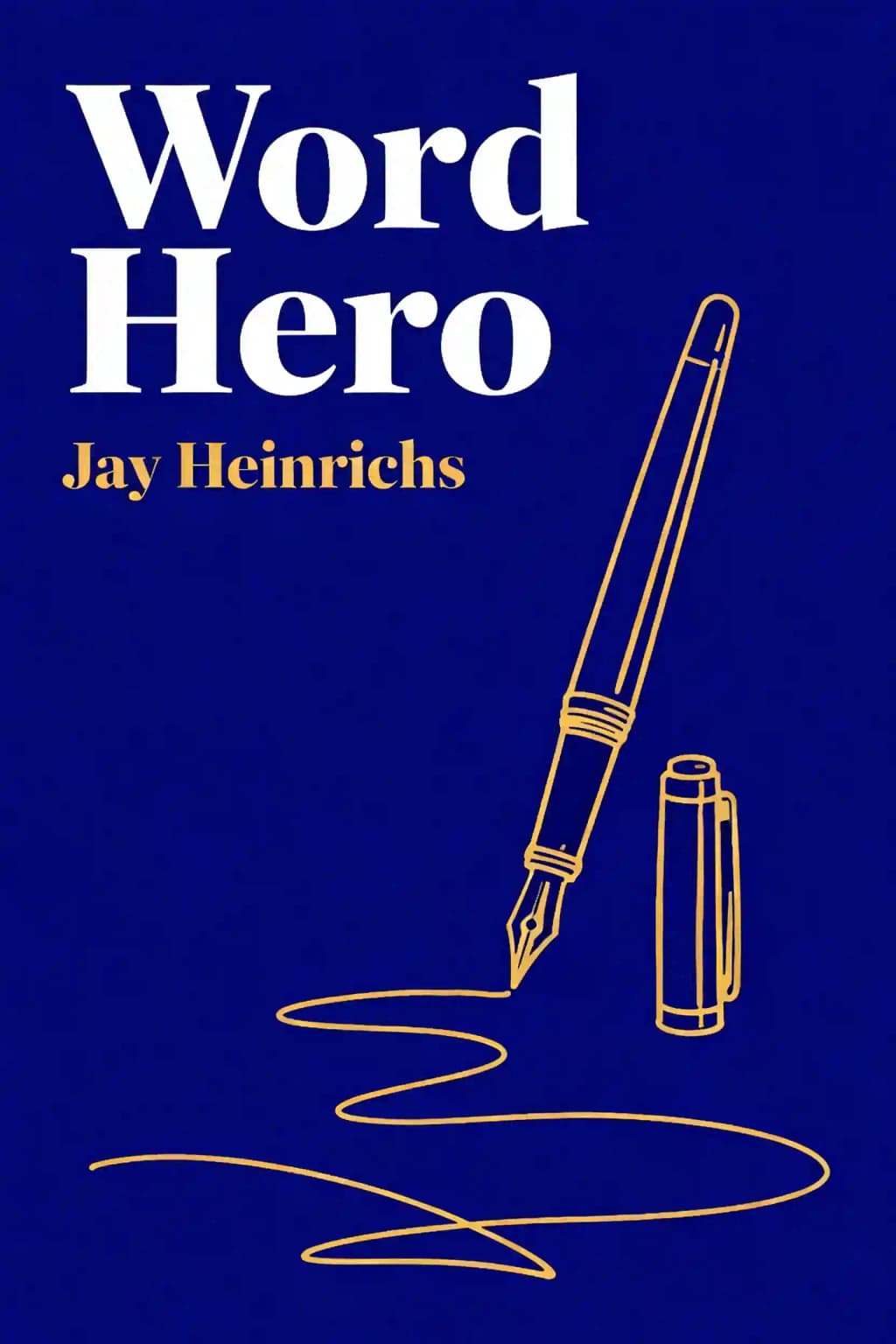
In a world drowning in content, only those who master persuasion truly stand out. Jay Heinrichs, advisor to NASA, Southwest Airlines, and the Pentagon, reveals the ancient art of rhetoric repackaged for our digital age in "Word Hero." While most communication books teach you to be clear, this masterclass teaches you to be unforgettable.
Heinrichs distills 2,500 years of rhetorical wisdom into techniques so powerful that readers report doubling their quotability overnight. The "figurative screw" technique alone has transformed ordinary marketers into industry influencers.
What separates forgettable speech from language that burns itself into memory? The difference isn't talent - it's technique. Heinrichs unveils the psychological triggers behind phrases like Kennedy's "ask not what your country can do for you" that changed history.
Whether you're crafting emails that get responses, presentations that close deals, or social posts that actually travel, "Word Hero" delivers the verbal arsenal used by history's most persuasive figures. It's not just about finding your voice - it's about making sure everyone remembers what you said.
Chapitre 2
Witcraft: The Power Behind Memorable Language
At sixteen, working at a Philadelphia department store, Jay Heinrichs received his first lesson in witcraft from his mentor Al. By cleverly inverting the familiar Spider-Man quote to "With responsibility comes great power," Al demonstrated how twisting familiar phrases could wield significant influence. This moment ignited Heinrichs' lifelong pursuit of witcraft - the art of crafting language that sways emotions, thoughts, and actions.
Throughout history, figures like Cicero, Joan of Arc, and Winston Churchill have demonstrated that word heroism doesn't require Shakespearean eloquence but rather mastery of memorable, pithy phrases. Consider Roosevelt's "The only thing we have to fear is fear itself" - simple words arranged with unforgettable impact. Heinrichs reveals that such linguistic immortality isn't accidental but the result of specific techniques used by everyone from world leaders to late-night comedians.
Warren Buffett exemplifies the natural word hero, wielding rhetorical figures without unnecessary ornamentation. His investment letters sparkle with wit, often through devices like taking cliches literally. When Buffett states that "price is what you pay, value is what you get," he creates a quotable moment through calculated linguistic turns. Like Yogi Berra's logic-bending aphorisms, Buffett's expressions stick because they employ deliberate rhetorical techniques rather than flowery language.
The comprehensive study of these figures of speech extends far beyond basic grammar, forming the foundation of sophisticated linguistic artistry. While traditional education often limits itself to grammar rules, delving into rhetorical devices elevates communication to an art form, allowing thoughtful individuals to articulate complex ideas with memorable precision. These techniques bridge the gap between inspiration and expression, fostering immediate recall through vivid linguistic impressions.
Chapitre 3
The Pith Method: Distilling Ideas to Their Essence
Every impactful communication piece benefits from a core "pith" - a concise set of words at its heart that captures its fundamental essence. Heinrichs advocates distilling thoughts to their essence, creating a pith of fewer than a dozen words that can anchor your message in others' minds. This technique has proven remarkably effective across various domains - from Martin Luther King Jr.'s "I have a dream" to Apple's "Think different" to Shakespeare's "To be or not to be." Consider how a single "seismic" phrase can elevate an entire academic paper or how a well-crafted slogan can define a brand for decades, becoming part of cultural consciousness.
The pith method isn't about crafting simple catchphrases but concentrating rich, complex thoughts into succinct, memorable expressions. This sophisticated approach refines ideas with minimal effort for maximum impact, whether in conversation, social media, or presentations. Rather than following conventional writing methods that start with outlines and drafts, the pith method encourages phrase-first thinking to uncover buried insights. It's particularly powerful because it forces you to identify the core truth or insight before getting lost in details.
By focusing on keywords like "fight" or "politeness," mundane scenarios transform into memorable narratives. Imagine describing NASCAR as "gentlemanly demolition derby" - suddenly, the essence of the sport comes alive in just three words. Or consider how "survival of the fittest" encapsulated Darwin's entire theory of evolution, making it accessible to the masses. This cognitive process of distillation works because it forces us to identify what truly matters in our message, stripping away unnecessary complexity while preserving essential meaning. The method also helps overcome writer's block by providing a clear starting point and direction.
I've found this approach transformative in my own writing and public speaking. When struggling with a complex topic, I now ask myself: "What's the one phrase I want readers to remember?" Once I have that pith, the surrounding content flows naturally, all supporting that central idea. It's like finding the North Star - once visible, navigation becomes intuitive. For example, when writing about personal finance, the pith "spend less than you earn" becomes a powerful organizing principle. In business presentations, a clear pith like "maximize customer value" can guide every slide and talking point.
The method also proves invaluable in digital communication, where attention spans are shorter than ever. Social media posts, email subject lines, and blog titles all benefit from this disciplined approach to distillation. Even in everyday conversations, having a clear pith in mind helps maintain focus and deliver messages that stick. The key is to practice this method regularly, testing different phrasings until you find one that resonates both intellectually and emotionally with your audience.
Chapitre 4
Unlocking Memory: Sounds, Pictures, and Associations
To make words truly unforgettable, we must understand how memory functions through three primary systems: sounds, pictures, and associations. The most memorable language engages all three simultaneously, creating a multi-sensory impression that resists forgetting.
Sound functions as a powerful sensory anchor for memory. Consider how easily you recall advertising jingles from childhood or how certain phrases "ring" in your mind. By drawing parallels with musical mnemonics and using rhythmic, repetitive wordplay, ordinary sentences transform into sticky expressions. Hip-hop artists intuitively understand this - their syncopated rhythms and internal rhymes create auditory tapestries that listeners can recall verbatim even years later.
Even abstract concepts can become concrete through visualization. Ancient Greek orators used the "memory palace" technique, associating ideas with physical locations. Similarly, crafting vivid descriptions places imagery directly into the audience's minds. When Churchill described the Iron Curtain "descending across the continent," he wasn't just making a political point - he was creating a visual that would define the Cold War era.
Associations bridge new thoughts with established experiences. When we encounter unfamiliar concepts, our brains naturally seek connections to what we already know. Puns, analogies, and metaphors leverage this tendency, anchoring abstract ideas in relatable contexts. This is why analogies comparing the internet to a "highway" or the brain to a "computer" proved so effective - they connected the unknown to the familiar.
The "unwriting" process teaches us to dissect eloquence by comparing simplified translations of admired works with the originals. Take Harold Ross's description of The New Yorker's audience: "not for the little old lady in Dubuque." By analyzing how this phrase works - using a specific image (little old lady) to represent a broader concept (provincial mindset) - we can identify the technique and adapt it for our own purposes.
Chapitre 5
Sound Tools: The Music of Language
Language isn't just meaning - it's music. The sounds of our words can dramatically enhance their impact and memorability. From charades to modern vernacular, sound effects, alliteration, and sound symbolism manipulate audience perceptions in subtle but powerful ways.
Onomatopoeia, or "ono," encapsulates sounds to create immersive storytelling. Children's delight in animal sounds underscores its primal appeal. Whether in fiction or anecdotes, effectively using "ono" can dramatize or humorize narratives. Consider how "Spider-Man's "thwip" instantly evokes the hero's web-slinging, or how "splash," "boom," and "crash" bring scenes to life without elaborate description.
Sound symbolism amplifies descriptions by repeating specific letters, enhancing emotive impact. Alliteration can convey wit or trivialize, as history shows with Vice President Agnew's infamous "nattering nabobs of negativism." The repetition of the "n" sound created a memorable phrase that outlived its political context. However, this section advises caution in overuse yet celebrates playful applications.
The business of naming in branding exemplifies the financial power inherent in word sounds. Names like Haagen-Dazs (created to sound Scandinavian despite being American) or Verizon (combining "veritas" and "horizon") demonstrate how companies invest millions in names that simply sound right for their brand positioning.
Wordplay invigorates language through puns, homonyms, and neologisms. While puns are often maligned as the lowest form of humor, they're unmatched in their ability to layer meanings. When Shakespeare has Mercutio say "Ask for me tomorrow and you shall find me a grave man," the pun on "grave" (serious/dead) adds emotional depth that a straightforward statement couldn't achieve.
Chapitre 6
Verbal Transformation: Making Language Dynamic
Language gains power through transformation - turning nouns into verbs, shifting word positions, and creating novel expressions. These techniques inject freshness into tired phrases and capture attention through their unexpectedness.
"Verbing" - deploying existing nouns as verbs - introduces novelty into language. Although grammar purists may scorn this practice, it follows Shakespeare's innovative tradition. When we speak of "adulting" or "ghosting" someone, we condense rich narratives into brief, impactful phrases. This inventive approach transforms nouns into verbs or adjectives to enhance wit and emphasis.
The medieval linguistic practice of shifting a word or phrase to the object of your sentence intensifies its rhetorical punch. Consider the difference between "I don't like your attitude" and "Your attitude I don't like." The second version places emphasis on "attitude," creating a more pointed criticism. This method revives dull expressions and delineates behavior types with sharp linguistic focus.
Repetition transforms words by driving home points or altering meanings through context shifts. Martha Stewart's promotional line "It's a good thing" became "It's a good business thing" - simultaneously asserting toughness and promoting her brand. Single repetition can shift word context dramatically, as when a spouse repeatedly uses "relax" to criticize moral lapses on a cruise, each iteration taking on new meaning.
The "for-want-of-a-shoe" figure layers words, explaining processes by linking sequences. Benjamin Franklin's famous proverb - "For want of a nail, the shoe was lost; for want of a shoe, the horse was lost..." - demonstrates how minor oversights lead to catastrophic consequences. This device crafts domino narratives of inevitability, leading audiences through logical paths with compelling clarity.
Chapitre 7
Drawing Pictures with Words: Visual Rhetoric
Words can paint pictures in the mind, creating vivid imagery that sticks with audiences long after they've forgotten abstract explanations. Several techniques help transform concepts into mental images that resist forgetting.
The "Mr. Potato Head" rhetorical figure describes a person or object by mixing and matching attributes from different sources. By breaking down the subject into components and pretending the parts originated elsewhere, vivid, humorous, and often satirical portraits emerge. This technique not only entertains but provides deeper understanding by spotlighting exaggerated traits - like describing someone as having "the vocabulary of Shakespeare and the social grace of a rhinoceros."
The Russian Doll metaphor involves nesting ideas within others to create complexity. Churchill's description of Russia during WWII as "a riddle wrapped in a mystery inside an enigma" exemplifies this device. By wrapping layers upon an object or person, we uncover deeper, often humorous truths - like describing an unpredictable Christmas tree as "an incendiary bomb veiled in holiday cheer."
Descriptive labeling pins succinct images onto subjects, morphing characteristics into memorable representations. A well-crafted label transforms abstract, complex identities into immediate, visceral visuals. Prince Charles once referred to Chinese leaders as "appalling old wax works" - an unflattering but instantly visual description that combines humor with critical insight.
Definition attaches a vivid identity to concepts. When defining off-road vehicles as "lawsuits on wheels," narrative authority transforms understanding. This approach aligns descriptions with sociopolitical stances, similar to Ambrose Bierce's darkly witty dictionary defining human experiences in unexpected ways. By redefining familiar concepts, we invite audiences to see them from fresh perspectives.
Chapitre 8
Metaphors and Reality: The Power of Nonliteral Language
Tropes - nonliteral language like metaphors and analogies - dominate our communication, shaping understanding by converting abstract ideas into tangible concepts. These devices bridge disparate concepts, helping people relate the unfamiliar to known experiences.
Metaphors shape perceptions, sometimes distorting reality. When politicians use war metaphors for social issues ("war on poverty," "battle against inflation"), they may oversimplify complex socioeconomic challenges. Reality isn't always mirrored in these metaphors, leading to potential misinterpretation. Despite calls for plain language, much of communication is inherently metaphorical - even seemingly straightforward descriptions contain hidden metaphoric meanings.
The belonging trope allows a part to stand for the whole, making grand concepts relatable. For instance, "Wall Street" represents financial institutions while "Main Street" symbolizes ordinary citizens. These tropes anchor political debates but risk oversimplifying nuanced topics. From "Joe the Plumber" to "The White House says," belonging tropes wield significant rhetorical power, making intricate ideas accessible yet potentially reductive.
Synecdoche, a subset of belonging tropes, swaps a part for the whole or vice versa with high rhetorical impact. Political discourse frequently employs synecdoche, as seen with "Wall Street" representing economic malfeasance. These simplifications evoke strong emotional responses but risk oversimplifying reality. Similarly, metonymy enriches language through indirect substitution, allowing a related object to stand for another - like "the Crown" representing monarchy or "the pen is mightier than the sword" comparing writing to military might.
Have you noticed how these tropes permeate our daily language? We speak of "heads" of cattle, "hands" on deck, and needing more "eyes" on a project - all examples of parts representing wholes. These expressions are so embedded in our communication that we rarely recognize them as figurative language.
Chapitre 9
The Art of Tension: Creative Paradox
Communication thrives on crafted tension, much like a tight string in a tin can telephone. In rhetoric, conceptual tension propels stories, jokes, and persuasive arguments through paradoxes, oxymorons, and contrasts.
To paint a memorable picture of someone, blending contrasting traits creates a compelling paradox. While a purely negative description fades quickly, adding ambiguity through contradictory qualities can immortalize a character. Historical figures like Saint Paul, famously described as "coldly sublime, intolerably just," demonstrate this technique. Juxtaposing virtues with flaws enriches descriptions and captures audiences - in essence, crafting truth through opposition.
The oxymoron, with its sharp contradictions, remains a beloved narrative tool, highlighting absurdities and challenging perceptions. Whether it's "jumbo shrimp" or "compassionate conservative," these witty dichotomies blur lines and evoke deeper reflection on seemingly opposed concepts. In rhetoric and arguments, crafting oxymorons dismantles conventional views and invites audiences into nuanced thinking.
Contrasting figures of speech magnify differences, enhancing the importance or triviality of subjects. In "Sunset Boulevard," Norma Desmond responds to being called a "has-been" with "I am big. It's the pictures that got small." This rhetorical device shifts perspectives, drawing attention to details otherwise dismissed. Infusing conversation with contrast isn't about being logical; it's about displaying wit, shifting focus, and highlighting a subject's best angles with imaginative manipulation.
Tennessee Williams exemplifies the transformative power of tension by intertwining unique contrariety into his works. Juxtapositions deepen stories, revealing unconventional pairings: a poetic heart left behind or a courtesan entwined with love. Hollywood taps this essence in film themes where heartless pursuits yield heartfelt quests. Identifying story cores with conflicting edges frames narratives with paradoxes that magnetize audience attention.
Chapitre 10
The Strategic Speaker: Rhetoric in Public Address
Public speaking invokes anxiety for many, but focusing on supportive audiences helps while rhetorical figures refine thoughts and enhance recall. Memorable expressions anchor talks, allowing speakers to shine with even a single impactful sentence, mirroring historic examples like Churchill's "iron curtain." Precision over quantity captures audience admiration and is key to impactful delivery.
Crafting a memorable speech rests on the power of a single, perfect sentence. In constructing a commencement address, consider using word repeaters like "Prove them wrong" to focus on compelling rhetoric. Create a theme that energizes your audience, using metaphors and contrasts to paint a vivid picture. The process involves selecting pithy themes and crafting a speech that challenges and inspires action.
Word repeaters excel in delivering memorable speeches before large audiences by encouraging sentence completion and making note-taking unnecessary. To compare differing ideas or groups effectively, incorporate mirror images to showcase opposite arguments. Utilize contrasters and metaphorical figures to highlight stark differences, making audiences feel part of a superior tribe.
Speeches serve various purposes, from conveying group sentiments to labeling competitors humorously. Employ figures like "for-want-of-a-shoe" to simplify processes by connecting them to audience knowledge. Similes, analogies, and paradox labeling can engage audiences emotionally, transforming complex topics into digestible, relatable concepts.
When winning arguments, crafting memorable comebacks can elevate your stature regardless of outcome. Focus more on wit than winning, especially with audiences present. Utilize sound symbolism for reassurance and employ understated humor to diffuse tensions. Techniques like litotes - the art of understatement to emphasize a point - can soften complaints while suggesting a different perspective.
Chapitre 11
Becoming the Word Hero: Living a Well-Figured Life
Being a hero in rhetoric extends far beyond mere wordplay - it represents a commitment to mastering language as a tool for genuine human connection and influence. Using rhetoric creatively isn't just about showing off linguistic prowess; it's about crafting messages that resonate deeply with audiences, whether you're giving a presentation at work, writing a compelling email, or engaging in everyday conversation. The true Word Hero understands that effective rhetoric combines both art and strategy.
There's a special kind of joy in adult interaction when language becomes playful and purposeful, particularly in bridging generational gaps. This is especially evident when engaging with younger audiences who might be surprised by sophisticated wordplay. Understanding "bad" words and their origins can transform potentially awkward moments into teaching opportunities, as demonstrated when the author's daughter approaches taboo language with intellectual curiosity rather than embarrassment at the dinner table. Modern parenting involves a delicate balance - teaching children that language has power while helping them understand its nuances. Foul words aren't simply linguistic defects to be avoided; they're part of a complex tapestry of expression that, when understood properly, adds depth to our communicative repertoire.
The mastery of rhetoric serves as both shield and sword in our media-saturated world. Recognizing the manipulative nature of language - from political speeches to advertising slogans - equips individuals to resist unconscious persuasion. By understanding rhetoric's intricate mechanisms, one moves beyond accepting surface-level arguments and develops the ability to analyze messages critically. This sophisticated understanding allows people to transcend limiting cultural narratives and become active creators rather than passive consumers of language. Whether in professional settings, social media, or personal relationships, mastery of rhetorical techniques transforms individuals from mere participants into influential voices who can guide conversations toward meaningful outcomes.
The journey to becoming a Word Hero represents a fundamental shift in how we relate to language. It's about developing not just a toolkit of clever phrases and figures of speech, but a deeper understanding of how words shape thought and action. When we grasp the mechanics behind memorable expression - from metaphor to antithesis, from alliteration to irony - we gain access to a more nuanced view of human communication. As Heinrichs emphasizes, this awareness creates a protective barrier against manipulation while simultaneously empowering us to craft meaning in an increasingly complex world. The Word Hero learns to navigate between different registers of language, knowing when to employ formal rhetoric and when casual expression better serves their purpose.
Moreover, this mastery extends into the digital age, where written communication often lacks traditional context and tone. Modern Word Heroes must adapt classical rhetorical techniques to new media, understanding how to convey nuance in tweets, emails, and text messages. They recognize that effective communication in any medium requires not just knowledge of rhetorical devices, but also an understanding of audience, context, and timing.
What words will you make immortal today? The question isn't just rhetorical - it's an invitation to join the ranks of those who use language not just to communicate, but to illuminate, inspire, and transform.