Former Honeywell CEO David Cote reveals how to achieve immediate results while building long-term success. His "One Honeywell" initiative saved millions and transformed corporate culture. Can your business thrive in both timeframes? The answer might surprise you.
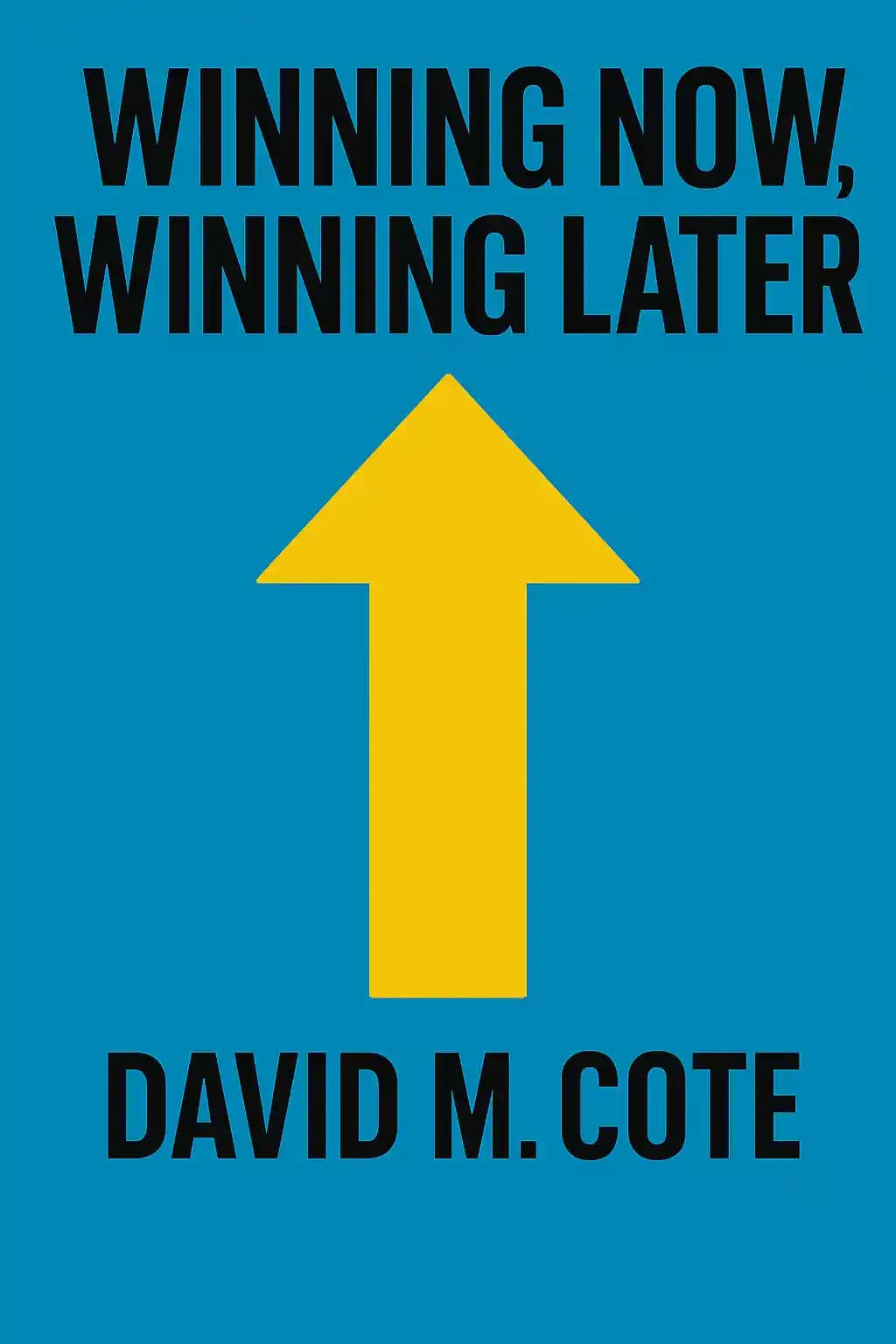
David M. Cote is the author of Winning Now, Winning Later: How Companies Can Succeed in the Short Term While Investing for the Long Term, and is a renowned executive leader and transformative CEO best known for revitalizing Honeywell International during his 16-year tenure.
A Pembroke Academy graduate and University of New Hampshire alumnus, Cote blends operational expertise with strategic foresight, themes central to his leadership guidebook. His career spans iconic roles—from GE’s Senior Vice President to TRW Inc.’s CEO—and board positions at JPMorgan Chase and the Federal Reserve Bank of New York.
Cote’s insights draw from turning Honeywell’s $20 billion market cap into $120 billion, earning accolades like Chief Executive magazine’s “CEO of the Year” and a Horatio Alger Award. His follow-up work, How to Be a Leader, expands on pragmatic leadership frameworks.
A frequent CNBC and C-SPAN commentator, Cote also advised the U.S.-India CEO Forum and co-chaired the Simpson-Bowles Commission. Winning Now, Winning Later has been celebrated as a roadmap for balancing immediate results with enduring growth, endorsed by industry leaders and global enterprises.
Winning Now, Winning Later provides a framework for balancing short-term business performance with long-term strategic investments. David M. Cote, former Honeywell CEO, shares proven strategies to avoid costly short-term practices while fostering sustainable growth, drawing from his experience growing Honeywell’s market cap from $20B to $120B. The book offers tools for leaders to navigate recessions, leadership transitions, and investor pressures.
This book is essential for CEOs, executives, and managers seeking to align quarterly results with multi-year goals. Entrepreneurs and mid-career professionals will gain actionable insights on decision-making, resource allocation, and cultivating organizational resilience. It’s particularly valuable for leaders in tech, manufacturing, or data-driven industries facing shareholder demands.
Cote led Honeywell’s transformation into a $120B company during his 16-year CEO tenure. He served on the Simpson-Bowles Commission under President Obama and received Barron’s “World’s Best CEO” recognition five times. His hands-on experience balancing operational efficiency with R&D investments grounds the book’s principles in real-world success.
Cote’s core framework emphasizes:
These principles enabled Honeywell to outperform the S&P 500 by 2.5x.
The book advises:
Cote demonstrates how Honeywell increased automation investments while delivering consistent quarterly growth.
Unlike theoretical frameworks, Cote’s approach was battle-tested at Honeywell during the 2008 crisis and multiple leadership transitions. The book combines operational playbooks with psychological strategies to counter investor myopia. It uniquely addresses sustaining dual focuses across economic cycles, supported by 25+ case studies.
“The same discipline that delivers short-term results becomes the foundation for long-term success”. This reflects Cote’s belief that operational excellence and strategic vision are mutually reinforcing, not opposing forces. Another pivotal analogy compares leadership to engineering the Panama Canal – requiring simultaneous precision and long-range planning.
Yes, it identifies pitfalls like:
Cote shares how he avoided these at Honeywell by tying 30% of executive bonuses to 5-year metrics.
The strategies are particularly applicable to current issues like:
Cote’s recession playbook helps leaders manage inflation and geopolitical uncertainty while funding innovation.
While Collins focuses on foundational practices, Cote specifically addresses executing dual time-horizon strategies in complex organizations. Good to Great analyzes what makes companies endure, whereas Winning Now provides tactical tools for maintaining endurance amid modern market volatility. Both emphasize disciplined execution but target different leadership challenges.
Readers gain access to:
These tools stem from Honeywell’s playbook for doubling innovation spending while improving margins.
Absolutely. The book adapts enterprise-scale strategies for smaller teams, emphasizing:
Cote illustrates this with examples from his GE Appliances leadership, where he balanced product launches with factory modernization.
Yes – its focus on sustainable growth amid AI disruption and climate challenges makes it increasingly relevant. Cote’s emphasis on “anti-fragile leadership” helps organizations thrive in volatile markets. With 85% of Fortune 500 leaders facing short-termism pressures, the book provides actionable solutions tested across economic cycles.
Ressentez le livre à travers la voix de l'auteur
Transformez les connaissances en idées captivantes et riches en exemples
Capturez les idées clés en un éclair pour un apprentissage rapide
Profitez du livre de manière ludique et engageante
Intellectual laziness was epidemic.
Any ninny could improve a single metric without much thought.
Leaders had no real understanding of how to run their businesses.
Eliminated quick fixes that kept everyone focused on short-term results.
Darwin's key insight wasn't just 'survival of the fittest' but survival of the most flexible.
Décomposez les idées clés de Winning Now, Winning Later en points faciles à comprendre pour découvrir comment les équipes innovantes créent, collaborent et grandissent.
Découvrez Winning Now, Winning Later à travers des récits vivants qui transforment les leçons d'innovation en moments mémorables et applicables.
Posez vos questions, choisissez votre style d’apprentissage et co-créez des idées qui vous correspondent vraiment.

Cree par des anciens de Columbia University a San Francisco
"Instead of endless scrolling, I just hit play on BeFreed. It saves me so much time."
"I never knew where to start with nonfiction—BeFreed’s book lists turned into podcasts gave me a clear path."
"Perfect balance between learning and entertainment. Finished ‘Thinking, Fast and Slow’ on my commute this week."
"Crazy how much I learned while walking the dog. BeFreed = small habits → big gains."
"Reading used to feel like a chore. Now it’s just part of my lifestyle."
"Feels effortless compared to reading. I’ve finished 6 books this month already."
"BeFreed turned my guilty doomscrolling into something that feels productive and inspiring."
"BeFreed turned my commute into learning time. 20-min podcasts are perfect for finishing books I never had time for."
"BeFreed replaced my podcast queue. Imagine Spotify for books — that’s it. 🙌"
"It is great for me to learn something from the book without reading it."
"The themed book list podcasts help me connect ideas across authors—like a guided audio journey."
"Makes me feel smarter every time before going to work"
Cree par des anciens de Columbia University a San Francisco

Obtenez le resume de Winning Now, Winning Later en PDF ou EPUB gratuit. Imprimez-le ou lisez-le hors ligne a tout moment.
A company teetering on the edge. Twenty billion in market value. Aggressive accounting masking deep operational rot. Employees so demoralized they maintained tribal identities from past mergers, refusing to cooperate. This was Honeywell in 2002-a cautionary tale waiting to happen. Yet sixteen years later, that same company was worth $120 billion, had beaten the S&P 500 by 2.5 times, and created 2,500 employee millionaires, 95% of whom weren't executives. What happened in between wasn't magic or luck. It was the systematic rejection of business's most seductive lie: that you must choose between winning today and building for tomorrow. Most leaders treat this as an either-or proposition-squeeze every penny now or invest for the future. But what if that's a false choice designed to excuse intellectual laziness? Walk into most boardrooms and you'll find executives armed with PowerPoint decks thick enough to stop bullets, filled with jargon that sounds impressive but means nothing. During one customer visit, leadership expected to discuss an exciting new product. Instead, they discovered the customer was finalizing a lawsuit against them-something the team knew nothing about. This wasn't an anomaly. It was symptomatic of a culture where leaders didn't truly understand their businesses, customers, or markets.
The antidote isn't working harder - it's thinking harder. The "Any Ninny" theory explains why: anyone can improve a single metric without thought. Cut costs? Fire people. Boost profits? Delay investments. Great leadership resolves tensions between competing priorities. Conventional wisdom claimed you couldn't have high margins and high volume, or reduced inventory with excellent delivery. With intellectual discipline, you can achieve both. This required challenging leaders to move beyond incrementalism - considering only immediate implications while ignoring long-term consequences. When executives wanted to expand expensive existing plants rather than establish presence in low-cost regions, deeper analysis revealed the equation changed dramatically. The planning process was theater - hundreds of PowerPoint slides concealing that leaders had no real understanding of how to run their businesses over five years. The company was trapped in destructive short-termism, consistently missing forecasts by 20% because business leaders accepted impossible targets while finance demanded they "just get it done."
The first step was eliminating quick fixes - all the aggressive accounting practices that kept everyone focused on quarterly results at tomorrow's expense. This took eighteen months and required transparency with investors that performance would initially lag, causing the stock to drop 25%. It hurt, but the alternative was continuing to mortgage the future for today's illusion of success. Next came transforming strategic planning from a worthless exercise into a substantive discipline. Leaders submitted concise three-to-four-page executive summaries, with every word scrutinized and vague claims about "competitive strengths" challenged relentlessly. Rather than dramatic cost-cutting through mass layoffs, the approach was "perpetual restructuring": keeping fixed costs steady while growing sales year over year. By doing slightly more each year with the same resources, you deliver added profits to investors while setting aside portions for R&D and strategic expansion. This measured approach allowed R&D investment to increase from 3.3% to 5.5% of sales while operating margins improved from 8% to 16% and sales nearly doubled. Process improvement became business's invisible hero. The Honeywell Operating System standardized processes across all facilities while engaging frontline workers in continuous improvement - unglamorous work that delivered extraordinary results.
A fatal chemical plant accident exposed a dangerous pattern: dismissing serious problems as "unlucky" rather than addressing systemic failures. Investigation revealed billions in asbestos liabilities, massive environmental cleanup costs, an underfunded pension, and accounting practices designed to obscure problems-all from prioritizing quarterly results over long-term health. The decision: fix everything immediately. This meant $1.5 billion for asbestos settlements, increasing environmental remediation from $80 million to $250 million annually, and nearly $900 million to properly fund the pension. When arsenic appeared in a Baltimore playground, cleanup was funded immediately without waiting for lawsuits. The most striking transformation came at Onondaga Lake near Syracuse, once "America's most polluted lake." After a $451 million cleanup starting in 2006, swimming resumed by 2015, wildlife returned, and contaminant levels plummeted. Over fifteen years, environmental incidents declined 93%, energy efficiency improved 70%, and safety became 80% better than industry average. The total investment was $3.5 billion-worth every penny, not just morally but strategically, as process improvements reduced costs while preventing harm.
Honeywell was fractured into warring tribes-legacy Honeywell employees ("red"), AlliedSignal employees ("blue"), and acquired Pittway employees operating independently. This cultural chaos destroyed talent retention and prevented strategic execution. Five key initiatives were defined-growth, productivity, cash, people, and operational enablers-along with twelve core behaviors including customer focus, getting results, fostering teamwork, and self-awareness. Branded as "One Honeywell," this unified everyone around serving customers rather than maintaining subcultures. The proof came in 2014 when Honeywell nearly sold its Friction Materials business at a $75 million loss. Because the "learning mindset" behavior had been internalized, an additional review was called despite initial approval. During a late-night conference call from China, previously unexplored financial details revealed the deal was worse than presented. By backing out, Honeywell later sold the business for $50 million more-a massive swing from cultural discipline. Meanwhile, half of 115,000 employees worked in manufacturing, wanting to contribute intellectually but lacking formal channels. The solution: a phased approach starting with ten pilot plants tracking improvements in safety, quality, delivery, cost, and inventory. Over a decade, typical plants generated hundreds of process improvement ideas, reducing costs 15-20% while similarly improving safety, inventory, delivery, and quality.
When Honeywell's Aerospace division president and CFO resigned simultaneously, replacements were announced within 48 hours - only possible through rigorous succession planning. Sustained performance requires talented leaders committed to company strategies. The performance review system was transformed by requiring managers to write appraisals themselves rather than having employees self-evaluate. Despite complaints, spending twenty hours annually ensuring you have the best people was framed as essential. For the 200 most senior positions, final candidates were personally interviewed. Internal hiring was emphasized because the best talent was often already within the organization, overlooked due to credentials or past positions. Like Tom Brady, who sat on the bench before becoming football's greatest quarterback, many potential stars simply need the opportunity to shine. In a business world obsessed with quarterly earnings, the most radical act is planting seeds you won't harvest for years. Honeywell was severely underinvesting in new products, so R&D spending was tripled over fifteen years while dramatically improving efficiency by expanding high-quality, low-cost R&D centers in India, China, and the Czech Republic from 500 to 10,000 employees.
Even brilliant strategies stumble during leadership transitions. A decade-long succession process prevented typical chaos. Starting in 2007, potential successors around forty received progressively larger responsibilities. By 2014, finalists tackled significant "leap" jobs testing their decision-making. In 2015, they presented strategic plans to the board-Darius Adamczyk distinguished himself through independent thinking and courage. A deliberate two-year transition followed. Darius served as COO the first year, then CEO while his predecessor remained as executive chairman. Both leaders set egos aside, making the transition seamless. Six weeks before retirement, activist investor Third Point Management recommended spinning off Aerospace. The constructive response won over investors-shares jumped 32% in 2017. During Darius's first two years, Honeywell delivered 55% total shareholder return versus 32% for the S&P 500. The greatest leaders reject false choices between today and tomorrow. They think harder, dig deeper, and refuse to sacrifice either timeframe. Your legacy isn't the numbers you deliver-it's the garden you leave behind, fertile and ready for the next season's growth.