Chapitre 1
When Change Becomes Your Greatest Opportunity
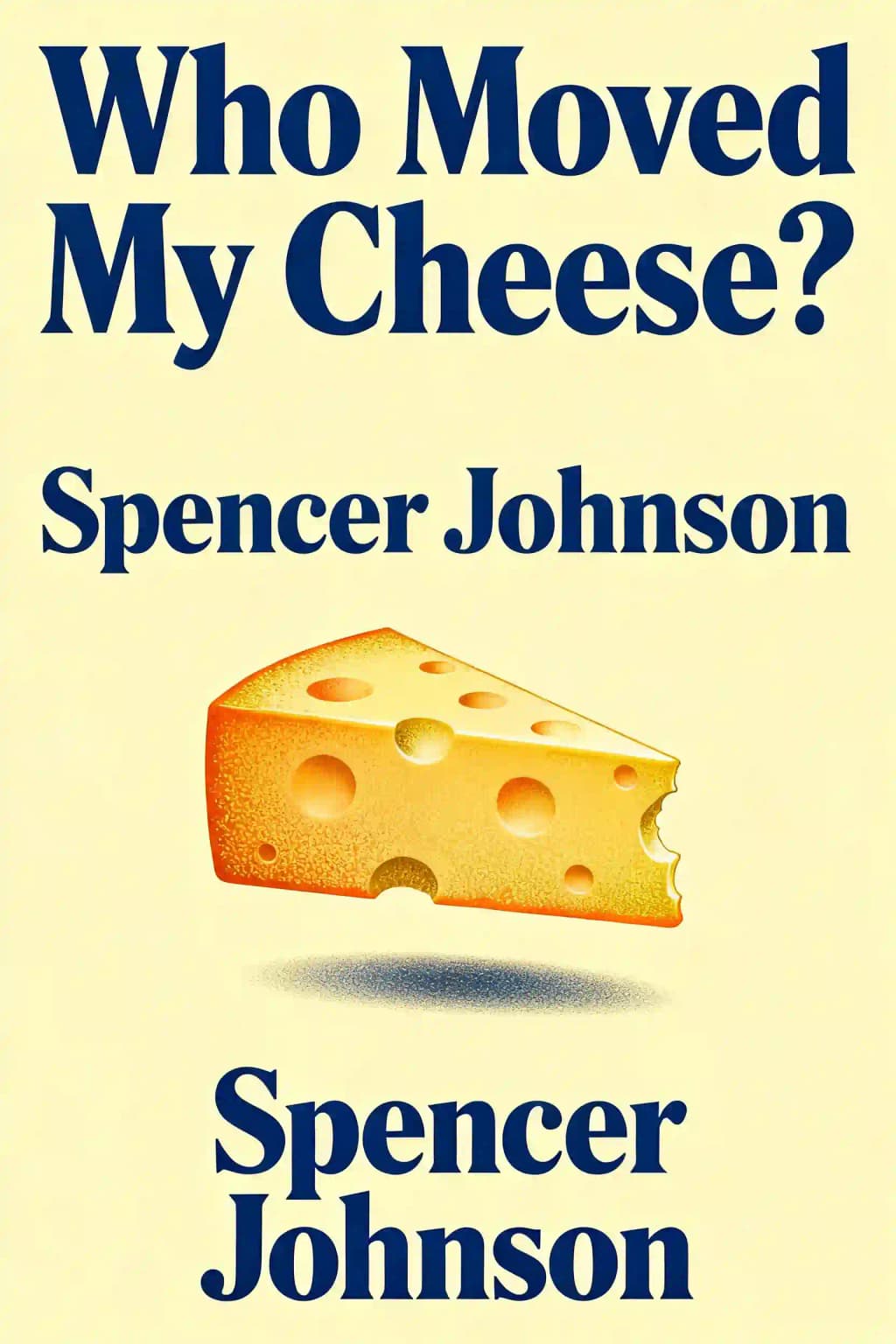
Imagine waking up one day to discover everything you've counted on has vanished. Your job, your relationship, your sense of security-gone. What would you do? Would you stand paralyzed by fear, demanding the return of what was lost? Or would you venture into the unknown, seeking something potentially better? This fundamental question lies at the heart of Spencer Johnson's phenomenal bestseller, which has sold over 28 million copies worldwide and been translated into 37 languages. The book has been embraced by Fortune 500 CEOs, recommended by Oprah Winfrey, and has become required reading in many corporate training programs. Its brilliance lies in its simplicity-using a parable about mice and little people searching for cheese to illuminate profound truths about human adaptation. In our rapidly evolving world where the only constant is change itself, this story's message has never been more relevant.
Chapitre 2
The Maze: A Metaphor for Life's Complexities
The story unfolds in a maze-a perfect metaphor for the complex, often confusing world we navigate daily. Within this labyrinth, four characters search for cheese, which represents whatever we desire in life: a satisfying job, loving relationships, wealth, health, or spiritual peace. Two are mice named Sniff and Scurry, while two are Little people (miniature humans) named Hem and Haw. These characters embody different aspects of our personality when facing change.
The mice operate on instinct and simple trial-and-error methods. Sniff possesses exceptional ability to detect early signs of change, while Scurry excels at taking quick, decisive action. They're unburdened by complex emotions or overthinking. Their approach is refreshingly straightforward: when something isn't working, try something else.
The Little people, being more complex, rely on their sophisticated brains but often become entangled in their beliefs, fears, and emotions. Hem represents our stubborn resistance to change-clinging to comfortable patterns even when they no longer serve us. Haw embodies our capacity to eventually learn, adapt, and discover that change often leads to something better.
This quartet represents the internal dialogue many of us experience during transitions. Sometimes we're quick to sense impending change like Sniff. Other times we spring into action like Scurry. Occasionally we dig in our heels like Hem, or eventually adapt like Haw. The genius of the story is showing how these different responses lead to vastly different outcomes when the inevitable occurs: the cheese disappears.
The maze itself represents life's structural constraints-the organizations we work in, the relationships we navigate, the economic systems we operate within. Just as the maze has corridors that lead to cheese and others that lead nowhere, our lives contain productive paths and dead ends. Learning to navigate this complexity while remaining adaptable becomes the central challenge.
Chapitre 3
Finding Comfort: The Danger Zone
After much searching, all four characters discover an abundant cheese supply at "Cheese Station C." This discovery marks the beginning of a crucial phase in the story-one that mirrors how we often respond to success and stability. The mice and Little people develop dramatically different relationships with their newfound prosperity.
Sniff and Scurry maintain their vigilance despite the abundance. They continue arriving early each morning, inspecting the area thoroughly, and remaining alert to subtle changes in their environment. They never take the cheese for granted, instinctively understanding that resources in any environment can change without warning.
Hem and Haw, however, fall into a pattern that feels eerily familiar to many of us. Their initial excitement gives way to complacency and entitlement. They arrive later each day, remove their running shoes (symbolizing readiness for movement), and even begin decorating the walls with sayings and pictures that reflect their attachment to this location. They essentially move in, treating Cheese Station C as their permanent home rather than one temporary source in a changing environment.
This transformation is subtle but profound. The Little people begin to see the cheese not as a fortunate discovery but as their rightful reward-something they deserve and can count on indefinitely. "This is our cheese," they declare, revealing a dangerous sense of ownership over something they neither created nor control. They build their entire identity and security around this single source of fulfillment.
Most troubling is their failure to notice the gradual changes occurring around them. The cheese supply begins diminishing day by day. Its quality deteriorates. Warning signs appear. Yet wrapped in their comfortable routines and entitled mindset, Hem and Haw remain oblivious to these signals.
This section of the story serves as a powerful warning about the dangers of comfort zones. When we achieve success-whether in careers, relationships, or other life domains-we often stop doing the very things that got us there. We cease exploring, stop paying attention to warning signs, and develop rigid expectations about what we deserve. We decorate our metaphorical walls with achievements and accolades, forgetting that yesterday's solutions rarely solve tomorrow's problems.
The mice, representing our more instinctual selves, never fall into this trap. They understand at a fundamental level that change is inevitable and preparation essential. Their continued vigilance isn't paranoia-it's pragmatism in a world where nothing remains static.
Chapitre 4
The Moment of Truth: When the Cheese Disappears
One morning, the inevitable happens: Sniff and Scurry arrive at Cheese Station C to find the cheese completely gone. Their response is immediate and uncomplicated. Without wasting time on analysis or complaint, they simply tie on their running shoes and set off into the maze to find new cheese. Their previous vigilance had prepared them for this moment-they had noticed the dwindling supply and were mentally ready for change.
Later that same day, Hem and Haw arrive to confront the same empty station. Their reaction couldn't be more different. Hem explodes with indignation: "Who moved my cheese?" he demands, as if some cosmic injustice has occurred. "It's not fair!" he shouts, revealing his deep-seated belief that the world should conform to his expectations rather than the other way around.
Haw stands frozen in disbelief, unable to process this unexpected development. Both Little people are utterly unprepared-physically, mentally, and emotionally-for a change they should have seen coming.
What follows is a painfully familiar pattern of denial and resistance. Rather than accepting reality and adapting, Hem and Haw return day after day, hoping the cheese will magically reappear. They analyze endlessly, creating elaborate theories about who "stole" their cheese and why. They grow increasingly hungry, frustrated, and stressed, yet remain paralyzed by their inability to accept the new reality.
Their behavior, while unproductive, is deeply human. The cheese represented more than mere sustenance-it symbolized their happiness, security, and identity. Its disappearance threatens not just their physical well-being but their entire sense of how the world works and their place within it.
Meanwhile, Sniff and Scurry have already ventured deep into the maze. Using their simple trial-and-error approach, they explore new corridors, learn from dead ends, and eventually discover an even more abundant supply at "Cheese Station N." Their willingness to immediately let go of the past and embrace uncertainty leads them to a better situation than the one they lost.
This stark contrast highlights a fundamental truth about change: our response matters far more than the change itself. The same event-the disappearance of cheese-leads to thriving for the mice and suffering for the Little people. The difference isn't in the external circumstance but in the internal response.
Hem and Haw's predicament worsens as hunger and stress take their toll. In desperation, they even try breaking through the wall of Cheese Station C, hoping to find cheese hidden behind it-a futile attempt to force old solutions onto new problems. Their situation perfectly illustrates Einstein's definition of insanity: doing the same thing repeatedly while expecting different results.
Chapitre 5
Breaking Free: Haw's Journey of Transformation
After enduring hunger and frustration, Haw finally reaches a breaking point. He realizes the futility of waiting for cheese that will never return and recognizes that continuing their current approach means slow starvation. With growing clarity, he sees that the only reasonable option is to venture into the maze to find new cheese.
Hem, however, remains entrenched in denial and fear. When Haw suggests they need to move on, Hem responds with incredulity: "Move on? Never! I'm staying right here until they put the cheese back." This response reveals how deeply fear can entrench us in failing situations-we'd rather suffer in familiar territory than risk the unknown.
Facing this impasse, Haw makes the courageous decision to venture into the maze alone. Before leaving, he writes a message on the wall: "If You Do Not Change, You Can Become Extinct." This simple truth becomes the first of several insights Haw will discover and share throughout his journey.
As Haw enters the maze, he confronts overwhelming fear. The once-familiar corridors now seem threatening. He worries about getting lost or never finding cheese again. Most painfully, he feels the ache of leaving his friend behind. These emotions mirror what many of us experience during major life transitions-whether leaving unfulfilling jobs, ending stagnant relationships, or abandoning comfortable but limiting beliefs.
To combat his fear, Haw asks himself a powerful question: "What would I do if I weren't afraid?" This question becomes a touchstone throughout his journey, helping him distinguish between legitimate caution and paralyzing fear. It's a question we might all benefit from asking more frequently.
As Haw progresses through the maze, he makes several crucial discoveries. First, he realizes the cheese at Station C hadn't disappeared overnight-it had been gradually diminishing all along. The mold had been growing, the quality declining, but in his complacency, he had failed to notice. This recognition leads to another wall writing: "Smell The Cheese Often So You Know When It Is Getting Old."
This insight applies powerfully to our own lives. How often do we ignore the warning signs of impending change? The gradual decline in job satisfaction, the subtle distancing in relationships, the mounting evidence that our industry is transforming-these signals surround us, yet we often choose not to see them until crisis forces our hand.
As Haw continues his journey, something unexpected happens: he begins to enjoy the adventure. Despite his hunger and uncertainty, he discovers that movement itself brings a sense of vitality and purpose that had been missing during his stagnation at the empty cheese station. He writes: "Movement In A New Direction Helps You Find New Cheese."
This paradoxical truth-that embracing uncertainty can feel better than clinging to certainty that no longer exists-challenges our natural tendency to avoid change. Often what we fear most is not the new situation but the transition itself. Yet Haw discovers that once he commits to movement, the journey becomes not just bearable but invigorating.
Chapitre 6
The Power of Visualization: Creating New Possibilities
One of Haw's most powerful discoveries is the impact of visualization on his ability to persevere through difficulty. When his journey through the maze becomes particularly challenging, he begins to imagine himself enjoying new cheese-visualizing in vivid detail the taste, texture, and satisfaction of finding an abundant new supply.
This mental rehearsal serves multiple purposes. It provides motivation by connecting present struggles with future rewards. It reduces fear by making the unknown seem more familiar. Perhaps most importantly, it expands Haw's sense of possibility beyond the limited options he previously perceived.
"Visualizing yourself enjoying your New Cheese leads you to it," Haw writes on the wall, capturing this profound psychological insight. Our brains are remarkably responsive to mental imagery-athletes have long used visualization to enhance performance, and research confirms that imagining success increases the likelihood of achieving it.
Haw's visualization practice doesn't eliminate the challenges of his journey. He still faces wrong turns, disappointments, and moments of doubt. But his mental pictures provide an emotional anchor that prevents him from retreating to the false security of Cheese Station C.
This aspect of the story offers a practical tool for navigating our own transitions. When facing uncertainty-whether a career change, relationship shift, or personal reinvention-we can harness the power of detailed visualization. By repeatedly imagining ourselves thriving in new circumstances, we build neural pathways that support adaptation rather than resistance.
Importantly, Haw's visualizations aren't vague fantasies but specific, sensory-rich scenarios. He doesn't just imagine "finding cheese somewhere"-he pictures himself enjoying particular varieties in concrete situations. This specificity makes the visualization more compelling and effective.
As Haw continues his journey, fueled by these mental images, he begins finding small bits of new cheese. Though not the abundance he ultimately seeks, these discoveries provide crucial reinforcement for his new behaviors. Each small success builds confidence for the challenges ahead.
The visualization technique also helps Haw maintain perspective during setbacks. When he encounters empty cheese stations or difficult passages in the maze, his mental images remind him that these are temporary obstacles rather than permanent conditions. This resilience-the ability to bounce back from disappointment-becomes as valuable as any cheese he might find.
Chapitre 7
The Reunion: Lessons Learned and Applied
After a challenging journey through the maze, Haw finally rounds a corner and discovers Cheese Station N-home to the largest supply of cheese he's ever seen. The variety is astonishing, including many types he doesn't recognize alongside his old favorites. To his delight, he finds Sniff and Scurry already there, their plump bellies evidence they've been enjoying this abundance for some time.
This moment of discovery brings profound satisfaction, but it's Haw's reflection on his journey that provides the story's deepest insights. Looking back, he realizes several crucial lessons that apply far beyond cheese hunting:
First, he recognizes how tightly he had clung to the illusion of Old Cheese that was no longer there. Like many of us, he had invested his identity and security in a particular source of fulfillment, making its loss feel like an existential threat rather than a natural transition. Learning to laugh at his own folly helps him let go and move on.
From observing Sniff and Scurry, Haw learns the value of simplicity. When circumstances changed and the cheese moved, the mice didn't overanalyze or complain-they simply changed and moved with it. Their uncomplicated approach proved more effective than the Little people's complex reasoning and emotional resistance.
Yet Haw also acknowledges the unique human capacity that ultimately saved him: the ability to envision something better beyond current circumstances. This cognitive gift, when properly directed, allows us to learn from past mistakes and plan for future changes. The mice adapted quickly through instinct, but Haw adapted through conscious learning-a distinctly human advantage.
Perhaps most importantly, Haw recognizes that change becomes less threatening with practice. By repeatedly facing his fears and discovering they were overblown, he builds confidence for future transitions. "I was afraid of change," he reflects, "but now I see that change can lead to something better."
At Cheese Station N, Haw creates his masterpiece-a comprehensive summary of lessons learned, which he calls "The Handwriting On The Wall." These principles become a guide not just for finding cheese but for navigating life's inevitable changes:
• Change Happens (They Keep Moving The Cheese)
• Anticipate Change (Get Ready For The Cheese To Move)
• Monitor Change (Smell The Cheese Often So You Know When It Is Getting Old)
• Adapt To Change Quickly (The Quicker You Let Go Of Old Cheese, The Sooner You Can Enjoy New Cheese)
• Change (Move With The Cheese)
• Enjoy Change! (Savor The Adventure And Enjoy The Taste Of New Cheese!)
• Be Ready To Change Quickly And Enjoy It Again (They Keep Moving The Cheese)
Haw commits to inspecting his cheese supply daily and exploring the maze regularly, determined never again to be surprised by change. His final insight may be the most profound: the biggest inhibitor to change lies within ourselves. Our beliefs, fears, and attachments often prevent us from seeing opportunities that await beyond our comfort zones.
Chapitre 8
Beyond the Maze: Real-World Applications
The story's brilliance lies in its applicability across virtually every domain of human experience. Whether in business, relationships, health, or personal growth, the principles of "Who Moved My Cheese?" offer a framework for navigating change more effectively.
In organizations, the story provides a shared language for discussing difficult transitions. Rather than personalizing change as attack or failure, team members can ask, "Who moved our cheese?" and "What would we do if we weren't afraid?" These questions shift focus from blame to adaptation and from fear to possibility.
The concept of "smelling the cheese often" encourages organizational vigilance-regularly assessing market conditions, customer needs, and competitive threats rather than assuming today's success guarantees tomorrow's. Companies that thrive long-term typically excel at detecting early warning signs and responding before crisis forces their hand.
In personal relationships, the story illuminates how attachment to "the way things were" can prevent growth and renewal. Partners who cling to outdated patterns often find themselves at empty cheese stations, wondering why fulfillment has vanished. Those willing to venture into new territory-having difficult conversations, trying new approaches, or reimagining their connection-often discover richer possibilities.
For individuals facing career transitions, the parable offers particular comfort. Job loss, industry disruption, or professional reinvention can feel devastating when we've built our identity around particular roles or organizations. The story reminds us that what initially appears as loss often creates space for something better-if we're willing to move through the maze rather than remaining at empty stations.
Perhaps most valuably, the story challenges our fundamental relationship with change itself. Rather than seeing change as something to be feared or resisted, we're invited to recognize it as natural, inevitable, and potentially beneficial. "Change happens," the story tells us. Our choice isn't whether to experience change but how to respond when it arrives.
This shift in perspective-from seeing change as threat to viewing it as opportunity-may be the most liberating aspect of Johnson's parable. When we no longer waste energy resisting the inevitable, we can direct that same energy toward exploration, adaptation, and growth.
Chapitre 9
The Legacy of a Simple Story
What makes "Who Moved My Cheese?" so enduringly powerful is its accessibility. Through four characters and a simple quest for cheese, Johnson captures profound truths about human psychology and organizational dynamics that might otherwise require volumes of academic text to convey.
The story works because we all recognize ourselves in these characters. We've all been Hem, stubbornly demanding the return of what's gone. We've all been Haw, reluctantly accepting reality and eventually finding something better. We've experienced the quick perception of Sniff and the decisive action of Scurry. By seeing these parts of ourselves externalized in the story, we gain perspective on our own responses to change.
The parable's endurance also speaks to a universal human challenge. While specific changes vary across cultures and eras-from technological disruption to political upheaval to personal transitions-the fundamental experience of having our "cheese moved" connects us across time and circumstance. The farmer whose land no longer yields crops, the craftsman whose skills are replaced by machines, the executive whose industry transforms overnight-all face the same essential choice between adaptation and obsolescence.
Perhaps most importantly, the story offers hope. By showing Haw's journey from fear to discovery, from resistance to renewal, Johnson reminds us that change, while often painful, contains the seeds of new possibility. The cheese that disappears from one station awaits discovery at another. The skills that serve us in navigating one transition build capacity for the next.
In a world where change accelerates with each passing year, this simple story about mice, little people, and cheese provides not just comfort but practical wisdom. It reminds us that while we cannot control when our cheese moves, we always retain the most important choice of all: how we respond when it does.
Chapitre 10
Finding Your Own New Cheese
As the story concludes, we're left with a tantalizing question: Did Hem ever leave Cheese Station C? Did he finally overcome his fear and follow the trail of insights Haw left on the walls? The story doesn't tell us, perhaps because each of us must answer this question in our own lives. This ambiguity serves as a mirror, reflecting our own choices and potential resistance to change.
The maze represents life's complex journey, with its twisting corridors and unexpected dead ends. Where are you currently standing in this maze? Are you enjoying abundant cheese while remaining vigilant for change, like successful entrepreneurs who continue innovating even during prosperous times? Are you clinging to an empty station, like companies that refused to adapt to digital transformation and eventually became obsolete? Or are you somewhere in the journey between-having recognized the need for movement but still finding your way to new abundance, similar to professionals transitioning careers or businesses pivoting their strategies?
The beauty of this simple parable is that it meets each of us exactly where we are, offering different lessons depending on our current situation. It acknowledges the very real fear that accompanies change-whether it's starting a new job, ending a relationship, or launching a business-while gently challenging us to move beyond it. It recognizes our tendency toward complacency while reminding us that anticipation and adaptation serve us better. Consider how Nokia dominated the mobile phone market but failed to adapt to smartphones, while Apple embraced change and revolutionized the industry.
Most importantly, it affirms that beyond our comfort zones-beyond the familiar cheese we've grown accustomed to-awaits the possibility of something even better. History is filled with examples of individuals who took this lesson to heart: Walt Disney being fired from a newspaper for "lacking imagination," Steve Jobs being ousted from Apple only to return and lead it to unprecedented success, or J.K. Rowling facing multiple rejections before Harry Potter became a global phenomenon.
The next time you face unexpected change-when your personal or professional cheese disappears-remember to ask yourself: "What would I do if I weren't afraid?" This powerful question can help break through paralysis and illuminate new possibilities. The answer might lead you to explore new markets, develop new skills, build meaningful relationships, or discover talents you never knew you had. Remember, the richest cheese often lies beyond the boundaries of your current comfort zone, waiting for those brave enough to venture out and find it.
Your journey through the maze is uniquely yours, but the principles remain universal: embrace change, stay alert, move quickly when necessary, and always be ready to abandon old cheese in pursuit of new opportunities.