Chapitre 4
From Analyst to Presidential Advisor
Brennan's work at the Counterterrorism Center marked a significant acceleration in both pace and gravity compared to his previous research-focused roles. Days stretched into evenings, and weekends disappeared as he immersed himself in the urgent work of assessing Saddam Hussein's potential use of terrorism against U.S. interests during the Gulf War.
This experience proved formative in several ways. First, it taught Brennan the value of collaboration across intelligence disciplines by working in an integrated office that combined diverse CIA capabilities under unified leadership. Second, he navigated the difficult balance between acting decisively on incomplete intelligence to save lives versus waiting for greater certainty but potentially missing opportunities. Finally, he learned to maintain analytic independence while working within an operationally-focused environment - a skill that would serve him well throughout his career.
By 1994, Brennan's expertise and reputation led to his selection as a Presidential Daily Brief (PDB) briefer for President Clinton and Vice President Gore. This prestigious assignment, previously held by legendary briefer Chuck Peters, filled him with both honor and panic as he worried about mastering global issues beyond his Middle East expertise. His daily routine transformed completely - going to bed by 8:30 PM (same time as his young children) to arrive at headquarters by 2:30 AM, needing four hours to thoroughly study the PDB and supporting materials before briefings.
Brennan observed stark differences between his two primary briefing subjects. President Clinton proved an exceptionally careful reader with remarkable recall ability, typically meeting one to three times weekly in the Oval Office. Vice President Gore's briefings were less formal but more frequent and interactive, often conducted in his limousine en route to the White House, with particular interest in breakthrough technologies and climate change.
Though Brennan's PDB stint lasted less than ten months, it connected him with George Tenet, who in May 1995 became Deputy Director of Central Intelligence and asked Brennan to join him as his executive assistant. This role introduced Brennan to the executive leadership world of national security, giving him unprecedented access to the Agency's most sensitive programs and accompanying Tenet to meetings with U.S. and foreign officials.
Brennan's career trajectory continued upward when he returned to Saudi Arabia in 1996 as the senior intelligence liaison, giving him regular interaction with senior Saudi officials, particularly Prince Turki al-Faisal, the sophisticated head of Saudi intelligence. Following al-Qa'ida's devastating embassy attacks in Tanzania and Kenya in August 1998, Brennan coordinated closely with FBI Director Louis Freeh during his many Saudi visits, finding that maximum transparency between their organizations was most effective, despite resistance from individuals in both agencies.
By 2001, Brennan had become deputy executive director under "Buzzy" Krongard, a former investment bank CEO who proved an excellent mentor despite their occasional philosophical differences. Krongard offered valuable leadership advice, distinguishing between decisions "above the waterline" that could be made independently versus potentially damaging ones "below the waterline" that required higher approval.
Chapitre 5
September 11th and Its Aftermath
On September 11, 2001, Brennan was in George Tenet's conference room when news broke of the first plane hitting the World Trade Center. Watching the second plane hit on television, they instantly suspected al-Qa'ida's involvement. As the Pentagon was struck and Flight 93 crashed in Pennsylvania, Tenet ordered the evacuation of CIA headquarters while essential personnel relocated to the printing plant. Brennan walked the emptying halls ensuring everyone evacuated, while counterterrorism staff remained at their posts analyzing intelligence despite the danger.
The aftermath brought unprecedented operational tempo. CIA officers deployed to Afghanistan just two weeks after the attacks, preceding the military response. When CIA officer Mike Spann became the first American killed in combat on November 25, it foreshadowed the long conflict ahead. The Agency successfully thwarted al-Qa'ida's planned follow-up attacks, including West Coast airplane plots, while also contending with the anthrax letter attacks and the D.C. sniper shootings.
In this intense period, Brennan confronted one of the most morally challenging aspects of his career. In August 2002, he read cables about Abu Zubaydah's interrogation that contained graphic descriptions of repeated waterboarding sessions. "My God, what are we doing?" he thought while walking to a secluded area of the parking lot. Though he knew harsh techniques had been approved, seeing the actual account made him question the program's ethics. He shared his concerns with colleagues and Director Tenet, who insisted they verify everything was explicitly authorized by the Justice Department.
Years later, Brennan would express regret at not speaking more forcefully against the program or considering resignation: "I consider this failure to clearly convey my concerns my most egregious sin of omission. Over time, I vowed never to remain silent again."
In late 2002, Brennan was asked to serve on an interagency working group examining government deficiencies that contributed to the 9/11 intelligence failure. Their team proposed a new multi-agency organization with access to all terrorism threat information. President Bush announced the creation of the Terrorist Threat Integration Center (TTIC) in January 2003, and Brennan was tasked with designing this new entity with only six weeks to reach "initial operating capability."
Brennan's greatest challenge was gaining access to classified networks across agencies. While technical and legal hurdles were significant, the political resistance proved far worse. CIA colleagues accused him of abandoning the "need to know" principle, while the FBI saw TTIC as a CIA plot to steal sensitive information. To establish TTIC's independence, they created their own "President's Terrorist Threat Report" delivered directly to the president and other PDB recipients.
After twenty-five years of service, Brennan retired from the CIA in November 2005, becoming president and CEO of The Analysis Corporation, a small northern Virginia firm providing classified technical and analytic support to intelligence agencies. Though he found private sector work routine and unexciting compared to government service, it improved his family's financial situation and allowed him to finally have both arthritic hips replaced, ending years of pain he'd stubbornly endured.
Chapitre 6
Returning to Government Service
Brennan's private sector interlude ended when Barack Obama won the 2008 presidential election. Though initially supporting Hillary Clinton in the primaries, Brennan was drawn to Obama after watching his South Carolina primary victory from a Dubai hotel room. Ted Kennedy's endorsement, saying Obama "lit a spark of hope amid the fierce urgency of now," ignited Brennan's own enthusiasm despite earlier reservations about Obama's experience.
After contributing to Obama's campaign and writing position papers on intelligence and Middle East policy, Brennan was surprised when Denis McDonough called with an invitation to meet the president-elect in Chicago. During their meeting, Obama asked Brennan to lead the intelligence portfolio for the transition team, and on November 13, Obama called personally: "John, I would like you to be my director of the CIA."
However, criticism mounted from the political left regarding Brennan's tenure during the CIA's controversial interrogation program. When he offered to withdraw, Obama's team initially dismissed his concerns but eventually accepted his withdrawal. Devastated, Brennan wrote a letter to Obama overstating his opposition to coercive interrogation tactics, claiming he'd been a "strong opponent" of waterboarding when in truth he hadn't spoken out as forcefully as he should have.
Unexpectedly, Obama offered Brennan an alternative position as his assistant for homeland security and counterterrorism. Though initially reluctant, Brennan accepted the White House role, which ironically gave him more regular access to President Obama than he would have had as CIA Director due to his office's strategic location - forty feet from the Situation Room and directly below the Oval Office.
As Obama's counterterrorism adviser, Brennan served as the White House gatekeeper for all lethal action requests against terrorist targets outside Iraq and Afghanistan. President Obama had established that any strikes outside active war zones required his personal approval, making Brennan the designated point person for such requests, whether they involved missiles from Navy ships or drone strikes.
Before bringing strike proposals to the president, Brennan ensured thorough vetting through interagency meetings where intelligence was rigorously challenged. These meetings followed a pattern: Brennan would present intelligence about terrorist threats, explain why capture operations weren't feasible, and recommend strikes only when legal requirements were met and civilian casualties could be avoided with "near certainty." The president would carefully review materials, ask probing questions about contingencies, and emphasize embassy security before giving time-limited authorizations.
The targeting of Anwar al-Awlaki, a U.S. citizen and al-Qa'ida leader responsible for numerous terrorist attacks, presented unique challenges. After extensive legal deliberations about due process concerns, the Justice Department determined that Awlaki posed a "continued and imminent threat" and targeting him would be lawful. He was killed by a drone strike in Yemen on September 30, 2011 - the only U.S. citizen intentionally targeted during Obama's presidency.
Chapitre 7
The Hunt for Bin Laden
The operation that killed Usama Bin Ladin represented the most intense, secretive, and successful counterterrorism mission of Brennan's career. President Obama had prioritized finding Bin Ladin from his first days in office, convening senior officials in May 2009 for a status briefing. Unsatisfied with progress, Obama directed the CIA to produce a detailed operational plan within thirty days, energizing the hunt with presidential backing.
In September 2010, the CIA briefed the president on a potentially significant development: they had located and followed an individual believed to be Bin Ladin's personal courier living with his brother in a compound in Abbottabad, Pakistan. The location presented significant challenges, being near Pakistan's Military Academy and a retirement area for senior Pakistani officers.
By early 2011, planning accelerated with Vice Admiral Bill McRaven brought in to develop military options. The deputies unanimously rejected involving Pakistani authorities, fearing mission compromise, and concluded a unilateral U.S. operation was the only viable approach. Obama chaired a March 29 NSC meeting where McRaven detailed the helicopter assault option, warning things could get "sporty" with Pakistani security forces. The president firmly instructed the team to "be prepared to fight their way out if necessary" rather than negotiate for their release.
A "red team" assessment from the National Counterterrorism Center put the probability of Bin Laden's presence as low as 40%, prompting Obama to pragmatically note, "The odds are fifty-fifty... Even if it's only forty percent, that's forty percent more than we've ever had before." At the final April 28 NSC meeting, CIA Director Panetta strongly advocated for the raid, while Defense Secretary Gates and Vice President Biden expressed concerns about risking American lives. The president made his decision the next morning: "It's a go," scheduling the operation for Sunday, May 1.
On the day of the raid, Brennan and other officials gathered in the Situation Room to watch the operation unfold through General Webb's communications link with McRaven. When word came at 3:50 PM that "Geronimo" was dead, there was no jubilation - just shared relief that America had finally eliminated the 9/11 mastermind. The most harrowing part was waiting for the forces to return safely through Pakistani airspace. After confirmation of their safe return, they implemented their playbook - Admiral Mullen called Pakistani General Kayani while Brennan called Saudi Prince Muhammad to inform them and discuss Bin Ladin's remains. President Obama delivered his historic address shortly before midnight. When Brennan left the White House at 1:00 AM, he found crowds outside chanting "USA" and "CIA," bringing tears to his eyes.
Chapitre 8
The Obama Administration's National Security Approach
During eight years working with President Obama, Brennan observed a leader whose approach to national security evolved significantly over time. Despite Obama's limited initial experience, Brennan was impressed by how quickly he became knowledgeable and how his natural idealism became tempered with pragmatism as he recognized the limits of American power.
Obama's administration maintained a structured interagency framework for national security decisions. Policy discussions began at Interagency Policy Committee level with assistant secretaries, sometimes starting with sub-IPCs of deputy assistant secretaries. These meetings prepared options for deputies committee and principals committee meetings, with many issues requiring final presidential review at National Security Council meetings. Intelligence briefings always initiated these meetings, sometimes delaying policy debates. Legal counsel attended to advise on legal bases for options.
Obama came exceptionally prepared to NSC meetings, having marked up detailed memos, and never signaled his preferred outcome at the start, instead actively seeking diverse viewpoints and drawing out unspoken dissent. He possessed an uncanny ability to anticipate second-, third-, and fourth-order effects of national security decisions, approaching problems like multidimensional chess.
His decision not to provide Ukraine lethal weapons during Russia's Crimea annexation exemplified this approach - he correctly assessed that such aid would provoke Russian escalation, potentially overwhelming Ukrainian forces and forcing either a dangerous proxy conflict or embarrassing U.S. retreat. Instead, he provided non-lethal assistance while maintaining pressure on Moscow, allowing Ukraine's military to rebuild before the Trump administration later provided lethal aid when conditions were more favorable.
The Arab Spring presented unexpected policy dilemmas that lasted throughout Obama's presidency. Despite years of intelligence about poor governance and repression in the Middle East, the intelligence community failed to tap sufficiently into social media that might have provided warning about the depth of popular disaffection. When a Tunisian fruit vendor's self-immolation in December 2010 triggered massive unrest across the region, it reminded Brennan of the 1987 Palestinian intifada's sudden eruption.
In Egypt, Obama focused intensely as millions took to the streets demanding Mubarak's ouster. In a direct call, Obama urged Mubarak not to use lethal force against protesters - a plea Mubarak heeded. When it became clear the Egyptian masses wouldn't be satisfied with anything less than leadership change, Obama told Mubarak it was time to step aside, which he did.
Syria proved even more devastating than Libya. Obama had initially sought improved relations with Syria in 2010, canceling travel advisories as part of efforts to engage Syria in peace talks with Israel. When anti-government protests erupted during the Arab Spring, Obama publicly called for Asad to step down in August 2011. The administration supported the Free Syrian Army, which initially appeared secular and nationalist. Brennan deeply regretted they didn't take bolder action to support them early in the uprising. By late 2012, policy decisions became more complicated as al-Qa'ida elements joined forces to form ISIS, giving opposition forces an extremist cast.
Chapitre 9
Director of the CIA: Reform and Controversy
When CIA Director David Petraeus resigned following revelations of an affair with his biographer and disclosure of classified information, President Obama nominated Brennan for the position in January 2013. Despite Senator Rand Paul's thirteen-hour filibuster demanding assurances about drone strikes against American citizens, Brennan was confirmed 63-34.
Returning to Langley as the twenty-first CIA Director, Brennan had mixed feelings - pride in the organization that kept Americans safe in ways the public would never know, tempered by awareness of the Agency's serious mistakes. As one of only five directors who had previously served as CIA staff officers, he had unique insights into the Agency's strengths and weaknesses. His appointment wasn't universally welcomed; many officers were concerned about his advocacy for stricter limits on covert action and greater information sharing.
Brennan had no intention of being a caretaker director, instead planning comprehensive reforms focused on five priorities: people, cyber, organizational structure, culture, and ethics. Recognizing the CIA's history as a bastion of white male dominance, he tackled diversity head-on. He declassified and publicly released Madeleine Albright's study on women in leadership, exposing systemic obstacles despite statistical gains. Later, he appointed Avril Haines as the first female Deputy Director, valuing her outside perspective and national security expertise.
On LGBTQ issues, Brennan authorized Gay Pride Month exhibits at headquarters and wore rainbow lanyards alongside senior leadership, despite receiving anonymous criticism from some employees. Critics claimed he prioritized "liberal social agendas" over intelligence work, but he firmly believed diversity was mission-critical - the CIA couldn't effectively operate globally without reflecting America's melting pot.
Addressing cyber challenges became Brennan's first major substantive priority. After reviewing CIA's cyber authorities and capabilities, he launched a comprehensive "modernization effort" in September 2014, ultimately creating a new Directorate of Digital Innovation - the first new directorate in over fifty years - and making major investments in talent development. Rather than choosing a modest pilot program, he opted for a comprehensive reorganization, creating ten mission centers - six regional and four functional - that would integrate expertise previously dispersed across directorates.
This decision met resistance, particularly from Frank Archibald, his deputy director for operations, who Brennan ultimately replaced with Greg Vogle when it became clear Frank couldn't support the changes. Congressional oversight committees were initially annoyed they weren't consulted earlier, but Brennan maintained he needed to function as a "public-sector CEO" without asking for permission at every step.
No issue during Brennan's CIA directorship proved more complex and contentious than the fallout from the Agency's Rendition, Detention, and Interrogation (RDI) program. Though the program was effectively dead before he became director, it remained a flashpoint with congressional Democrats who weren't satisfied with simply moving forward.
The situation escalated in January 2014 when Brennan learned that Senate Intelligence Committee staff had somehow accessed internal CIA documents (the "Panetta review") that had never been officially shared with the committee. When CIA conducted a forensic search of the network, tensions erupted between Brennan and Senator Dianne Feinstein, who accused the CIA of "illegal and unconstitutional breaches" on the Senate floor.
In July, the CIA Inspector General's report revealed that CIA technical experts had inappropriately accessed the content of four internal SSCI staff messages during their forensic search. Though the messages contained nothing significant, Brennan immediately apologized to Senators Feinstein and Chambliss for this inappropriate action. Unfortunately, his intentionally brief public statement about the incident proved too ambiguous, allowing false narratives about CIA "hacking" Senate computers to persist.
Chapitre 10
Russian Interference and the Trump Transition
Throughout his CIA career, Brennan's engagement with Russian officials evolved from minimal contact to significant diplomatic exchanges. In March 2016, as storm clouds of Russian election interference were forming, he traveled to Moscow to push for a cessation of hostilities in Aleppo. He met with Putin's chief of staff Sergei Ivanov in the Kremlin and newly appointed GRU director Igor Korobov, unaware that just one week before his visit, the GRU had successfully hacked John Podesta's emails.
In early 2016, U.S. intelligence detected Russian, Chinese, and other foreign intelligence services attempting to hack presidential campaign networks. While initially resembling similar efforts from previous election cycles, the scale became unprecedented. By June, when DCLeaks.com and Guccifer 2.0 (later identified as Russian intelligence fronts) released thousands of stolen Democratic emails, it became clear this wasn't merely intelligence collection but an intentional effort to politically damage Hillary Clinton.
By late July, Brennan immersed himself in all available intelligence on Russian election interference, reviewing raw intelligence, finished reports, and meeting with CIA's Russia, cyber, and counterintelligence experts. On July 28, he briefed President Obama, telling him, "The Russian effort to undermine the November election is much more intense, determined, and insidious than any we have seen before." He explained that Putin had authorized activities designed to hurt Clinton and boost Trump.
On August 4, Brennan directly confronted FSB Director Bortnikov about Russian election interference during a scheduled call, warning that continued interference would damage U.S.-Russia relations for years and emphasizing that interference would backfire by outraging all Americans. Bortnikov predictably denied everything, claiming "Russia would never dream of interfering in any foreign election."
In August and September, Brennan personally briefed all Gang of Eight members about Russia's election interference. While most members showed appropriate concern, Mitch McConnell's response was most troubling - he suggested the CIA was making claims to prevent Trump's election, which left Brennan "gobsmacked."
After Trump's electoral college victory, President Obama requested a comprehensive report on Russian election interference. The assessment determined that Putin ordered an influence campaign to undermine faith in U.S. democracy, harm Clinton's candidacy, and help Trump's election chances. NSA assigned "moderate confidence" to the Trump-assistance conclusion while CIA and FBI maintained "high confidence."
As January 2017 approached, Brennan prepared to end his thirty-three year government career. During his final week, he held a Martin Luther King Day celebration where he urged the workforce to "speak up" if they saw progress being undone. On Inauguration Day, he arrived early to gather his belongings and walk the halls one last time, though his planned quiet moment at the Memorial Wall was disrupted by preparations for Trump's visit the following day.
The day after inauguration, Brennan watched Trump's visit to CIA headquarters on television. While initially pleased he prioritized the Agency, Brennan became physically nauseated as Trump launched into political talk about his election victory and inaugural crowd size against the backdrop of the Memorial Wall. Colleagues texted Brennan in dismay, and he responded by releasing a statement that Trump's "despicable display of self-aggrandizement" before the Memorial Wall was deeply saddening and angering.
Chapitre 11
Speaking Truth to Power
Though Brennan cherished newfound time with family after leaving government service, he remained outspoken about Trump's behavior. His criticism intensified in spring 2018 when Trump targeted FBI Deputy Director Andy McCabe, firing him just before retirement eligibility. On St. Patrick's Day, Brennan tweeted that Trump would "take your rightful place as a disgraced demagogue in the dustbin of history," garnering 235,000 likes.
After Trump's Helsinki press conference where he sided with Putin over U.S. intelligence, Brennan called his behavior "nothing short of treasonous." He was equally dismayed by Republican lawmakers' unwillingness to stand up to Trump's shameful behavior, watching what he called "the party of Lincoln become completely debased."
Despite White House claims of revoking his security clearances, they remained intact as of the book's publication. Trump personally issued a directive in July 2018 forbidding anyone in intelligence from sharing classified information with Brennan - the first such presidential order ever issued.
When the Mueller report was released, it corroborated the intelligence community's findings about Russian interference, revealed surprising details about Russia's social media campaign, and showed how Attorney General Barr had misrepresented the findings. Though Mueller didn't establish criminal conspiracy, his investigation was limited by lack of access to financial records and key interviews.
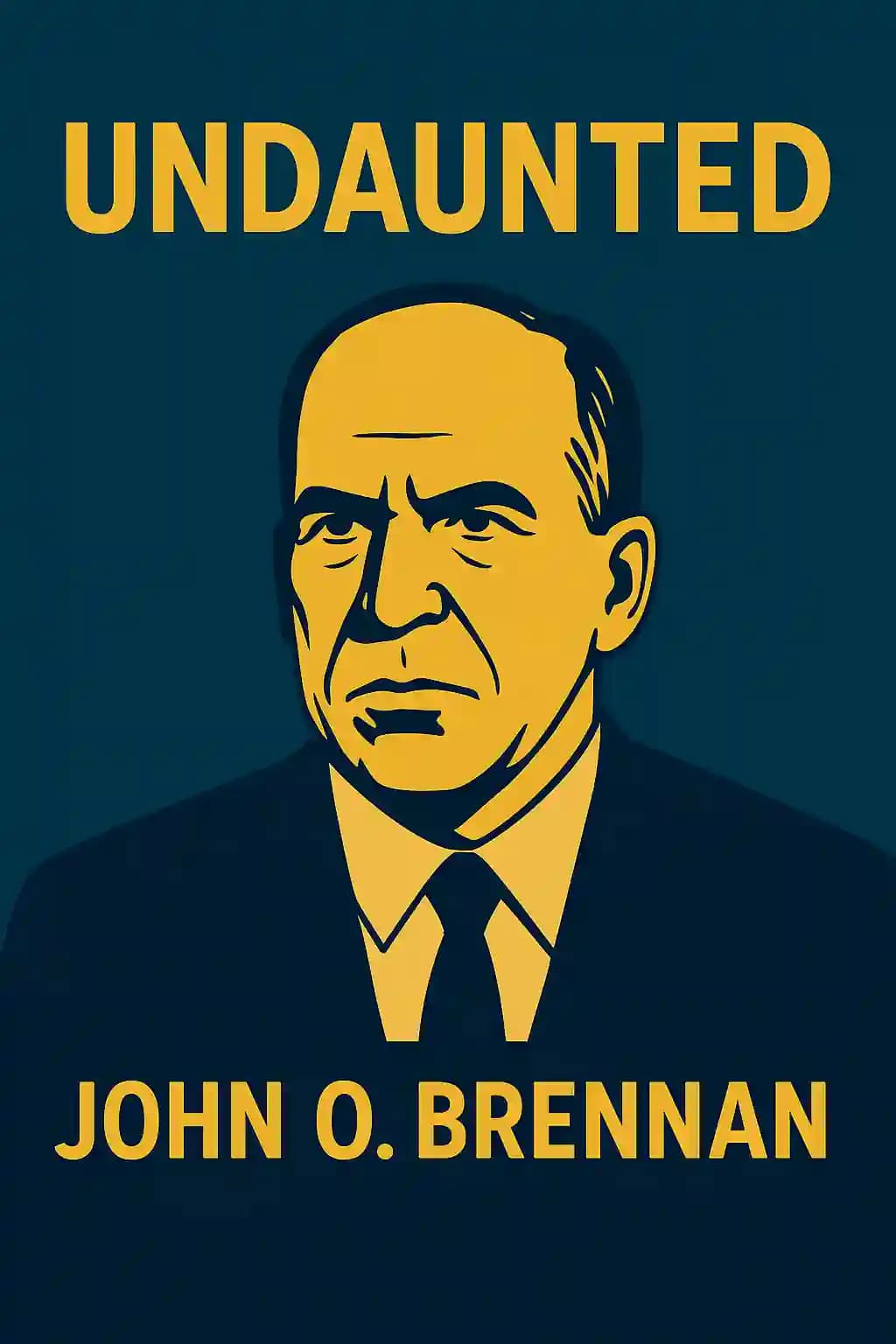
Despite facing derisive comments and threats, Brennan remained committed to speaking out against what he viewed as Trump's trampling of democracy. As he concluded his memoir: "I remain undaunted."
Throughout his thirty-three year career in national security, Brennan witnessed America's greatest strengths and most troubling weaknesses. From the blue-collar streets of New Jersey to the corridors of the White House, his journey embodied both the promise of American opportunity and the responsibility of speaking truth to power - even when that truth might be unwelcome. In an era of increasing political polarization, his story reminds us that intelligence work at its best transcends partisanship to protect the enduring values that define America.