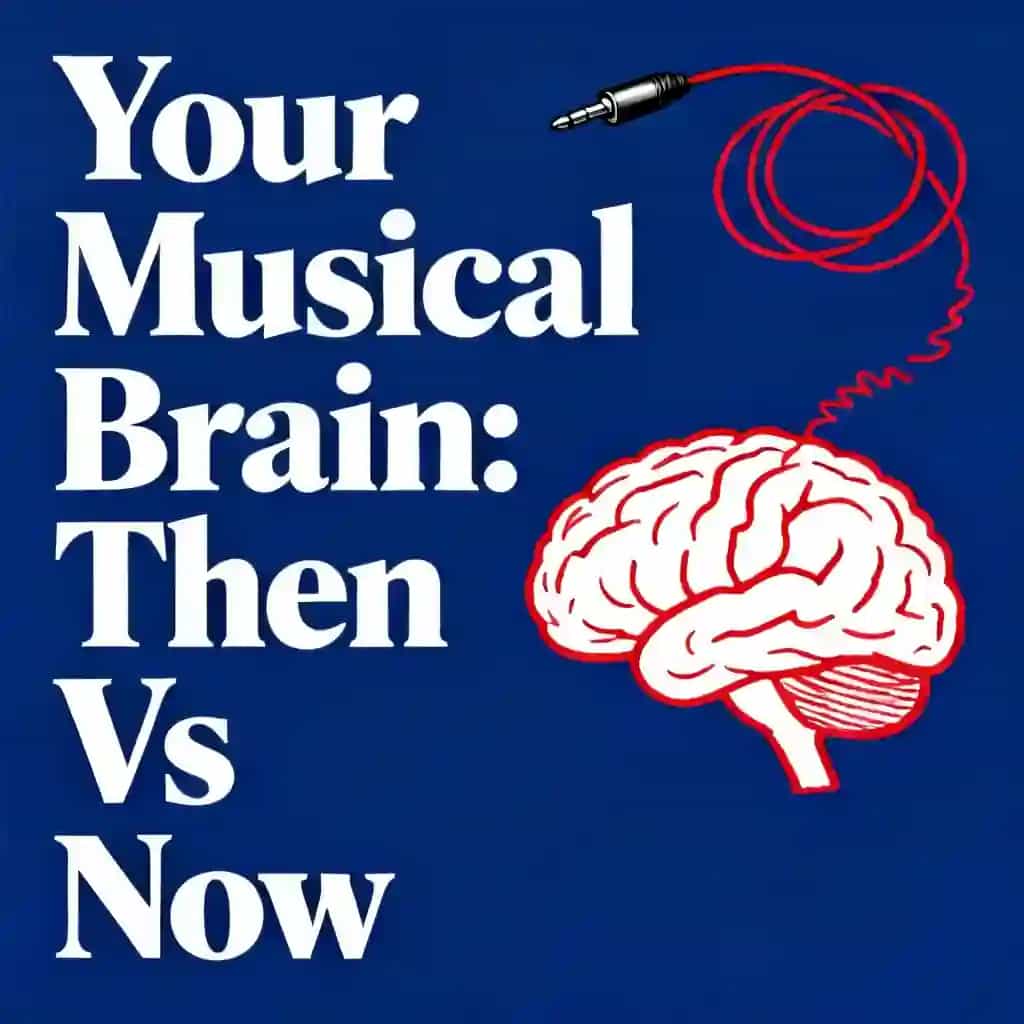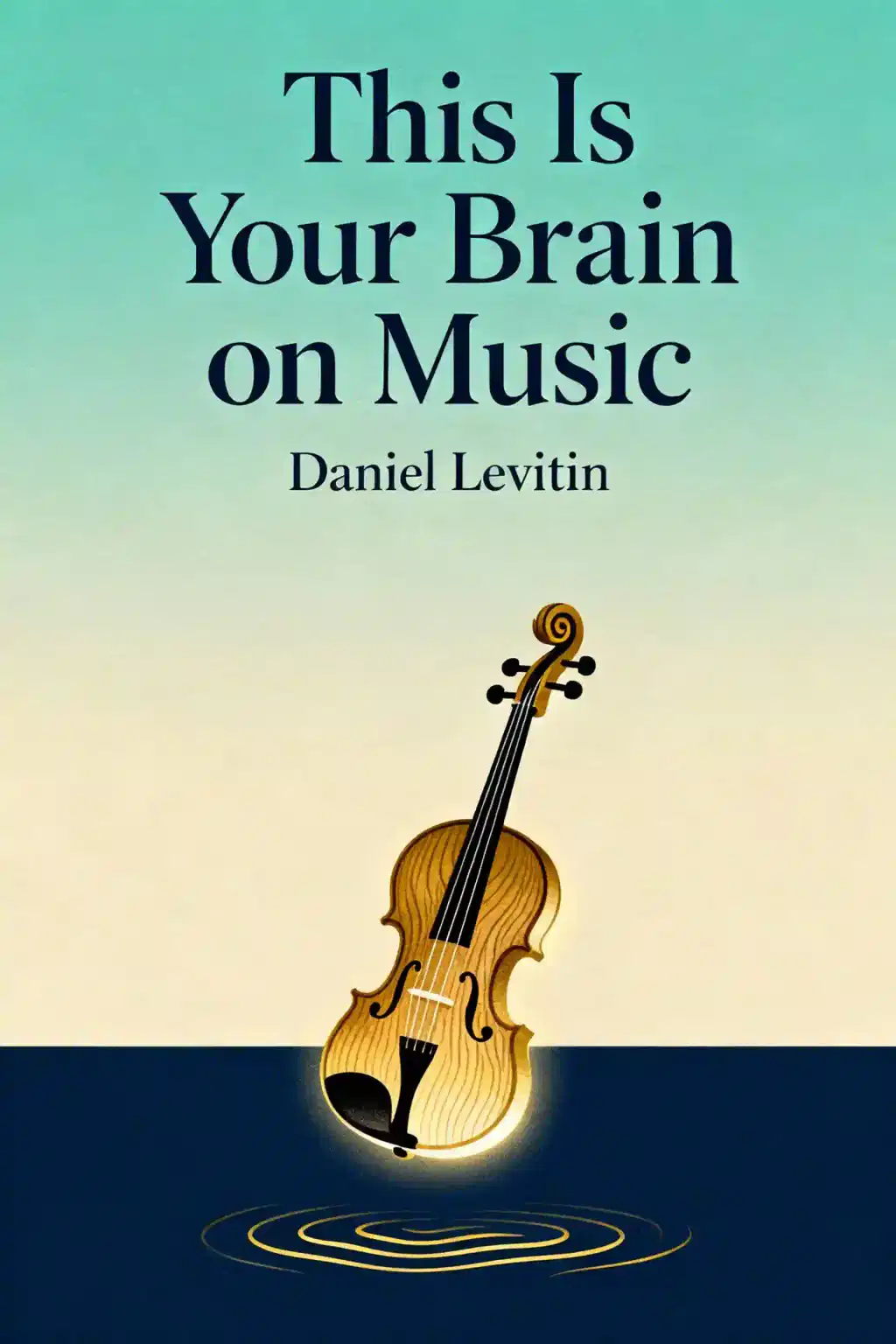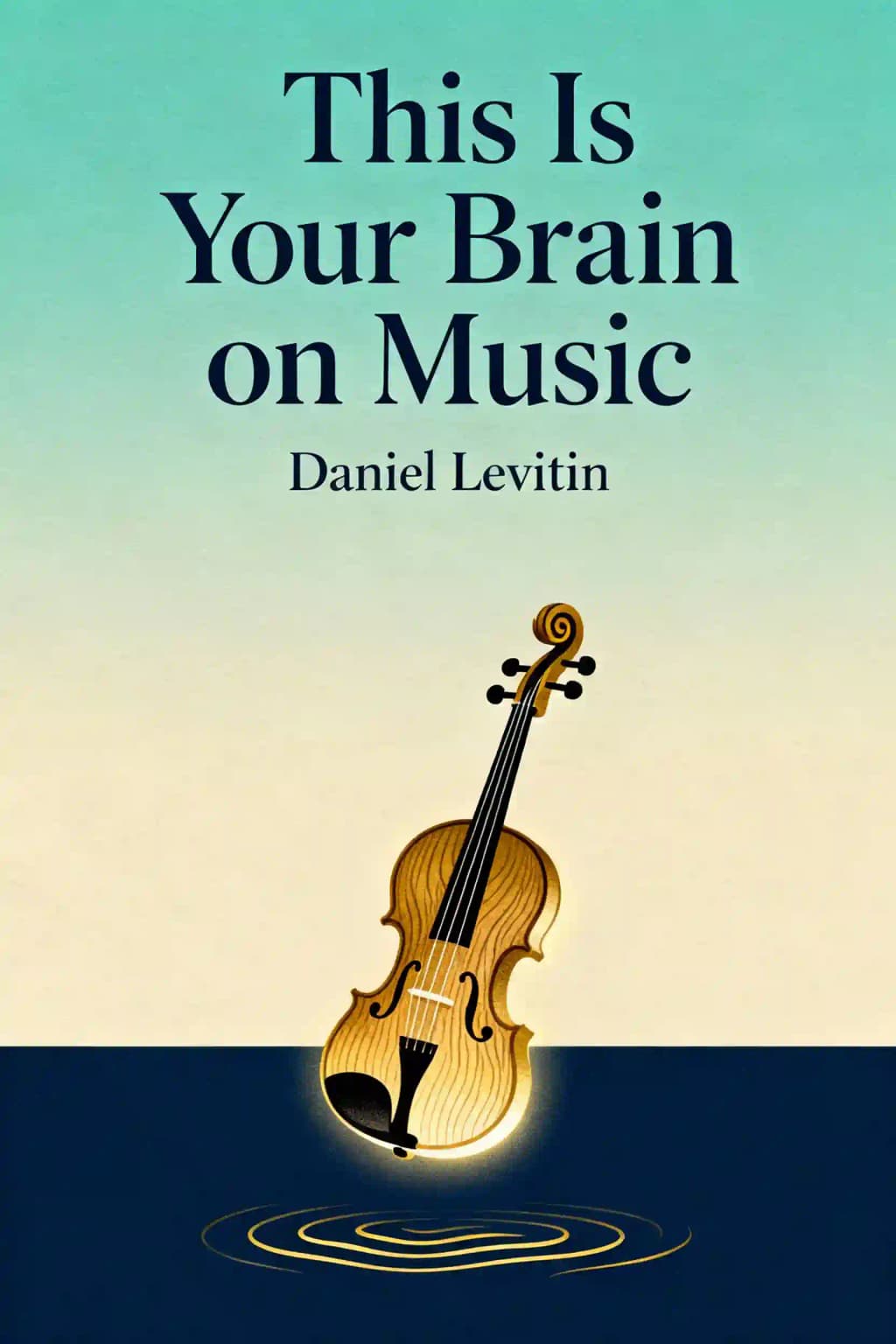
Ever wonder why music from your teen years hits differently? Neuroscientist Daniel Levitin reveals how our brains process rhythm, memory, and emotion. Recommended by Tai Lopez and using Miles Davis's "Kind of Blue" as evidence, this mind-bending exploration transforms how you'll experience every song.
Ressentez le livre à travers la voix de l'auteur
Transformez les connaissances en idées captivantes et riches en exemples
Capturez les idées clés en un éclair pour un apprentissage rapide
Profitez du livre de manière ludique et engageante
What happens when you hear your favorite song? More than you might imagine. Your brain lights up like a fireworks display, with nearly every region engaging in a complex dance of neural activity. The auditory cortex processes pitch and timbre, your cerebellum tracks rhythm, and your frontal lobes predict what comes next. This widespread activation explains why music affects us so profoundly-it's literally engaging your entire brain simultaneously. Music isn't just sound; it's organized sound that creates meaning through relationships between elements like pitch, rhythm, and timbre. As Miles Davis famously noted, music isn't just about the notes you play-it's about the spaces between them. This parallels Picasso's approach to visual art, where negative space carries as much meaning as painted areas. In music, silence and anticipation create tension and release, engaging our brains in a constant dance of expectation and surprise. Ever wonder how you instantly recognize a violin versus a piano playing the same note? The answer lies in timbre-the unique tonal quality that distinguishes one sound source from another. When an instrument plays a note, it doesn't produce just one frequency but a complex mixture of the fundamental tone plus higher frequencies called overtones. These overtones occur in specific mathematical relationships to the fundamental-usually as integer multiples-and their specific blend creates each instrument's characteristic sound. Our brains are remarkably adept at processing these harmonic relationships. Even if the fundamental frequency is missing, our auditory system will "fill in" the gap based on the pattern of overtones-demonstrating how actively our brains construct sound rather than passively receiving it. Fascinatingly, much of an instrument's identity resides in how the sound begins rather than how it sustains. Remove the initial attack phase-those first few milliseconds-and many instruments become nearly indistinguishable from one another.
Décomposez les idées clés de This Is Your Brain on Music en points faciles à comprendre pour découvrir comment les équipes innovantes créent, collaborent et grandissent.
Condensez This Is Your Brain on Music en indices de mémoire rapides mettant en évidence les principes clés de franchise, de travail d'équipe et de résilience créative.

Découvrez This Is Your Brain on Music à travers des récits vivants qui transforment les leçons d'innovation en moments mémorables et applicables.
Posez n'importe quelle question, choisissez la voix et co-créez des idées qui résonnent vraiment avec vous.

Cree par des anciens de Columbia University a San Francisco
"Instead of endless scrolling, I just hit play on BeFreed. It saves me so much time."
"I never knew where to start with nonfiction—BeFreed’s book lists turned into podcasts gave me a clear path."
"Perfect balance between learning and entertainment. Finished ‘Thinking, Fast and Slow’ on my commute this week."
"Crazy how much I learned while walking the dog. BeFreed = small habits → big gains."
"Reading used to feel like a chore. Now it’s just part of my lifestyle."
"Feels effortless compared to reading. I’ve finished 6 books this month already."
"BeFreed turned my guilty doomscrolling into something that feels productive and inspiring."
"BeFreed turned my commute into learning time. 20-min podcasts are perfect for finishing books I never had time for."
"BeFreed replaced my podcast queue. Imagine Spotify for books — that’s it. 🙌"
"It is great for me to learn something from the book without reading it."
"The themed book list podcasts help me connect ideas across authors—like a guided audio journey."
"Makes me feel smarter every time before going to work"
Cree par des anciens de Columbia University a San Francisco

Obtenez le resume de This Is Your Brain on Music en PDF ou EPUB gratuit. Imprimez-le ou lisez-le hors ligne a tout moment.