Chapitre 4
When Basketball Becomes Religion: The Deification of LeBron James
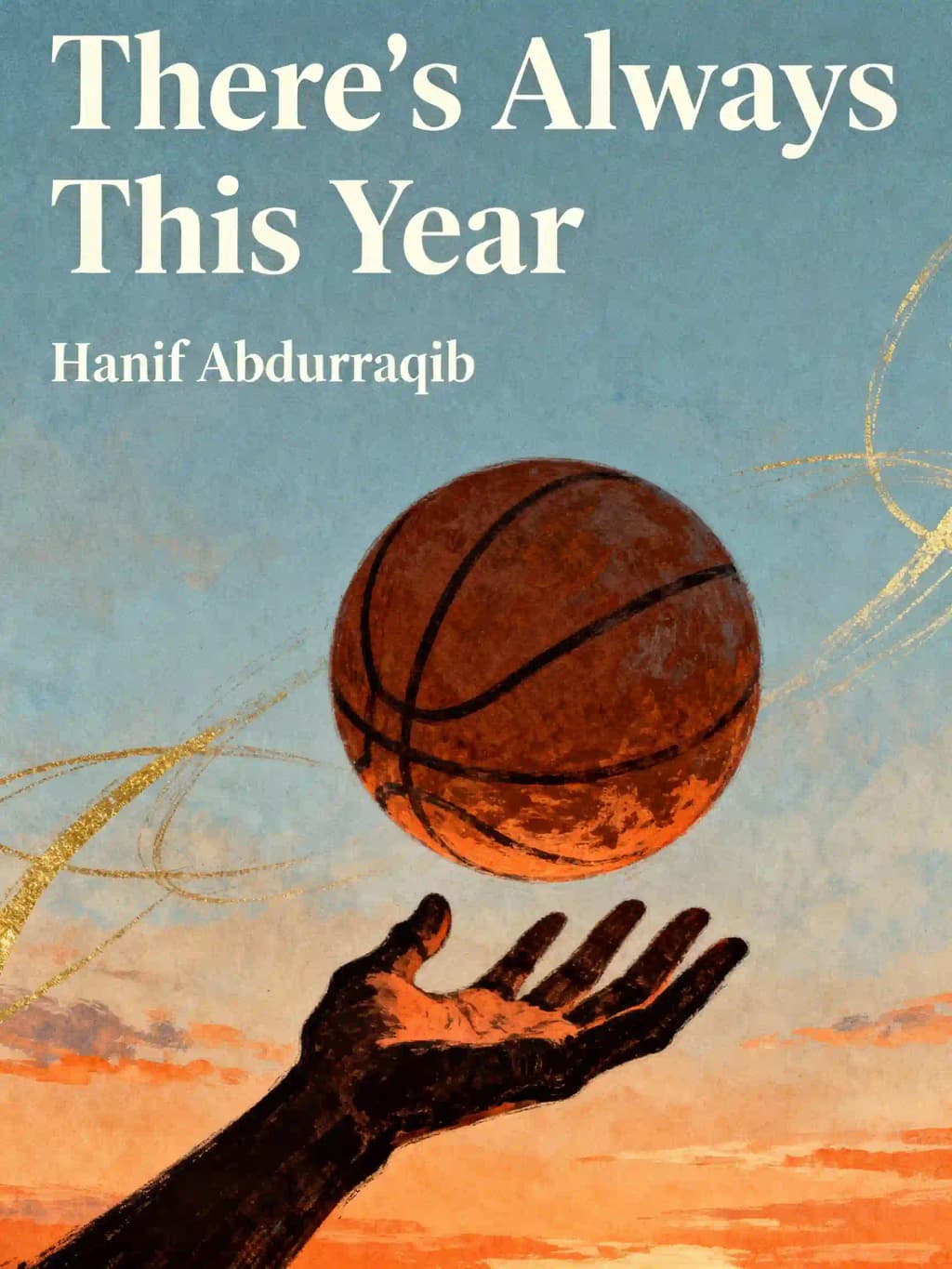
Humans make gods out of men because they need tangible deities. There's a distinction between begging and praying-both require belief in someone who might care despite having "their hands being full." While elders warned against "wasting God's time" with foolish prayers, the narrator confesses never knowing which prayers were worthy and which foolish, eventually believing all their prayers were foolish-even desperate ones bargaining with God during crises.
It's easier for some to "make gods out of men" who at least answer for their actions, creating "gods" of sports, finance, love, and war. The author prefers "savior" to "god," admitting to making saviors of the living when seeing "no path to being saved otherwise," while sometimes becoming someone's savior themselves but falling short.
Nike's 2006-2007 "We Are All Witnesses" campaign for LeBron James in Cleveland exemplified this deification. The campaign featured a skyline mural, black t-shirts with "WITNESS" across the chest, and commercials linking LeBron to religious imagery. One commercial showed LeBron dunking in slow motion, set to Marion Williams' gospel version of "I Shall Be Released," with the message "BELIEVE at nikebasketball.com." The campaign transcended mere marketing, creating a religious experience around LeBron: "a church in our arena, a church in our skyline... God very literally in the architecture."
The author connects biblical witnessing to Cleveland fans spreading the gospel of LeBron James. They describe how LeBron's pre-game ritual of clapping chalk-covered hands created "a small white cloud bursting from his fingers" that fans would mimic at home, creating "tributary clouds" throughout the city. This shared ritual showed how "a city has started to become your city. When it moves alongside you, a dance partner who you can never out-step."
Witnessing has limits when confronted with the unbelievable-the field from which miracles bloom. When we see something that defies belief, we search for greater meaning, something divine that might respond if we knock loudly enough, kneel humbly enough, or convince ourselves that the rustling outside isn't just wind but something speaking back.
Chapitre 5
The Heartbreak of Departure: LeBron's Decision and the City's Response
The emotional negotiation learned from soul songs began within Cleveland fans' hearts when LeBron's departure seemed imminent in 2010. Some, like the author's friend who pulled off his LeBron jersey after Game 6 and muttered "Well, fuck. That's it. He's gone," immediately accepted the inevitable. Others convinced themselves he'd never leave, dismissing his meetings with other teams as standard free agent procedure. Some believed reports that LeBron was trying to bring Chris Bosh to Cleveland rather than planning their joint departure.
And then came the pleading song. Of course there was a song-"We Are LeBron," a desperate riff on "We Are the World" featuring local news anchors, politicians (including Ohio's governor), TV personalities and others. The song walks the line between self-awareness and sincerity, with uneven vocal performances and an underlying message that echoes soul ballads: no one will love you like we do. Yes, the coasts are more beautiful, there's a shortcut to glory elsewhere, but our love should be enough.
In relationships between people and places, the outcome was inevitable. He was always going to leave. The politics of place aren't necessarily about staying but about knowing-knowing where to find shelter, where the jukebox plays four songs for a quarter when you're lovesick, where memories live at street level. Few things are more intimate than the history made when a person touches a place for decades, or when a place touches you back.
On the night of The Decision, men in Cleveland set LeBron jerseys ablaze, dousing them with lighter fluid as the numbers burned like separate countries collapsing. The small crowd grew, throwing more items onto the fire while shouting about betrayal. When a microphone was thrust into the face of the man responsible, his voice ragged from shouting, he declared: "He's dead to me."
What haunts the author most about this era of Ohio heartbreak is that everyone circled around those flames was white. Everyone having their smiles illuminated by the sharp orange pushing into the darkness was white. So many with microphones pushed into their faces spoke about death, about burial. The overwhelming sentiment wasn't wishing LeBron dead, but declaring him dead to them-he served a purpose, then did something displeasing, so he no longer existed.
Fire is a type of song too. The song that arrives after all the begging has exhausted itself and those who prayed and wept rise from their knees with newly idle hands. Fire is a whole symphony if you allow it to be-not just its snapping sounds, but its makers, the things that drag people to its urgent heat. People bring their hauntings down to the fire-not just trinkets of dismantled love but their broken hearts, the whole faulty machine.
Chapitre 6
Survival Beyond Basketball: The Criminal Justice System and Personal Redemption
In fall 2004, the author found himself handcuffed in a police car, though he doesn't remember exactly why. After enough minor offenses, jail becomes mundane, forgettable. But he remembers his first time, thinking it would be his last. Unlike those who feel relief when caught-finally free from looking over their shoulders-he believed he was too good at doing dirt to get caught. He was wrong, and terrible at lying, especially to himself.
His first night in a holding cell, his nervous breathing caught the attention of his cellmate, an older Black man who calmly said, "Don't worry, man. Whatever they do to you, they gonna do to all of us." He initially thought this meant "We all got your back," but realized the man meant "No one here suffers alone"-similar but distinctly different. Later at the workhouse, this man gave him a Bible without sharing his name, saying, "You might need this in the early days." Inside, he found the same words circled throughout: body, eyes, ears, man, people, sons, children, and sometimes, witness.
A jail cell becomes both kingdom and church, depending on your bid. In the workhouse with its dusty wooden floor and thin blue mattresses, he carved out his quiet kingdom in a corner by the scant library of Nicholas Sparks books-a space no one wanted. The unspoken rules: your territory depended on tenure or fights won. He kept to himself, shrinking into invisibility as hours crawled by.
At night, he'd pass hours shooting balled-up white socks toward the ceiling, imagining an orange rim with a fresh net-like the ones Scottwood's custodians hung in summer. He'd count shots-twenty, forty, eighty-until one dream became another. Meanwhile, his desperate companion whispered Bible verses, a photo of a woman at his feet. He never asked what the man prayed for. Some places, questions heal; others, they're weapons pushed into wounds.
The author reflects on the emotional dilemma of freedom after imprisonment-what it means to be seen by someone who knew you as a child, now through prison glass. When his brother visited him in jail in '03, it was the only time he'd seen him look afraid. He was doing the math on how his brother might survive because he knew he had been a child once-one who cried from nightmares in their top bunk, who disappeared into songs when the world closed in, who fought with him only because he loved him too much.
The jail's thick glass created infinite reflections where their faces merged, both afraid of the same thing, both carrying different shames. It's hard knowing you'll never be who you once were in their mind. After getting out, survival becomes about simplification: get a job, rent a room, eat once a day, write at night, stay out of trouble. Don't try to scale your mountain of shame all at once. Find something to lose yourself in, watch the seasons change through a window. Better to be a witness to the seasons than a victim of them.
Chapitre 7
The Block and The Championship: Redemption Through Victory
Game 7 of the 2016 NBA Finals was tied at 89-89 with two minutes left, after a scoring drought where neither team could put the ball in the basket. The fourth quarter had produced only 27 combined points, a stark contrast to the Cavs' 33 in the third quarter alone. In winning time, every movement becomes calculated, the game reduced to granular math. Both teams heaved up shots falling short, while the Warriors crowd chanted their familiar taunt, rattling Oracle Arena.
When Andre Iguodala grabbed a rebound and sprinted into a fast break with what looked like a two-on-one advantage, he and Stephen Curry did what you should do: exchanged quick passes to get the single defender off-balance. There was no time to look back, even if he had wanted to.
But LeBron was there from the start-as Iguodala grabbed the rebound, LeBron accelerated down the sideline, then accelerated beyond his already considerable speed when Iguodala got the bounce pass. The chasedown block is timing, math, and an audacious belief in self-a hope and prayer when nothing else was working. The game had turned from who could score to who would let the other team score.
The author watched Game 7 in a tiny Connecticut bar, far from home, living within those moments of silence after the block, before shouts of disbelief began-seconds wide enough to make a home in, where it was clear who was still throwing punches and who was just hanging on.
When Kyrie Irving started his slow dribble at 1:03, then faced Stephen Curry as the clock hit 59 seconds, the shot looked good from the moment it left his hand-that haphazard rainbow that sent the ball out of frame before its descent. It felt like destiny as it fell through the net, despite the prolonged "nooooo" from someone in the back of the room.
This story ends as you've seen it before-the way you might write it for a child still young enough to believe in luminous possibilities. It ends in a city adorned with flowers, golden smoke puffing into summer skies, all curses broken. From above, people become indistinguishable from streets, from grass, from trees. But the true ending comes in the aftermath of celebration, when confetti still blows through silent streets and homemade signs litter the pavement.
The author walked Cleveland's streets that night (which was technically morning) after the championship, searching to prolong the miracle alongside others ravenous for residual joy. Ball don't lie is one way of saying You get what you deserve. In basketball, when a player flails into a defender, draws an undeserved foul, then misses the free throw, someone inevitably shouts "Ball don't lie!"-cosmic justice delivered through the rim.
Chapitre 8
The Eternal Return: Memory, Community, and Belonging
The author contemplates how humans make gods out of men because they need tangible deities. They distinguish between begging and praying-both require belief in someone who might care despite having "their hands being full." While elders warned against "wasting God's time" with foolish prayers, the author confesses never knowing which prayers were worthy and which foolish, eventually believing all their prayers were foolish-even desperate ones bargaining with God during crises.
Even in our park's utopian universe, hierarchy existed. The full court sat at the center, while a single rusty rim without a net lorded over a small half-court near the back. This forgotten rim was where the kids played-younger siblings, cousins, friends of friends-all too small or not ready for the main court but still in love with the game enough to shoot toward that unkempt halo of rust. To pass time, they'd take turns beating an imaginary clock, someone throwing the ball in the air and counting down from five or ten, depending on the distance.
Against time, and nothing else. All that mattered was making the shot before your crew howled out the noise that was supposed to sound like the buzzer at the end of a game, but most often sounded like a flock of birds, strangled by clouds, and screeching on their descent to earth. The magic was sometimes in the shots that missed, inviting an orchestra of high-pitched, uneven laughter. The axis of success and pleasure is flimsy-some days I'd rather fail but be in awe of the rapturous joy I got to fold into with my crew, boys not yet big enough for the courts where games mattered.
One where we could be small and inconsequential gods, architects of the miraculous. Miss enough shots and when one falls, time slows, and bliss becomes elastic. We would hold our follow-throughs, our fingers extended and frozen toward the sky, though not like Mike. We loved MJ, but there were Michael Jordans on our block. Jordans four houses down, Jordans at the bus stop. This is all about the good fortune of who gets to make it out of somewhere and who doesn't. But let it be known that some of us never once dreamed of leaving.
When Brian Wilson completed the song "God Only Knows," he spoke of the impulse to fade the song out on a loop of the chorus, suggesting that it creates a sort of infinity spiral. A world where the song is still going on, always, somewhere. And you, the listener, are still in it, as you were at the time of listening. A dream with no exit. There is a universe, always, where you are joyfully encased in the endless return of chorus, and you might age there, but let's say you don't. Let's say you and the chorus both lock into a type of eternity.
And it is both beautiful and heartbreaking to imagine this, that we go on living while a past version of ourselves remains locked, peacefully, in a euphoric dream. What the author has been asking, the door he has been pawing at this entire time, is for a reimagining of eternity. A reversal, perhaps. Not that our happiest, freest selves are fastened to a dream, while we exit and return to the living world. But that our exit is where the dreaming begins, and our real, actual living is the place where we remain at our most joyous, time moving forward by small inches.
That I am still living in the kingdom of a ball descending from the sky while I stand on an unevenly painted foul line, waiting with my arms open. The friends I believe I will always love, forever counting down, a series of falling numbers, but the clock never reaching the end.
Chapitre 9
The Eternal Return: Home as Both Departure and Arrival
It was never the leaving that fascinated the author as a child, beside his father in the grass, looking at the darkening sky. The leaving was special enough-planes tilting upward and then gone. But it was the returning that gently opened his mouth into an ever-widening crescent. He was born into an obsession with returns. Something leaves you, but you'll get something back. Sometimes it's an even exchange-you kiss someone goodbye and they come back the same. Other times, you lose part of your childhood and something harder grows in its place. But a return is a return.
Sometimes, the sky would be calm, then a plane would emerge, first by its blinking red light, then its belly growing larger as it descended, low enough to see the windows. He thought this was magic-the same plane that vanished now returning to the people and place it loved.
People ask if he will ever leave. He tells them he has carved out a corner of these skies and they are his. He tells them he loves this city because he can move through it while looking up the entire time. He tells them even when he's gone, he is never gone. He is always returning from somewhere. He is always returning to someone. Some past self. Some future self. Some world that shifted, even slightly, while he was alive somewhere else.
To return, one must first survive, and there's no telling what was endured on the path to magic. Sometimes it's just one loss that echoes into pursuing the impossible. A boy bleeds but isn't destroyed. Decades later, another boy sits beside his father watching the sky, waiting for people to return.