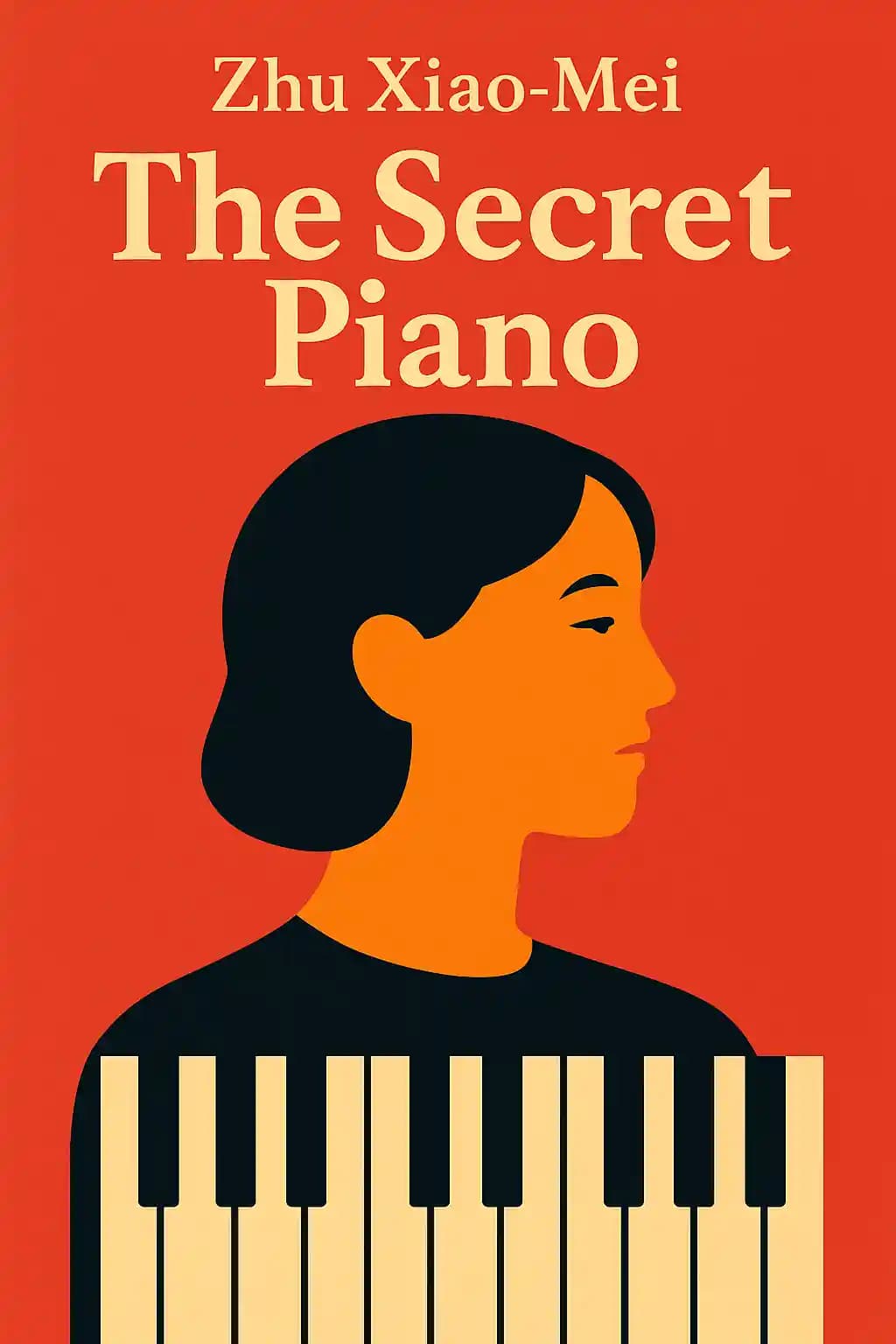
During Mao's Cultural Revolution, pianist Zhu Xiao-Mei survived labor camps by secretly playing Bach. Her memoir - structured like the 30 Goldberg Variations she mastered - reveals how music became her salvation when everything else was forbidden.
Ressentez le livre à travers la voix de l'auteur
Transformez les connaissances en idées captivantes et riches en exemples
Capturez les idées clés en un éclair pour un apprentissage rapide
Profitez du livre de manière ludique et engageante
Picture a three-year-old girl standing before an enormous wooden box that barely fit through the doorway of her family's cramped Beijing apartment. The piano sat like a forbidden shrine in a space where seven people shared just two rooms and one toilet with eleven families. She watched her mother dust it religiously each morning, adorning it with paper flowers like an ancestral altar, yet never playing a single note. Why keep such a monster if it remained forever silent? The answer was dangerous. In Mao's China of the 1950s, owning a piano meant carrying the stain of "bad class background"-a permanent mark against families who had once embraced Western culture. Zhu Xiao-Mei's grandfathers had built fortunes in furniture manufacturing and import-export, immersing themselves in European arts. Now, that heritage could destroy them. Her father remained unemployed, emotionally distant, following strict Confucian principles that demanded absolute obedience. Her mother supported the family teaching music while hiding her own bourgeois education. Everything shifted one stormy evening when her mother finally sat at the piano and played Schumann's "Reverie." The gentle notes awakened something profound in the child-perhaps inherited memory, perhaps universal truth. She knew immediately she wanted to master this singing creature. Her mother's teaching method made music magical: each note represented a family member, transforming abstract theory into living relationships. Under her father's harsh discipline, only piano playing brought peace-perhaps the music reminded him of his parents' better life before revolution consumed everything.
Décomposez les idées clés de The Secret Piano en points faciles à comprendre pour découvrir comment les équipes innovantes créent, collaborent et grandissent.
Condensez The Secret Piano en indices de mémoire rapides mettant en évidence les principes clés de franchise, de travail d'équipe et de résilience créative.

Découvrez The Secret Piano à travers des récits vivants qui transforment les leçons d'innovation en moments mémorables et applicables.
Posez n'importe quelle question, choisissez la voix et co-créez des idées qui résonnent vraiment avec vous.

Cree par des anciens de Columbia University a San Francisco
"Instead of endless scrolling, I just hit play on BeFreed. It saves me so much time."
"I never knew where to start with nonfiction—BeFreed’s book lists turned into podcasts gave me a clear path."
"Perfect balance between learning and entertainment. Finished ‘Thinking, Fast and Slow’ on my commute this week."
"Crazy how much I learned while walking the dog. BeFreed = small habits → big gains."
"Reading used to feel like a chore. Now it’s just part of my lifestyle."
"Feels effortless compared to reading. I’ve finished 6 books this month already."
"BeFreed turned my guilty doomscrolling into something that feels productive and inspiring."
"BeFreed turned my commute into learning time. 20-min podcasts are perfect for finishing books I never had time for."
"BeFreed replaced my podcast queue. Imagine Spotify for books — that’s it. 🙌"
"It is great for me to learn something from the book without reading it."
"The themed book list podcasts help me connect ideas across authors—like a guided audio journey."
"Makes me feel smarter every time before going to work"
Cree par des anciens de Columbia University a San Francisco

Obtenez le resume de The Secret Piano en PDF ou EPUB gratuit. Imprimez-le ou lisez-le hors ligne a tout moment.