Chapitre 1
Unraveling the Rose Code: A Tale of Friendship, Betrayal, and Wartime Secrets
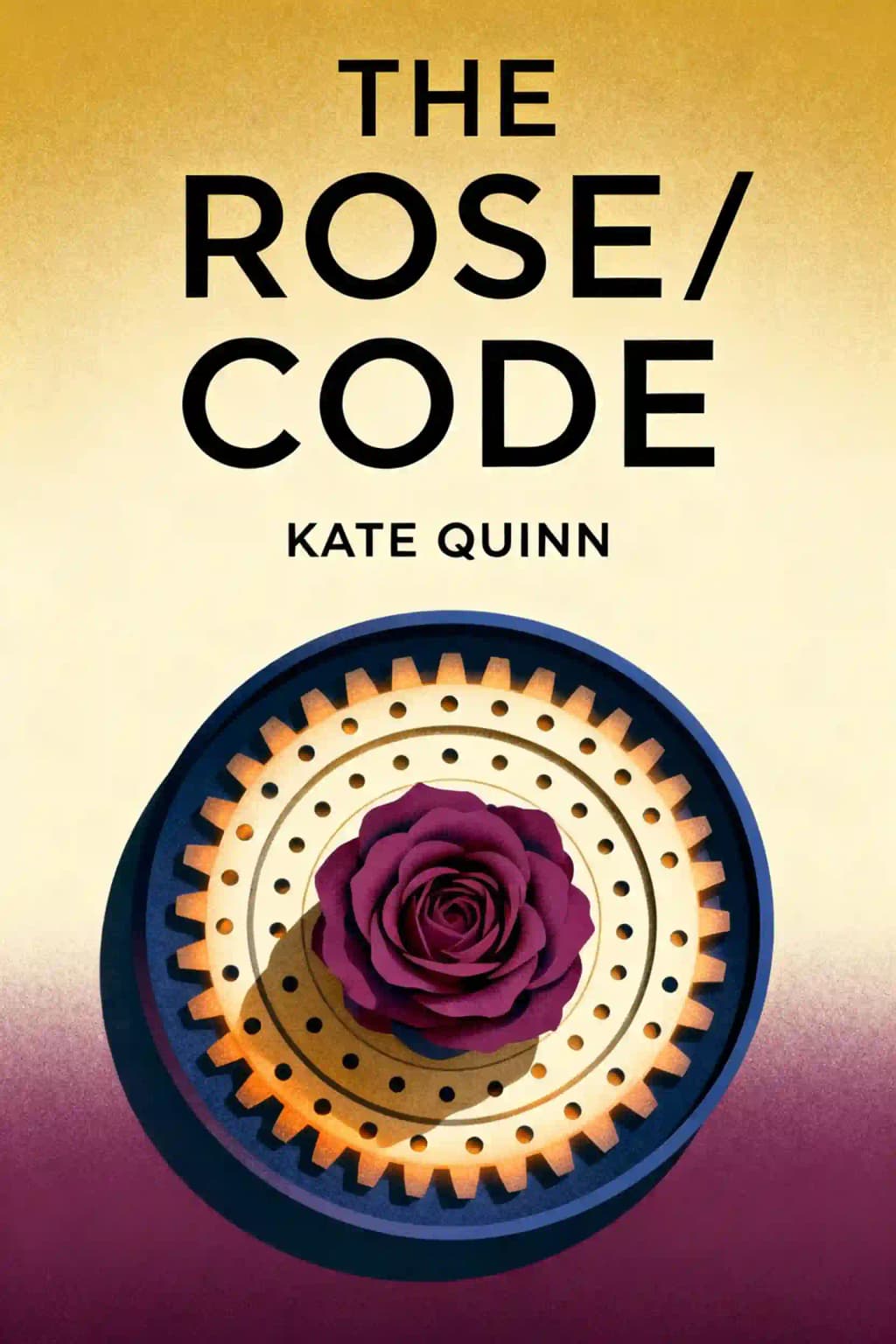
The year is 1947, and Princess Elizabeth's royal wedding to Lieutenant Philip Mountbatten approaches. While London buzzes with excitement, three women are entangled in a desperate race against time, bound by secrets from their past at Bletchley Park-Britain's top-secret codebreaking facility during World War II. Kate Quinn's "The Rose Code" has captivated readers worldwide since its publication, becoming a New York Times bestseller and earning praise from critics for its meticulous historical research and compelling characters. The novel has particularly resonated with readers fascinated by the previously untold stories of women codebreakers, whose contributions remained classified for decades after the war ended.
Chapitre 2
Three Unlikely Friends United by War
In 1939, as Hitler's forces sweep across Europe, three extraordinarily different women arrive at Bletchley Park. Osla Kendall is a vivacious debutante with royal connections and a perfect Mayfair accent, determined to prove she's more than just a pretty face. Though Canadian-born and privileged, Osla craves purpose beyond society parties and has finagled her way back to England from exile in Canada to contribute to the war effort. When we first meet her, she's drilling Dural sheets for Hurricane fighter planes at the Hawker Siddeley factory, refusing to join the WRNS (Women's Royal Naval Service) like other society girls.
Mab Churt couldn't be more different. A working-class East Londoner with "empress eyebrows" and perfect red lipstick, Mab has methodically clawed her way up from poverty. Having left school at fourteen to work, she's moved from grocery clerk to Selfridges counter girl and recently completed a secretarial course. She studies society magazines like instruction manuals, determined to secure a husband who can provide the stability she never had. Behind her cool exterior lies a secret: the four-year-old sister she's raising is actually her daughter, conceived after a traumatic assault when she was seventeen.
Then there's Beth Finch, a timid vicar's daughter with an extraordinary mind trapped under the thumb of her domineering mother. Painfully shy and socially awkward, Beth has never been allowed to develop independence, spending her days solving crossword puzzles and enduring her mother's biblical punishments. Yet beneath her meek exterior lies a brilliant pattern-recognition ability that will make her one of Bletchley's most valuable assets.
These three women, billeted together in the Finches' home, form an unlikely friendship that will be tested by war, love, and ultimately betrayal.
Chapitre 3
Inside the Park: Breaking the Unbreakable Code
Bletchley Park-or "BP" as insiders call it-operates like a strange, secret universe behind its barbed-wire fences. The facility houses Britain's Government Code and Cipher School, tasked with intercepting and decrypting enemy communications. At the heart of their challenge is the Enigma machine-a portable cipher device that scrambles German military orders into nonsense for transmission via Morse code. The Germans believe Enigma is unbreakable, with astronomical odds against cracking its code: 150 million million million possible starting positions that change daily.
Quinn masterfully demystifies the complex work of codebreaking through her characters' experiences. Osla, with her fluent German, becomes a translator in Hut 4's naval section, transforming decrypted messages into actionable intelligence. Mab works with the massive electromechanical "bombe" machines designed by Alan Turing, which help eliminate impossible Enigma settings. And Beth, initially hired as a clerk despite her mother's objections, discovers her extraordinary talent for breaking codes under the mentorship of eccentric genius Dilly Knox.
The novel vividly portrays the unique culture that developed at Bletchley Park-a place where conventional social barriers dissolved in service to a higher purpose. Academics work alongside debutantes, chess champions collaborate with factory workers, and women find unprecedented opportunities to use their intellects. The characters form a literary society nicknamed "the Mad Hatters," produce a satirical newsletter called "Bletchley Bletherings," and dance away their rare free evenings in Bedford or London, all while maintaining absolute secrecy about their work.
The pressure is immense. Beth experiences a breakthrough moment when she cracks the Italian naval Enigma before the Battle of Matapan, allowing the British fleet to ambush Italian warships. Later, she joins Knox's "Illicit Services Knox" team (nicknamed "the Harem") working on the four-wheel Abwehr Enigma used by German intelligence-a more complex challenge that consumes her completely. As Beth observes, "It was an endless slog of dead ends," yet the codebreakers persevere, knowing lives depend on their work.
Chapitre 4
Love in the Time of War
Against the backdrop of global conflict, each woman finds and loses love in different ways. Osla begins a passionate romance with a young naval officer-none other than Prince Philip of Greece. Their relationship blossoms despite the complications of his royal connections and her classified work. Philip confides his painful family history to Osla, including his mother's mental breakdown and institutionalization. Their stolen moments together represent for Osla the possibility of having both meaningful work and a loving home.
Mab pursues a more calculated path to matrimony, setting her sights on Francis Gray, a Foreign Office official and published war poet. Their courtship is unconventional-Francis is taciturn in person but writes eloquent, vulnerable letters. After just six dates, they marry hastily before he departs on assignment. Through Francis, Mab finds unexpected emotional connection rather than just the security she sought. When he discovers her secret about Lucy's parentage, his acceptance heals something broken inside her.
Beth's romance is the most complicated. She develops feelings for Harry Zarb, a brilliant mathematician with a Maltese background who works in Hut 8 on naval Enigma. The problem? Harry is married with a disabled son. When Beth learns that Harry and his wife Sheila have an arrangement-remaining married for their son's sake while pursuing other relationships-she must decide whether such an unconventional arrangement could work for her. Their connection is intellectual as much as physical; they discuss codebreaking techniques while dancing and find solace in each other's brilliant minds.
These wartime romances unfold against a backdrop of urgency and uncertainty. Characters seize happiness where they can, knowing tomorrow is never guaranteed. As Mab observes, war brings "hasty weddings and opportunities for ambitious girls." The novel doesn't shy away from the physical aspects of these relationships, portraying them with sensitivity and acknowledging the era's shifting sexual mores during wartime.
Chapitre 5
The Weight of Secrecy
"The Rose Code" powerfully explores the psychological burden of keeping secrets - both professional and personal. Everyone at Bletchley Park signs the Official Secrets Act, forbidden from revealing their work even to spouses or family members under threat of prosecution for treason. This creates a strange double life: codebreakers perform world-changing work by day, breaking enemy ciphers that could determine the outcome of battles and save thousands of lives, then return home to families who believe they're doing routine clerical jobs filing papers or typing letters. The contrast between the magnitude of their real work and the mundane cover story creates an almost unbearable tension.
This enforced secrecy becomes particularly painful during moments of crisis. When Beth decodes a message about an upcoming air raid on Coventry, she faces an impossible ethical dilemma that haunts her throughout the narrative. Warning her friends might save their lives but would compromise national security and potentially reveal to Germans that their codes had been broken - potentially costing thousands more lives later. The weight of this knowledge physically manifests in sleepless nights and anxiety attacks as she watches her friends continue their normal routines, unaware of the impending danger. Her decision to remain silent has devastating consequences when Mab's husband Francis and daughter Lucy are killed in the raid, a loss that fractures their friendship and leaves Beth questioning whether she made the right choice.
The novel also explores how secrets corrode relationships on multiple levels. Osla can't explain to Philip why she suddenly stops writing to him after intelligence officers question her loyalty due to her German heritage and social connections. Her silence is interpreted as rejection, destroying a promising romance. Mab hides her daughter's true parentage from everyone except Francis, carrying the burden of her past and living in constant fear of discovery. Beth conceals her relationship with Harry from most colleagues, forcing them to maintain a professional distance at work while secretly meeting in London on weekends. These personal secrets mirror the larger classified work they perform, creating invisible walls between characters even as their shared experiences bring them closer together.
Perhaps most poignantly, the secrecy continues long after the war ends. The Bletchley Park veterans are forbidden from discussing their contributions for decades, their achievements unacknowledged while others receive public recognition for the Allied victory. Many struggle with post-traumatic stress disorder without being able to explain its true cause. As Quinn writes in the epilogue, "Some kept their oath until death, taking their secrets to the grave." This enforced silence denies them recognition and makes processing their wartime experiences more difficult, leaving psychological wounds that never fully heal. The impact extends to their families, who only learn the truth about their loved ones' wartime service years later, sometimes after their deaths, creating a legacy of unspoken stories and unexplained behaviors that echo through generations.
Chapitre 6
Betrayal and Its Aftermath
The novel's central mystery revolves around Beth's imprisonment in Clockwell Sanitarium and her desperate message to her former friends: "Get me out of here. You owe me." The story alternates between 1947, with Beth facing an imminent lobotomy in the asylum, and the wartime events that led to her confinement.
The betrayal unfolds gradually. In 1944, Beth discovers evidence of a Soviet spy at Bletchley Park-someone passing information to "Uncle Joe" Stalin. Before she can report her findings, she's drugged, declared mentally unstable, and committed to Clockwell. For three and a half years, she endures the dehumanizing conditions of the asylum, maintaining her sanity by secretly avoiding medication and planning her escape.
When Osla and Mab finally respond to her coded plea for help, they must overcome their own bitter history. Their friendship fractured on D-Day when Mab learned Beth had known about the Coventry raid that killed her family. Osla, meanwhile, has become engaged to Giles Talbot-whom Beth now identifies as the traitor who had her committed.
The women's reconciliation isn't easy or complete. As Mab admits, there are things she might never fully forgive. Yet their shared purpose-exposing Giles and saving Beth from lobotomy-allows them to work together again. They reassemble former Bletchley colleagues for "one last absolutely topping Tea Party" to break what Beth calls the "Rose Code"-the cipher protecting messages that will prove Giles's guilt.
This final codebreaking effort symbolizes how their wartime bonds transcend personal grievances. Despite everything, they still trust each other's abilities and integrity. When they succeed in decrypting the evidence against Giles, their victory represents not just justice for Beth but vindication of the principles that guided their work at Bletchley Park.
Chapitre 7
Women's Changing Roles in Wartime Britain
Throughout the novel, Quinn meticulously chronicles how World War II catalyzed unprecedented transformations in women's social and professional opportunities. Before the war, Mab's aspirations were severely constrained by her working-class East End background, limited to shop work or domestic service. Osla, despite her privileged education and social connections, found herself dismissed as "just a silly deb" - useful only for her marriage prospects. Beth remained imprisoned in her parents' suffocating household, her mathematical talents wasted on household accounts.
Bletchley Park emerges as a revolutionary space where traditional gender barriers temporarily dissolve. The war's desperate need for intelligence creates opportunities for women to demonstrate their capabilities in cryptography, linguistics, and analysis. When Beth achieves her breakthrough in breaking a particularly complex cipher, Dilly Knox's response illuminates the period's evolving attitudes. He explicitly prefers women for his codebreaking team, noting their superior attention to detail, collaborative nature, and ability to listen without ego - qualities he finds lacking in his male colleagues. Throughout the facility, women perform vital roles at every stage of the intelligence process: intercepting enemy signals as "Y Service" operators, translating decrypted messages in multiple languages, analyzing military movements, and maintaining the complex card index systems crucial for cross-referencing information.
However, these newfound opportunities operate within strict limitations. Women at Bletchley face a rigid pay structure that consistently values their work below male counterparts - even when performing identical tasks. The senior management remains overwhelmingly male, with few women advancing beyond middle management positions. The specter of postwar regression looms large: Osla's supervisor at the Tatler casually assumes she'll abandon her career upon marriage, while Beth grapples with anxiety about returning to dependency once her specialized skills become redundant.
Class distinctions profoundly shape each woman's wartime experience. Osla's upper-class background provides social ease and valuable connections, yet paradoxically leads colleagues to question her intellectual capabilities - assuming she's merely dabbling until marriage. Mab embarks on a determined self-improvement campaign, taking elocution lessons and devouring literature to overcome her working-class accent and background. Her efforts to advance require constant proof of worthiness in ways her middle-class colleagues never face. Beth's middle-class but sheltered upbringing creates social awkwardness while leaving her intellectual development remarkably free from conventional limitations on women's mathematical abilities.
Through these three distinct perspectives, Quinn crafts a nuanced portrait of a pivotal moment in women's history - when wartime necessity briefly overcame traditional barriers, allowing women to prove their capabilities in fields previously closed to them. Yet the novel also honestly portrays the impermanence of this progress, as many of these doors begin closing in the conservative postwar period, forcing women to fight to maintain their professional gains or retreat to traditional domestic roles. The lasting impact of this period resonates through subsequent decades of women's struggle for workplace equality.
Chapitre 8
The Psychological Toll of War
"The Rose Code" offers an unflinching examination of war's profound psychological impact, depicting how trauma, grief, and moral injury fundamentally reshape personalities and relationships. The narrative weaves together multiple threads of psychological damage, from acute battlefield trauma to the subtle erosion of civilian resilience under constant threat.
Mab's psychological collapse following the deaths of Francis and Lucy serves as a devastating portrait of compound grief. For nearly a year, she maintains a facade of functionality, protected by a shell of emotional numbness that allows her to continue her work at Bletchley Park. When this defensive shield finally shatters during a routine demonstration of a bombe machine - triggered by its rhythmic sounds reminiscent of air raid sirens - she experiences a complete breakdown. Her recovery proves both gradual and incomplete, marked by night terrors, emotional volatility, and an increasing dependence on alcohol. Even her second marriage to John bears the scars of her trauma, as she struggles to fully trust or connect, always anticipating another loss.
Francis Gray embodies the enduring legacy of World War I trauma. Enlisted at sixteen, his experiences in the trenches - witnessing the deaths of fellow soldiers, enduring chemical warfare, and surviving the Battle of the Somme - left permanent psychological scars. His description of viewing life through "a gray veil" captures the persistent emotional numbness characteristic of what would now be recognized as PTSD. His symptoms manifest in chronic insomnia, an inability to form close relationships, and sudden episodes of disassociation, particularly during air raids that trigger memories of artillery bombardment.
Beth's institutionalization at Clockwell Sanitarium exposes the darker aspects of wartime psychiatric practice and social control. The asylum's "progressive treatment" regime includes forced sedation, isolation, and the threat of lobotomy - all justified under the guise of medical necessity. Her experience reflects the broader societal tendency to pathologize female intelligence and independence, particularly during wartime when conformity was prized. The sanitarium's methods, from sleep deprivation to psychological manipulation, mirror the very warfare techniques being decoded at Bletchley Park.
The concept of moral injury emerges as a central theme, affecting even those who never see direct combat. Beth's forced complicity in the Coventry bombing - knowing the attack was coming but being unable to warn anyone - creates a deep-seated guilt that manifests in recurring nightmares and social withdrawal. Osla's momentary lapse in watching Lucy during the air raid, though brief, generates a crushing sense of responsibility that affects her subsequent relationships and decision-making. These moral wounds prove particularly insidious because they challenge the characters' fundamental sense of right and wrong, creating internal conflicts that persist long after the war's end.
The novel also explores how wartime trauma affects interpersonal relationships, showing how shared experiences of loss and moral compromise both bond and divide the characters. The code-breakers' inability to discuss their work, even with family, creates additional psychological strain, forcing them to process their experiences in isolation.
Chapitre 9
Redemption Through Truth
As the novel reaches its dramatic climax in November 1947, the three women must confront both haunting past betrayals and immediate life-threatening dangers. Beth faces a terrifying fate-imminent lobotomy at a mental institution where she's been wrongfully committed. Osla, devastated and disillusioned, discovers that her fiance Giles-whom she's defended for years-is actually a Soviet spy. Meanwhile, Mab grapples with an agonizing choice: whether to risk her hard-won middle-class security and new marriage to help Beth-the friend who kept silent about Coventry and inadvertently allowed Mab's first husband to die in the bombing.
Their path to redemption emerges through layers of truth-telling-both to each other and to British authorities. When they finally discuss Beth's devastating decision about Coventry openly, they can acknowledge the impossible ethical dilemma she faced: save thousands of civilians and reveal that Britain had broken Enigma, potentially prolonging the war, or maintain the secret and let innocent people die. When Beth admits her deep-seated fear that Harry, her former love, might have been the traitor, her friends help her examine the evidence objectively, leading to the painful but necessary realization of Giles's guilt. When Mab finally confesses to her second husband about her first marriage and the daughter she lost to illness, she creates space for genuine emotional intimacy in her current relationship.
The final codebreaking effort becomes a powerful symbol of this commitment to truth. Just as they once decoded German messages to reveal enemy plans during the war, they now work frantically to decrypt Soviet communications that will expose Giles's treachery. Their success depends on rebuilding trust with former colleagues at Bletchley Park-particularly Lucy and Harry-and learning to rely on each other despite years of misunderstandings and buried resentments. The process forces them to confront their own biases and assumptions about loyalty, betrayal, and forgiveness.
The novel's conclusion deliberately avoids neat resolution. The women don't achieve perfect reconciliation or completely heal their emotional wounds. Instead, they reach a nuanced, fragile understanding based on their shared history at Bletchley Park and newfound mutual respect. As they stand in the swirling snow at their old workplace, shouting the BP poem together one last time-"Are you happy in your work?"-they honor both the bonds that united them and the wartime pressures that drove them apart. Their laughter echoing through the abandoned huts suggests that while some codes may never be fully broken-particularly the complexities of human relationships and moral choices in wartime-the effort to understand and forgive remains profoundly worthwhile. The novel ends with this bittersweet acknowledgment that redemption comes not through perfect resolution, but through the courage to face difficult truths and choose connection over silence.
Chapitre 10
Legacy of the Silent Heroes
The epilogue jumps forward to 2014, when the Duchess of Cambridge reopens Bletchley Park after extensive restoration. This significant time-shift poignantly emphasizes how long the codebreakers' contributions remained hidden from public view. Many veterans - brilliant mathematicians, linguists, and puzzle-solvers - lived entire lives without recognition, some passing away before their achievements could be acknowledged. The restoration itself becomes a metaphor for the gradual unveiling of their story, as each brick and beam brings to light another piece of hidden history.
Quinn masterfully illustrates how differently each character navigated the weight of their secrets across the decades. Mab emerges as the most openly embracing of declassification, finding purpose in demonstrating the intricate workings of the bombe machine to wide-eyed visitors. Her detailed explanations of the mechanical processes serve both as education and catharsis, allowing her to finally share the technical brilliance she witnessed. Osla takes a more measured approach, carefully crafting her memoirs but insisting they remain sealed until after her death - a compromise between her sense of duty and her desire for truth-telling. Beth, even at 98, maintains an unwavering silence about her wartime activities, treating her oath as sacrosanct. Her steadfast refusal becomes its own form of quiet dignity.
These varied responses to secrecy profoundly reflect each woman's character and wartime experiences. For Beth, whose loyalty was brutally questioned and whose integrity was attacked, maintaining her oath becomes an act of defiance - a way of reclaiming control over her narrative when so much was taken from her. Mab's openness serves as a tribute to Francis's memory, transforming her personal loss into public education. Her tours of Bletchley Park become a way of ensuring his sacrifice, and those of countless others, aren't forgotten. Osla's careful balance of delayed disclosure reflects both her sophisticated understanding of diplomatic sensitivities and her aristocratic sense of proper timing.
The novel celebrates not only the technical achievements - the broken codes, the intercepted messages, the strategic intelligence - but the profound moral courage required of these individuals. They faced devastating ethical dilemmas daily: knowing about impending attacks but being unable to warn every target without revealing their broken codes, carrying the weight of information that could save lives but must remain secret, watching loved ones suffer while holding vital intelligence close. Their work shortened World War II by an estimated two to four years, potentially saving millions of lives, yet they spent decades unable to explain even to family members where they had worked or what they had accomplished.
Through meticulously researched historical detail and deeply realized characters, "The Rose Code" ensures these "silent heroes" finally receive their due recognition. As Quinn writes in her epilogue: "Bletchley Park's walls have been renovated. If only they could speak... But some codes will never be broken." The novel itself becomes an act of decryption, breaking decades of silence to give voice to the extraordinary women whose intelligence, dedication, and sacrifice helped win a war from behind closed doors - women who proved that sometimes the quietest heroes make the loudest impact on history.