Chapitre 1
A World Divided by Dragons, United by Destiny
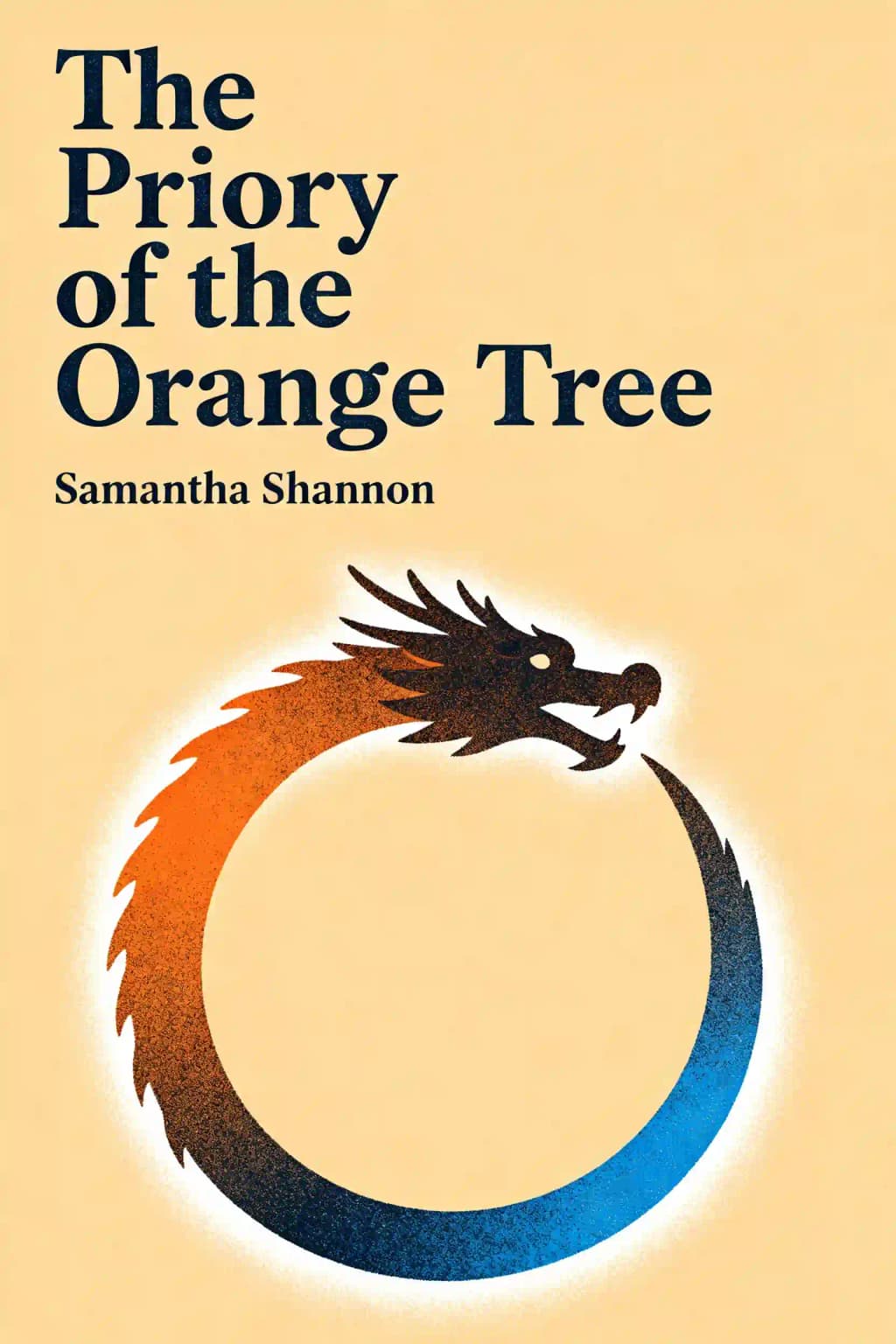
The Priory of the Orange Tree has captivated readers since its 2019 release, earning praise from fantasy lovers and critics alike for its feminist reimagining of dragon mythology. This epic standalone fantasy from Samantha Shannon, better known for her Bone Season series, has been hailed as "the Feminist Game of Thrones" by publications like O Magazine. The 800+ page tome has become a TikTok sensation, with #PrioryOfTheOrangeTree amassing over 20 million views as readers share their emotional journeys through Shannon's intricately crafted world. What makes this book particularly remarkable is how it subverts traditional fantasy tropes while creating a rich tapestry of cultures inspired by real-world mythologies from East Asia to medieval Europe, all woven together through the universal symbol of dragons-creatures that both divide and ultimately unite this sprawling world.
Chapitre 2
Four Lives Across a Divided World
Shannon's epic fantasy unfolds through four main characters whose lives initially seem disconnected but gradually intertwine as ancient threats resurface. In the isolated island nation of Seiiki, young Tane trains relentlessly to become a dragonrider, a prestigious position that would elevate her from her humble origins. Her ambitions are threatened when she encounters a foreigner washed ashore-a crime that could end her dreams if reported, yet ignoring it might spread the dreaded "red sickness." Her fateful decision to help smuggle the outsider to Orisima sets in motion consequences that will echo across continents.
In the West, Queen Sabran IX of Inys faces mounting pressure to marry and produce an heir, as her bloodline allegedly keeps the monstrous Nameless One imprisoned. Unknown to her, Ead Duryan, a lady-in-waiting in her court, secretly belongs to the Priory of the Orange Tree-a hidden order of women mages who protect the South from draconic power. Ead uses forbidden magic to protect Sabran from assassination attempts while concealing her true identity and purpose.
Lord Arteloth Beck (Loth), Sabran's childhood friend, is suddenly sent on a "diplomatic mission" to the dangerous Draconic Kingdom of Yscalin-actually an exile orchestrated by the scheming Lord Seyton Combe to separate him from the queen. His journey exposes him to truths about the world that challenge everything he was raised to believe.
Meanwhile, Doctor Niclays Roos, a bitter Mentish alchemist exiled to the East after failing to create an elixir of immortality for Queen Sabran, becomes entangled with pirates seeking eternal life. His bitterness toward the Berethnet court is complicated by his desire to return home and his unexpected role in the coming conflict.
These four perspectives offer windows into different corners of Shannon's world, where Eastern dragons of water and air are revered as gods, while Western "wyrms" of fire and earth are feared as demons. This fundamental religious and cultural divide has kept East and West separated for centuries, but as ancient prophecies begin to unfold, these divisions become dangerous luxuries the world can no longer afford.
Chapitre 3
The Thousand-Year Deception
At the heart of Shannon's epic lies a powerful exploration of how history is written by the victorious and how religious dogma can distort truth across generations. The Western kingdoms of Virtudom worship the Six Virtues and believe that Saint Galian Berethnet rescued Princess Cleolind from the Nameless One, a monstrous dragon that emerged from the Dreadmount nearly a thousand years ago. According to their faith, Galian's bloodline-passed through his female descendants who rule Inys-keeps the Nameless One imprisoned.
As the narrative unfolds, this foundational myth is gradually revealed to be a carefully constructed lie. The truth, preserved by the secretive Priory of the Orange Tree, is that Cleolind herself defeated the Nameless One using ancient magic and two celestial jewels. Galian, far from being a hero, was a power-hungry deceiver who wanted to make himself a god. After Cleolind rejected him, he rewrote history, establishing himself as the savior and founding a dynasty based on this falsehood.
This revelation forces characters and readers alike to reconsider everything they thought they knew. Shannon masterfully uses this historical deception to explore how religious institutions can manipulate truth to maintain power, how women's accomplishments are erased from history, and how artificial divisions between cultures can be maintained through carefully controlled narratives. When Sabran learns the truth about her ancestry-that she descends not from Galian but from Kalyba, an immortal witch who was Cleolind's rival-her entire identity is shattered, forcing her to reconsider her role in the world and the legitimacy of her rule.
The thousand-year deception serves as both plot device and thematic cornerstone, highlighting how stories shape reality and how questioning received wisdom can be both devastating and necessary for growth. As the characters discover these buried truths, they must decide whether to cling to comfortable lies or embrace difficult realities that might offer the only path to salvation.
Chapitre 4
Dragons as Cultural Dividers and Unifiers
Shannon's dragons are far more than mere fantasy creatures-they represent fundamental philosophical and cultural differences between East and West. In the East, dragons are benevolent deities of water and air, created from starlight when a comet called Kwiriki's Lantern rained light into the sea. They choose riders based on merit rather than birth, offering wisdom and protection to those they deem worthy. Eastern dragons possess abilities like shapeshifting and controlling weather, but their powers wane between the comet's passages.
In stark contrast, Western wyrms are creatures of fire and earth, viewed as demonic manifestations from the Womb of Fire. Led by the Nameless One and his lieutenants like Fyredel, these dragons once brought devastation during the Grief of Ages, a catastrophic war that shaped the current political landscape. The Western kingdoms unite under the banner of Virtudom specifically to oppose these draconic threats.
This dichotomy creates not just religious differences but fundamentally incompatible worldviews that have kept East and West isolated from each other for centuries. The Eastern nations of Seiiki and the Empire of the Twelve Lakes forbid outsiders, while Virtudom condemns Eastern dragon worship as heresy. These divisions, Shannon reveals, are not natural but constructed-deliberate barriers that prevent the sharing of knowledge that might challenge established power structures.
As the narrative progresses, dragons evolve from symbols of division to potential unifiers. When the Nameless One threatens to return, characters must overcome their prejudices to forge unprecedented alliances. Eastern dragons like Nayimathun join forces with Western rulers like Queen Sabran, demonstrating that cooperation across cultural boundaries is possible when facing existential threats. This transformation of dragons from divisive symbols to agents of unity represents Shannon's broader theme of breaking down artificial barriers in pursuit of truth and survival.
Chapitre 5
Women's Agency in a Patriarchal World
Shannon crafts a feminist fantasy that examines women's power in societies that often seek to constrain it. Queen Sabran, though nominally the most powerful person in Virtudom, finds herself reduced to a royal womb, pressured to marry and produce an heir while male advisors make crucial decisions. Her struggle to maintain autonomy while fulfilling her perceived duty creates constant tension, especially after she loses her unborn daughter and learns she can never bear children again-a development that, in the eyes of her court, renders her nearly worthless.
Ead's journey offers a different perspective on female power. As a member of the Priory-an order of women mages who preserve ancient knowledge and protect the world from draconic threats-she represents an alternative to patriarchal power structures. The Priory values women for their abilities rather than their reproductive capacity, creating a space where they can develop their full potential outside male control. Yet even this female-centered organization has its flaws, with the current Prioress willing to sacrifice individual freedom for what she perceives as the greater good.
Tane's story explores how talent and determination can overcome social barriers, as she rises from humble origins to become a dragonrider through sheer skill and perseverance. Her relationship with the dragon Nayimathun demonstrates a partnership based on mutual respect rather than domination, contrasting with the hierarchical structures that prevail in human society.
Through these varied female perspectives, Shannon examines different models of power-inherited, magical, earned-and suggests that true strength comes not from dominating others but from forming authentic connections across differences. The growing relationship between Sabran and Ead, which evolves from duty to genuine love, exemplifies how vulnerability and openness can be sources of strength rather than weakness.
Chapitre 6
The Nature of Power and Its Corruptions
Power-its acquisition, use, and abuse-forms a central theme throughout the narrative. Shannon explores multiple forms of power: political authority represented by rulers like Sabran and the Unceasing Emperor; religious influence wielded by institutions like the Virtues Council; magical abilities granted by siden (earth magic from sacred trees) and sterren (star magic); and personal agency exercised by characters making crucial choices despite constraints.
The novel demonstrates how power often corrupts through characters like Lord Seyton Combe, who manipulates events to maintain his influence over the Inys court, and Igrain Crest, who orchestrated Queen Rosarian's murder to control young Sabran. Even ostensibly benevolent figures like Prioress Mita Yedanya become willing to sacrifice individuals for what they perceive as the greater good, revealing how easily power can justify cruelty.
Kalyba, the immortal witch who was once Cleolind's rival, represents the ultimate corruption of power-someone who has lived so long and accumulated so much magical ability that she views humans as pawns in her centuries-spanning games. Her willingness to ally with the Nameless One demonstrates how the pursuit of power can lead to monstrous choices.
Yet Shannon also shows how power can be used positively when tempered by compassion and wisdom. The Unceasing Emperor, who agrees to an alliance with Virtudom without demanding marriage to Sabran, demonstrates how traditional authority can adapt to changing circumstances. Sabran's gradual evolution from a ruler defined by her bloodline to one who questions received wisdom and plans a Great Reformation shows how power can become a force for positive change when wielded with humility and openness.
Through these contrasting examples, Shannon suggests that power itself is neutral-neither inherently good nor evil-but becomes destructive when divorced from responsibility and compassion. The most admirable characters are not those who accumulate the most power but those who use what influence they have to protect others and challenge harmful systems.
Chapitre 7
Balance and Cosmic Harmony
The novel's metaphysical framework centers on balance between opposing forces: fire and water, earth and air, siden and sterren. This cosmic equilibrium maintains the world's stability, with disruptions to this balance creating catastrophic consequences. The Tablet of Rumelabar, an ancient text that appears throughout the narrative, encapsulates this philosophy: "Fire ascends from the earth, light descends from the sky. Too much of one doth inflame the other, and in this is the extinction of the universe."
Shannon develops this theme through the relationship between the two forms of magic-siden (earth magic channeled through sacred trees) and sterren (sidereal magic from the stars). These powers exist in cosmic balance, waxing and waning in opposition. When sterren grew too strong, siden created the Nameless One as a "miscreation" to restore equilibrium-a cure that proved worse than the disease.
The two celestial jewels-the rising jewel and the waning jewel-embody this principle of balance. Created from fragments of a comet, they must be used together to bind the Nameless One. Neither alone is sufficient; only their combined power can restore harmony to a world threatened by chaos.
This philosophical framework extends beyond magic to human relationships and political systems. The long separation between East and West has created an imbalance that leaves both vulnerable to ancient threats. Only by bringing together Eastern dragons and Western kingdoms, combining their knowledge and strengths, can the characters hope to defeat the Nameless One.
By the novel's conclusion, balance emerges as more than an abstract concept-it becomes a practical necessity for survival and a model for a better world. Sabran's planned Great Reformation, which will tell her people the truth about Cleolind and Galian while opening Virtudom to other faiths, represents a step toward a more balanced society where different perspectives can coexist rather than compete for dominance.
Chapitre 8
The Power of Truth Against Historical Lies
Throughout the narrative, Shannon explores how historical falsehoods shape present realities and how uncovering buried truths can be both destabilizing and necessary. The central deception-that Galian Berethnet rather than Cleolind defeated the Nameless One-has structured the entire political and religious system of Virtudom for a thousand years. When characters discover this lie, they must reevaluate everything they thought they knew about their world.
For Loth, learning that the Six Virtues faith is based on a fabrication challenges his entire worldview. As a devout believer, he initially resists these revelations, but gradually comes to accept that truth matters more than comfortable certainties. His journey represents how individuals can grow through confronting historical lies, even when the process is painful.
Sabran faces an even more profound crisis when she learns she is not descended from Galian at all but from Kalyba, the witch who was Cleolind's rival. This revelation destroys the foundation of her authority-the belief that the Berethnet bloodline keeps the Nameless One imprisoned-and forces her to find new grounds for her rule. Her decision to eventually tell her people the truth about Cleolind and Galian, even though it will undermine the religious system that supports her throne, demonstrates remarkable courage and integrity.
The Priory of the Orange Tree itself represents an alternative approach to history-preserving uncomfortable truths rather than convenient myths. Yet even this institution is not immune to manipulation, as shown by the Prioress's willingness to sacrifice individuals for what she perceives as the greater good. No system, Shannon suggests, is immune to corruption when power becomes more important than truth.
By the novel's end, truth emerges as both weapon and healing balm-a force that can destroy outdated systems while creating space for more authentic connections. The planned alliance between East and West, based on shared knowledge rather than shared myths, offers hope for a world where truth is valued above comforting lies.
Chapitre 9
Finding Home in a World of Shifting Identities
As characters journey across continents and discover hidden truths, they grapple with questions of identity and belonging. Each protagonist undergoes a profound transformation that challenges their understanding of home and self.
Ead begins as a devoted member of the Priory, infiltrating the Inys court to protect Sabran while maintaining emotional distance. Over time, she develops genuine connections with Sabran and others, creating a conflict between her duty to the Priory and her growing attachment to people she was meant to view instrumentally. Her eventual decision to return to the Priory as its new Prioress, with plans to meet Sabran again in ten years, represents a compromise between competing loyalties-a recognition that home can exist in multiple places and forms.
Tane's identity crisis stems from her disgrace after breaking the Great Edict by helping Sulyard. Stripped of her position as a dragonrider-the achievement that defined her self-worth-she must rebuild her sense of purpose. Her discovery that she descends from Neporo, an ancient queen who helped bind the Nameless One, provides a new foundation for her identity. By the novel's end, she embraces both her heritage and her bond with Nayimathun, finding home not in a physical location but in her connection to history and to her dragon.
Niclays, exiled from his homeland and separated from his lover Jannart, spends years consumed by bitterness and regret. His journey forces him to confront his grief and ultimately leads to reconciliation with Aleidine, Jannart's widow, who welcomes him as family. This unexpected acceptance offers Niclays a chance to redefine home not as the court position he lost but as the human connections he still possesses.
Loth's understanding of home evolves from a straightforward attachment to Inys and its traditions to a more complex appreciation for different cultures. His experiences in foreign lands, particularly his time with the Priory, expand his worldview while deepening his commitment to serving his queen and country. By the novel's end, he feels torn between his duties as future Earl of Goldenbirch and his desire to serve at court-a tension between inherited responsibilities and personal inclinations that reflects his growth from provincial nobleman to cosmopolitan diplomat.
Through these varied journeys, Shannon suggests that true belonging comes not from rigid adherence to inherited identities but from authentic connections formed across differences. Home becomes less a physical place than a state of being-a harmony between one's values and actions, and between one's individual needs and responsibilities to others.
Chapitre 10
Legacy and Inheritance: Breaking Cycles of History
The novel concludes with characters positioned at pivotal moments of historical transformation, each facing the weight of inherited traditions while choosing paths toward meaningful change. Sabran's ambitious Great Reformation represents more than political reform - it embodies a fundamental reimagining of Virtudom's social and religious fabric. By revealing the truth about Cleolind and Galian's relationship, she challenges centuries of carefully maintained mythology that kept East and West divided. This decision carries enormous risk, as it threatens to destabilize the very foundations of her society's belief system, yet Sabran recognizes that genuine peace cannot be built on convenient lies.
Ead's ascension to Prioress of the Priory marks another crucial transformation. Her unique perspective as both an outsider and insider enables her to see where the organization has strayed from its founding principles. She implements reforms that balance the Priory's traditional role as guardians with a more open and collaborative approach to protecting the world. Under her leadership, the Priory begins sharing knowledge rather than hoarding it, forming alliances instead of maintaining isolation.
Tane's journey perhaps best exemplifies the delicate balance between honoring heritage and forging new paths. As Neporo's descendant, she carries the weight of ancient dragon-riding traditions, yet she chooses to adapt these practices for a new era. Her decision to protect rather than hunt dragons demonstrates how inherited knowledge can be redirected toward more constructive purposes. She establishes new training methods that emphasize partnership with dragons rather than dominance over them.
The unprecedented alliance between East and West emerges as a powerful symbol of possibility. After a millennium of conflict, leaders from both sides begin dismantling barriers - physical, cultural, and psychological. This process reveals how shared challenges, particularly the threat of Fyredel, can unite former enemies. Trade routes reopen, diplomatic channels strengthen, and cultural exchange flourishes as people discover their common humanity beneath surface differences.
However, Shannon's narrative refuses to slip into fairy-tale endings. The final chapters present a clear-eyed view of the challenges ahead. Fyredel's continued existence serves as a reminder that threats don't disappear simply because people choose cooperation over conflict. The delicate balance between siden and sterren requires constant attention and adjustment. Deep-seated prejudices continue to surface, demanding patient, persistent efforts to overcome.
The characters' pledge to reunite in ten years - particularly the poignant trothplight between Ead and Sabran at Perchling - acknowledges that true change unfolds across generations. This future meeting point serves both as a promise and a challenge, suggesting that the work of transformation requires sustained commitment rather than singular heroic acts.
Through these various threads, the novel presents legacy as a dynamic force rather than a static inheritance. Characters demonstrate that while history shapes us, it need not define us. The stories they choose to tell, the bonds they forge across ancient divides, and their careful navigation between tradition and progress suggest that breaking historical cycles requires both courage and wisdom. Their actions prove that the most powerful legacy may be the choice to chart new paths while learning from - rather than being bound by - the past.
Chapitre 11
The Enduring Power of Myth and Story
In a world where a thousand-year-old lie shapes political and religious structures, Shannon explores how stories-whether true or false-exert tremendous power over human societies. The official narrative of Saint Galian rescuing Princess Cleolind has defined Virtudom's identity for generations, creating a religious framework that justifies both its political structure and its hostility toward the East. When characters discover this story's falsity, they must grapple not just with historical deception but with the collapse of their worldview.
Yet even as Shannon exposes the dangers of manipulated narratives, she affirms the essential value of storytelling itself. The Priory preserves the true tale of Cleolind's victory, using this counter-narrative to maintain an alternative tradition that values women's power and agency. Ancient texts like the Tablet of Rumelabar and The Tale of Komoridu contain vital knowledge encoded in mythic language, demonstrating how stories can preserve wisdom across generations.
By the novel's end, characters recognize that they must create new stories that incorporate truth while inspiring hope. Sabran's planned Great Reformation will tell her people what really happened between Cleolind and Galian, but this revelation aims not to destroy faith but to transform it-to create a more inclusive religious framework based on historical reality rather than convenient fiction.
Shannon's meta-commentary on storytelling extends to the novel's structure itself, with its multiple perspectives offering different windows into shared events. No single viewpoint provides complete understanding; only by weaving together diverse narratives can characters and readers grasp the full complexity of this world. This approach suggests that truth emerges not from any single authoritative account but from the interplay of multiple voices and experiences-a fitting philosophy for a novel that celebrates diversity while acknowledging the challenges of bridging profound differences.