Chapitre 1
Breaking the Cycle of Failed Change
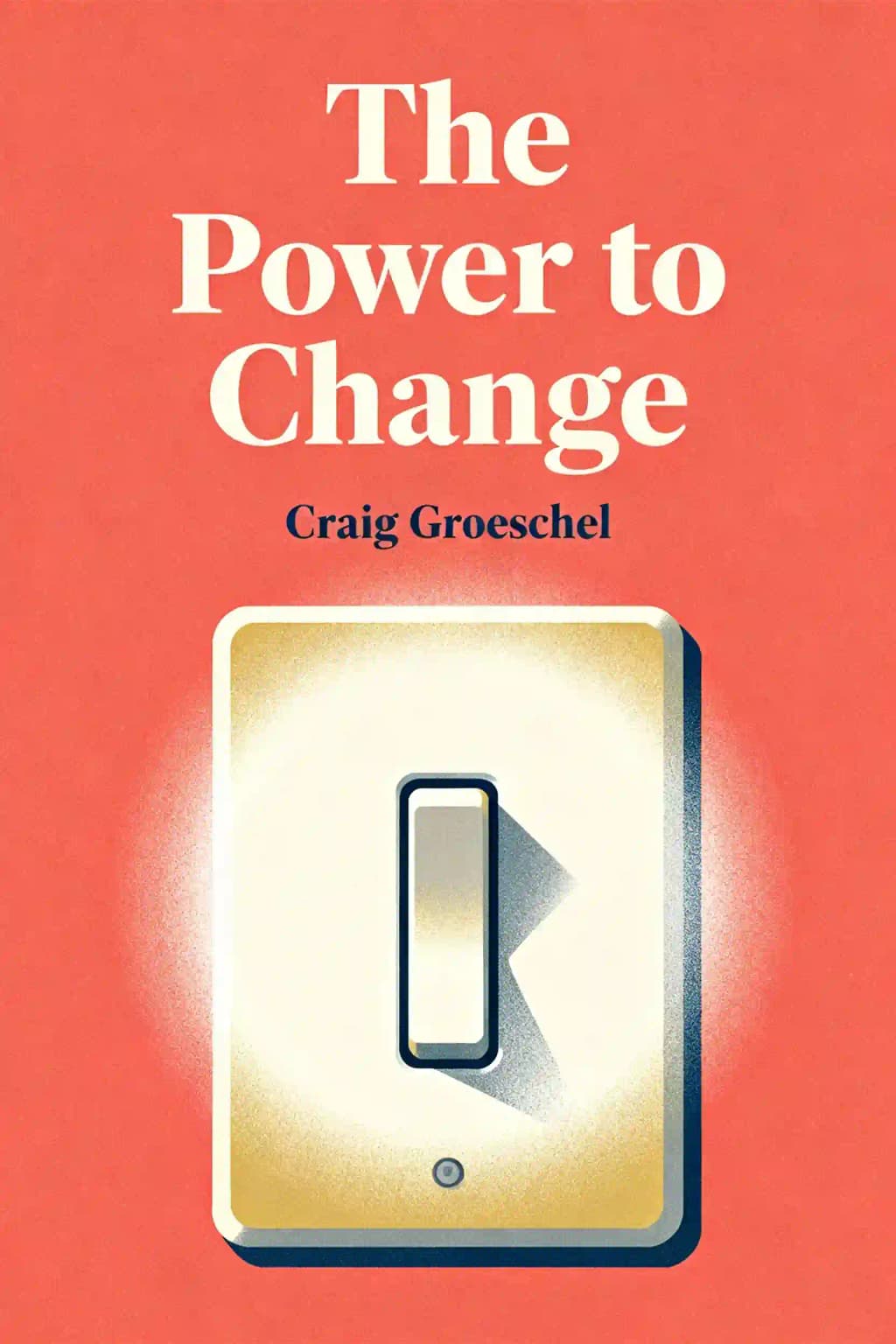
Have you ever felt trapped in the frustrating cycle of wanting to change, trying desperately to change, but never actually changing? You're not alone. Craig Groeschel, founder of Life.Church and one of America's most influential pastors, found himself caught in this same pattern-committing to healthier eating only to end each "successful" day with a midnight feast of brownies, chips, and ice cream. His book "The Power to Change" has resonated with millions precisely because it addresses this universal struggle. Since its 2023 release, it has consistently ranked among Amazon's top Christian personal growth titles and earned praise from figures like bestselling author John Maxwell, who called it "a life-changing guide to lasting transformation." What makes Groeschel's approach different is his focus not on superficial behavior modification but on identity transformation-a distinction that has made this book a cornerstone resource for those seeking meaningful, sustainable change.
Chapitre 2
The Identity-Behavior Connection: Why You Do What You Do
At the heart of our struggle with change lies a profound truth: you do what you do because of what you think of you. This isn't just pop psychology-it's a principle rooted in ancient wisdom. "For as he thinks within himself, so he is," declares Proverbs 23:7. Our actions flow naturally from our self-perception.
Consider the story Groeschel shares about catching teenagers preparing to fight in his church parking lot. His initial reaction was excitement-he wanted to watch! But something deeper kicked in. "I'm a pastor. I'm a Christian." This identity awareness immediately shifted his response from spectator to peacemaker.
Stanford professor James March's research confirms this identity-driven decision-making. When facing choices, we subconsciously ask three questions: "Who am I?", "What kind of situation is this?", and "What would someone like me do?" These identity currents operate below our awareness, pulling us toward certain decisions and away from others.
This explains why someone might repeatedly sabotage their finances despite knowing better-they've internalized the belief "I'm just not good with money." Or why another person consistently attracts toxic relationships-they've accepted the identity "I don't deserve better." These aren't just habits; they're expressions of who we believe ourselves to be.
The breakthrough comes when we recognize that our behaviors aren't random or merely the result of weak willpower-they're the natural outgrowth of our self-perception. When we say things like "I'm just not a morning person" or "I can't resist chocolate," we're not describing immutable facts but reinforcing identity beliefs that drive our actions. Understanding this connection between identity and behavior is the first crucial step toward lasting change.
Chapitre 3
Why Behavior Modification Always Fails
We've all made those grand declarations: "I'll read my Bible every day," "I'll quit smoking," "I'll stop yelling at my kids." Yet despite our best intentions, we find ourselves back in the same patterns weeks or even days later. Why? Because we've been trying to change what we do without changing what we think of ourselves.
This approach-behavior modification-is fundamentally flawed. It's like pulling up a weed without removing the root or treating symptoms while ignoring the underlying illness. Behaviors don't exist in isolation; they're always connected to deeper identity beliefs.
Consider someone who promises to stop watching pornography. They might avoid it briefly through sheer willpower, but they'll likely relapse because they haven't addressed the real issues driving the behavior-perhaps beliefs about intimacy, coping mechanisms for stress, or unresolved emotional wounds. Similarly, your commitment to morning prayer might last a couple of weeks before fading because you didn't address why you weren't praying in the first place.
The science confirms what we experience: motivation and willpower are limited resources that deplete quickly. As James Clear writes in Atomic Habits, "It's hard to change your habits if you never change the underlying beliefs that led to your past behavior."
Scientists distinguish between first-order change (behavior modification) and second-order change (conceptual transformation). First-order change might produce immediate results but rarely lasts. Only second-order change-thinking differently about yourself-creates lasting transformation.
This aligns perfectly with Romans 12:2: "Don't copy the behavior and customs of this world, but let God transform you into a new person by changing the way you think." The pathway to lasting change isn't through gritting your teeth and trying harder-it's through embracing a new identity that makes different behaviors natural expressions of who you are becoming.
Chapitre 4
Embracing Your True Identity
Our identity often gets defined through distorted lenses-others' perceptions, our worst moments, or the lies we've internalized. Groeschel shares Amy's story, a student who believed she was stupid because she struggled in school. When a teacher helped her see herself differently-as someone who simply needed more time to process information-her entire academic experience transformed. She began waking up excited for school instead of dreading it.
This illustrates how our spiritual enemy constantly feeds us false narratives about who we are. "You're a failure." "You're worthless." "You'll never change." These aren't just discouraging thoughts; they're identity statements that shape our behaviors and limit our potential.
But God defines our identity differently. We are not who Satan says we are-we're chosen, loved, forgiven, and complete in Christ. When Peter denied Jesus three times, Jesus didn't label him "betrayer" but restored him as "rock." When a woman caught in adultery stood condemned, Jesus didn't call her "sinner" but "forgiven." God sees not just who we are but who we're becoming.
The transformation process begins when we embrace these truths not just intellectually but at the heart level. This isn't about positive thinking or self-help mantras. It's about aligning our self-perception with God's perception-seeing ourselves through His eyes rather than through the distorted mirrors of past failures, others' opinions, or cultural expectations.
When we begin to believe we are who God says we are, our behaviors naturally shift. The person who believes they're forgiven stops living in shame. The person who knows they're loved stops seeking validation through destructive relationships. The person who understands they're God's masterpiece stops settling for mediocrity. True change comes not through behavior modification but through identity transformation-moving from "I need to do better" to "This is who I am."
Chapitre 5
Envisioning Your Future Self
When Matthew McConaughey accepted his Oscar, he revealed his hero wasn't some celebrity or historical figure-it was "myself in ten years." This concept of "Future You" holds remarkable power for personal transformation.
Psychologists Hal Hershfield and Daniel Gilbert have demonstrated that connecting with your future self drives better decisions today. When we can vividly imagine who we want to become, we gain both direction and motivation. Without this target, we're like archers shooting without aim-we might hit something, but probably not what matters most.
Most people fall prey to what psychologists call the "end of history illusion"-we acknowledge how much we've changed in the past decade but doubt we'll change much in the coming one. This creates a blind spot that limits our potential. The truth is, you will change. The question is whether you'll change intentionally or accidentally.
Carol Dweck's groundbreaking research on mindsets reveals that people with fixed mindsets believe their qualities are carved in stone, while those with growth mindsets believe they can develop through dedication and effort. The good news? Even if you've operated with a fixed mindset, you can learn to embrace growth.
Both psychology and scripture confirm our potential for transformation. God promises to complete the good work He began in us (Philippians 1:6), making us "complete, steady, strong, and firm" (1 Peter 5:10). This isn't passive-it's an active, ongoing process that requires our participation.
Groeschel shares his personal aspiration to be faithful rather than important, symbolized by a pen he receives annually representing faithfulness in ministry. This clear vision of his future self guides his daily decisions and priorities.
By creating a compelling vision of your "Future You"-not just what you'll accomplish but who you'll become-you establish a target for deliberate practice. This isn't about fantasizing but about clarifying your direction and committing to becoming the person God designed you to be.
Chapitre 6
The Power of Starting with Identity
We often try to change our behaviors without changing our identity, but lasting transformation works in the opposite direction. When we start with who we want to become, the behaviors follow naturally.
Groeschel points to how God renames people throughout scripture to reflect their true identity and destiny before they embodied those qualities. Abram became Abraham ("father of many") when he was still childless. Fearful Gideon was called "mighty warrior" while hiding in a winepress. Unstable Simon became Peter ("rock") long before he demonstrated rock-like stability. These name changes weren't arbitrary-they reflected who these people would become before they became it.
This principle transforms how we approach change. Instead of saying "I'm going to stop gossiping" (behavior modification), we embrace "As a follower of Jesus, I'm called to speak well of others" (identity transformation). Rather than "I'm trying to quit smoking" (which communicates "I'm a smoker trying to do something else"), we declare "I don't smoke" (establishing a new identity).
The shift is subtle but profound. When we define ourselves by who we want to become-debt-free, generous, godly, pure, faithful-our behaviors naturally align with that identity. We're no longer fighting against our nature but expressing our true nature.
This explains why some people can walk away from addictions or destructive patterns seemingly overnight when they experience a profound identity shift. The alcoholic who truly comes to believe "I am a child of God, not a slave to alcohol" finds freedom not through willpower but through living from their new identity.
The key question becomes not "What should I do?" but "Who am I becoming?" When we anchor our identity in who God says we are and who we're becoming in Christ, our behaviors naturally flow from that foundation.
Chapitre 7
Training Versus Trying: The Path to Lasting Change
Most of us approach change through trying-exerting willpower in the moment to make better choices. But trying doesn't work; training does. This distinction is crucial for lasting transformation.
Groeschel defines trying as "attempting to do the right thing by exerting effort in the moment" while training is "committing to developing strategic habits that equip you to do the right thing in the moment." The difference is between momentary reaction and ongoing action.
When we merely try, we set ourselves up for the vicious cycle of trying, getting tired, quitting, feeling embarrassed, regrouping, and trying again. This approach fails because willpower is a limited resource that depletes quickly. Training, however, prepares us before the moment of challenge arrives.
Consider marathon running. No one completes a marathon by simply trying really hard on race day. They train systematically for months, gradually building endurance through consistent practice. The same principle applies to spiritual growth, relationship improvement, financial discipline, or any area where we seek change.
Discipline-often viewed negatively-is simply "choosing what you want most over what you want now." It's the bridge between goals and accomplishments, between who you are and who you want to become. And contrary to popular belief, everyone is already disciplined in some areas of life. The question isn't whether you have discipline but where you're directing it.
The key insight: your desires don't determine who you become; your disciplines do. By shifting from trying to training-from sporadic effort to strategic habits-you create sustainable change that works with rather than against your limited willpower.
This approach transforms how we view success. Instead of focusing solely on outcomes (losing 30 pounds, saving $10,000), we make doing the habit our win (exercising today, saving $20 today). This shift allows us to win daily rather than waiting months or years to feel successful. We focus on inputs (what we can control) rather than outcomes (which sometimes lie beyond our control).
When we adopt the mindset "I'm in training," we stop hoping to become something we're not and start getting better at what we already are. This subtle shift makes all the difference in creating sustainable change.
Chapitre 8
The Habit Loop: Understanding How Behaviors Become Automatic
Our lives are largely shaped by habits, not conscious choices. Research suggests about 40% of our daily actions are habitual rather than decisions. From morning routines to work patterns to evening activities, most of what we do today mirrors what we did yesterday and will do tomorrow.
This autopilot living means our choices, which determine our destiny, are more habitual than intentional. The good news? If you want to change who you're becoming, where you're going, or your life itself, you can do so by changing your habits.
Habits function as behavioral autopilot-actions we perform without conscious thought. Our brains are wired to conserve energy, which is why they love habits that allow behaviors to happen automatically. Understanding how habits form gives us power to reshape them.
The habit loop consists of four steps:
1. Cue - a trigger that alerts your brain to engage the habit
2. Craving - the physical, mental, or emotional need the cue creates
3. Response - the routine behavior you fall into
4. Reward - how the behavior makes you feel
When this loop repeats enough times, the process becomes automatic as the brain connects cues with rewards. To effectively manage habits, we need to understand our triggers, which fall into five major categories: place (physical locations), time (specific moments), mood (emotional states), moments (specific situations), and people (who can trigger both positive and negative behaviors).
The influence of people on our habits is particularly powerful. Research shows we're 57% more likely to be overweight if a close friend is overweight, demonstrating how our social connections shape our behaviors. This explains why the Bible repeatedly emphasizes the importance of our associations: "Walk with the wise and become wise; associate with fools and get in trouble" (Proverbs 13:20).
By understanding the habit loop and our personal triggers, we gain the ability to intervene at various points-changing cues, redirecting cravings, altering responses, or finding healthier rewards. This knowledge gives us power over the automatic behaviors that have been directing our lives.
Chapitre 9
Strategic Habit Formation: The Art of Starting and Stopping
To successfully establish new habits, Groeschel offers five powerful strategies. First, make your habit obvious through visual triggers and specific time/place commitments. When you decide exactly when and where you'll perform a new habit, you dramatically increase your chances of success.
Second, make your habit attractive by choosing activities you genuinely enjoy. If you hate jogging but want to exercise, find a more appealing alternative like dancing, swimming, or hiking. The best habit is one you'll actually do.
Third, make your habit easy. Since your brain follows the "law of least effort," experts recommend starting with habits that take less than two minutes to do. Instead of "read before bed," start with "read one page before bed." For prayer with your spouse, begin by thanking God together for just one thing daily. Small beginnings matter-"Do not despise these small beginnings, for the LORD rejoices to see the work begin" (Zechariah 4:10).
Fourth, make your habit communal by surrounding yourself with supportive people who already do what you want to do. "Living the right life is almost impossible if you have the wrong friends"-you become like those with whom you spend the most time.
Finally, make your habit repetitious. Through "potentiation," the neural connections in your brain strengthen with repeated activity-"the more you do something, the easier it is to do." What matters isn't how many days you practice but how many repetitions. With enough repetition, "that new habit will go from being hard to start to hard to stop."
Breaking bad habits presents a unique challenge because while good habits have immediate pain and future payoff, bad habits offer immediate pleasure with delayed consequences. The key is removing triggers rather than relying on willpower. As Solomon advises: "Do not set foot on the path of the wicked" (Proverbs 4:14)-or as Groeschel paraphrases: "Why resist a temptation tomorrow if you have the power to eliminate it today?"
For example, with pornography addiction, practical steps might include content blockers, accountability partners with password access, and eliminating situations that trigger temptation. For oversleeping, place your alarm across the room. For overspending, have someone else control your passwords.
The habits you have today are shaping who you will become tomorrow. One step at a time, your habits are taking you somewhere. If you don't like where they're taking you, change your habits.
Chapitre 10
The Principle of Sowing and Reaping
How do successful people become successful? Growing up, Groeschel assumed they were just lucky-born into the right family, blessed with the right abilities, or given the right breaks. But as he got to know successful people, he realized they weren't lucky. They were consistent.
Successful people do consistently what other people do occasionally. Their success isn't serendipitous or the result of a single moment, but countless small actions made consistently over time. Researchers studying standout leaders found that "fanatical consistency" leads to success-a dogged zealousness of doing the same (usually small) right things over and over.
This principle appears throughout scripture, most clearly in Galatians 6:7-9: "Do not be deceived: God cannot be mocked. A man reaps what he sows." To sow means to plant seeds; to reap means to gather the resulting fruit. This isn't just spiritual truth but a universal law-like gravity. If you plant apple seeds, you get apples, not oranges. Similarly, if you plant good habits, you'll get good outcomes; plant bad habits, expect bad outcomes.
But there's more: you don't just reap what you sow-you reap MORE than you sow. In agriculture, one kernel of wheat produces about one hundred kernels. This multiplication happens in life through two powerful factors: the cumulative effect and the compound effect.
The cumulative effect is the powerful outcome produced by small actions repeated over time. A magic penny that doubles daily would be worth over $5 million after 30 days. The compound effect, like compound interest in finance, means you earn interest on your interest. A $1,000 investment at 10% becomes over $10,000 in 25 years.
These principles apply to every area of life. Financially, a 20-year-old needs to invest only $2 daily to reach $1 million by age 65, while a 40-year-old needs $20 daily to reach the same goal. Physically, consuming just 100 fewer calories daily leads to losing 10 pounds in a year. Spiritually, consistent disciplines compound over time, explaining how figures like Billy Graham or Martin Luther developed such profound faith.
There's no such thing as "small stuff" when it comes to habits and decisions. Because of cumulative effect and compounding interest, saving two dollars daily, eating an extra hundred calories, skipping a workout, telling your spouse "I love you" again-none of these are small actions. What you do consistently, not occasionally, makes all the difference.
Chapitre 11
God's Power, Not Willpower: The Ultimate Source of Change
Despite our best efforts, many of us remain stuck-in unhealthy relationship patterns, phone addiction, a job we hate, critical spirit, health issues, or spiritual stagnation. Some situations feel beyond stuck-they feel dead.
The apostle Paul described this struggle perfectly: "I want to do what is right, but I can't... I don't want to do what is wrong, but I do it anyway" (Romans 7:18-19). Despite his spiritual transformation, he found himself repeatedly failing to change.
We stay stuck because we rely on willpower instead of God's power. Willpower is like a muscle that fatigues with overuse. Research confirms this-in one study, people forced to resist cookies gave up on a puzzle much faster than those who could indulge. Willpower wilts.
This limited willpower traps us in a shame cycle: We feel deficient, try to change, succeed briefly, fail when willpower depletes, feel guilt that reinforces our negative self-image, try harder, fail again, and eventually conclude we're fundamentally flawed. We beat up our "who" and give up.
Paul asked the question we're all asking: "Who will free me from this life that is dominated by sin and death?" (Romans 7:24). His answer points to the ultimate source of transformation: "Thank God! The answer is in Jesus Christ our Lord" (Romans 7:25).
The same resurrection power that raised Jesus from the dead is available to us. We were dead in our sins, "but God"-that transformative phrase changes everything. God's grace saves us in the perfect tense-something that happened in the past, continues in the present, and will remain in the future.
To access this power, Groeschel offers a four-word framework: Renew and Remain (before the moment), Acknowledge and Ask (in the moment).
We renew our minds through Scripture, memorizing verses related to our struggles, and good Bible teaching. We remain in Christ through authentic prayer, silent presence with God, and obedience. When temptation comes, we acknowledge our powerlessness-"I can't, but God can"-and ask for His help.
Walking by the Spirit is like taking first steps-awkward at first, but natural to who we truly are. Like babies learning to walk, we might wobble and fall, but that's not failure-it's learning. When we're winning, we're winning; when we're losing, we're learning.
The key difference between what we want now versus what we want most is time. The desires of the flesh offer immediate payoff, while what we want most-a godly marriage, financial freedom, spiritual legacy-takes time to achieve. By walking with the Spirit, depending on God moment by moment, we can choose what we want most over what we want now.
We can change and be transformed, not through our power but through God's. We can't, but He can.