Chapitre 1
Rediscovering Life's Spark: The Science of True Fun
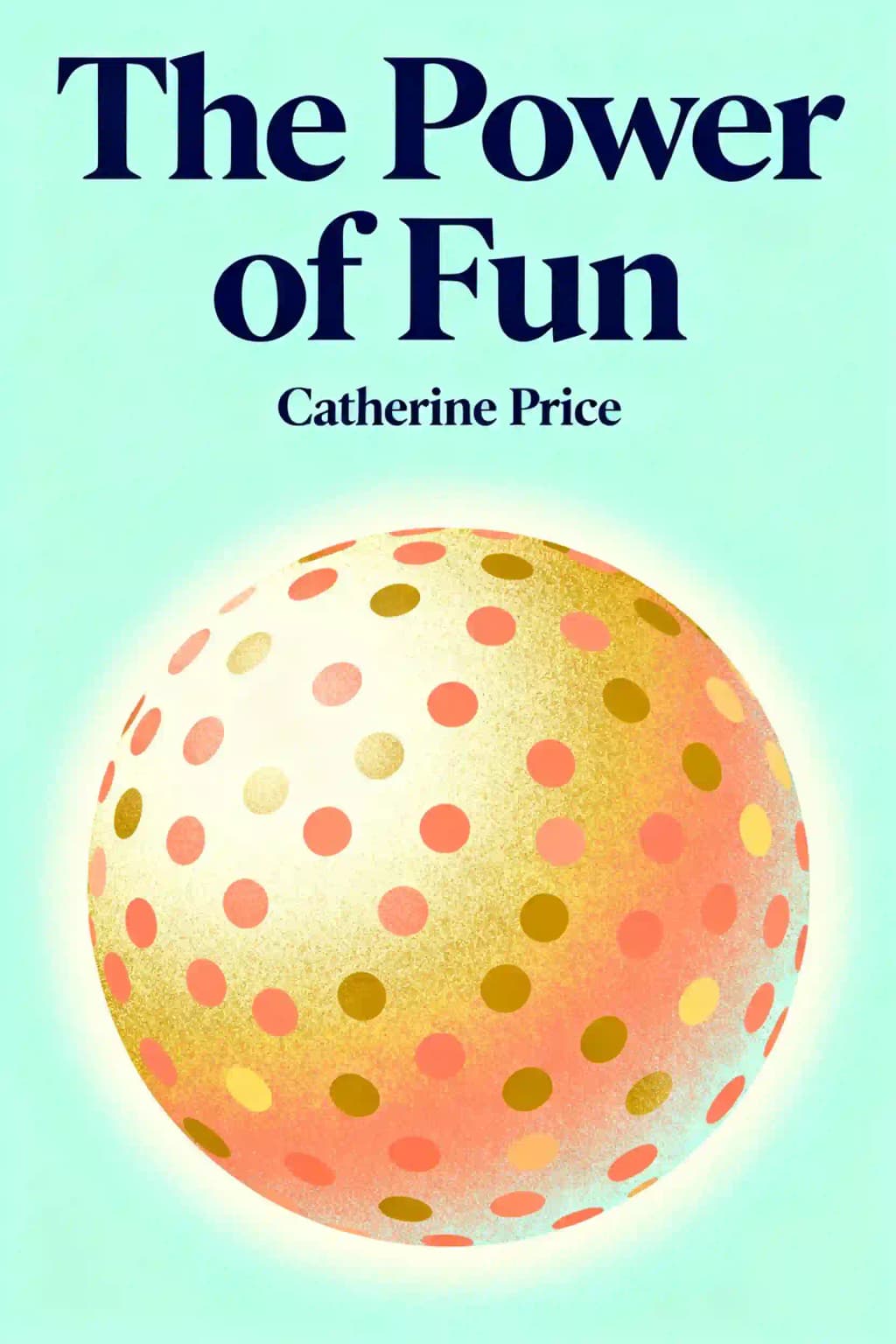
Have you ever noticed how some people seem to radiate energy and vitality while others appear drained and disconnected? Catherine Price found herself in the latter category after her daughter's premature birth, when she realized she'd become addicted to her smartphone. Even while holding her newborn, she couldn't resist the urge to scroll. This painful moment of clarity became the catalyst for her transformative journey into understanding what makes life worth living. "The Power of Fun" has resonated deeply with celebrities like Brene Brown and Adam Grant, who praise its science-backed approach to reclaiming joy. The book arrived at a critical cultural moment when burnout, screen addiction, and disconnection had reached epidemic proportions-even before the pandemic amplified these issues. As we navigate an increasingly digital world, Price's exploration of authentic enjoyment has become not just a personal guide but a societal prescription for what ails our modern existence.
Chapitre 2
The Elusive Nature of True Fun
When was the last time you truly had fun? Not the casual "that was fun" we say after any social obligation, but an experience that left you feeling exhilarated, connected, and fully alive? For most adults, answering this question proves surprisingly difficult. We've diluted the word "fun" to describe anything from mildly pleasant to merely tolerable, losing sight of its transformative potential.
Despite how frequently we reference fun, it remains largely unexplored in academic research. Johan Huizinga called fun an "absolutely primary category of life" yet one that "resists all analysis, all logical interpretation." To develop a precise understanding, Price recruited a global "Fun Squad" of over 1,500 people who shared their most memorable fun experiences. Their stories revealed a common energy-joyful, moving, lighthearted, exuberant, and electric.
From analyzing these experiences, Price discovered that True Fun emerges at the intersection of three essential elements: playfulness, connection, and flow. Playfulness involves a spirit of lightheartedness and freedom-doing something purely for its own sake without concern for outcomes. When we're being playful, we feel relieved of everyday responsibilities and become carefree. We smile frequently, laugh easily, and there's no sense of obligation.
Connection means feeling a special, shared experience with someone or something else. While this connection can occur with your physical environment, an activity, a pet, or even your own body, it most commonly happens with another person. In these moments, people report feeling simultaneously joined with others while remaining completely themselves. Surprisingly, even introverts reported their most fun moments occurring with others, not alone.
Flow is that psychological state where you're fully engrossed in your present experience, losing track of time. Self-consciousness, judgment, and distraction are its enemies. Whether it's an athlete in the zone, a musician lost in melody, or someone deep in conversation, flow grounds us in the present moment.
When playfulness, connection, and flow converge, True Fun emerges as something magical. These three elements together explain why True Fun feels so energizing and life-giving. Unlike happiness or satisfaction, which are ongoing states, True Fun exists exclusively in the present tense-an experience with a beginning and end.
Importantly, True Fun cannot exist alongside distraction, which prevents flow, playfulness, and connection. Judgment also kills fun by pulling us out of the present moment. Many experiences we casually label as "fun" aren't True Fun at all: passive consumption like watching television, material possessions, self-medication through substances, or compulsive busyness.
Price also identifies "Fake Fun"-activities deliberately designed to mimic True Fun without delivering playful, connected flow. Like junk food, Fake Fun offers quick pleasure but ultimately leaves us feeling empty. It's engineered to trigger the same neurochemicals as True Fun, creating a mirage that's hard to identify because it's so well camouflaged. When we succumb to Fake Fun, we're pulled away from our actual passions and priorities, leaving us feeling vacant, anxious, unfulfilled, and numb-essentially, dead inside.
Chapitre 3
The Digital Drain on Our Humanity
Life is temporary, and this truth underscores why True Fun matters. While we can't avoid death, we can choose to truly live rather than merely endure our days. Our attention - our most precious and non-renewable resource - determines what we experience and remember. These choices about where to direct our focus shape our lives fundamentally.
The Industrial Revolution transformed work from task-based to time-based compensation, creating a cycle where we work more to earn more to buy more. This shift has trapped us in a paradox where we consider time too valuable to waste, yet spend leisure hours on empty activities.
This productivity obsession has eroded community connections. Social participation has declined sharply since the 1960s, leading to what experts call an epidemic of loneliness. Paradoxically, our communication devices often worsen isolation - studies show social media use correlates with increased loneliness, with face-to-face interactions proving more meaningful than online ones.
Our screen addiction isn't merely poor self-control - sophisticated algorithms deliberately manipulate our behavior. Our phones function like pocket slot machines, exploiting our brain chemistry through three key dopamine triggers: novelty, rewards, and unpredictability. While dopamine naturally rewards survival-essential activities, it can't distinguish between True Fun and harmful triggers.
App designers exploit this through features like notifications, social validation, and intermittent reinforcement. Our evolutionary need for novelty, once crucial for survival, now keeps us glued to endless digital stimulation. Though we recognize social media validation as meaningless, our instinct for social status drives us to perform for approval, replacing genuine connection with perfectionism and self-consciousness.
This creates "continuous partial attention" - a state blocking True Fun by preventing flow and impairing memory formation. Even a phone's presence reduces conversation quality. We're caught in a cycle where dopamine pulls us back while FOMO (fear of missing out) triggers stress hormones when disconnected. This cortisol elevation impairs rational decision-making, leading to poorer choices and quick fixes, further feeding the cycle.
Chapitre 4
The Transformative Power of True Fun
True Fun isn't just enjoyable-it's transformative. While our lack of screen-life balance creates a downward spiral of negative effects, pursuing True Fun taps into an uplifting current that elevates us. The most important benefit is simply the fun itself; experiencing playfulness, connection, and flow feels genuinely great-far better than anything a smartphone can provide.
Our devices amplify numerous harmful conditions including chronic anxiety and stress, lack of confidence, inability to find humor, not laughing, social isolation, loneliness, disconnection from nature, physical inactivity, perpetual distraction, purposelessness, and feelings of powerlessness-all of which negatively impact our wellbeing.
In contrast, fun facilitates essential positive states including freedom from chronic anxiety and stress, confidence, humor, laughter, strong social ties, community belonging, time in nature, physical activity, focus, purpose, and a sense of control-all scientifically proven to lower disease risk and lengthen our lives.
Playfulness isn't just for children or extroverts-it's a state of mind that makes us feel most alive. Stuart Brown, founder of the National Institute for Play, argues that "a life without play" means no books, movies, art, music, jokes, flirting, or daydreaming-"when we stop playing, we start dying." Play increases brain-derived neurotrophic factor (BDNF), reduces dementia risk, and helps us access our authentic selves.
Humans evolved as social creatures, making connection vital for survival. Loneliness affects us at a cellular level and acts as "fertilizer for other diseases." The Grant Study, one of the world's longest-running studies on well-being, found that relationship quality was the biggest predictor of healthy aging-more important than money, fame, IQ, or genes. Even brief connections with strangers boost mood and reduce stress hormones.
Flow, the third component of True Fun, is a state of total engagement where you become so absorbed in an activity that you lose track of time and self-consciousness. Flow creates a stronger self-concept and confidence in our authentic selves. The Japanese concept of ikigai-one's "reason for being"-is closely connected to flow. Researchers studying centenarians in Okinawa found these elders constantly engaged in activities they enjoyed, from singing karaoke to visiting neighbors.
Laughter serves as a telltale sign of True Fun with profound health benefits. Beyond reducing cortisol and improving cardiovascular health, laughter enhances short-term memory in older adults and releases endorphins that increase pain tolerance. Laughter plays a crucial role in social bonding-it's thirty times more likely to occur in social contexts than when alone, which explains why True Fun often happens with others.
While many Americans obsess over pursuing happiness, announcing we want to "be happy" is as practical as wanting to be taller. Fun provides a concrete blueprint for happiness by shifting focus from an emotional state (being happy) to an active experience (having fun). Since we're invariably happy while having fun, pursuing fun creates a self-perpetuating positive cycle.
Flourishing-a state of optimal functioning where we feel engaged, purposeful, resilient and satisfied-stands opposite to languishing. According to Martin Seligman, flourishing requires five elements: positive emotions, engagement, positive relationships, meaning, and accomplishment. True Fun naturally generates all these elements.
Prioritizing True Fun transforms our lives in numerous ways. It enhances resilience by helping us cope with difficult times-even microdoses of fun helped maintain sanity during the pandemic. Fun prevents burnout by providing genuine mental breaks; unlike checking email or news that adds to cognitive load, activities like playing drums activate different brain regions and replenish attention. Fun boosts creativity by reducing stress, triggering dopamine release through novelty and laughter, and creating a safe psychological space free from self-judgment.
Chapitre 5
Finding Your Personal Fun Formula
The author cautions against directly pursuing "more fun" because the phrase itself lacks specificity about what actions to take. True Fun, like romance, requires creating the right conditions rather than forcing the experience.
To appreciate and seek out fun, we must first learn to recognize its physical and emotional effects. Key indicators include laughter, a sense of freedom, feeling like you're sharing a special experience, losing track of time, freedom from self-judgment, feeling fully present and absorbed, not caring too much about outcomes, childlike excitement, positive energy, and feeling completely yourself.
After establishing how much True Fun you're currently experiencing through a questionnaire, the next step is creating a daily journal to track moments of playfulness, connection, and flow in your everyday life. This helps identify patterns-activities, settings, or people consistently associated with these states-and distinguish between True Fun and "Fake Fun" that leaves you drained.
Several universal preconditions are necessary for True Fun to emerge. These include being engaged and present (requiring you to be undistracted, possibly putting away your phone), not feeling judged or self-conscious (which prevents fun), going all-in (requiring full investment in the activity), not caring too much about the outcome (as high stakes drive fun away), and being with other people (which surprisingly applies even for introverts, who often find their most fun moments involve others, though typically in smaller, more intimate groups).
While activities themselves aren't inherently fun (since fun is an emotional experience), certain activities, people, and settings are more likely to trigger feelings of playfulness, connection, and flow-these are your "fun magnets." To identify them, examine your fun history and journal entries where all three elements of True Fun were present.
Once you've identified your fun magnets, the next step is determining what characteristics create their magnetic pull-your personal "fun factors." These might include physical activities, intellectual engagement, nature, creativity, community, or competition. Understanding these factors makes it easier to attract more fun.
Just as important as identifying what brings you fun is recognizing your "anti-fun factors"-elements that actively repel fun for you personally. Risk tolerance is the most divisive factor, with some people gravitating toward risk while others avoid it completely. Other major dividing lines include attitudes toward crowds, loss of control (like drinking alcohol), and imagination-based activities.
Having identified personal fun magnets and factors, the SPARK framework guides implementation: make Space, pursue Passions, Attract fun, Rebel, and Keep at it. This approach aims to transform True Fun from an occasional experience to a regular companion by making lasting changes to both routine and mindset.
Chapitre 6
Creating Space for Joy in a Cluttered Life
Our lives often resemble haphazardly built houses-functional but not designed with our happiness in mind. We've built our routines around external expectations rather than personal desires, becoming consumed by responsibilities and digital distractions that leave us drained. To experience True Fun, we must become the architects of our own lives by clearing both mental and physical space.
Many people feel guilty or irresponsible prioritizing fun, believing they've been tagged as "unfun" or have lost their playful side. The author encourages readers to give themselves explicit permission to prioritize fun without feeling selfish, emphasizing that this isn't about shirking responsibilities but reorienting toward energizing activities that ultimately increase resilience.
Resentment ranks among the top universal fun killers. It's particularly common in households where "invisible labor" or "mental load" falls disproportionately on one person-tracking appointments, managing logistics, remembering birthdays, stocking supplies, and coordinating everyone's needs. The author shares her own experience with resentment despite having a helpful husband who took on many parenting tasks but fewer planning responsibilities. After discovering Eve Rodsky's book "Fair Play," they implemented regular Monday morning planning sessions to divide responsibilities, which dramatically lowered their resentment and created space for both to seek True Fun independently and together.
When building a fun-filled life, it's crucial to create space for others to experience True Fun, even when their fun magnets differ from yours. Don't criticize or resent loved ones for pursuing activities you don't share-instead, actively encourage them and give them permission to enjoy themselves without guilt or expectations of "payback."
Our physical environments profoundly affect our mental states, emotions, and behaviors. Cluttered spaces drain cognitive resources, reduce focus, increase stress, and elevate cortisol levels. This directly impacts True Fun because distractions and anxiety disrupt flow-a precondition for fun. Clutter also serves as a constant reminder of responsibilities, making it difficult to achieve the sense of freedom and escape that True Fun requires.
Between our distracting thoughts and external stimulation competing for attention, we often lack mental space for True Fun. The author recommends bookending days with self-reflection rather than scrolling, charging phones outside the bedroom, and using separate alarm clocks.
Creating space for fun requires making a daily "not-to-do" list to preemptively identify time-wasting activities. This practice preserves space for spontaneity and enjoyable activities. For new commitments, she recommends a "fun gut check": asking whether something will produce playfulness, connection, or flow.
Rather than completely abandoning our devices, "breaking up" with our phones means creating a healthier relationship that preserves what we love while minimizing what we don't. The author recommends a mindful approach starting with the WWW exercise when reaching for your phone: "What for?" (identifying your purpose), "Why now?" (understanding emotional triggers), and "What else?" (considering alternatives). She suggests creating physical barriers like putting a rubber band around your phone to interrupt autopilot habits and using "friction" strategically-make problematic apps harder to access while reducing friction for preferred activities.
To make space for fun, we must reduce mental clutter by quieting our minds. The author recommends embracing boredom instead of reflexively grabbing your phone during idle moments, taking longer breaks from screens, and practicing single-tasking to rebuild your attention span. Simple exercises like reading a book for ten minutes without interruption (gradually increasing the time) can help restore focus.
Creating space in our lives can trigger what Viktor Frankl called "Sunday neurosis"-the depression that emerges when busy schedules quiet down and we confront the emptiness within. This discomfort-even existential angst-shouldn't be avoided but rather experienced as a necessary transition. Learning to sit with this discomfort can help navigate other life challenges and ultimately motivate us to discover what truly brings us joy.
Chapitre 7
Rekindling Passions and Embracing Play
Mihaly Csikszentmihalyi reminds us that contrary to popular belief, free time requires skill to enjoy effectively-it's actually more difficult to enjoy than work. The author illustrates this principle through her own journey learning to row crew at age forty, despite the sport typically being started in youth. She describes a memorable Halloween morning when she capsized into the Schuylkill River during heavy rain. Despite the mishap, she got back in the boat and continued rowing through the downpour. Though soaked and shaken, the experience contained all three elements of True Fun: playful connection with her coach, physical engagement that kept her out of her head, and complete flow absorption.
The author clarifies that "pursuing passions" means doing things genuinely "for fun," not just any non-work activity. She argues we've diluted this phrase by applying it too broadly and proposes excluding: activities that are compulsive but ultimately draining (Fake Fun like doomscrolling), things done purely for self-medication, unpaid activities we don't enjoy, and purely restorative activities like naps that don't generate playfulness, connection or flow.
She distinguishes between interests (subjects we enjoy learning about), hobbies (things we like to do), and passions (interests or hobbies that have been "turbocharged" with energy and motivation). All three put us into flow, though passions generate the most invigoration and joy. These pursuits foster playfulness through their voluntary nature, create connection by strengthening relationships and introducing us to new communities, and develop skills that help us access flow in more contexts.
The author strongly endorses solitary interests and hobbies because they provide alternatives during common moments of alone time when we might otherwise default to screens. During pandemic lockdown, she took up plant foraging, learning to identify edible flora and gathering wineberries with her daughter. While acknowledging that solitary pursuits may lack the connection element needed for True Fun, she notes how they often unexpectedly lead to shared experiences-her daughter began enthusiastically identifying "trailside nibbles," and the author found herself excitedly pointing out edible plants to friends on walks.
Unlike True Fun, passions and hobbies are concrete and schedulable. You can't declare "Today, I shall have True Fun," but you can commit to doing a crossword or trying a new recipe. Many adults struggle to remember what activities they once enjoyed before time became scarce, or find their circumstances have changed. We default to passive consumption because it's easy and requires no planning, especially when we're exhausted. Technology has worsened this by eroding work-life boundaries and making passive consumption irresistibly accessible.
While solitary activities can be genuinely enjoyable and put you into flow, they often lack the connection needed for True Fun. Transform solitary pursuits into social experiences by inviting someone to join you-turn reading into a book club discussion, or take your home yoga practice to a studio class.
Long-term relationships often lead to shared interests replacing individual passions. While shared interests strengthen relationships, Eve Rodsky's concept of "Unicorn Space" emphasizes the need for time dedicated to individual passions that make you "come alive." This isn't time for passive consumption but for active leisure that nourishes your internal flame. Creating this space is particularly challenging for parents, who may feel selfish prioritizing personal needs. Think of it like airplane safety: secure your own oxygen mask first.
Flow states require a certain degree of skill, but developing competence can be frustrating. Csikszentmihalyi recommends building in external rewards during early learning stages until you reach competence where the activity becomes intrinsically satisfying.
Fear of looking stupid prevents many adults from trying new activities. As play scholar Stuart Brown notes, worrying about appearing undignified is the biggest roadblock to adult play. But being a beginner should feel freeing-no one expects you to be good! Embracing the beginner mindset is brave and necessary for growth.
Chapitre 8
Becoming a Magnet for Fun
People who attract fun share key qualities: spontaneity, self-comfort, willingness to be silly, openness to experiences, and appreciation for small joys. These aren't innate traits but learnable skills developed through intentional choices and habits. The foundation is developing a "Fun Mindset" - building on Carol Dweck's growth mindset concept - which helps notice and create opportunities for playfulness, connection, and flow.
Cultivating this mindset starts with appreciating everyday humor and being "easy-to-laugh." Adopting the improvisational principle of "Yes, and" - accepting and building on others' suggestions - opens doors to spontaneity and connection. Embracing absurdity provides escape from routine and creates memorable experiences, like the author's amusing aqua aerobics class in Latvia.
To attract fun, regularly ask "How could I add playfulness, connection, or flow to this moment?" Send out "play signals" through brief eye contact, genuine smiles, or playful comments. Being fully present is crucial - research shows device distraction reduces genuine social interactions and negatively impacts mood.
Practice noticing daily delights, inspired by Ross Gay's approach of physically pointing out joyful moments. Savoring these experiences - from fresh coffee to cool breezes - reliably boosts happiness and strengthens relationships. Position yourself where fun naturally occurs, and when opportunities arise, prioritize participating despite obstacles.
The ability to laugh at yourself is essential - those who aren't afraid to be silly, try new things, or show vulnerability naturally attract fun. Create "playgrounds" - physical or metaphorical spaces that encourage playfulness while providing clear guidelines. Even simple ideas work well, like informal wine tastings where expertise matters less than shared enjoyment.
Environmental elements significantly influence fun - natural features like water and fire frequently appear in memorable experiences. Protect these playgrounds from "spoilsports" who might unintentionally or deliberately disrupt the fun atmosphere. Remember that successful playgrounds don't require elaborate planning - they just need to create space for authentic play and connection.
Chapitre 9
The Revolutionary Power of Playful Rebellion
When examining Fun Squad anecdotes about True Fun, many involved mild rule-breaking and playful deviance. People engaged in rebellion-not dangerous lawbreaking, but harmless activities that deliberately stepped outside normal boundaries.
Rebellion and play share important characteristics: both involve stepping outside ordinary life and breaking normal patterns. As play expert Stuart Brown notes, play "is about bending rules of thought, action, and behavior," while Huizinga described play as "stepping out of 'real' life into a temporary sphere of activity."
For rule-following adults, the idea of rebellion might seem irresponsible or indulgent. But in proper doses, these qualities are essential to our wellbeing. Having too many responsibilities makes us feel burdened; always prioritizing others leads to burnout. As Jennifer Senior writes in "All Joy and No Fun," "All of us crave liberation from our adult selves, at least from time to time"-not just from obligations, but from living too much in our heads, fearing judgment, and knowing too much about how the world works rather than imagining how it could be.
Rebelling against habits and routines fights what Senior calls "the dirty secret about adulthood"-its sameness and adherence to customs. While routines make life easier, they also make it boring and can put us on autopilot, causing us to miss the present moment.
This autopilot state actually makes time seem to speed up. William James noted this in 1890, writing that as experiences become automatic routines, "the days and weeks smooth themselves out...and the years grow hollow and collapse." Psychologists call this "dissociation"-when you look up from your phone with no idea where the last forty-five minutes went.
The antidote is creating more "pattern separation"-breaking up monotony with new experiences and small rebellions. Instead of a smooth chain of indistinguishable days, you create a necklace of colorful memory beads. The more distinct these experiences, the more time seems to slow down-compare your vivid high school memories to the last four years of adult life.
To rebel against habit, first adopt the Fun Mindset, then identify areas of your life where you're on autopilot. Ask yourself: Why do I do things this way? What if I tried something different? What's the worst that could happen?
Changes don't need to be dramatic. Sometimes you've simply never considered alternatives or you're holding back out of fear. Being flexible and saying "yes" to spontaneous opportunities is another form of rebellion-like when the author accepted her husband's invitation to play with LED badminton birdies at dusk, despite not being good at racquet sports and having planned to read instead. They spent half an hour laughing and running barefoot in the grass, and it was genuinely fun.
Rebelling against convention means refusing to follow trends just because everyone else does. As the author's grandmother used to say, "If everyone else jumped off the Brooklyn Bridge, would you?" This contrarian approach creates space for activities you genuinely enjoy rather than those society expects.
While traditions can build connections, they can also be stifling-the word "tradition" derives from words meaning "surrender." The best traditions are those you consciously choose or create. The author's friend Marie rebelled against Thanksgiving stress by celebrating on Friday instead. Her family spends Wednesday night doing minimal prep with festive cocktails, enjoys Thursday at a relaxed pace culminating in dim sum for dinner, then hosts the traditional feast on Friday.
Question your own assumptions by asking why you believe something and examining its validity. One Fun Squad member realized she'd filled her calendar with "intellectual stimulation" activities she'd categorized as fun but were actually more about enrichment than joy. This insight helped her understand why she felt burned out despite supposedly doing things she enjoyed.
Formality creates distance and shields us from vulnerability, but our humanity is what connects us to others. Rebelling against formality means becoming comfortable with your authentic self and rejecting perfectionism.
Join your children in play instead of watching from the sidelines-run through fountains, hop on swings, or take classes together. Seek experiences that make you feel like a kid again, like the author's friend Kristy who celebrated her wedding anniversary by being pulled behind a motorboat on a tube, looking absolutely exuberant.
Make a point of regularly doing things that are totally selfish. While selfishness is often viewed as a vice, taking time for yourself is essential for mental health-you cannot care for others if you don't care for yourself. This doesn't mean abandoning responsibilities, but rather using free time deliberately for your own enjoyment.
Consider how you might create rebellious experiences for others. Many Fun Squad participants recalled special outings with parents that felt like breaking rules together. These don't need to be dramatic-simply going out in the rain without umbrellas can create precious memories. For children, seeing adults step out of their typical roles can be delightful.
Chapitre 10
Sustaining a Fun-Filled Life
Orienting your life around fun is like exercise-not something you do once and forget about. As Alex Soojung-Kim Pang writes about rest, fun is "not something that the world gives us... If you want [it], you have to take it." We must commit to prioritizing fun not just temporarily but for the rest of our lives.
Fun squads are simply people with whom you tend to have fun-your human fun magnets. You likely already have several in your life: friends, passion-sharers, or enjoyable coworkers. Spending more time with these existing squads increases both fun and community.
You've worked hard to identify activities, settings, and people conducive to your fun-don't let that effort go to waste. With limited leisure time, make your fun magnets a priority.
Though planning for fun might sound counterintuitive, it's essential. Without planning and protecting opportunities for fun magnets and passions, life will rush in and fill your time. One key goal is to always have something on your calendar to look forward to-every week and ideally every day. This "anticipatory savoring" is pleasurable, boosts resilience, and lowers stress.
Microdoses are small, everyday pleasurable experiences that create feelings of playfulness, connection, and/or flow. They may not always cross into full-on fun, but they're energizing and rejuvenating. Aim to microdose on fun-related activities several times weekly, if not daily.
You can microdose spontaneously-carpe diem fun-like taking an impromptu drive with windows down and music up, or eating dinner on a picnic blanket instead of at the table. Reducing distractions helps you notice more opportunities for these playful moments and makes you more likely to say yes to them.
Booster shots are larger fun-oriented experiences-vacations, annual gatherings, events-that require more planning but replenish your energy for longer periods. Aim to have at least one booster shot per season, so you always have something fun on the horizon.
Fun doesn't have to be expensive-consider the Pie Madness tournament, which costs only ingredients. But sometimes, especially for booster shots, money is required for vacations, gatherings, or events. Saying yes to these experiences may mean saying no to material purchases.
This tradeoff is worthwhile because spending on experiences-especially those involving other people-has been repeatedly proven to boost well-being far more effectively than spending on possessions. Neuroscientist Leaf Van Boven explains that while possessions encourage comparison and division, experiences bring people together, providing "a better source of entertaining conversation" and more enduring satisfaction.
Technology can actually help foster playfulness, connection, and flow when used intentionally. The author's plant identification app enhances her enjoyment of nature; her guitar tab app helps her learn new songs. Many people have True Fun playing multiplayer video games together. The key is using technology in ways that facilitate engagement rather than emptiness.
Maintaining boundaries with screens is essential and will only become more challenging as technology advances. One effective practice is taking regular breaks from devices-what some call a "technology shabbat" or "digital sabbath."
While prioritizing and creating opportunities for fun requires effort, it's important not to make it feel like a job. It's too easy to turn fun into another homework assignment, becoming "obsessed and anxious, like it's just another thing on my to-do list."
Don't beat yourself up if your life doesn't always feel fun-no one's life is nonstop enjoyment. We all experience rough patches where even getting out of bed feels challenging. Meet yourself where you are, acknowledge what is going well, and practice self-compassion. Some days you'll have energy to create fun opportunities; other days, simply remain open to moments of playfulness, connection, or flow that come your way.
Chapitre 11
The Ultimate Power of Choosing Life
I wrote this book during the SARS-CoV-2 pandemic when opportunities for playfulness, connection, and flow felt scarcer than ever. Though fortunate to avoid personal tragedy, months of monotony and isolation left me languishing. Paradoxically, this difficult period clarified my priorities and strengthened my belief in fun's importance. Breaking fun into its components-playfulness, connection, and flow-helped me discover microdoses of enjoyment even during restrictions: noticing delights, calling friends, pursuing hobbies. These experiences weren't dramatic, but their cumulative effect was profound, rejuvenating me and lifting me from emotional ruts.
If our lives are what we pay attention to, we must ask: what do we want that attention focused on? With countless things competing for our focus-external distractions and internal anxieties alike-our natural tendency is to pay attention to the negative, scanning for threats. This evolutionary bias often hurts rather than helps, affecting both our health and our experience of life. We spend far more energy correcting what's wrong than enjoying what's right, chasing future goals while scenery rushes by in a blur. But we aren't problems to be fixed-we're lives that want to be lived, in every moment, right now. My life changed dramatically when I decided my answer to "what deserves my attention?" would be True Fun.
One irony about fun is our assumption that because it feels good, it must be frivolous. But perhaps fun feels good because it is deeply good for us-a requirement for happiness and health rather than unnecessary self-indulgence. Playfulness, connection, and flow are among the most potent factors for both immediate well-being and long-term fulfillment. Our most meaningful relationships, greatest accomplishments, strongest passions, and fondest memories involve these three states.
Once basic needs are met, fun helps us achieve our full human potential. If we all prioritized these elements, we might focus on what connects us rather than divides us, defuse tension with playfulness, and create space for flow to flourish. Fun isn't just a result of human thriving; it's a cause-invigorating us, bringing us together, and reminding us who we want to be. True Fun is sunshine, a distillation of life's energy under which our lives can blossom.