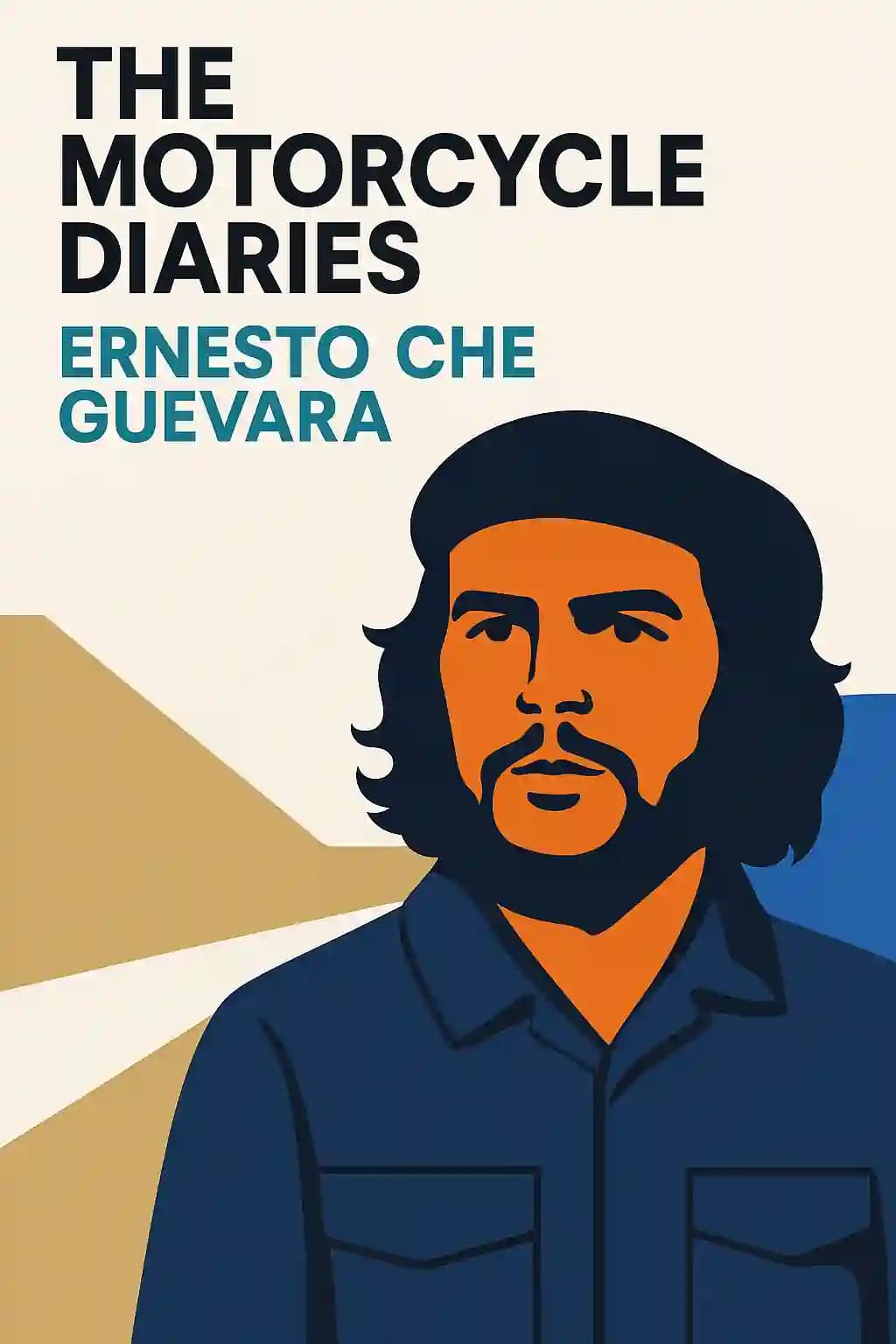
Motorcycle Diaries
Aperçu de Motorcycle Diaries
Before becoming revolutionary "Che," Guevara's transformative motorcycle odyssey across South America awakened his social conscience. This raw 1952 travelogue - later inspiring an Oscar-winning film - reveals how poverty and inequality transformed a medical student into the iconic figure who changed history.

Thèmes clés dans Motorcycle Diaries
- political awakening
- latin american inequality
- coming of age journey
- social consciousness
- continental travel odyssey
Citations de Motorcycle Diaries
the moment when 'I' turned into 'we'
"Why don't we go to North America?"
If I were your age, I'd go with you.
Did I win or did I lose? The question is superfluous...
an expedition has two points: the point of departure and the point of arrival
Personnages de Motorcycle Diaries
- Ernesto Che GuevaraA 23-year-old medical student and protagonist
- Alberto GranadoA biochemist and Ernesto's traveling companion
- ChichinaErnesto's girlfriend in Miramar
- AleidaErnesto's daughter who provides commentary
À propos de l'auteur
À propos de l'auteur de Motorcycle Diaries
Ernesto Che Guevara, author of The Motorcycle Diaries, was a revolutionary leader and key figure in the Cuban Revolution. This memoir, blending travelogue and political awakening, chronicles his 1952 journey across South America, exposing the social inequalities that fueled his Marxist ideology.
A trained physician from Argentina, Guevara’s firsthand encounters with poverty and oppression during his travels shaped his commitment to socialist revolution. Beyond this seminal work, his influential writings include Guerrilla Warfare and Reminiscences of the Cuban Revolutionary War, which outline his strategies for armed resistance and anti-imperialist struggle.
As a comandante under Fidel Castro, Guevara played a pivotal role in overthrowing Cuba’s Batista regime, later serving as Minister of Industry and architect of the nation’s economic reforms. Translated into over 30 languages, The Motorcycle Diaries has sold millions of copies worldwide and inspired a 2004 Academy Award–nominated film adaptation, cementing its legacy as a foundational text of 20th-century revolutionary thought.
Telecharger le resume de Motorcycle Diaries
Obtenez le resume de Motorcycle Diaries en PDF ou EPUB gratuit. Imprimez-le ou lisez-le hors ligne a tout moment.
FAQ sur ce livre
The Motorcycle Diaries chronicles Ernesto "Che" Guevara’s 1952 journey across South America with friend Alberto Granado. As a 23-year-old medical student, Guevara documents their 8,000-kilometer adventure—from motorcycle mishaps in Argentina to hitchhiking through Chile and Peru—while confronting social injustices, poverty, and the resilience of marginalized communities. The memoir traces his ideological awakening, blending adventure with reflections on class divides and human suffering.
This book appeals to readers of travel memoirs, history enthusiasts, and those interested in Che Guevara’s early life. Its mix of humor, poetic landscapes, and social commentary suits fans of coming-of-age stories or revolutionary history. Critics note its value for understanding Guevara’s transition from student to revolutionary.
Yes, for its blend of adventure and introspection. While some criticize its episodic, diary-like structure, others praise its vivid storytelling and historical significance. It offers insights into Guevara’s empathy for the oppressed and his evolving worldview, making it essential for understanding his later revolutionary work.
Key themes include social inequality, solidarity with the marginalized, and personal transformation. Guevara highlights the plight of Indigenous communities, miners, and leprosy patients, framing their struggles against capitalist exploitation. The journey symbolizes his shift from privileged student to advocate for systemic change.
The trip exposed Guevara to widespread poverty and oppression, catalyzing his revolutionary ideals. Experiences like volunteering at a Peruvian leper colony and witnessing labor exploitation deepened his commitment to social justice, later shaping his role in Cuba’s revolution.
The Norton 500 motorcycle, La Poderosa, symbolizes freedom and adventure early in the journey. Its eventual breakdown forces Guevara and Granado to rely on hitchhiking and trains, mirroring their growing connection to the working-class communities they encounter.
While the film (2004) romanticizes the journey with cinematic landscapes, the book offers deeper introspection through Guevara’s raw journal entries. The memoir includes philosophical musings and political critiques absent in the movie, emphasizing his internal transformation.
- “The person who wrote these notes died the day he stepped back on Argentine soil.”
This line marks Guevara’s symbolic rebirth as a revolutionary. - “How is it possible to feel nostalgia for a world I never knew?”
Reflects his longing for pre-colonial Indigenous societies.
At a Peruvian leper colony, Guevara condemns the isolation of patients, insisting on shaking their hands—a radical act against societal fears. This experience reinforces his belief in human dignity and collective care.
Some readers find the early chapters overly focused on trivial adventures, with sparse political analysis. Critics argue it reads more as a travelogue than a manifesto, though others appreciate its candid, unfiltered perspective.
It merges personal growth with socio-political critique, offering a foundational text for understanding 20th-century revolutions. Its blend of youthful idealism and incisive observation resonates with global audiences, cementing its status in Latin American literature.
Guevara depicts a continent rich in cultural history but fractured by colonialism and inequality. From the Atacama Desert to Amazonian villages, he contrasts natural beauty with systemic oppression, framing South America as both a backdrop and catalyst for change.