How can ordinary people become monsters? Zimbardo's landmark Stanford Prison Experiment reveals the terrifying truth behind Abu Ghraib and beyond. Not just "bad apples" but "bad barrels" transform good people into perpetrators of evil - a psychological phenomenon that haunts military, corporate, and everyday ethics.
Philip George Zimbardo is a renowned psychologist and the bestselling author of The Lucifer Effect: Understanding How Good People Turn Evil. He was a professor at Stanford University whose groundbreaking Stanford Prison Experiment reshaped modern social psychology.
A triple-major graduate of Brooklyn College and a Yale PhD recipient, Zimbardo served as president of the American Psychological Association in 2002. He also founded the Heroic Imagination Project to study everyday heroism.
Zimbardo's expertise in situational behavior and institutional power dynamics stems from decades of research into cults, shyness, and time perspective psychology. This work is documented in books such as The Time Paradox and The Time Cure.
Zimbardo also hosted PBS’s award-winning Discovering Psychology series, which was translated into 10 languages. He has authored textbooks that are used universally in psychology curricula. His analysis of the Abu Ghraib prison abuses in The Lucifer Effect combines clinical research with real-world case studies, cementing its status as a critical work in moral psychology. The book has been cited in over 5,000 academic papers and adopted by military ethics programs worldwide.
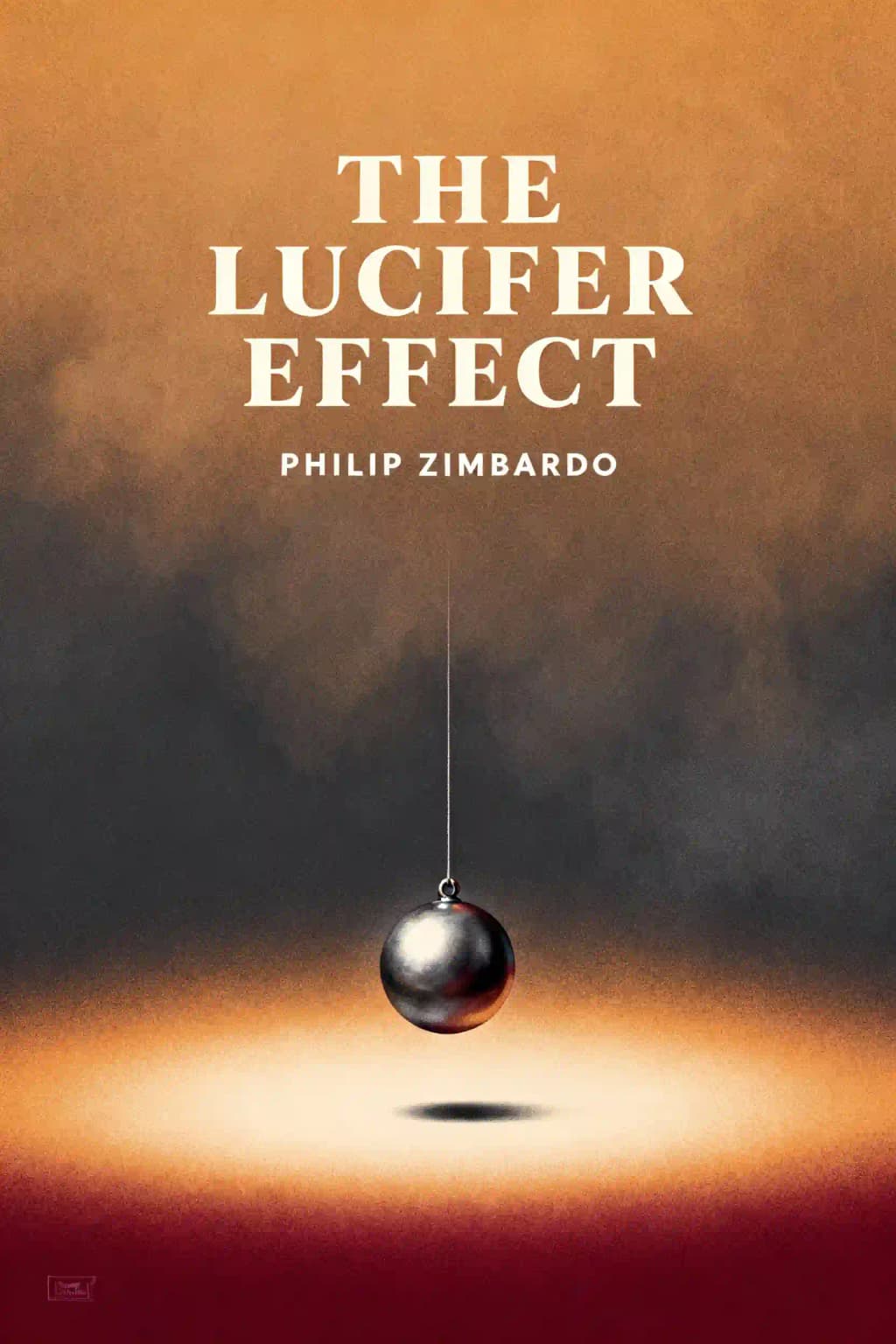
The Lucifer Effect explores how ordinary people commit unethical acts under specific situational pressures. Drawing from the Stanford Prison Experiment and the Abu Ghraib scandal, Zimbardo argues that systemic factors—not just individual morality—drive evil behavior. Key themes include dehumanization, moral disengagement, and the power of roles in shaping actions.
This book is essential for psychology students, professionals in criminal justice or leadership, and anyone interested in human behavior. It offers insights into organizational dynamics, ethical decision-making, and strategies to resist negative peer influences.
Zimbardo’s 1971 study, where college students acting as guards rapidly abused "prisoners," serves as the book’s foundation. It demonstrates how assigned roles and unchecked authority corrupt behavior, mirroring real-world atrocities like Abu Ghraib.
The book analyzes the Abu Ghraib torture scandal (2003–2004), where U.S. soldiers abused Iraqi detainees. Zimbardo argues these acts resulted from systemic failures and situational pressures, not inherent evil in individuals.
Critics argue Zimbardo overemphasizes situational factors while downplaying personal responsibility. Others question the Stanford experiment’s methodology and generalizability. However, the book remains influential in social psychology and ethics debates.
The book warns against toxic hierarchies and passive compliance. For example, employees might rationalize unethical tasks due to peer pressure or fear of job loss. Solutions include fostering accountability and encouraging dissent.
These lines underscore Zimbardo’s focus on systemic influences and the potential for moral courage.
Both books examine how ordinary people commit atrocities. While Browning focuses on Holocaust perpetrators’ psychological trauma, Zimbardo emphasizes situational triggers like anonymity and peer conformity.
Zimbardo (1933–2024) was a Stanford psychologist best known for the Stanford Prison Experiment. He authored over 50 studies on shyness, time perception, and heroism, and founded the Heroic Imagination Project to promote ethical resilience.
Its insights remain critical amid debates about AI ethics, workplace misconduct, and political polarization. The book provides frameworks to identify and combat systemic corruption in modern institutions.
Zimbardo shifts the focus from individual “bad apples” to “bad barrels”—toxic systems that normalize abuse. This challenges readers to address root causes rather than scapegoat individuals.
Ressentez le livre à travers la voix de l'auteur
Transformez les connaissances en idées captivantes et riches en exemples
Capturez les idées clés en un éclair pour un apprentissage rapide
Profitez du livre de manière ludique et engageante
The line between good and evil might be far thinner than you've ever imagined.
Rules quickly became sacred in this environment.
They have no civil rights.
This is the way Military Intelligence wants it done.
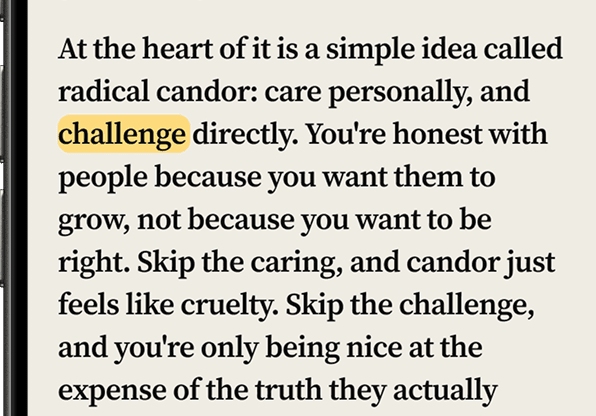
Roles and rules are powerful precisely because they simplify complex social interactions.
Décomposez les idées clés de Lucifer Effect en points faciles à comprendre pour découvrir comment les équipes innovantes créent, collaborent et grandissent.
Découvrez Lucifer Effect à travers des récits vivants qui transforment les leçons d'innovation en moments mémorables et applicables.
Posez vos questions, choisissez votre style d’apprentissage et co-créez des idées qui vous correspondent vraiment.

Cree par des anciens de Columbia University a San Francisco
"Instead of endless scrolling, I just hit play on BeFreed. It saves me so much time."
"I never knew where to start with nonfiction—BeFreed’s book lists turned into podcasts gave me a clear path."
"Perfect balance between learning and entertainment. Finished ‘Thinking, Fast and Slow’ on my commute this week."
"Crazy how much I learned while walking the dog. BeFreed = small habits → big gains."
"Reading used to feel like a chore. Now it’s just part of my lifestyle."
"Feels effortless compared to reading. I’ve finished 6 books this month already."
"BeFreed turned my guilty doomscrolling into something that feels productive and inspiring."
"BeFreed turned my commute into learning time. 20-min podcasts are perfect for finishing books I never had time for."
"BeFreed replaced my podcast queue. Imagine Spotify for books — that’s it. 🙌"
"It is great for me to learn something from the book without reading it."
"The themed book list podcasts help me connect ideas across authors—like a guided audio journey."
"Makes me feel smarter every time before going to work"
Cree par des anciens de Columbia University a San Francisco

Obtenez le resume de Lucifer Effect en PDF ou EPUB gratuit. Imprimez-le ou lisez-le hors ligne a tout moment.
What turns a kind college student into a sadistic prison guard in just days? This question haunts Philip Zimbardo's groundbreaking work on the psychology of evil. In 1971, Zimbardo transformed Stanford University's basement into a mock prison, randomly assigning psychologically healthy students to roles as either guards or prisoners. The planned two-week experiment collapsed after just six days when the situation spiraled dangerously out of control. Guards who described themselves as pacifists became increasingly cruel-forcing prisoners to clean toilets with bare hands, standing on their backs during push-ups, and subjecting them to humiliating sexual taunts. Meanwhile, prisoners became passive, depressed, and helpless, with some experiencing complete emotional breakdowns. Most disturbing was how quickly everyone-including Zimbardo himself-became absorbed in their roles. The experiment ended only when an outside observer was horrified by what she witnessed. This wasn't about "bad apples" with sadistic personalities; the roles had been randomly assigned. The situation itself transformed ordinary people into monsters.
Within hours of entering the Stanford experiment, participants weren't just playing parts-they were becoming their roles. Guards quickly developed elaborate control systems and arbitrary rules, requiring prisoners to ask permission for basic needs and creating increasingly degrading punishments. One guard admitted conducting "little experiments" of verbal abuse, surprised that "no one questioned my authority." Prisoners embraced their subordinate identities, addressing guards formally and using ID numbers. When offered "parole," some forfeited payment to leave-then allowed themselves to be led back to cells rather than simply quitting. Dehumanization-stripping away others' human qualities-enables decent people to justify cruelty. In the Stanford experiment, this occurred systematically: prisoners were identified by numbers, wore uniform smocks resembling dresses, had bags placed over their heads, and were referred to collectively. Guards began viewing them as "cattle." Bandura's research confirmed this effect: students administered higher electric shocks to victims described as "animals" versus "nice guys." The power of roles lies in how they simplify social interactions through clear expectations, but this same quality makes them dangerous when divorced from ethical principles. We see this in workplaces where people follow questionable directives because "that's my job," in military units where soldiers commit atrocities under orders, and in social groups where peer pressure overrides individual conscience.
While we focus on active perpetrators, Zimbardo highlights how passive bystanders enable evil through inaction. In the Stanford experiment, "good guards" who never personally abused prisoners facilitated abuse by failing to intervene. Their silence constituted tacit approval. This pattern repeats throughout history-from Holocaust bystanders claiming ignorance to employees who observe unethical practices yet remain silent. The "bystander effect" explains this phenomenon: the more witnesses to an emergency, the less likely any individual will act. When responsibility diffuses among many observers, personal obligation diminishes. Princeton Theological Seminary students, preparing sermons about the Good Samaritan, largely ignored a person in distress when they believed they were running late. Institutional structures often discourage intervention-whistleblowers face retaliation while organizational loyalty is rewarded. Military and police cultures particularly emphasize not reporting misconduct. Recognizing our vulnerability to bystander apathy is essential for overcoming it, with direct requests significantly increasing intervention by clarifying individual responsibility.
Thirty years after his experiment, Zimbardo witnessed its dynamics horrifically replicated in the Abu Ghraib prison scandal, where American soldiers forced Iraqi prisoners into humiliating poses while guards smiled for cameras. As an expert witness for Staff Sergeant Ivan Frederick, Zimbardo accessed evidence challenging the official "bad apples" narrative. Frederick, like most Stanford participants, had no history of sadism or psychological problems-his file showed exemplary service as both a civilian corrections officer and military reservist. Yet at Abu Ghraib, he participated in shocking abuses. The situational forces exceeded Stanford's: guards worked twelve-hour night shifts seven days weekly, slept in rodent-infested cells, faced constant mortar attacks, received minimal training, and operated under blurred chains of command. Military intelligence instructed guards to "soften up" prisoners without specifying legal methods. Both settings featured the same psychological processes: deindividuation through anonymity, dehumanization of prisoners, diffusion of responsibility, and gradual normalization of escalating abuse.
Zimbardo's core insight reveals that while individuals make choices, systems create conditions that make certain choices more likely. People bring unique personalities and values to situations, with some resisting situational pressures better than others. However, research consistently shows situational forces typically overwhelm individual differences. At the situational level, multiple mechanisms shape behavior: authoritative roles provide permission, anonymity reduces accountability, group dynamics create conformity pressure, and rules justify questionable actions. At the systemic level, someone designs these roles, rules, and incentives. In the Stanford experiment, Zimbardo created the system; at Abu Ghraib, military and political leaders established policies enabling abuse. This understanding has practical implications: individuals need "situational awareness" - recognizing when they're being influenced by roles or authority figures. Organizations must create accountability at all levels, especially for system designers. The Abu Ghraib scandal punished low-ranking soldiers but brought virtually no consequences for high-ranking officials who created the enabling policies.
Despite human vulnerability to situational forces, heroism offers hope as evil's counterpoint. Ordinary people can become perpetrators under certain conditions, but also heroes when circumstances demand moral courage. Heroism includes not just physical risk but standing against injustice despite personal costs like rejection or career damage. Heroes typically reject the label, insisting they simply did what anyone would do. This "banality of heroism" parallels Hannah Arendt's "banality of evil" - both emerge from ordinary people responding to extraordinary circumstances. The Stanford Prison Experiment itself ended because of Christina Maslach's heroic confrontation with Zimbardo: "What you are doing to those boys is a terrible thing!" The most unsettling revelation is that the capacity for both good and evil exists within each of us. The line between hero and villain shifts with circumstances rather than being fixed in personality. This changes how we view evil - from asking "What kind of monster would do this?" to "What kind of situation would make ordinary people do this?" It challenges us to examine the systems we create, recognizing that roles and structures profoundly shape behavior.
The Stanford Prison Experiment reveals that evil stems not just from bad individuals but from toxic situations and system designs that bring out the worst in human nature. This insight gives us both responsibility and power to design systems with proper safeguards and accountability. Heroes emerge unexpectedly: Joe Darby exposed Abu Ghraib abuses despite knowing he'd face retaliation; helicopter pilot Hugh Thompson intervened at My Lai by positioning his aircraft between American troops and Vietnamese civilians. Zimbardo suggests we can cultivate the "heroic imagination" by viewing ourselves as "heroes-in-waiting" prepared to act when needed. The same psychological processes operating in extreme situations function in our everyday lives when we dehumanize others, conform despite ethical concerns, or witness injustice silently. Understanding these forces empowers us to resist them. The choice between good and evil isn't made once but daily, in small decisions that either affirm or deny our shared humanity.