

Aperçu de Little Liar
In "The Little Liar," Truth itself narrates a Holocaust tale that became Albom's most acclaimed work yet. When Katie Couric highlighted its relevance to rising antisemitism, readers discovered why this surprise-ending masterpiece rivals "The Book Thief" in emotional power.
- The Little Liar is Mitch Albom's powerful first Holocaust novel.
- Nico Krispis transforms from a truthful boy to a pathological liar overnight.
- Truth itself narrates this story of deception and redemption.
- An innocent boy unknowingly sends his own family to Auschwitz.
- Nazi manipulation turns Nico's honesty into a weapon against the Jewish community.
- Three Holocaust survivors spend decades searching for forgiveness and atonement.
- The Little Liar examines lasting psychological consequences of wartime betrayal.
- Guilt permanently shapes survivor identity across multiple post-war generations.
- Love's redemptive power ultimately overcomes damage from devastating lies.
- Nico's false reassurances send fifty thousand Jews to certain death.
- Mitch Albom explores courage, survival, and revenge in Salonika, Greece.
- Redemption requires confronting the painful past and seeking forgiveness from others.
À propos de l'auteur de Little Liar
Mitchell David Albom is the bestselling author of The Little Liar and an internationally renowned writer whose fiction explores themes of hope, resilience, and the power of human connection during times of profound hardship.
Born in 1958 in New Jersey, Albom has sold over 40 million copies of his books worldwide, translated into 48 languages. He first gained recognition as an award-winning sports journalist before pivoting to inspirational storytelling that examines love, loss, and moral courage.
His breakthrough work, Tuesdays with Morrie, remains the bestselling memoir of all time, and he has written eight #1 New York Times bestsellers including The Five People You Meet in Heaven, Finding Chika, and The Stranger in the Lifeboat.
Beyond his literary career, Albom is a dedicated philanthropist who operates an orphanage in Haiti and founded SAY Detroit, a consortium of charitable organizations. His work has been adapted into Emmy Award-winning films, and he continues to inspire readers globally with stories that blend emotional depth with timeless wisdom.
FAQ sur Little Liar
What is The Little Liar by Mitch Albom about?
The Little Liar follows Nico Krispis, an 11-year-old Greek Jewish boy who never told a lie until a Nazi officer tricks him into reassuring fellow Jews that trains departing Salonika are taking them to safety—when they're actually headed to Auschwitz. After discovering he sent his own family to their deaths, Nico becomes a pathological liar. The novel spans four decades, exploring how deception, survival, and the search for redemption shape the intertwined lives of Nico, his brother Sebastian, their schoolmate Fannie, and the Nazi officer Udo Graf.
Who is Mitch Albom and why did he write The Little Liar?
Mitch Albom is an internationally bestselling author whose books have sold over 40 million copies worldwide, best known for Tuesdays with Morrie. The Little Liar marks Albom's first novel set during the Holocaust, exploring themes of honesty, survival, and forgiveness through the lens of historical tragedy. Born to Jewish parents in 1958, Albom brings his signature exploration of moral questions and human connection to this powerful parable about the lasting consequences of deception and the transformative power of truth.
Who should read The Little Liar by Mitch Albom?
The Little Liar is ideal for readers who appreciate historical fiction with deep moral questions, particularly those interested in Holocaust narratives told through unique perspectives. Fans of Mitch Albom's contemplative storytelling style will find familiar themes of redemption and forgiveness woven throughout. This book suits readers seeking emotionally resonant stories about the long-term consequences of wartime trauma, the nature of truth and deception, and the resilience of the human spirit across generations.
Is The Little Liar by Mitch Albom worth reading?
The Little Liar became an instant New York Times bestseller and showcases Mitch Albom at his very best, according to multiple reviewers. The novel's unique narrative device—being told by the "Angel of Truth" as an omniscient narrator—creates an unvarnished perspective that eliminates unreliable narration. While some readers may find certain plot coincidences fortuitous, the book's exploration of courage, deceit, betrayal, and consequences makes it a compelling page-turner that examines the Holocaust's lasting impact through an original lens.
What happens to Nico Krispis in The Little Liar?
Nico Krispis transforms from a truthful 11-year-old boy into a pathological liar after being manipulated by Nazi officer Udo Graf. Believing he's helping his community, Nico stands at the train station daily reassuring Jewish residents they're heading to safe "new homes" with jobs and security—unknowingly sending them to Auschwitz. When his own family boards the final train and Nico realizes his devastating role, he never tells the truth again. The novel follows his guilt-ridden journey through survival, self-discovery, and his decades-long search for redemption.
Who narrates The Little Liar by Mitch Albom?
The Little Liar is narrated by the "Angel of Truth," a third-person omniscient narrator that serves as the voice of Truth itself. This unique narrative device provides readers with unvarnished honesty and no pretense or disguises, leaving no room for unreliable narration. When Truth speaks, readers receive absolute certainty about events and characters' inner lives. This approach is considered one of the novel's strongest and most intriguing aspects, allowing Mitch Albom to explore deception and honesty from an authoritative, all-knowing perspective that reinforces the book's central themes.
What are the main themes in The Little Liar?
The Little Liar explores honesty, deception, survival, revenge, and devotion as its central themes. The novel examines how a single lie can echo across decades, destroying trust and corrupting the soul of both the liar and those deceived. Additional themes include the consequences of choices made under duress, the search for redemption and forgiveness, and the lasting trauma of wartime atrocities. Albom also investigates courage, betrayal, and the resilience of the human spirit when confronted with impossible moral dilemmas.
What is the significance of lies and truth in The Little Liar?
In The Little Liar, lies and truth represent opposing forces that shape human destiny and moral character. The novel demonstrates how ignoring proper truth "will ultimately decay your body" and "handpicking the Truth eventually rot your soul," according to the narrator. Nico's transformation from a boy who never lied to a pathological liar illustrates how trauma and guilt can fundamentally alter one's relationship with honesty. The Angel of Truth as narrator emphasizes that humans "lie constantly, especially to their Maker," highlighting deception as a defining human characteristic.
How does The Little Liar compare to Mitch Albom's other books?
The Little Liar represents Mitch Albom's first foray into Holocaust fiction, distinguishing it from his previous works like Tuesdays with Morrie and The Five People You Meet in Heaven. While maintaining Albom's signature themes of redemption, forgiveness, and moral exploration, this novel features a darker historical setting and more complex moral ambiguity than his earlier inspirational works. The book returns to fiction after his memoir Finding Chika, continuing Albom's pattern of exploring time, death, love, and loss through narrative storytelling that has collectively sold over 40 million copies worldwide.
What makes The Little Liar different from other Holocaust novels?
The Little Liar distinguishes itself through its unique narrator—the Angel of Truth—which provides an omniscient perspective rarely seen in Holocaust fiction. Rather than focusing solely on concentration camp experiences, the novel spans four decades from the 1940s to mid-1980s, examining how wartime trauma echoes through survivors' entire lives. The story centers on the moral complexity of a Jewish child unknowingly collaborating with Nazis, exploring the gray areas of culpability and innocence. Albom's characteristic focus on redemption and forgiveness brings a distinctive hopeful lens to Holocaust narratives.
What are key quotes from The Little Liar by Mitch Albom?
The Little Liar contains several powerful quotes that illuminate its themes.
- "Humans can be trusted only to watch out for themselves" reflects the narrator's cynical view of human nature under pressure.
- "Humans lie constantly, especially to their Maker" emphasizes deception as a universal human trait.
- Most significantly, "But just as ignoring proper food will ultimately decay your body, so will handpicking the Truth eventually rot your soul" serves as the book's moral center, warning that selective honesty corrupts one's character as surely as malnutrition destroys physical health.
Does The Little Liar have redemption and forgiveness?
The Little Liar ultimately offers a message of redemption and hope despite its dark subject matter. The novel follows Nico's journey from guilt-ridden boy to a man seeking atonement for his unwitting betrayal, demonstrating that forgiveness is "a journey rather than a destination" requiring courage and humility. While characters struggle with grief, anger, jealousy, and self-hatred, they also experience acts of immense kindness and witness the transformative power of confronting one's past. The book concludes as a testament to love's resurrected power and the unbreakable character of the human soul.
Ressentez le livre à travers la voix de l'auteur
Transformez les connaissances en idées captivantes et riches en exemples
Capturez les idées clés en un éclair pour un apprentissage rapide
Profitez du livre de manière ludique et engageante
Personnages de Little Liar
- Nico KrispisA boy known for his honesty who becomes a liar
- LazarreNico's grandfather who teaches him about truth
- SebastianNico's brother
- FannieNico's cousin
- TruthThe unique, omniscient narrator of the story
Thèmes clés dans Little Liar
- holocaust survival
- moral ambiguity
- jewish sephardic history
- nature of truth
- guilt and redemption
Citations de Little Liar
Who could spot a little liar better than me?
You are a Jew, a Greek.
God is always watching.
Some lies are easier to believe than the truth.
First, They Take Your Business...
Explorez Votre Façon d'Apprendre
 Mode Résumé Rapide
Lisez ou écoutez le résumé de Little Liar en 9 minutes
Décomposez les idées clés de Little Liar en points faciles à comprendre pour découvrir comment les équipes innovantes créent, collaborent et grandissent.

 Mode Fun
Leçons de Little Liar Racontées en Histoires de 24 Min
Découvrez Little Liar à travers des récits vivants qui transforment les leçons d'innovation en moments mémorables et applicables.
 Mode Personnaliser
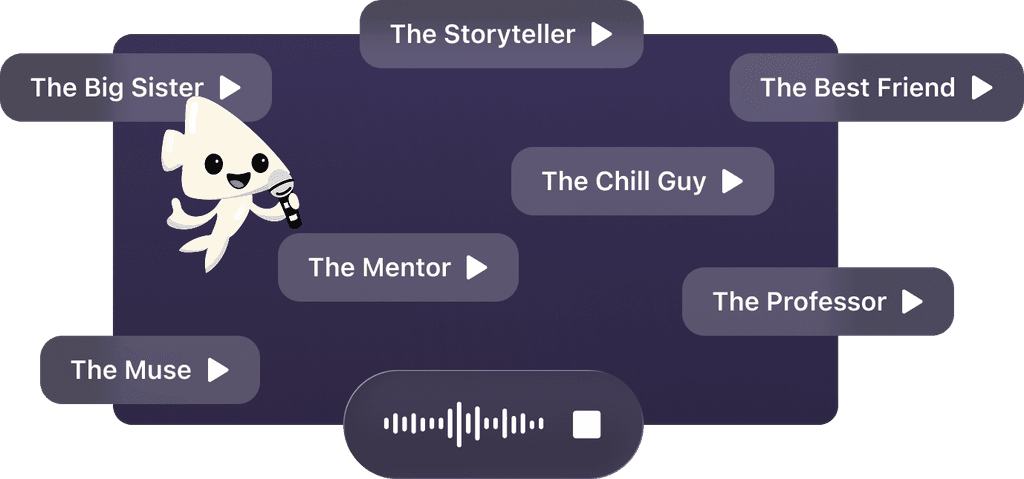
Découvrez Little Liar dans votre propre style d’apprentissage
Posez vos questions, choisissez votre style d’apprentissage et co-créez des idées qui vous correspondent vraiment.
Cree par des anciens de Columbia University a San Francisco
"Instead of endless scrolling, I just hit play on BeFreed. It saves me so much time."


"I never knew where to start with nonfiction—BeFreed’s book lists turned into podcasts gave me a clear path."


"Perfect balance between learning and entertainment. Finished ‘Thinking, Fast and Slow’ on my commute this week."
"Crazy how much I learned while walking the dog. BeFreed = small habits → big gains."
"Reading used to feel like a chore. Now it’s just part of my lifestyle."

"Feels effortless compared to reading. I’ve finished 6 books this month already."
"BeFreed turned my guilty doomscrolling into something that feels productive and inspiring."

"BeFreed turned my commute into learning time. 20-min podcasts are perfect for finishing books I never had time for."
"BeFreed replaced my podcast queue. Imagine Spotify for books — that’s it. 🙌"

"It is great for me to learn something from the book without reading it."
"The themed book list podcasts help me connect ideas across authors—like a guided audio journey."
"Makes me feel smarter every time before going to work"
Cree par des anciens de Columbia University a San Francisco
"Instead of endless scrolling, I just hit play on BeFreed. It saves me so much time."
"I never knew where to start with nonfiction—BeFreed’s book lists turned into podcasts gave me a clear path."
"Perfect balance between learning and entertainment. Finished ‘Thinking, Fast and Slow’ on my commute this week."
"Crazy how much I learned while walking the dog. BeFreed = small habits → big gains."
"Reading used to feel like a chore. Now it’s just part of my lifestyle."
"Feels effortless compared to reading. I’ve finished 6 books this month already."
"BeFreed turned my guilty doomscrolling into something that feels productive and inspiring."
"BeFreed turned my commute into learning time. 20-min podcasts are perfect for finishing books I never had time for."
"BeFreed replaced my podcast queue. Imagine Spotify for books — that’s it. 🙌"
"It is great for me to learn something from the book without reading it."
"The themed book list podcasts help me connect ideas across authors—like a guided audio journey."
"Makes me feel smarter every time before going to work"
"Instead of endless scrolling, I just hit play on BeFreed. It saves me so much time."
"I never knew where to start with nonfiction—BeFreed’s book lists turned into podcasts gave me a clear path."
"Perfect balance between learning and entertainment. Finished ‘Thinking, Fast and Slow’ on my commute this week."
"Crazy how much I learned while walking the dog. BeFreed = small habits → big gains."
"Reading used to feel like a chore. Now it’s just part of my lifestyle."
"Feels effortless compared to reading. I’ve finished 6 books this month already."
"BeFreed turned my guilty doomscrolling into something that feels productive and inspiring."
"BeFreed turned my commute into learning time. 20-min podcasts are perfect for finishing books I never had time for."
"BeFreed replaced my podcast queue. Imagine Spotify for books — that’s it. 🙌"
"It is great for me to learn something from the book without reading it."
"The themed book list podcasts help me connect ideas across authors—like a guided audio journey."
"Makes me feel smarter every time before going to work"
"Instead of endless scrolling, I just hit play on BeFreed. It saves me so much time."
"I never knew where to start with nonfiction—BeFreed’s book lists turned into podcasts gave me a clear path."
"Perfect balance between learning and entertainment. Finished ‘Thinking, Fast and Slow’ on my commute this week."
"Crazy how much I learned while walking the dog. BeFreed = small habits → big gains."
"Reading used to feel like a chore. Now it’s just part of my lifestyle."
"Feels effortless compared to reading. I’ve finished 6 books this month already."
"BeFreed turned my guilty doomscrolling into something that feels productive and inspiring."
"BeFreed turned my commute into learning time. 20-min podcasts are perfect for finishing books I never had time for."
"BeFreed replaced my podcast queue. Imagine Spotify for books — that’s it. 🙌"
"It is great for me to learn something from the book without reading it."
"The themed book list podcasts help me connect ideas across authors—like a guided audio journey."
"Makes me feel smarter every time before going to work"

Telecharger le resume de Little Liar
Obtenez le resume de Little Liar en PDF ou EPUB gratuit. Imprimez-le ou lisez-le hors ligne a tout moment.


