Chapitre 1
The Plot to Kill a President Before He Took Office
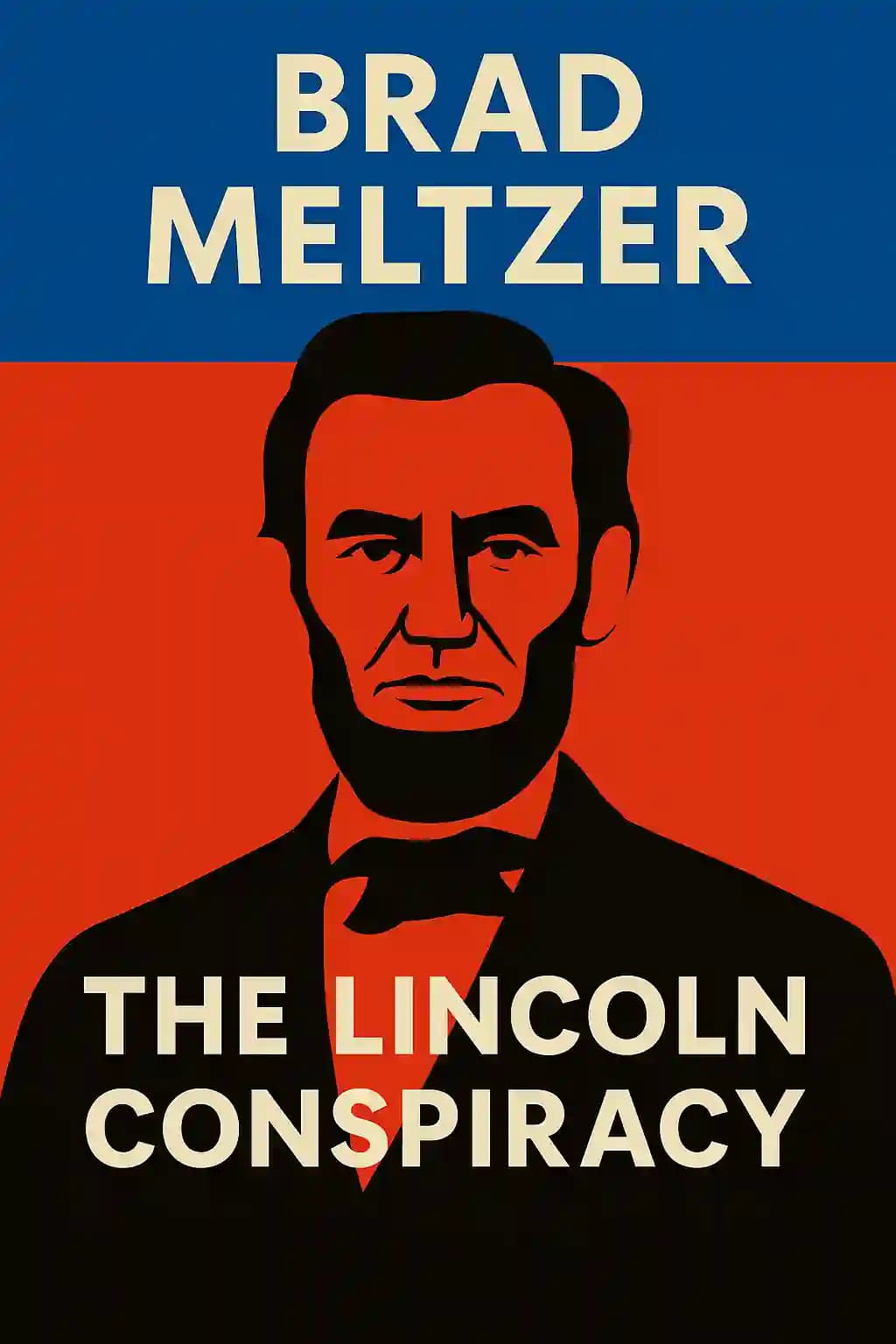
Abraham Lincoln's election in 1860 sparked a conspiracy that would change American history forever. As the nation teetered on the brink of civil war, a shadowy group of Southern sympathizers plotted to assassinate the President-elect before he could take office. This meticulously researched account by Brad Meltzer and Josh Mensch reveals how close America came to losing Lincoln before his presidency even began. The book has captivated readers across political spectrums, with historian Doris Kearns Goodwin calling it "a true story that reads like a thriller." What makes this tale particularly chilling is how few Americans today realize that Lincoln survived an assassination attempt four years before John Wilkes Booth's fatal shot at Ford's Theatre-an attempt that, had it succeeded, would have dramatically altered the course of the Civil War and American history.
Chapitre 2
A Nation Divided: The Powder Keg of 1860
By the 1850s, America was a country fundamentally divided. The issue of slavery had transformed from a moral debate into an existential crisis threatening the Union itself. With 3.5 million people enslaved in the South-a sevenfold increase from seventy-five years earlier-the institution had become deeply entrenched in Southern economics, religion, and social order. Cotton production created enormous wealth for white landowners while subjecting enslaved people to barbaric fourteen-hour workdays and brutal punishments.
The political divide manifested violently even in Congress. In 1856, Senator Charles Sumner of Massachusetts delivered a powerful five-hour speech condemning slavery called "The Crime Against Kansas." Days later, Congressman Preston Brooks of South Carolina approached Sumner at his Senate desk and savagely beat him with a cane, striking him repeatedly even as the Senator fell unconscious and tried to crawl away. Brooks became a Southern hero, receiving replacement canes as gifts, while Sumner became a Northern martyr.
With Congress nearly evenly divided-sixteen free states versus fifteen slave states-the status of western territories became crucial to the balance of power. Southern politicians like John C. Calhoun claimed slavery benefited the enslaved, while Northern leaders like Senator William Seward declared an "irrepressible conflict" between slave and free states. As members of Congress began arming themselves with revolvers and knives, the nation moved closer to a confrontation that would require extraordinary leadership.
Against this backdrop, an unlikely figure emerged on the national stage. Abraham Lincoln, born in a one-room dirt-floored log cabin in Kentucky, had grown up in frontier poverty. Despite minimal formal schooling, he taught himself to read and write, developing an insatiable hunger for knowledge. By 1858, he challenged powerful Democratic Senator Stephen Douglas in a series of debates that established his reputation as an articulate opponent of slavery's expansion. Though Lincoln lost that Senate race, his performance caught national attention as Republicans looked toward the 1860 presidential election.
Chapitre 3
The Rail Splitter's Unlikely Rise
Lincoln's path to the presidency was anything but certain. When he arrived at the Republican National Convention in Chicago in May 1860, he was considered a long-shot candidate behind frontrunner William Henry Seward of New York. But Lincoln had key advantages: the Chicago location gave him a home-state edge, and unlike Seward, he lacked the baggage of Northeast politics.
Lincoln's campaign manager, David Davis, executed a brilliant strategy-positioning Lincoln as everyone's best second choice. When voting began on May 18, Lincoln's supporters created a deafening roar in the convention hall when his name was called. By the third ballot, Lincoln had secured the nomination, with a telegram arriving in Springfield bearing the simple message: "We did it-Glory to God."
The Democratic Party, meanwhile, was fracturing. At their convention in Charleston, moderate Democrats backed Illinois Senator Stephen Douglas, while Southern "Fire-Eaters" refused any compromise on slavery. The convention descended into chaos with shouting matches and fistfights. The party ultimately split, nominating two different candidates-Douglas for the Northern Democrats and John C. Breckinridge for the Southern Democrats.
This division virtually guaranteed Lincoln's victory in November, though he would win less than 40% of the popular vote. His election was profoundly sectional-he didn't carry a single slaveholding state, and in many Southern states, no one even voted for him. To Southerners, Lincoln represented "a party founded on the single sentiment of hatred of African slavery." Some feared he would "instigate revolt among the slaves" and that Republicans would "march against the South to cut the throat of every white man."
Chapitre 4
The Gathering Storm of Secession
Lincoln's victory on November 6, 1860, triggered immediate crisis. Just three days later, South Carolina's General Assembly passed a resolution declaring his election "a hostile act" and announcing the state was "ready to dissolve her connection with the government of the United States." By December 20, South Carolina had officially seceded from the Union.
As President-elect, Lincoln found himself constrained by tradition. Custom dictated he remain largely silent until his March 4 inauguration, four months away. Many Northerners, Lincoln included, initially viewed Southern secession threats with skepticism, dismissing them as "the old game of scaring and bullying the North into submission."
Yet the crisis accelerated rapidly. In just three days-January 9-11, 1861-three more states seceded: Mississippi, Florida, and Alabama. Each explicitly cited slavery as their primary motivation, with Mississippi declaring "Our position is thoroughly identified with the institution of slavery." By January 19, Georgia became the fifth state to secede, and Texas would soon follow.
The secession movement was fueled by a campaign of fear throughout the South. Newspapers and politicians spread hysteria about supposed Northern plots to incite slave revolts, with the Charleston Mercury warning of "violence, murder, poisons and rape." Southern elites convinced poor whites to join their cause by appealing to racial superiority.
All this occurred before Lincoln had enacted a single policy or given a speech as President-elect. Despite mounting pressure to compromise on slavery to preserve the Union, Lincoln remained firm on his core principle-preventing slavery's expansion into new territories. "On that point hold firm, as with a chain of steel," he wrote to Congressman Washburne.
Chapitre 5
The Baltimore Plot Takes Shape
As the nation fractured, a more immediate threat to Lincoln emerged. In Baltimore, Maryland, a barber named Cypriano Ferrandini was at the center of an intricate web of Southern sympathizers. As a member of the Knights of the Golden Circle (KGC), a secret society that had shifted focus from expanding slavery internationally to fighting the domestic "threat" of Lincoln's presidency, Ferrandini connected with fellow KGC member William Byrne.
Byrne had founded the National Volunteers, initially to support Southern Democratic candidate John C. Breckinridge, but after Lincoln's election, the group transformed into a militant organization with hundreds of members between Baltimore and Washington. Their manifesto pledged to "stand by and defend the South" against the "Black Republican party." By early 1861, Ferrandini had formed the Constitutional Guards, which operated under the National Volunteers umbrella.
From this position of influence, Ferrandini began recruiting for a new secret group with an even more sinister purpose-not merely disrupting the inauguration, but targeting President-elect Lincoln himself. The conspirators planned to strike when Lincoln's train arrived at Baltimore's Calvert Street Station on February 23. They would create a disturbance to draw away police protection, leaving Lincoln vulnerable as he passed through the station tunnel into crowded streets.
The plot might have succeeded if not for the intervention of America's first private detective, Allan Pinkerton. Born in Glasgow, Scotland in 1819, Pinkerton had grown up in notorious slums before immigrating to America in 1842. After accidentally discovering a counterfeiting operation while gathering wood in 1846, he developed a reputation as a skilled detective and eventually established Pinkerton's National Detective Agency.
Chapitre 6
The Detective and the Railroad President
In January 1861, Pinkerton received an urgent letter from Samuel M. Felton, president of the Philadelphia, Wilmington and Baltimore Railroad. Felton had learned from renowned reformer Dorothea Dix about "a deep-laid conspiracy" to capture Washington, destroy transportation routes from the North, and prevent Lincoln's inauguration. Even more chilling, conspirators planned to "murder him while on his way to the capital."
Recognizing the gravity of the situation, Pinkerton immediately assembled an elite team of operatives for an undercover mission in Baltimore. Among them: Timothy Webster, a physically powerful former NYC policeman; Harry Davies, a well-dressed young man educated as a Jesuit priest who spoke multiple languages; and Kate Warne, America's first female detective whom Pinkerton had hired in 1856 despite convention.
Pinkerton's team infiltrated secessionist circles in Baltimore, with agent Harry Davies befriending wealthy secessionist Otis K. Hillard, a member of the Palmetto Guards militia. After a day of drinking and socializing across Baltimore, the increasingly intoxicated Hillard took Davies to Barnum's City Hotel to meet someone significant-a man he called "Captain Ferrandini."
Meanwhile, Pinkerton himself posed as Southern sympathizer "John Hutcheson" to gain the trust of stockbroker Thomas Luckett. After donating $25 (equivalent to $750 today) to the Southern cause, Luckett revealed a secret organization stockpiling weapons and ammunition. The leader, he said, was "Captain Ferrandini," who "had a plan fixed to prevent Lincoln from passing through Baltimore."
Chapitre 7
Face to Face with the Conspirators
Pinkerton's investigation reached a pivotal moment when he arranged to meet Ferrandini at Barr's Saloon, a popular establishment in Baltimore, on the evening of February 15. Operating under his alias "John H. Hutcheson," Pinkerton described the Italian barber as "a fine looking, intelligent appearing person" whose perfectly trimmed mustache reflected his professional precision. The detective noted Ferrandini's carefully pressed clothes and commanding presence that drew attention from others in the establishment.
As their conversation naturally shifted to politics over drinks, Pinkerton witnessed a dramatic transformation in Ferrandini's demeanor. The barber became "very excited," his voice rising with passionate intensity as he argued that Southerners were "justified resorting to any means to prevent Lincoln from taking his seat." His hands gesticulated wildly as he spoke of perceived Northern aggression and Southern rights, drawing nearby patrons into his orbit.
Pinkerton, a seasoned detective accustomed to maintaining emotional distance, found himself unexpectedly affected by Ferrandini's magnetic personality, noting "even I myself felt the influence of this man's strange power." The barber's charisma seemed to electrify the room as his rhetoric grew increasingly violent. With unwavering conviction, he declared, "Murder of any kind is justifiable and right to save the rights of the Southern people." Then, fixing Pinkerton with an intense stare that the detective would never forget, Ferrandini made his chilling proclamation: "Mr. Hutcheson, if I alone must do it, I shall-Lincoln shall die in this city."
The investigation deepened when Pinkerton's trusted operative Harry Davies successfully infiltrated a clandestine meeting several days later. In a tobacco-hazed room lit only by gas lamps, Davies joined about two dozen conspirators. After taking a blood oath of secrecy with their hands on a Bible, Davies witnessed Ferrandini unveil their meticulously planned assassination plot. The scheme targeted Lincoln on February 23rd during the president-elect's scheduled train transfer at Baltimore's Calvert Street Station. The conspirators had devised a sophisticated plan to create a manufactured riot or disturbance, drawing away police protection and leaving Lincoln exposed to their assassins.
The meeting's culminating moment came with a ballot drawing to select the assassin. Members were told one red ballot among white ones would designate the chosen killer. However, Davies discovered a crucial detail: the conspiracy's leadership had secretly loaded the ballot box with eight red ballots instead of one. This calculated insurance policy ensured multiple potential assassins would be ready to act, significantly increasing their chances of success and making it nearly impossible to identify a single perpetrator afterward.
Chapitre 8
Racing to Save the President-Elect
With evidence of the plot mounting, Pinkerton sent Kate Warne to New York to contact Norman Judd, a trusted member of Lincoln's inner circle traveling with the inaugural train. Meanwhile, Lincoln had begun his journey from Springfield on February 11, delivering an emotional farewell address: "I now leave, not knowing when, or whether ever, I may return, with a task before me greater than that which rested upon Washington."
Lincoln's twelve-day journey to Washington included stops in numerous cities where he delivered speeches and met enthusiastic crowds. His eclectic entourage included longtime political allies, personal physician William Wallace, secretaries John Nicolay and John Hay, and an informal security detail led by his brawny friend Ward Hill Lamon.
On February 21, with Lincoln's train approaching Philadelphia and his passage through Baltimore just two days away, Pinkerton finally secured a crucial meeting with Norman Judd at the St. Louis Hotel. Felton explained how his concerns about railroad sabotage led to hiring Pinkerton, which unexpectedly revealed the assassination plot. Convinced of the "great danger," Judd agreed they must change Lincoln's schedule, sneaking him out that night-36 hours ahead of the announced schedule-on an overnight train through Baltimore.
That evening, despite his exhaustion from a grueling day, Lincoln met with Pinkerton in his hotel room. As Lincoln later recalled, "I went, and found there Mr. Pinkerton, a skillful police detective." Pinkerton detailed the circumstances of the plot, and Lincoln listened attentively, showing no emotion but appearing "thoughtful and serious, but decidedly firm."
Chapitre 9
The Midnight Journey
What convinced Lincoln to change his plans was the arrival of Frederick Seward, son of William H. Seward, Lincoln's incoming Secretary of State. Frederick delivered three critical letters: one from his father urging Lincoln to read the enclosed messages, another from General Winfield Scott insisting on immediate contact, and a third from Colonel Charles P. Stone warning of an assassination plot in Baltimore involving "rowdies holding secret meetings."
This remarkable corroboration from two independent sources-Pinkerton's team and Seward's separate investigation-convinced Lincoln that "such a plot to be in existence." He agreed to the secret passage through Baltimore, though some of his advisors, like Colonel "Bull Head" Sumner, considered it "a damned piece of cowardice."
On February 22, after raising a new 34-star flag above Independence Hall and delivering a poignant speech where he declared, "I was about to say I would rather be assassinated on this spot than to surrender" the principle of liberty, Lincoln slipped away from a reception in Harrisburg. He donned an overcoat, wrapped a shawl around his neck, and traded his iconic stovepipe hat for a low, soft-brimmed one, transforming his appearance.
With only Ward Hill Lamon accompanying him, Lincoln boarded a specially chartered train to Philadelphia. There, he met Pinkerton and was escorted to the PW&B train depot. Kate Warne had secured three berths in the rear sleeping car under false names: "John H. Hutcheson," "Mrs. Cherry," and her "invalid brother."
The tall President-elect stooped and leaned on Pinkerton's arm to disguise his height as they entered through the rear door of the sleeping car. Warne guided Lincoln to the rearmost berth where he had to bend his long legs to fit behind the curtain.
Chapitre 10
Through the Heart of Danger
At 12:45 a.m. on February 23, the train carrying Lincoln crossed into Maryland's borders, entering what many considered the most dangerous phase of the journey. Despite bone-deep exhaustion from the long journey, not a single passenger dozed, their nerves crackling with a mixture of anticipation and dread. Pinkerton had orchestrated an intricate web of security measures that demonstrated his legendary attention to detail. Every quarter-mile along the route, trusted railroad men stood vigil with carefully positioned lanterns, each light a silent confirmation that the track ahead remained safe and clear. In a particularly shrewd move, Pinkerton had ordered all telegraph wires between major cities cut, creating an information blackout that prevented any possibility of conspirators coordinating their movements.
The train glided into Baltimore's outskirts around 3:15 a.m., the city's usual bustle replaced by an eerie stillness that made every shadow seem threatening. President Street Station lay dark and hushed, its normal activity suspended by the late hour. In a carefully choreographed operation, workers detached their passenger car with minimal noise, and horses drew it through Baltimore's cobblestone streets. The route took them dangerously close to Barnum's City Hotel, a known gathering place for Southern sympathizers and the suspected headquarters of the assassination plot. Inside, the conspirators slept, unaware that their quarry was passing mere blocks away.
The tension peaked as they navigated through Baltimore's narrow streets, every clip-clop of the horses' hooves seeming to echo too loudly in the pre-dawn silence. By 4:30 a.m., Lincoln's train had safely cleared Baltimore's city limits, steaming toward Washington while the would-be assassins still lay in their beds, their elaborate plot already rendered futile.
The arrival in Washington brought one final moment of heart-stopping drama. As Lincoln stepped onto the platform, a burly figure emerged from the shadows, calling out the president-elect's name and lunging forward. Pinkerton, operating on pure instinct, immediately struck the man with a swift elbow, his body tensing for combat. "Don't strike him!" Lincoln's voice rang out with surprising authority. "That is my friend!" The mysterious figure turned out to be Elihu Washburne, a trusted Congressman from Illinois, who had received word of Lincoln's early arrival through Senator William Seward's confidential channels.
Relief flooded through the group as Lincoln found himself surrounded by loyal allies in the capital. Pinkerton, maintaining operational security until the very end, sent his carefully coded telegram to Chicago: "Plum arrived here with Nuts this morning-all right." The message's seemingly innocent words masked a momentous achievement - the successful prevention of what could have been a catastrophic assassination, one that would have altered the course of American history before Lincoln's presidency even began.
Chapitre 11
The Aftermath and Lincoln's Legacy
News of Lincoln's secret arrival spread quickly, igniting a frenzy of rumors and political reactions. Southern papers attacked Lincoln's character, with The Charleston Mercury calling it "the most wretched cowardice" and The Baltimore Sun claiming no assassination plot existed. Frederick Douglass offered perhaps the most insightful perspective, drawing parallels between Lincoln's midnight journey and the plight of escaped slaves, noting that what appears "cowardly" actually showed "wisdom, forethought, and discretion" in evading "slave-holding assassins."
On his very first day in office, Lincoln faced the Fort Sumter crisis that would define his presidency. After agonizing deliberation, he chose to send naval vessels with provisions only to the fort, notifying South Carolina's governor in advance of his peaceful intentions. This transparency removed the element of surprise but established that any violence would be initiated by the Confederacy.
When Confederate forces fired on Fort Sumter on April 12, 1861, the Civil War began. The conflict would claim more American lives than all other U.S. wars combined from the Revolution through Korea. The burden of approximately 3,500 deaths weekly-about 500 daily-weighed heavily on Lincoln as Commander in Chief.
Despite personal grief and relentless criticism, Lincoln persevered through impossible decisions. He evolved from political caution regarding slavery to bold action, issuing the Emancipation Proclamation and supporting the Thirteenth Amendment. Frederick Douglass, once one of Lincoln's harshest critics, came to call him "the hour and the man of our redemption."
Lincoln's greatness stemmed from his embodiment of America's promise-that even someone born into poverty deserved equal rights and opportunities. Tragically, his early premonition of his own death came true when John Wilkes Booth assassinated him on April 14, 1865, just days after Lee's surrender.
Had the Baltimore Plot succeeded in February 1861, would Vice President Hamlin or another leader have made the same crucial decisions to preserve the Union? We'll never know. But thanks to Allan Pinkerton, Kate Warne, and their team of detectives, Lincoln survived to lead America through its greatest crisis-preserving the Union and setting the nation on a path toward fulfilling its founding promise that all people are created equal.
Chapitre 12
The Conspiracy's Long Shadow
The Baltimore Plot remains partially shrouded in mystery, particularly regarding which organizations were truly responsible. While Ferrandini and likely Otis K. Hillard were members of the Knights of the Golden Circle (KGC), there's no evidence the KGC's national leadership planned or supported the assassination attempt. The conspirators almost certainly acted independently of the formal organization.
After the Civil War began, Ferrandini initially remained active in Maryland's secessionist movement, forming a militia company called the Winan's Guards. Despite Maryland's Southern sympathies, the state remained in the Union, and with increasing federal troop presence, secessionist activities became more difficult. In May 1863, Ferrandini was arrested for expressing Confederate sympathies and was forced to take a loyalty oath to secure his release.
Throughout the war and after, Ferrandini remarkably continued his position as barber at Barnum's City Hotel. He died of natural causes on December 20, 1910, at age eighty-eight. His obituary in The Baltimore Sun described him as having "a genial disposition and pleasant manner" and revealed that during the Civil War, he had hidden firearms, flags, and valuables under his floorboards to evade Union soldiers, demonstrating his unwavering Southern loyalty.
As for Pinkerton, he established "McClellan's Secret Service" during the Civil War-a pioneering military intelligence operation that employed his best agents including Kate Warne. Tragically, his agent Timothy Webster was later captured while undercover in Richmond and hanged as a spy. Kate Warne continued working for Pinkerton until her death from illness in 1868 at age thirty-five.
The Baltimore Plot faded from public consciousness during the war, only to be reexamined after the conflict ended. A feud between Pinkerton and Lincoln's bodyguard Ward Hill Lamon led to competing accounts of the conspiracy, with Lamon claiming there was no plot at all-suggesting Pinkerton fabricated the danger to bring acclaim to his detective agency.
However, modern evidence strongly supports Pinkerton's version. His contemporaneous field notes, the consistent reports from his agents, and the fact that he actively avoided publicity at the time contradict Lamon's claim. Most convincingly, a completely separate team of detectives working for William Seward and General Winfield Scott independently reached the same conclusion about the assassination threat.
A century and a half later, this decision likely saved Lincoln's life and preserved his presidency during America's most tumultuous four years-a presidency that, despite its tragic end, forever changed the course of American history and the meaning of freedom itself.