Chapitre 1
The Moral Mathematics of Saving Lives
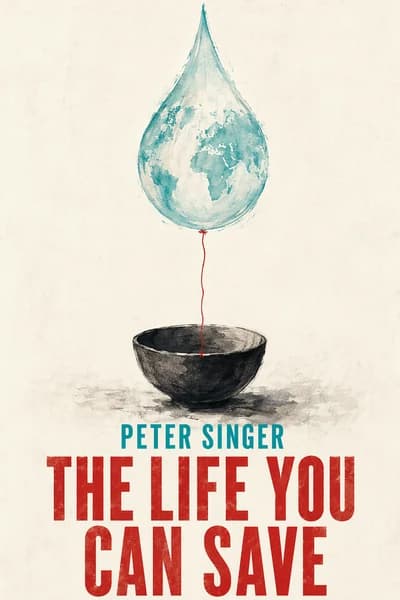
Have you ever considered that the money you spent on your last coffee could have saved a child's life? This isn't hyperbole-it's the startling reality Peter Singer presents in "The Life You Can Save." First published in 2009 and updated in a 10th anniversary edition, this book has transformed how we think about our moral obligations to those living in extreme poverty. Bill Gates calls it "a persuasive and inspiring work," while The New York Times describes it as "a thunderous clarion call to action." The book has launched a movement, inspired thousands to redirect millions of dollars to effective charities, and even prompted Facebook co-founder Dustin Moskovitz and his wife Cari Tuna to restructure their philanthropy. Singer's argument is devastatingly simple yet profound: if you would save a drowning child at the cost of ruining your clothes, why wouldn't you save a distant child at the same financial cost? This question has made "The Life You Can Save" required reading in ethics courses worldwide and established Singer as perhaps the most influential living philosopher.
Chapitre 2
The Drowning Child and Our Moral Blind Spot
Imagine walking past a shallow pond and noticing a toddler drowning. No one else is around. Saving the child would ruin your expensive shoes and make you late for work. What would you do? When Singer poses this scenario to his ethics students, they unanimously agree they would save the child without hesitation. The response is consistent across cultures, income levels, and backgrounds - an almost universal moral intuition. Yet this seemingly obvious moral response creates a troubling inconsistency in how we live our daily lives, revealing a profound disconnect between our ethical instincts and our actual behavior.
While we've made remarkable progress-extreme poverty has fallen from 34% to 10.7% of the global population in recent decades-736 million people still live on less than $1.90 per day. This progress, while significant, masks the ongoing tragedy of preventable suffering. This isn't the relative poverty we see in wealthy nations, where the "poor" often own televisions and cars. This is absolute poverty: chronic hunger, lack of basic healthcare, no education, and early death. Children die from easily preventable diseases like malaria and diarrhea. Mothers lack basic prenatal care. Millions of young people never learn to read or write.
Meanwhile, those of us in affluent countries enjoy unprecedented comfort. We have luxuries unavailable even to kings of past centuries-air conditioning, refrigeration, instant communication, rapid transportation. The average American spends $1,100 annually on coffee, $1,800 on clothing, and throws away nearly 400 pounds of food per year. We work fewer hours to meet our basic needs yet often waste money on bottled water when tap water is perfectly safe, expensive coffees, unworn clothing, and discarded food. A single fancy dinner out could fund deworming medication for hundreds of children, or provide mosquito nets to protect multiple families from malaria.
The stark contrast between extreme poverty and our casual spending raises a profound question: If we wouldn't hesitate to save a drowning child at the cost of our shoes, how can we justify not helping those dying from poverty when it would cost us only luxuries we'd hardly miss? This is Singer's central challenge-a moral equation that's difficult to escape once you truly confront it. The distance between us and those in extreme poverty doesn't change the moral calculus - whether the child is drowning before our eyes or dying of preventable causes halfway around the world, our capacity to help at relatively little cost to ourselves creates a moral imperative that's hard to dismiss.
Chapitre 3
Beyond Good Intentions: The Ethics of Giving
Singer presents a straightforward logical argument: Suffering and death from poverty are bad. If you can prevent something bad without sacrificing anything nearly as important, it's wrong not to do so. By donating to effective charities, you can prevent suffering and death without comparable sacrifice. Therefore, not donating is wrong.
This reasoning challenges our comfortable assumption that once we've met basic social obligations like paying taxes, surplus money is ours to spend freely. It suggests that the line between obligation and generosity may be drawn in the wrong place.
Major religious traditions support this view. Jesus emphasized charity to the poor above all else, with early Christians sharing possessions according to need. Thomas Aquinas taught that surplus wealth is "owed" to the poor by right, not merely as optional charity. Judaism considers tzedakah (charity/justice) essential to a just life. Islam requires annual zakat from those above minimum wealth. Even Mencius in the Chinese tradition harshly criticized rulers who allowed people to starve.
Despite these teachings, we resist the implications. We tell ourselves we've earned our money and have the right to enjoy it. But this overlooks the "social capital" that enables success in wealthy nations-education, infrastructure, stable governments, and rule of law that those in poor countries lack. The libertarian view that we only owe compensation to those we've harmed ignores our broader responsibilities.
The world's wealth distribution is starkly unequal-1% own 45% of global wealth while 64% own just 2%. And the rich have harmed the poor in concrete ways, from European fishing fleets depleting African coastal waters to climate change disproportionately affecting developing nations. President Museveni of Uganda bluntly stated that industrialized nations are causing "aggression" through global warming, as nearly half of greenhouse gases come from the U.S. and Europe while Africa contributes less than 3%.
Chapitre 4
Why We Don't Give: The Psychology of Indifference
If the moral case for giving is so strong, why don't we give more? Research reveals several psychological barriers that prevent us from responding to distant suffering as we would to immediate needs.
The "identifiable victim effect" shows we're more generous toward specific individuals than statistical victims. When participants were shown information about "Rokia," a specific child in need, they gave almost twice as much compared to those given general information about millions suffering. Our emotional systems respond strongly to images and stories of individuals, while statistics leave us cold.
Our concern naturally extends only to those close to us-a tendency Adam Smith noted 250 years ago. Americans donated $1.54 billion after the 2004 tsunami that killed 220,000 people in Southeast Asia, but $6.5 billion for Hurricane Katrina which killed 1,600 Americans. This parochialism evolved from millions of years as social mammals who survived by caring for kin and tribe members.
"Futility thinking" manifests when people dismiss charitable giving as "drops in the ocean." Research shows people prefer saving 80% of 100 lives (80 people) over saving 20% of 1,000 lives (200 people) at the same cost-valuing proportion over absolute numbers.
The "diffusion of responsibility" explains why we're less likely to help when we believe others could also help. In a famous experiment, 70% of students offered help when alone after hearing someone in distress, but only 7% helped when another person was present and didn't respond.
Our sense of fairness diminishes our willingness to help when we feel others aren't doing their fair share. This runs so deep that in "ultimatum games," people regularly reject offers they perceive as unfair, even when accepting would benefit them.
While these psychological tendencies explain our reluctance to help distant strangers, they don't justify it. When examined rationally, these intuitions fail ethical scrutiny. The fact that our evolved intuitions don't align with impartial ethics doesn't mean we can't overcome them through reason and moral growth.
Chapitre 5
Creating a Culture of Giving
We can combat these psychological barriers by creating a culture where giving is normal, expected, and visible. Several approaches have proven effective in increasing charitable behavior.
Making giving visible increases generosity. Studies show people donate more when informed about others' contributions, particularly those in their reference group. In experiments at a public radio station and a Swedish university, learning about others' above-average donations significantly increased giving. While religious traditions have historically valued anonymous giving, the benefits of openness in developing a culture of giving may outweigh concerns about pure motives.
Collective pledging creates powerful commitment mechanisms. Toby Ord, an Oxford philosophy student, calculated he could donate two-thirds of his lifetime academic earnings ($1 million) and prevent 80,000 cases of blindness while still living comfortably. This realization led him to found Giving What We Can, which asks members to pledge 10% of their income to effective charities. Within ten years, it gained over 4,000 members who pledged $1.5 billion collectively.
Similarly, The Giving Pledge, launched by Bill and Melinda Gates and Warren Buffett in 2010, asks billionaires to give more than half their wealth to philanthropy. By 2019, it had 204 pledgers from 23 countries, including prominent figures like MacKenzie Bezos, Elon Musk, and Mark Zuckerberg.
Individual action can be powerful even without community support. Andrei Smith, a car salesman, found purpose by donating 5% of his commissions to effective charities. Boris Yakubchik, a math teacher earning $47,000, once donated 50% of his pre-tax income, noting that even after such generosity he remained among the world's wealthiest 5%.
Social media has become a powerful tool for spreading philanthropic ideas, exemplified by "Giving Tuesday" which has generated over $1 billion in donations since 2012. However, viral fundraising doesn't always target the most effective causes-highlighting the need for more strategic approaches to charitable social media campaigns.
Chapitre 6
The Life-Saving Math: Finding Effective Charities
Finding effective charities is crucial but challenging. Many donors fixate on administrative costs when evaluating charities, but this approach is fundamentally misguided. Low administrative costs can actually harm effectiveness-cutting expert staff might improve financial ratios but lead to failed projects.
Organizations like GiveWell have conducted in-depth investigations to identify charities with strong empirical evidence of improved life outcomes. Their recommended organizations include those preventing malaria (Malaria Consortium's Seasonal Malaria Chemoprevention program at $3.40 per child and Against Malaria Foundation's bed nets at $2 per net protecting two people for three years), addressing vitamin deficiencies (Helen Keller International's vitamin A supplementation at less than $1 per supplement), and preventing malnutrition (Project Healthy Children's food fortification at just 26 cents per person per year).
The cost-effectiveness of these interventions is remarkable. Development Media International broadcasts health messages on local radio stations in low-income countries, increasing healthcare visits for children with malaria by 56%, pneumonia by 39%, and diarrhea by 73%. Their three-year campaign in Burkina Faso saved nearly 3,000 children's lives at just $756 per life saved, with projected costs as low as $196 in countries with greater population density.
Other highly effective charities address preventable health issues like blindness and obstetric fistula. Organizations like The Fred Hollows Foundation restore sight through simple procedures costing as little as $50 per cataract surgery. They've supported over 4 million eye operations and restored sight to 2.5 million people, enabling 85% of previously blind men and 58% of women in India to rejoin the workforce.
Obstetric fistula affects at least a million women in impoverished countries, causing continuous leakage of urine or feces and leading to social ostracism. The Catherine Hamlin Fistula Foundation and Fistula Foundation provide life-transforming surgical repair for about $650-700 per woman.
When comparing costs to save lives-$196-756 through health radio campaigns, $2,041 through seasonal malaria prevention, $3,000-5,000 through bed nets-these interventions provide extraordinary value compared to the $2.2-10 million typically spent to save a life in wealthy nations.
Chapitre 7
Beyond Aid Skepticism: What Actually Works
Critics of foreign aid often cite examples of waste and corruption, but this overlooks remarkable progress and misrepresents the scale of Western generosity. The much-cited $2.3 trillion in aid over five decades amounts to just $46 billion annually-about $60 per person in wealthy nations or merely 0.3% of their total income. For perspective, this is less than what Americans spend annually on pet food, challenging the notion that aid represents an overwhelming financial burden on donor countries.
Much of this aid was politically motivated rather than humanitarian, with countries like Afghanistan receiving disproportionate amounts due to strategic interests rather than poverty levels. For instance, in 2011, Afghanistan received $219 per capita in aid, while more impoverished nations like Niger received just $50 per capita. Aid effectiveness is further compromised by practices like the U.S. tying 32% of its aid to American-made products and requiring food aid to use domestic crops shipped on U.S. vessels. These requirements can increase costs by 30-50% and delay delivery by months, making a $100 aid package effectively worth only $50-70 to recipients.
Despite these flaws, aid has achieved remarkable successes. The smallpox eradication campaign saved an estimated 63 million lives at approximately $40,000 per life-an extraordinary bargain compared to domestic safety spending in wealthy nations, where similar interventions often cost millions per life saved. Other successful programs include the near-elimination of Guinea worm disease, reducing cases from 3.5 million in 1986 to just 54 in 2019, and dramatic increases in childhood vaccination rates, rising from 20% in 1980 to over 80% today.
Recent research has improved our understanding of what works. While microcredit initially seemed promising, rigorous studies across six countries revealed it generally doesn't increase income, boost children's education, or substantially empower women. However, the "Graduation approach" has demonstrated remarkable success through rigorous evaluation across multiple countries including Ethiopia, Ghana, Honduras, India, Pakistan, and Peru. This multifaceted program provides ultra-poor people with productive assets (typically worth $500-1000) or cash, business training, mentoring, and access to savings facilities. Nine well-conducted randomized controlled trials have shown sustained positive outcomes in nutrition, income, and well-being, with household incomes increasing by 37% on average after three years.
Village Enterprise, implementing this approach in East Africa, achieves an impressive $1.80 return in lifetime household income for every $1 spent. With costs around $30 per person impacted, the World Bank suggests this approach could become "an integral component" of strategies to eradicate extreme poverty. The program has already reached over 1 million people across Uganda, Kenya, and the Democratic Republic of Congo, demonstrating that well-designed aid programs can create lasting positive change when based on evidence and proper implementation.
Chapitre 8
Family Versus Humanity: The Moral Tension
When does our obligation to others outweigh our duty to our own family? This tension emerges in powerful examples of extreme altruism. Zell Kravinsky donated not only his $45 million fortune but also a kidney to a stranger, reasoning that withholding it would value his life 4,000 times more than another's-a ratio he found "obscene." His decision caused significant strain in his marriage, with his wife threatening divorce, yet he maintained that the mathematical logic of saving lives couldn't be ignored. Similarly, physician Paul Farmer struggles with balancing love for his daughter Catherine against his commitment to patients in Haiti, driven by the conviction that "if I don't work this hard, someone will die who doesn't have to." Farmer's work establishing hospitals in impoverished areas meant missing many of his daughter's milestones, forcing him to grapple with competing moral imperatives.
Throughout history, from Abraham's willingness to sacrifice Isaac to Agamemnon sacrificing Iphigeneia, we've recognized that parental love sometimes yields to higher moral imperatives. These ancient narratives reflect a persistent ethical dilemma that continues to challenge modern sensibilities. The Buddhist tradition offers another perspective, teaching detachment from family bonds in pursuit of universal compassion, while Confucianism argues that family devotion is the foundation of broader social virtue.
Chuck Collins, who gave away his Oscar Mayer inheritance, believes parents should provide for their children's basic needs but then "expand the circle" of concern. He advocates for a middle path where wealth beyond essential education and healthcare should serve broader social purposes. Modern philanthropists like Melinda Gates echo this philosophy, balancing substantial inheritance for their children with massive charitable giving.
This tension manifests differently across cultures and economic classes. While wealthy families debate the ethics of large inheritances, many working-class families face daily choices between helping extended family members and maintaining their own household's stability. Some parents choose lower-paying public service careers despite having children to support, believing their work serves a greater good.
The tension between parental love and universal obligation remains fundamentally unresolvable. Yet we can find a middle ground that respects both our special obligations to those close to us and our duties to humanity at large. This might mean setting clear limits on family support while maintaining consistent charitable giving, or involving children in philanthropic decisions to cultivate both family bonds and broader social responsibility. The key lies not in choosing one obligation over another absolutely, but in finding sustainable ways to honor both commitments.
Chapitre 9
A Standard We Can Live With
Is it truly ethical to demand we sacrifice until we reach the point where giving more would harm us nearly as much as our donations help others? This seems to demand too much of us. One alternative view suggests we're only obligated to do our "fair share" of addressing global poverty-not to compensate for others' inaction.
If we calculate this fair share, the numbers are surprisingly modest. The global poverty gap-the amount needed to raise everyone above the extreme poverty line-has fallen from $300 billion in 1980 to just $80 billion today (less than Americans spend on alcohol annually). This represents merely 0.16% of OECD countries' GDP, or 16 cents per $100 earned.
But is limiting our obligation to a "fair share" morally defensible? If ten children are drowning and ten adults are present, but only five adults help, should the rescuers stop after saving one child each? The answer is clearly no. Those refusing to help become morally irrelevant-the children's lives cannot depend on others' failure to act.
To find a practical middle ground, I propose a progressive giving scale ranging from 1% for those earning $40,000-$81,000 to 50% for those making over $53 million annually. If everyone in the upper half of U.S. taxpayers gave at these levels, we'd raise $604 billion yearly. Extending this worldwide among the billion affluent people globally would generate $1.3 trillion annually-20 times what's needed to eliminate extreme poverty.
The greatest motivation for giving may be the fulfillment it brings. Ancient wisdom from Buddha, Socrates, and Epicurus taught that doing good brings happiness, and modern research confirms this. Studies show those who give to charity are 43% more likely to report being "very happy" and less likely to feel hopeless. Brain scans reveal that when people donate, their brain's "reward centers" activate-the physical manifestation of the "warm glow" altruists describe.
Chapitre 10
The Path Forward: What One Person Can Do
We live in a unique moment in human history-extreme poverty has reached its lowest point ever, while global wealth has soared to unprecedented heights. Modern technology not only connects us instantly to communities experiencing desperate poverty but also provides revolutionary tools to help them through advanced healthcare delivery systems, innovative agricultural techniques, and instantaneous communication networks that bridge vast distances.
Progress in recent decades has been truly remarkable: child deaths under age five have plummeted from 20 million in 1960 to 5.4 million in 2017. This represents millions of lives saved, yet this number remains a moral stain on our wealthy world. Most of these remaining deaths are preventable through simple, affordable interventions like vaccines, oral rehydration therapy, mosquito nets, and basic antibiotics - interventions that cost mere dollars per life saved.
Like mountaineers emerging from dense clouds to suddenly glimpse a challenging but feasible path to the summit, humanity can now envision a clear route to ending extreme poverty. While philanthropists like Warren Buffett and Bill Gates have contributed tens of billions to this cause through their foundations, their generous gifts represent only a fraction of what wealthy nations could easily contribute without meaningfully reducing their citizens' standard of living. If the developed world dedicated just 1% more of GDP to effective poverty reduction, it could transform millions of lives.
The moral imperative is clear: if you would instinctively save a drowning child from a pond, ruining your clothes but saving a life, you can achieve similar or even greater outcomes for people in danger through strategic giving to effective organizations. The key is to calculate an achievable giving amount based on your circumstances - whether it's 1% or 10% of your income - and make a concrete pledge to donate it. Share this book's ideas with friends, family, and colleagues to multiply your impact. Set up recurring monthly donations to thoroughly vetted charities that demonstrate measurable results in reducing poverty and suffering.
As Henry Spira, who dedicated his life to fighting for the downtrodden, reflected shortly before his death: "What greater motivation can there be than doing whatever one possibly can to reduce pain and suffering?" By taking these concrete steps - calculating your giving capacity, making a specific pledge, setting up regular donations, and spreading these ideas - you become an active part of the solution to one of humanity's greatest challenges. This path offers not just the opportunity to save and improve lives, but also to find greater purpose and meaning in your own life through connection to a cause larger than yourself. The tools and knowledge exist - what's needed now is the collective will to act.