Chapitre 1
Money or Life: The Radical Path to Financial Freedom
What if you could trade just a few years of your working life for complete financial freedom? In 1992, Vicki Robin and Joe Dominguez introduced a revolutionary approach that has helped hundreds of thousands escape the paycheck-to-paycheck cycle. "Your Money or Your Life" has become a cult classic in personal finance circles, praised by figures from Oprah Winfrey to Mr. Money Mustache. The book's enduring appeal lies in its counterintuitive premise: financial independence isn't about getting rich-it's about redefining your relationship with money entirely. This transformative program has sparked the modern FIRE (Financial Independence, Retire Early) movement and continues to change lives decades after its first publication. With over a million copies sold and translations in dozens of languages, it remains the definitive guide for those seeking to break free from financial servitude and reclaim their most precious resource: their life energy.
Chapitre 2
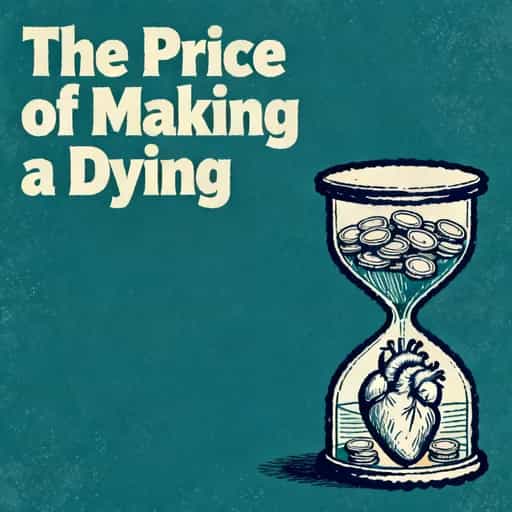
The Money Trap: Are We Making a Living or Making a Dying?
The American Dream has become a tender trap. We're told that success means working hard, climbing the corporate ladder, and accumulating possessions. Yet this path often leads to burnout, emptiness, and financial stress. Consider Rachel, working 70-hour weeks at a prestigious firm but feeling hollow inside, or Don, abandoning his passion for music to process data in a cubicle. Even high-earning tech workers like Kristy face health issues from stress while struggling to pay San Francisco rents.
The phrase "making a living" has become tragically ironic. Our typical workday drains rather than enhances life-from morning alarm clocks to evening commutes, we return home depleted rather than energized. We sacrifice health, relationships, and joy for jobs that slowly kill our spirits. The childhood sense of wonder and possibility gradually fades as we become trapped in the nine-to-five pattern, even when we enjoy our work.
Our identities have become dangerously entangled with our occupations. Jobs have replaced family, community, and civic engagement as our primary source of identity. This "jobism" creates a hidden social hierarchy that influences how we value ourselves and others. At high school reunions, the first question is typically "What do you do?"-a subtle way of determining someone's worth in the social pecking order.
The costs of this arrangement are staggering. Psychotherapist Douglas LaBier documented how prioritizing money and status over fulfillment leads to depression, anxiety, and stress in 60% of professionals. Despite the official 40-hour workweek, nearly 12% of Americans work 50+ hours weekly, yet less than half report job satisfaction. We're working more but enjoying life less, developing what might be called a "national disease" based on how we earn money.
What do we have to show for all this effort? Despite working harder, Americans aren't financially secure. The personal savings rate has declined from over 10% pre-1980 to around 5% recently, while wages stagnate for most workers. Since 2000, the lowest 70% of wage earners saw only 5.3% growth, while the top earners enjoyed 15-20% increases. Meanwhile, consumer debt has doubled since 2000 to over $3.7 trillion, averaging $11,000 per person. These financial shackles make the nine-to-five routine mandatory rather than optional.
Most troubling of all, this pursuit of money isn't buying happiness. In surveys across income levels from under $1,500 to over $6,000 monthly, happiness scores consistently averaged between 2.6-2.8 on a 5-point scale-regardless of income. When asked how much money would make them happy, respondents invariably answered "more than I have now" (typically 50-100% more). We've become the most affluent society in history, yet remain trapped in a work-home loop with hearts yearning for something perpetually out of reach.
Chapitre 3
The Environmental Cost of Endless Consumption
Our affluent lifestyles are devastating the planet. Despite warnings since 1987 from the UN that consumption patterns drive environmental damage, little has changed except better technology for impulse shopping. The Ecological Footprint metric shows that even careful North Americans would need four Earths if everyone consumed as they do. Earth Overshoot Day-when we've used up Earth's annual renewable resources-has moved from December 21 in 1971 to August 3 in 2016, showing our accelerating ecological debt.
Unlike financial debt, ecological debt can't be repaid-we have only one planet. This debt remains largely invisible because those we borrow from-future generations and the planet itself-have no voice. Everything we consume follows a one-way path from earth to factory to store to our homes to the dump. Despite mounting evidence of environmental damage, we can't seem to reduce consumption. Corporations have little incentive to encourage less consumption, politicians avoid consumption-limiting legislation, and individuals resist sacrificing unless everyone does.
The pervasive myth that "more is better" drives our working lives. We expect more money, greater responsibility, and increasing possessions as years pass. Yet the more we have, the more we want-and the less content we become. This expansive "frontier mentality" leads Americans to constantly upgrade everything from cars to smartphones. Ironically, surveys show Americans describing themselves as "very happy" have steadily declined since the late 1950s. In this environment, "enough" becomes like the horizon-always receding. When "more is better" is your operating principle, what you have can never satisfy.
Modern economics worships growth as the solution to everything-poverty, living standards, unemployment, inflation. What we overlook is that economic growth depends on finite natural resources. In nature, nothing grows forever; every organism reaches optimal size and then stops growing, focusing instead on survival and reproduction. Similarly, populations stabilize based on available resources or collapse when resources are depleted. By ignoring this fundamental reality, individuals and our economy are exceeding Earth's capacity to handle our demands.
We project onto money the power to fulfill all our desires, meeting our needs through purchasing rather than living. Once called "citizens," we're now "consumers"-people who "use up" and "waste." Consumerism emerged in the 1920s when industrial capacity outpaced needs and workers sought leisure. Industrialists and moralists, alarmed at slowing economic activity, invented "standard of living" and marketing to create insatiable wants. Leisure was transformed from relaxation into shopping opportunities, promoting most of the seven deadly sins in service of economic growth.
Chapitre 4
The Fulfillment Curve: Finding Your "Enough"
Money has become our culture's last taboo-easier to discuss sex than finances. Understanding why requires examining how our minds create and repeat patterns of belief and behavior, many unrelated to objective reality yet governing our actions.
The human mind creates patterns of response from personal experience, genetics, and culture to aid survival. Once established, these patterns become difficult to change-we salivate at cooking smells and brake at red lights automatically. The problem is that many patterns have nothing to do with reality, yet we cling to them, often denying reality in favor of our interpretations. Some financial beliefs may be as baseless as flat-Earth theories.
While we claim to know money can't buy happiness, our behavior tells a different story. When depressed, lonely, or celebrating, we buy things. When bored or searching for meaning, we purchase solutions. We've learned to address psychological and spiritual needs with physical consumption, seeking external remedies for internal signals that something is out of balance.
At the peak of the fulfillment curve lies "enough"-that perfect balance point where we have all necessities, comforts, and even some luxuries, but nothing excessive. This is a place of trust and self-awareness, where we fully enjoy what money brings without purchasing anything unnecessary. Once we discover our personal "enough," our fulfillment curve can actually reverse direction and head upward again, bringing greater satisfaction with less.
Clutter is anything excess for you personally-whatever takes up space without serving you. Contrary to popular belief, letting go of clutter isn't deprivation; it's liberation that opens space for new possibilities. "Enough" represents a stable plateau of alertness and freedom, while being buried under possessions that must be stored, cleaned, and paid for is truly the worse fate.
Most clutter enters our lives through the "more is better" door-the disease of materialism that seeks inner fulfillment through external possessions. It stems from early programming that discomfort can be alleviated by something external, and perpetuates through unconscious habits. We all have our "gazingus pins"-items we compulsively purchase whenever encountered, only to store them away and forget them until our next shopping trip.
Clutter extends beyond physical possessions to include meaningless activities, disorganized days, perpetual to-do items, cluttered motives, and unplanned errands. As awareness of clutter deepens, it inspires a desire to "spring-clean" your entire life. This impulse toward simplicity has deep American roots, from the Puritans to Thoreau to modern minimalism. The authors call it "enough"-not because there's one specific definition, but because it's that personal Goldilocks feeling of just-rightness that varies for everyone.
Chapitre 5
The Nine-Step Program: Making Peace with the Past
The nine-step program begins with surveying your relationship with money without judgment. The purpose is to increase awareness, not shame or arrogance. Though labeled as step 1, you don't need to complete it before continuing-in fact, the authors recommend reading the entire book first before returning to begin the steps.
The first part of Step 1 requires calculating your lifetime earnings-every penny you've ever made. This seemingly impossible task becomes manageable by examining tax returns, bank statements, resumes, and even requesting Social Security records. This exercise clears the fog around your financial past, eradicates limiting beliefs about your earning capacity, establishes a clean starting point, and helps release financial secrets that may be distorting your relationship with money. One seminar participant discovered she had earned over $50,000 during years she believed she had contributed "nothing" financially, transforming her self-image from dependent to capable wage-earner.
When confronting your financial past, the essential mantra is "No shame, no blame." This step may trigger self-criticism, but distinguishing between recrimination and discrimination is crucial. Recrimination involves shame and blame, which immobilizes progress. Discrimination simply illuminates potential pitfalls to avoid. Your lifetime earnings represent just a number, not your value-it's neither too much nor too little, and proves nothing about your worth as a person.
The second part involves calculating your net worth-everything you own minus everything you owe. The process requires taking inventory of your entire material universe. First, list all liquid assets (cash, savings, investments, etc.) that can be easily converted to cash. Then catalog fixed assets-your house, car, and every possession worth more than a dollar. Assign current market values to everything based on what you could actually sell items for, not what you paid. Finally, list all liabilities-mortgages, loans, credit card debt, and any other obligations. Subtract liabilities from assets to determine your net worth. This exercise can be humbling or heroic, but remember: net worth does not equal self-worth.
Creating a balance sheet provides a clear financial overview that empowers conscious decision-making. Many people discover they can liquidate excess possessions to increase savings or reduce debt. Some even realize they have enough assets to become financially independent immediately. Others find creative solutions to simplify their lives while building security. Whatever your situation, approaching this exercise with compassion rather than judgment allows it to be truly enlightening-lightening both your physical and emotional burdens.
Chapitre 6
Tracking Your Life Energy: The True Cost of Work
Step 2 involves understanding how much life energy you trade for money by tracking every cent that flows through your life. This step reveals the true relationship between your time and your earnings.
This section challenges the simplistic calculation of hourly wage by examining all job-related time and monetary expenses. Consider hidden costs including commuting (7.5 hours/week, $100/week), work-specific clothing and grooming (1.5 hours/week, $25/week), meals out due to work schedules (5 hours/week, $50/week), and post-work "decompression" time (5 hours/week, $30/week). These calculations reveal the surprising true cost of employment in terms of life energy.
Rather than lumping all food expenses together, readers might create subcategories like "Just Us" (household meals), "Guests" (entertaining), "Restaurants" (which could be further divided into "Too Tired to Cook" and "Special Occasions"), "Snacking," and even "TV Food." This precision helps answer the frustrated question "Where does it all go?" with specific insights about actual spending patterns.
Housing categories might include mortgage/rent, utilities, tax deductions, and rental income. The authors note that while the old rule suggested allocating 25% of income to housing, many now spend 40% or more. They share creative examples of people reducing housing costs: tech workers living seasonally in different hemispheres, a homeowner renting out her house while living in a camper during tourist season, and a retiree working as a house sitter-examples that demonstrate why standard budget categories are increasingly obsolete.
Clothing categories might distinguish between utility and fashion, everyday wear versus work attire, and specialized recreational apparel. The authors share a story about a doctor who discovered his shoe addiction was consuming 20% of his unaccounted-for income, noting he's not alone-the US footwear industry exceeds $64 billion, with the average woman owning nineteen pairs of shoes but regularly wearing only four. Categories might also reflect emotional motivations: clothes to cheer oneself up, impress others, or fit in.
Creating transportation subcategories can yield insights that save hundreds annually. The authors suggest reflecting on car ownership motives (convenience, status, necessity) and considering alternatives like ridesharing, car-sharing apps, and short-term rentals that might better serve one's needs while reducing costs.
Chapitre 7
The Monthly Tabulation: Where Does It All Go?
Staying connected has become a substantial expense category in modern society. The authors recommend breaking down technology costs into specific subcategories like Landline, Cell Phone, and Equipment to reveal spending patterns more clearly. This granularity helps identify savings opportunities, such as eliminating landlines or switching to no-contract cell services with secondhand devices. They suggest distinguishing between technology needed for work versus leisure or personal development to better understand where your money goes.
Entertainment has evolved beyond traditional movie theaters to include multiple streaming services, home entertainment systems, and various subscription models. The authors suggest creating detailed subcategories for streaming services, music platforms, and entertainment hardware to reveal potential redundancies and unnecessary expenses. They prompt readers to consider whether entertainment purchases trigger cascading costs (upgrading tech leads to furniture upgrades and repainting rooms) and to examine children's entertainment expenses, which might be better categorized separately or replaced with lower-cost alternatives like outdoor activities.
The Monthly Tabulation process works best with ruthless honesty in private, leading not to punishment but to freedom through self-acceptance. The authors encourage readers to create revealing subcategories that expose spending patterns-like distinguishing between job-related expenses and personal costs, or separating medical expenses into categories like sickness, wellness, and insurance. They note that "extraordinary" expenses eventually reveal themselves as regular parts of life. Over time, spending in each category settles into predictable ranges, providing clarity about patterns and an internally generated picture that evolves naturally-unlike rigid budget book categories. Income should also be categorized to distinguish between primary earnings, side hustles, investment returns, and other sources.
While various computer programs and apps can help with expense tracking, the essence of this step is proper categorization, which no software can do perfectly. Some people create personalized spreadsheets, others use simple note cards with codes, and some rely on bank statement charts as starting points. The authors themselves used paper and pencil successfully. The process is simple: at month's end, transfer entries from your tracking system into appropriate columns on your Monthly Tabulation, add up income columns for total monthly income, total each expenditure subcategory, and then sum all categories for your total monthly expenses.
After totaling your income and expenses, count your actual cash and bank balances. If you've kept accurate records, the money you have at month's end should equal your starting amount plus income minus expenses. Any discrepancy represents your "monthly error." When this error consistently reaches zero, you've mastered tracking every penny-a remarkable achievement. The book provides a sample balancing sheet as a model, but encourages readers to create systems tailored to their unique situations.
Here comes a transformative insight: raw numbers alone won't change your relationship with money. The key is translating expenses into life energy-what you truly trade for money. By dividing any expense by your real hourly wage (calculated in chapter 2), you convert dollars into hours of life energy spent. For example, $80 spent monthly on magazines divided by a $10 real hourly wage equals 8 hours of your life exchanged for that pleasure-a concrete measurement that creates meaningful perspective on spending choices.
Chapitre 8
Three Questions That Will Transform Your Life
Step 4 introduces three transformative questions for evaluating spending: (1) Did I receive fulfillment, satisfaction, and value in proportion to life energy spent? (2) Is this expenditure in alignment with my values and life purpose? (3) How might this expenditure change if I didn't have to work for money? These questions help align spending with dreams-asking if spending brings happiness, moves you toward your dream, and would change if financial independence were achieved.
This first question evaluates expenditures by marking each category with a plus sign (for fulfilling expenses worth increasing), minus sign (for unfulfilling expenses), or zero (for acceptable spending). This reveals automatic or addictive spending patterns, including "gazingus pins"-those shopping weaknesses we defensively justify. The exercise requires honest self-assessment without shame or blame. For couples like Martha and Ted P., it provides a non-confrontational way to discuss spending differences. The section distinguishes between "cheap thrills" (the fleeting happiness from purchases) and "deep thrills" (lasting satisfaction from purposeful living), encouraging readers to develop an internal yardstick for fulfillment rather than relying on external validation like pleasing others or competitive success. True fulfillment comes from finding "enough"-that sweet spot where desires are perfectly met without excess.
Financial Integrity means making choices independent of advertising and industry manipulation. It's about freedom from being manipulated into spending life energy on things that don't bring happiness. Nina N. described how before this evaluation, money would "fly out of her wallet" in stores-she felt powerless to stop it. By consistently marking expenditures with up and down arrows or zeros each month, you build the financial "muscle" of stopping at enough, practicing "no shame, no blame" when old habits resurface. This self-awareness becomes a form of Financial Independence, allowing you to consciously say no to unconscious spending.
The second question provides a concrete way to see if you're practicing what you preach. For each spending category, ask if your expenditure of life energy aligns with your values and life purpose, marking a + (up arrow) for yes, - (down arrow) for no, or 0 if it's fine as is. While some people like Amy, Jim D., Wes L., and the Langdons had clear values guiding their financial choices, many well-off people suffer from a "poverty of ideals"-financially dressed up with nowhere meaningful to go.
Values are the principles and qualities that matter to us-our ethical DNA structuring our choices. They reflect our beliefs but are truly revealed through our behaviors. Our spending patterns speak volumes about who we are and what we stand for. Looking at Monthly Tabulations can reveal surprising disconnects-like spending 25 hours of life energy on restaurants but only 8 hours with your child, or claiming to value the arts while spending minimally on concerts and museums. For many, expenditures don't align with their professed values. The monthly evaluation process serves as a mirror, helping bring financial choices into harmony with true values.
Chapitre 9
Making Life Energy Visible: The Wall Chart
Chapter 5 introduces the importance of visualizing your financial progress through time. After the initial revelations from tracking expenses, many people are tempted to stop, but persistence through multiple months reveals deeper patterns and sustainable change. The chapter emphasizes three keys to behavior change: making tracking a habit rather than a choice, being accountable to someone else, and charting progress visually to maintain motivation.
Step 5 involves creating a visual representation of your financial journey by plotting income and expenses on a Wall Chart. This simple yet powerful tool transforms static monthly tabulations into a dynamic picture of your financial situation over time, making your progress visible and reinforcing your commitment to continue the program.
Creating your Wall Chart requires a large piece of graph paper with money (income and expenses) on the vertical axis and time (months) on the horizontal axis. Allow space for 3-5 years of data and room for your income to potentially double. Plot monthly income and expenses in different colors, connecting points to previous months. While digital tools can generate similar graphs, the physical act of charting by hand often creates a stronger psychological impact.
Many people experience a predictable pattern when first tracking finances: shock at overspending leads to extreme austerity in month two, followed by a rebound in month three. The authors share Elaine's story-a computer programmer who initially cut expenses dramatically but then reverted to old habits. However, as she continued tracking, she achieved sustainable changes without feeling deprived, ultimately reducing her expenses from $4,770 to $1,640 monthly while becoming debt-free. The Wall Chart helped her visualize her spending habits and motivated gradual, lasting transformation.
The three questions from Step 4 naturally lead to reduced expenses as awareness grows. Question 1 ("Did I receive fulfillment, satisfaction, and value in proportion to life energy spent?") activates our survival mechanism, automatically steering us away from unsatisfying expenditures. Unlike traditional budgeting that relies on willpower, this approach harnesses our natural tendency to move toward pleasure and away from pain, helping us recognize our personal "gazingus pins" (habitual, unfulfilling purchases) and creating an "automatic lowering of expenses."
The program acknowledges that every month brings its own financial surprises-insurance payments, repairs, taxes-what people often call "unusual" expenses. Rather than seeing these as disruptions, FIers learn to anticipate them, either by taking them in stride as normal variations or by prorating annual expenses across twelve months. There's no single correct accounting method; the key is choosing an approach that provides clear information about your financial trajectory.
Chapitre 10
The Crossover Point: When Work Becomes Optional
This chapter begins by acknowledging the transformation that occurs after completing previous steps - minimizing expenses, maximizing income, paying off debt, and watching savings grow. Unlike in the past when these savings would immediately become "spending money" for vacations or upgrades, practitioners now approach money differently. Having internalized that money represents life energy, they're determined to spend it only on what brings joy and serves purpose. Most "gazingus pins" (compulsive purchases) no longer attract attention, and the freedom of "enough" begins to take hold. The chapter introduces the concept of making your money work for you through compound interest, suggesting this is the moment when a financially savvy relative might sit you down for "the magic of compound interest talk" - planting the idea that consistent saving could lead to wealth by middle age.
The chapter explains that the growing gap between income and expenses on your Wall Chart represents savings that, in FI thinking, become "capital" - money that makes money rather than sitting idle in a bank. Whether $50 or $500, this capital can start producing income, making Financial Independence possible for anyone willing to transform their relationship with money, not just the wealthy. The author emphasizes that with Step 8, complete Financial Independence becomes a real possibility.
This section introduces a third line for your Wall Chart: monthly investment income. Unlike job income, this money flows whether or not you work, coming from investments as dividends, interest, rental checks, or business profits. The author explains that when this investment income line "crosses over" your expense line on the chart, you've reached Financial Independence.
Step 8 involves calculating your monthly investment income by multiplying your total accumulated capital by the current long-term interest rate, then dividing by 12 months. The author suggests using the yield of 30-year US Treasury bonds (approximately 4%) as a conservative benchmark. This calculation simulates future income from investments and helps project what your FI income will be. The chapter explains that 4% is also the "safe withdrawal rate" in traditional financial planning - the amount you can withdraw annually from investments without depleting capital. A key formula is presented: your Crossover Point comes when you have 25 times your annual expenses, which gives you a 4% withdrawal rate indefinitely.
The Crossover Point is the magical moment when your monthly investment income exceeds your monthly expenses-the point at which employment becomes optional. By projecting your stable monthly expenses and growing investment income into the future, you can see exactly when these lines will intersect on your Wall Chart. At this point, you achieve true Financial Independence with passive income from sources other than a job.
Chapitre 11
Beyond Money: The ABCs of Natural Wealth
The program balances two forms of wealth: national currency (money controlled by financial institutions) and natural currency (the exchange of giving and receiving between people who recognize each other as kin). While national currency is a recent human invention, natural currency has existed since the first living organisms created mutually beneficial exchanges. The author suggests that true wealth encompasses both financial independence and these natural forms of interdependence and connection.
The author describes three essential forms of natural wealth that complement financial independence: Abilities (skills and knowledge you've developed), Belonging (who walks with you in life), and Community (the society you live in). Building these forms of natural wealth during your financial accumulation phase can help your FI come sooner, last longer, and be happier. Unlike money, these forms of wealth can "inflate" faster than financial currency as your consciousness grows.
Abilities are DIY skills that save money and can be monetized if needed. From fixing faucets to cooking from scratch, these self-reliant skills build empowerment while reducing expenses. The author suggests investing in yourself through training or certification in valuable skills, which provides resilience and options should you need income post-FI. These diverse abilities challenge you, allow you to help others, and meet life with courage.
Belonging wealth consists of the human bonds of love and loyalty that support us through life. Despite modern trends toward isolation (declining church attendance, fewer traditional families), building a network of mutual aid is crucial to any FI program. The author suggests repairing past relationships and cultivating enduring friendships in your local community. This "social capital" creates both emotional wealth and practical benefits through sharing resources and support.
Community wealth extends the circle of belonging to include broader social and natural systems. The more trusting the community, the more resources are shared freely outside the money economy. This includes choosing wisely where to live, considering access to necessities without a car, and participating actively in local organizations. Building community wealth means engaging with local institutions, serving on boards, joining groups, and creating connections that provide security and fulfillment.
The author notes that "consciousness grows faster than inflation"-you can "inflate" your skills, knowledge, and community connections faster than money. Once FI, you'll have more time to learn, DIY, bond with others, and find what you need at lower costs. Your financial independence is just one corner of your foundation, complemented by abilities, belonging and community to create total wealth.
Reaching the Crossover Point opens a world of possibilities. New FIers discover they have no idea how they had time for a job as their days become filled with meaningful activities-from meditation to community service to creative pursuits. The transition brings what economist Juliet Schor calls "plenitude." The author emphasizes that Financial Independence isn't about money but about choice-the freedom to direct your most precious resources (time, attention, life) wherever you choose. As Buckminster Fuller said, "We are called to be architects of the future, not its victims."





![[your-money-or-your-life-by-vicki-robin:c0000] Your Money or Your Life p1-1](/_next/image?url=https%3A%2F%2Fd1y2du6z1jfm9e.cloudfront.net%2Fassets%2Fpodcast%2Fblue.png&w=1024&q=50)
![[your-money-or-your-life-by-vicki-robin:c0001] Your Money or Your Life p1-1](/_next/image?url=https%3A%2F%2Fd1y2du6z1jfm9e.cloudfront.net%2Fassets%2Fpodcast%2Fyellow.png&w=1024&q=50)


