Chapitre 1
Farming Lean: The Revolution Transforming Small-Scale Agriculture
When Ben Hartman visited an aluminum trailer factory in Indiana, he never imagined it would revolutionize his farming practices. The factory was immaculate-clean, well-organized, with color-coded systems ensuring workers always had the right tools and materials. This wasn't the dirty, chaotic manufacturing environment he expected. Instead, he witnessed a carefully orchestrated system where every step was designed to eliminate waste and maximize value. The principles behind this efficiency-known as "lean"-originated with Toyota in Japan and had transformed countless industries. But could they work on a small organic farm?
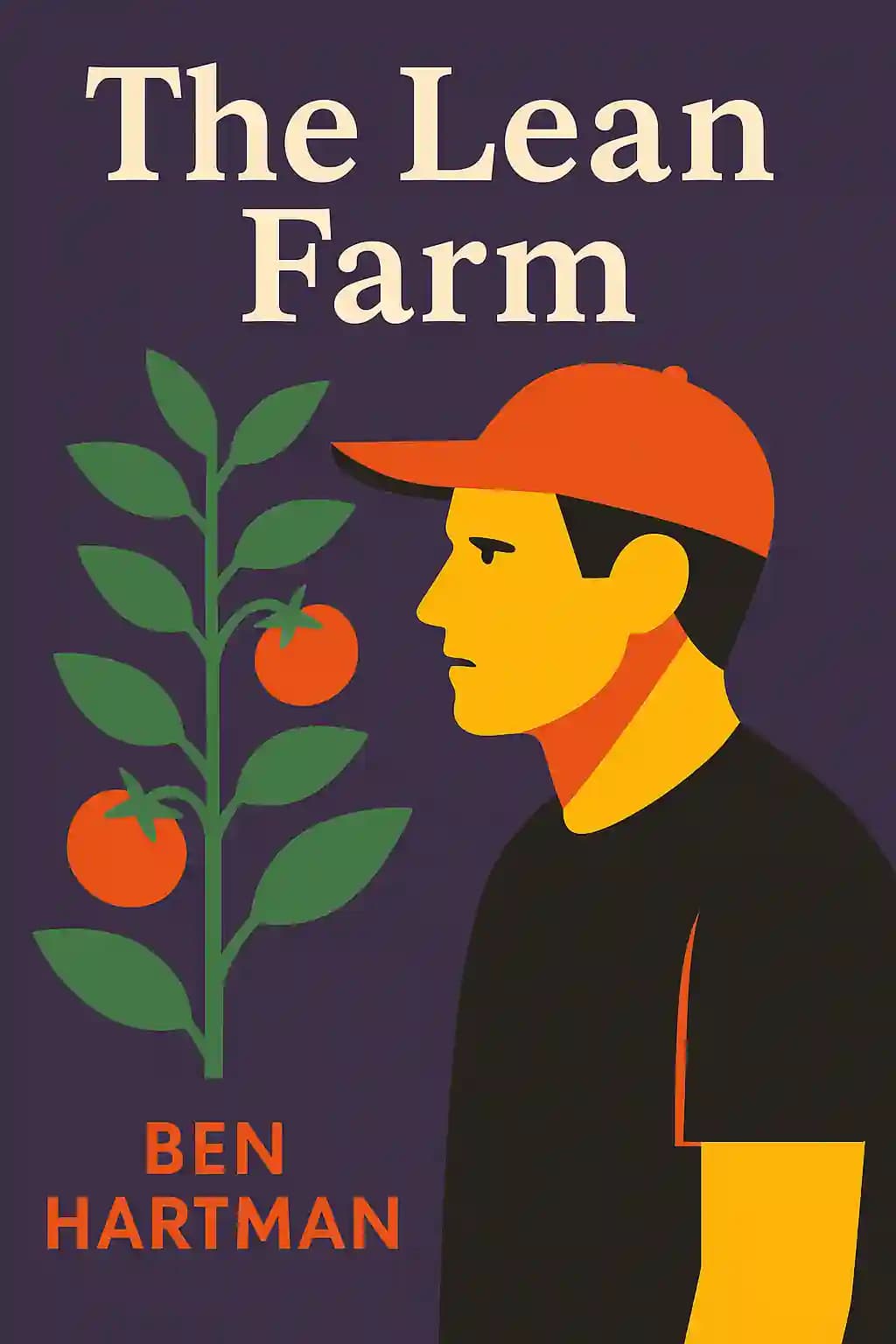
This question launched Hartman and his wife Rachel on a journey that would completely transform their Clay Bottom Farm in Goshen, Indiana. Today, they earn a comfortable living on less than an acre of land, supplying restaurants, grocery stores, and CSA members with high-quality organic produce year-round. Their farm has become a model for how small-scale agriculture can thrive in an era dominated by industrial farming. The Lean Farm has sparked a movement among small farmers seeking sustainability and profitability without getting caught in the "get big or get out" trap that has dominated American agriculture for decades. As climate change and economic pressures intensify, Hartman's approach offers a compelling alternative that's being adopted by farmers worldwide.
Chapitre 2
Reimagining Agriculture Through a Lean Lens
At first glance, pairing "factory" and "farm" seems contradictory, even offensive to many who care about sustainable agriculture. After all, many environmental problems stem from inappropriately applying industrial methods to family farms. When yield per acre or gallons per cow becomes the only metric of success, the mystery of life is overlooked and planetary health suffers.
Farms differ fundamentally from factories. Industrial raw materials are inert and predictable, while farming materials-seeds, plants, animals, and soil-constantly change. A single teaspoon of garden soil contains billions of living organisms interacting unpredictably with crops. Farming without a roof means constant vulnerability to weather shifts that can destroy crops within hours. As writer Bill McKibben notes, farming resembles chess where each day's weather changes the entire board.
Despite these differences, Hartman discovered that lean principles could be adapted to agriculture in ways that actually enhance sustainability rather than diminish it. Lean, as defined by Toyota's Taiichi Ohno, means "reducing the timeline from order to cash by removing non-value-added wastes." The capacity equation is simple: "Present capacity = work + waste." By eliminating waste and focusing on value, Toyota became the world's largest and most profitable automobile manufacturer.
Lean boils down to five principles: precisely specify what customers value, identify the value stream, make value flow without interruptions, let customers pull value from producers, and pursue perfection. These principles can help farms of any size become more efficient and profitable without sacrificing their values or expanding beyond their ideal scale.
Unlike the dominant American business model that assumes constant growth is necessary for success, lean's focus on creating more value rather than more quantity opens the possibility of finding your right size and thriving within constraints. For the Hartmans, this meant scaling back their growing area to less than an acre while increasing profits yearly through waste elimination, focusing on high-margin crops, and careful planning to harvest when demand peaks.
Chapitre 3
The 5S Foundation: Creating Order from Chaos
The journey toward a lean farm begins with 5S-a system of five Japanese practices that create the foundation for all other improvements: seiri (sort), seiton (set in order), seiso (shine), seiketsu (standardize), and shitsuke (sustain). These practices transform cluttered, chaotic spaces into organized, efficient environments where work flows smoothly.
The first step, seiri (sort), requires ruthlessly eliminating anything not absolutely necessary for production. At Clay Bottom Farm, this meant weeks filling wagonloads for auction and landfill, hiring scrap metal haulers, and liquidating unused equipment. The relief was palpable as each wagonload left-the farm became lighter, more nimble, and ready to produce.
Sorting isn't merely lining things up neatly; it's eliminating what isn't essential. As Ohno once scolded workers who had merely arranged parts in neat rows: "Sort means to throw out what you don't need, as when you do personnel adjustment." The Hartmans separated hobby and work areas, built dedicated prototyping shelves, and kept only minimal spare parts-those whose absence would seriously harm production.
The second step, seiton (set in order), ensures every tool has a designated place and should either be there or in a worker's hands-no third option exists. When Brenneman visited Clay Bottom Farm, he watched Ben walk 100 yards to retrieve pruners for tomato work, then trudge back to return them afterward. His simple question-"Why not store pruners in the tomato greenhouse?"-revolutionized their approach. They've since distributed tools across the farm near their points of use: hoses by irrigation plots, wrenches on magnets attached to seeders, and multiple rakes at greenhouse entrances.
The remaining 5S practices-shine (thorough cleaning), standardize (creating consistent routines), and sustain (maintaining improvements through discipline)-complete the foundation. Clean, uncluttered spaces make it easier to see what needs doing, reduce hazards, and improve workflow. Visual management-shadow boards, photos of clean spaces, clear labels, and whiteboards-communicates standards far more effectively than verbal instructions or checklists.
The goal isn't aesthetics but improving the work environment so "people can feel good working there," as Ohno emphasized. Clean, ordered environments with clear goals and minimal distractions create psychological "flow" states where workers experience heightened focus and satisfaction.
Chapitre 4
Farming for Your Customers: The Heart of Lean
Precisely identifying what customers truly value is central to lean farming. Without this understanding, farmers can't distinguish between value-creating activities and waste. The Toyota approach demonstrates this principle: engineer Yuji Yokoya drove through North America to understand customer needs before redesigning the Sienna minivan, resulting in practical innovations like fourteen cup holders and a tighter turning radius.
Clay Bottom Farm applied this approach by transforming market days into research opportunities. Rather than merely selling food, they began collecting customer feedback, watching how people responded to products, and asking questions about preferences. The farmers even visit customers' homes and restaurants to observe how their food is prepared, stored, and presented-gathering insights that guide production decisions.
Four common distortions prevent farmers from truly understanding customer value: technology fascination (investing in complex equipment that doesn't enhance customer value), product fascination (growing crops because they interest the farmer rather than customers), process fascination (adopting trendy growing methods regardless of customer needs), and letting supply determine value (pushing excess inventory onto customers).
After extensive research, the Hartmans discovered their different customer segments valued different things. Their CSA customers wanted meal preparation help with boxes built around meal plans and recipes included. They sought a farm connection through Facebook posts, newsletters with photos, and farm events. They needed flexible pickup options and preferred the right mix (never more than ten items) and amount to avoid waste.
Market customers were drawn to blocks of color-they arranged similar colors together and displayed produce attractively. Wholesale chef customers valued timely deliveries before 4 p.m. to prepare for dinner service and appreciated advance communication about upcoming harvests. Understanding these differences helped the Hartmans target their offerings appropriately.
Other farms demonstrate similar customer awareness. Lehman's Orchard opened a downtown retail location when they realized winter customers didn't want to drive rural roads. Van Belle Nursery developed easier-to-grow plants and mobile-friendly instructions when research showed only 2% of consumers were master gardeners. At Sustainable Greens, meticulous attention to chef preferences won them business from Grant Achatz of Alinea, one of America's most prestigious restaurants.
Chapitre 5
Eliminating Waste: The Ten Types of Farm Muda
In lean farming, waste encompasses activities that don't add value to the product. When analyzing a carrot's journey from seed to sale, surprisingly few steps directly increase its value. Value-adding activities include planting the seed, harvesting, washing, packaging, and displaying the product. Everything else-planning, soil preparation, delivery, even weeding-represents necessary movement but adds no direct value.
Beyond Toyota's original seven types of waste, farms face ten distinct categories of muda:
1. Overproduction occurs when farms grow more than they can sell, resulting in unsold crops or animals with significant investment that must be discarded. This includes selling items at reduced prices to clear excess inventory.
2. Waiting waste happens when workers stand idle or when market-ready products await customers. Products sitting in storage create waste through building costs, conditioning requirements, future movement needs, and mental tracking burden.
3. Transportation waste includes inefficient movement of products-using tractors for small loads, making multiple trips instead of consolidating, or delivering products customers would willingly pick up.
4. Overprocessing includes any activity that exceeds what customers will pay for-excessive washing, unnecessary packaging, too many delivery locations, or overspending on marketing materials.
5. Inventory waste means keeping excessive materials or goods on hand. While farming's unpredictable nature makes perfect inventory control impossible, farms can still minimize both supply and finished goods inventories through careful planning.
6. Motion waste includes handling items repeatedly, inefficient harvest practices, poor planning requiring extra trips, and problematic farm layouts with excessive distances between work areas.
7. Defect waste includes unsellable or discounted food due to quality issues from poor management, handling, storage or field practices. These represent significant lost investment, making early defect detection crucial.
8. Overburdening (Muri) occurs when workers and equipment are overstretched beyond reasonable limits. With people, this leads to burnout, injury and poor work quality. With equipment, it causes failures and premature wear.
9. Uneven Production (Mura) refers to production and sales spikes and dips that disrupt efficient workflow. While standardized, predictable work creates rhythm and efficiency, uneven work leads to mistakes and higher costs.
10. Unused Talent occurs when farms waste valuable insights from those closest to production details by dividing workers into "thinkers" and "doers." Any good idea that goes unspoken represents waste.
Recognizing these forms of waste is the first step toward creating efficient flow on the farm. As farmers lean up, they spend more time on value-creating activities like seeding and harvesting, while minimizing other tasks through efficiency improvements.
Chapitre 6
Creating Flow: Tools to Eliminate Production Waste
Creating flow means establishing conditions where products gain value smoothly without interruptions. After implementing 5S to clean up their farm, the Hartmans needed tools to eliminate deeper production wastes. They discovered that waste elimination, while simple in concept, requires careful observation, counterintuitive thinking, and hard work.
The first tool is minimizing moves. Customers pay for products and services, not movements. One study of a cola maker found that value-creating activities took just three hours within a 319-day production timeline! The rest was muda: waiting, transportation, inventories, and defects. On farms, work often boils down to moving objects from place to place. Spaghetti diagrams help visualize movement patterns to identify waste.
Single-piece flow means adding as much value as possible to an item before setting it down. While batch-and-queue thinking dominates many farms, the Hartmans redesigned their workflow to minimize handling. For example, Ben sorts and bunches turnips as he harvests them rather than setting them down and handling them again later.
Lightening the load is another crucial tool. Even small amounts of unnecessary lifting create significant overburdening waste. Eliot Coleman calculates that field workers make about 2,000 hoe strokes per hour, so lighter tools make an enormous difference. A half-pound reduction in hoe weight means 1,000 fewer pounds lifted per hour. The Hartmans systematically replaced heavy tools with lightweight alternatives and redesigned their CSA loading process to keep heavy produce totes stationary while workers walk through with boxes.
Other essential tools include avoiding overprocessing (giving customers exactly what they value, not more), asking "why" five times to get to root causes of problems, employing mistake-proofing (poka-yoke) to eliminate defects, shortening cycle time, using right-sized technology, ordering supplies just in time, and benefiting from the expertise of others through strategic outsourcing.
The right technology is particularly important. Lean isn't antitechnology, but emphasizes choosing equipment that is human-scaled and combines human intelligence with machines. The right tool removes burden from workers, while complicated machines often add burden. The Hartmans choose right-sized equipment to maximize fixed costs-like their 34-horsepower Kubota compact tractor that does exactly what they need without overkill. Small, simple equipment is more likely to be used by all workers, easier to maneuver in tight spaces, and less costly to maintain and repair.
Chapitre 7
Management Tools: Beyond Production Efficiency
While production waste is tangible and visible in daily operations, management waste is more elusive but equally damaging. These wastes occur during planning stages when plotting your farm's future-choosing wrong crops, producing too much or too little, or getting bogged down with experiments.
The first management tool is production control. Humans have agricultural instincts to hoard and overproduce-historically, survival depended on storing grain for lean times. But business economics differ from home economics. Overproduction hurts profits. Lean encourages production control through forecasting-tracking sales year-to-year and adjusting accordingly. The CSA model, a Japanese invention, is ideal because customers pay upfront, eliminating overproduction risk.
Cost-cutting is another powerful tool. If you trim expenses by just 5% annually for ten years while maintaining the same revenue, you'll grow your business by 50% without additional effort or investment. Unlike sales growth, which inevitably raises variable costs, cost-cutting doesn't require more land, staff, or facilities. On the Hartmans' farm, they've reduced costs from 60-70% of gross to around 40% while keeping revenues stable, making their operation more pleasant and resilient.
Replacing low-profit items with high-profit ones is equally important. Many crops are fun but yield low returns. When the Hartmans started ten years ago, they grew over eighty vegetable varieties; they've now cut that number in half by focusing on "winners"-high-margin crops with strong local demand that grow successfully using organic techniques. They stopped growing winter squash and watermelons despite customer demand because they required too much space and handling effort. Instead, they partnered with a nearby Amish farm to provide these items in their CSA boxes.
Maximizing fixed costs means getting the most from your existing infrastructure before expanding. At Clay Bottom Farm, this principle guided greenhouse expansion-only building a new one when fully utilizing the existing ones. They treat cultivated land as a fixed cost too, growing as much as possible before expanding, with quick succession planting and using "hidden spaces" like aisles between tomato plants for quick crops.
Load leveling (heijunka) spreads work and sales evenly throughout the year, reducing waste and creating a more predictable work environment. Though farming is inherently seasonal, Clay Bottom Farm has become a four-season operation, developing techniques to grow spinach, lettuce, kale and other crops through winter. Pete Johnson at Pete's Greens has leveled his load so effectively that his smallest winter sales week reaches two-thirds of his biggest summer week.
Effective metrics are essential for measuring progress. The Arnolds at Pleasant Valley Farm track dollar value per acre to guide crop selection. Jack Algiere at Stone Barns requires crops to "pay rent" for their plot, sometimes adding complementary crops like cucumbers alongside squash to increase value. Since tracking metrics is itself a form of waste, the Hartmans recommend keeping only essential records that help eliminate waste, such as seeding and harvest dates for new crops, amounts harvested for sales projections, and simple plot maps showing seasonal crop beds.
Chapitre 8
Pull, Don't Push: The Lean Approach to Sales
The author illustrates pull selling through a Belize vacation story where meals came from catching fish on demand rather than stockpiling food. Pull selling is fundamentally about replenishment-consumers take what they need, and providers restock accordingly, like vending machines.
Taiichi Ohno was inspired to create Toyota's pull system after seeing American supermarkets in the 1950s, marveling at their efficiency compared to Japanese grocery delivery systems where customers couldn't order precise amounts. The supermarket model allowed customers to "buy according to the size of their refrigerators and amount of money in their wallets." Toyota reversed traditional manufacturing by starting with customer orders that pulled parts through production rather than pushing pre-made goods.
For farmers, this means having what customers want when they want it-precision, not volume, increases value and enables living-wage prices. In local food sales, educating differs from pushing. When visitors from India toured Clay Bottom Farm, they were amazed by microgreens-crops they'd never seen. After tasting pea shoots, their eyes lit up: "Now I see. Just let them eat a few leaves!" Pushing means growing what you want then dumping it at any price; educating means introducing customers to products they'd otherwise never discover.
Ohno describes the wrong pricing formula as "selling price = profit + actual cost." This makes consumers responsible for your costs, when instead farmers should own their production efficiency. Prices should reflect market realities and customer value perception, not internal costs. Don't waste time calculating costs to set prices-charge what the market will bear for valuable products.
The Hartmans transformed their market setup from weighing items individually to selling in grab-and-go units. By switching to quart containers, per-piece pricing, and pre-packaging, customers can quickly select items without waiting. They streamlined pricing to mostly $2.50, $3, or $5 units, making math faster and reducing staff needs by half. This created flow at their booth, removing friction for both customers and themselves.
Chapitre 9
Continuous Improvement: The Never-Ending Journey
It's human nature to get things wrong. Our subjective perspectives create distortions in how we understand customer value and our production processes. As Ohno concluded after years refining Toyota's system, "People's ideas are unreliable things, and I would be impressed if we were right even half the time."
Continuous improvement requires ingrained routines called kata that make improvement part of everyday farmwork. While many creative farmers practice kaizen instinctively, implementing intentional routines helps everyone develop this discipline. At Clay Bottom Farm, they initially performed most kaizen on the fly-Ben would interrupt hoeing to rush to the shop and improve a tool. Eventually, they routinized improvement with weekly farm walks, a vegetable notebook tracking seeding and harvesting with improvement notes, staff input, and a whiteboard system.
Management largely involves developing and communicating standards-routinized ways of completing tasks consistently. But lean says standards should be fluid, not fixed. As Ohno explains, "If you think of the standard as the best you can do, it's all over. The standard is only a baseline for doing more kaizen." When you discover better methods, implement them immediately as the new standard.
The best time for kaizen is when crops grow well and animals are healthy-not during emergencies. When things go wrong, you're fixing obvious problems rather than truly improving. During good times, you have more energy to identify activities that could be done better. Waste removal is never finished because waste transforms as your business evolves. Getting rid of waste happens in layers-only when one layer is removed can you see the next.
For effective kaizen implementation, you need well-trained, well-treated staff who understand the value flow and their role in creating it. Toyota's success stems not just from its technical system but from nurturing people in "an organizational culture that expects and values their continuous improvements." Contrary to misconceptions, lean isn't about using cheaper labor or replacing humans with machines. In lean workplaces, skilled workers carry real responsibilities and actively engage in making improvements.
Chapitre 10
Lean Beyond Profit: Farming for a Better World
Farms are special places that connect us to what we eat and to nature itself. While lean principles can deliver profit, they should be used to further more holistic causes-restoring the earth and connecting farms with communities. As Wendell Berry distinguishes, the exploiter's goal is money while the nurturer's goal is health-of land, family, and community.
Lean tools can help eliminate food waste, which is staggering-31% of available food at retail and consumer levels goes uneaten, valued at $161.6 billion annually. On farms, 20% of fresh produce never leaves the field due to weather damage, market volatility, and overproduction. Total food loss reaches 40% when including storage, transportation, and consumer waste. This waste consumes 10% of U.S. energy, 50% of land, and 80% of freshwater, while rotting food generates 16% of U.S. methane emissions.
Lean principles can also strengthen local foodsheds-the geographic regions producing food for local populations. Many farms are physically within foodsheds but not functionally part of them, shipping their produce elsewhere and leaving communities vulnerable to disruptions in the global food system. For Clay Bottom Farm, 90% of food grown ends up on plates within 10 miles, strengthening the local food economy.
Lean approaches can help farmers partner with government programs and community initiatives to make fresh food accessible to low-income consumers. Programs like WIC vouchers for farmers' markets, church-sponsored prepaid market baskets, and "Share the Bounty" initiatives that match SNAP benefits allow farmers to efficiently address food insecurity.
Farm waste-containers, plastic films, and used tires-fills landfills at an alarming rate. Nature provides a model for lean systems, as illustrated by swallows building nests with repurposed materials at Clay Bottom Farm. Unlike human construction that generates enormous waste, natural systems are efficient, using only what's necessary without excess.
Children in urban communities need welcoming farms to explore, and lean practices make this possible. At Clay Bottom Farm, 5S sorting and high-frequency cleaning keep spaces tidy and visitor-friendly. When children visit, they can safely walk through crop rows without tripping over hoses or debris. The farm becomes a place of discovery-like when eight-year-old Adam, while helping harvest beets, became captivated by a tiny frog.
The lean journey began with addressing farm chaos and overwork, applying manufacturing principles from Japan to distinguish value from waste. The motivation was simple: making a viable living while staying on the farm. Like Picasso's philosophy of "great artists steal," the Hartmans have adapted Toyota's system to transform their small farm. With minimal supplies and focused energy, any farmer can create a more productive, less wasteful, and more pleasant place to farm well-proving that small farms can thrive in the modern world while staying true to their values.