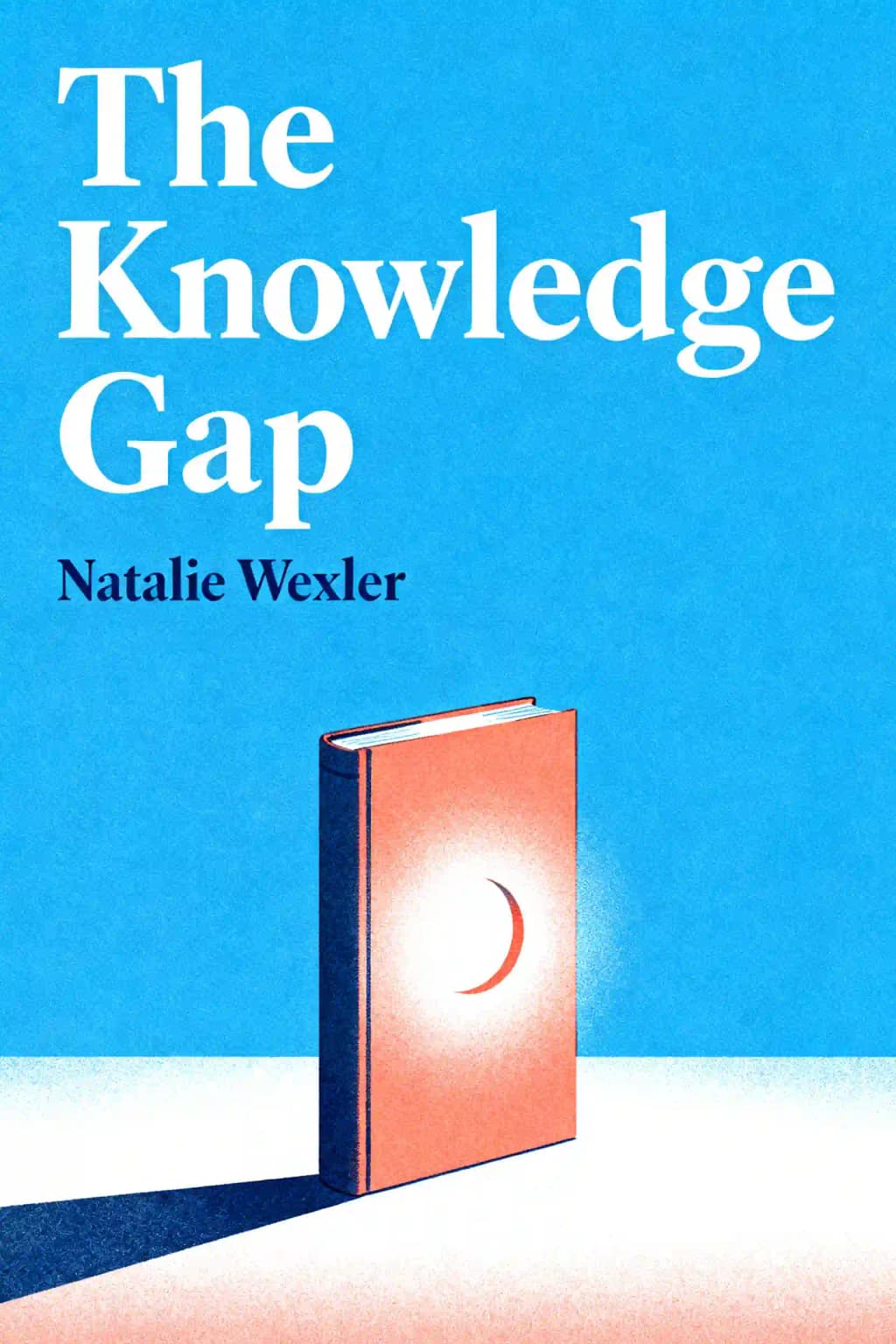
Knowledge Gap
The Hidden Cause of America's Broken Education System--And How to Fix It
Aperçu de Knowledge Gap
In "The Knowledge Gap," Natalie Wexler reveals why skills-focused education fails disadvantaged students. This 2019 Library Journal starred review exposes how our elementary schools create inequality by neglecting content knowledge - the hidden key to reading comprehension that could revolutionize American education.

Thèmes clés dans Knowledge Gap
- background knowledge
- reading comprehension
- curriculum reform
- educational inequality
- cognitive science
Citations de Knowledge Gap
The thinking skills are the same no matter what the content is.
Reading ability is largely a mirage.
We've been teaching children how to read without giving them anything worth reading about.
Personnages de Knowledge Gap
- Natalie WexlerAuthor and education journalist
- Donna RechtResearcher who co-conducted the baseball study
- Lauren LeslieResearcher who co-conducted the baseball study
À propos de l'auteur
À propos de l'auteur de Knowledge Gap
Natalie Wexler is an education writer, literacy advocate, and bestselling author of The Knowledge Gap: The Hidden Cause of America’s Broken Education System—And How to Fix It, a groundbreaking work in educational non-fiction. A Harvard and University of Pennsylvania graduate with a background in law, journalism, and legal history, Wexler draws on decades of research to challenge skills-based reading instruction, arguing instead for knowledge-rich curricula to bridge socioeducational divides.
She co-authored the widely adopted The Writing Revolution, a K-12 writing pedagogy framework used in schools nationwide, and hosts the Knowledge Matters Podcast, produced in collaboration with education reform initiatives.
Wexler’s work has been featured in The New York Times, The Atlantic, and NPR, and she regularly speaks to educators and policymakers. Her free Substack newsletter, Minding the Gap, distills education research for public audiences. A former Supreme Court law clerk and novelist, her interdisciplinary approach blends narrative storytelling with data-driven analysis. The Knowledge Gap has become a critical resource in school districts reshaping literacy instruction, with its principles integrated into curricula across the U.S. and U.K.
Telecharger le resume de Knowledge Gap
Obtenez le resume de Knowledge Gap en PDF ou EPUB gratuit. Imprimez-le ou lisez-le hors ligne a tout moment.
FAQ sur ce livre
The Knowledge Gap examines how American schools prioritize reading skills over content knowledge, worsening educational inequality. Wexler argues that disadvantaged students suffer most from this approach, advocating for knowledge-rich curricula to boost comprehension and critical thinking. The book blends classroom narratives with research on systemic phonics and background knowledge’s role in learning.
Educators, policymakers, and parents invested in education reform will find this book essential. It’s particularly valuable for those addressing literacy gaps or designing curricula. Wexler’s insights also resonate with advocates for equity in underfunded schools.
Yes—it’s praised for exposing flawed teaching methods and offering actionable solutions. Reviewers highlight its compelling mix of data and real-world examples, calling it a “first-rate addition” to education literature. Critics note it focuses more on diagnosis than detailed implementation.
Wexler contends that teaching reading as a standalone skill—rather than through content-rich subjects like history/science—widens achievement gaps. She emphasizes background knowledge’s critical role in comprehension, citing studies like the “Baseball Study” where prior knowledge outweighed reading ability.
The book links socioeconomic disparities to unequal access to knowledge-building curricula. Students from disadvantaged backgrounds often receive skill drills instead of engaging content, perpetuating cycles of low literacy and critical thinking. Wexler advocates systemic shifts to prioritize knowledge across all subjects.
Key recommendations include:
- Integrating literacy instruction with science, history, and arts content
- Training teachers to weave knowledge-building into lessons
- Adopting systematic phonics while avoiding isolated skill drills
Wexler criticizes “balanced literacy” approaches for overemphasizing generic comprehension strategies. She demonstrates how skill-focused methods fail to equip students with the vocabulary and context needed for complex texts.
The book cites landmark studies, including:
- The Baseball Study (1988): Low-reading students with baseball knowledge outperformed high-reading peers on baseball texts
- Preschool Comprehension Study (2014): Knowledge equalized comprehension across socioeconomic groups
Wexler builds on Hirsch’s core knowledge theory but provides updated classroom examples and addresses modern resistance to content-focused curricula. Reviewers note her work complements Hirsch’s ideas with practical advocacy.
Some argue it underserves implementation strategies for schools. Others note its primary focus on elementary education, leaving secondary gaps less explored. Despite this, even critics endorse its central thesis.
The book has influenced schools adopting knowledge-building curricula like Core Knowledge and Wit & Wisdom. It also informed Wexler’s later work, including The Writing Revolution, which merges writing instruction with content learning.
Wexler expands on these ideas in her Minding the Gap Substack, The Writing Revolution (co-authored), and the Reading Comprehension Revisited podcast. Her Forbes articles and New York Times op-eds further explore education reform.