Chapitre 1
The Perfect Assassin: A Study in Precision and Morality
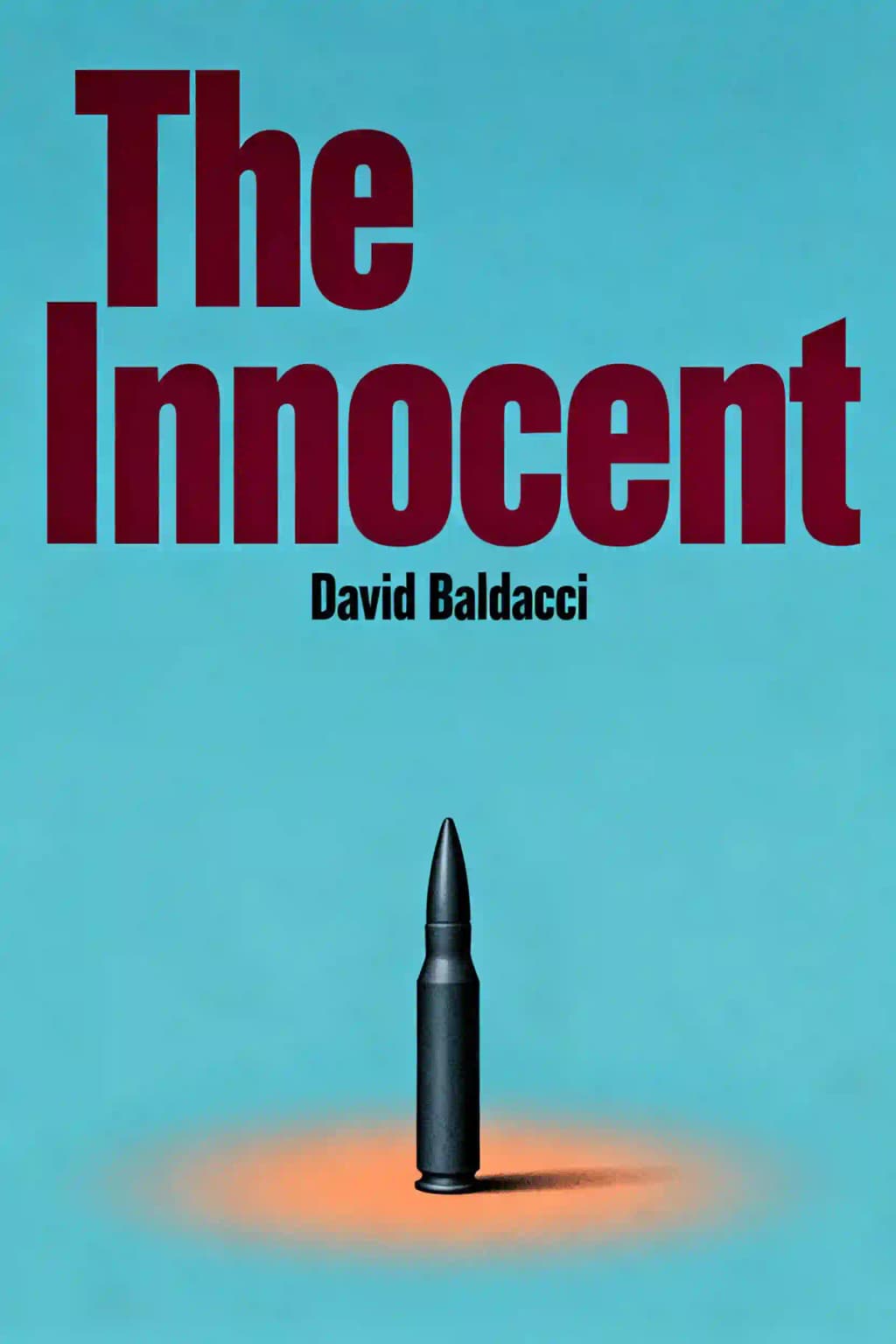
Will Robie isn't your average government employee. As America's top assassin, he's the last resort when conventional forces can't neutralize threats to national security. With an impeccable record and unwavering loyalty, Robie has never questioned an assignment-until now. When something feels wrong about his latest target, he makes the unprecedented decision to refuse the kill. In that moment, everything changes. Suddenly, the hunter becomes the hunted, forcing Robie to flee from the very agency he's served with distinction. The Innocent has become a global phenomenon since its 2012 release, spending weeks on bestseller lists and earning praise from Stephen King, who called it "Baldacci at his finest." This first installment in the Will Robie series showcases David Baldacci's masterful ability to blend high-stakes action with profound moral dilemmas, asking readers: what happens when doing the right thing means betraying everything you've sworn to uphold?
Chapitre 2
The Methodical Killer: Robie's Professional Precision
Will Robie approaches assassination with the methodical precision of a surgeon. In Edinburgh, Scotland, his first mission in the book demonstrates his exceptional attention to detail. At thirty-nine, he's in his professional prime-calculating, observant, and meticulous. He notes exactly sixteen returning Scots and fifty-three tourists on his flight, revealing his constant situational awareness.
His preparation is exhaustive. After checking into a modest room in an unremarkable building, he explores the city like any tourist, visiting Edinburgh Castle to establish his cover. When night falls, he executes a carefully timed plan, donning a monk's cloak and collecting his specialized equipment-gloves, night-vision goggles, a recorder, a suppressed Glock, and a knife. Each item serves a specific purpose in his deadly choreography.
In Underground Edinburgh, Robie moves with surgical precision. Using a recording of a tour guide's voice as cover, he eliminates five targets in rapid succession, each with a different technique-a knife strike to the first, a headshot to the second, a thrown knife to the third, another precise shot to the fourth, and finally, two shots to the head of his primary target. The diversity of his killing methods showcases his adaptability and comprehensive training.
What makes Robie exceptional isn't just his technical proficiency but his psychological composition. After completing his mission, he sleeps soundly, unburdened by the weight of taking five lives. This emotional compartmentalization is the hallmark of an elite assassin. The next morning, he transitions seamlessly back to civilian life, taking a train to London and flying to Dulles Airport in Virginia, moving efficiently between worlds like a ghost.
Yet beneath this cold efficiency, we glimpse the first hints of Robie's humanity. When he receives a congratulatory message from his handlers that he finds inappropriate, we see a man who, despite his profession, maintains certain standards. As he walks for hours by the river, reflecting on his uncelebrated birthday, we witness the isolation his career demands-a solitude that will become increasingly significant as the story unfolds.
Chapitre 3
The Tangier Assignment: When Doubt Creeps In
For his next high-profile assignment, Robie infiltrates a heavily secured facility in Tangier, Morocco. His target: Saudi Prince Khalid bin Talal, a man worth over twelve billion dollars who despises Americans and has been linked to terrorist attacks against U.S. servicemen. The mission requires Robie to wait three days in complete stillness, hidden in the rafters of a building, demonstrating his extraordinary physical discipline and mental fortitude.
The prince arrives with impressive security-four armored Hummers and loyal guards in a diamond formation. Using specialized surveillance equipment, Robie overhears a concerning conversation between the prince and his Russian and Palestinian conspirators. They discuss a decades-in-the-making "plant" positioned near an important target who's willing to die for the cause. This intelligence adds moral weight to Robie's assignment-he's not just eliminating a wealthy adversary but potentially preventing a significant terrorist attack.
When the moment arrives, Robie executes the kill with characteristic precision, firing a subsonic round through the jet's window that explodes the prince's brain. He then systematically eliminates the external guards and disables the plane's door mechanism and controls. His escape plan is equally meticulous-switching vehicles twice before boarding a slow ferry to Barcelona, a deliberately unexpected route that will take over twenty-seven hours.
"No one would expect an assassin to use transportation that takes over a day to reach its destination," Baldacci writes, highlighting Robie's strategic thinking. While authorities check airports, highways, train stations, and high-speed ferries, Robie's "old bathtub" of a ferry carries him safely away.
This mission reveals more about Robie's character. Despite his lethal efficiency, he's thoughtful about his targets. He notes that the Saudi royal family will publicly condemn the killing while privately toasting the Americans responsible. This understanding of political realities shows Robie isn't just a mindless killer but someone who comprehends the complex geopolitical landscape in which he operates.
As Robie falls asleep on the gently swaying ferry, we see a man completely at peace with his actions. Yet this mission plants seeds of doubt that will later bloom when faced with a more morally ambiguous assignment. The prince's conversation about a "plant" decades in the making will prove crucial to understanding the conspiracy that unfolds later in the novel.
Chapitre 4
The Mission That Changes Everything
Nearly three months after eliminating Prince Khalid bin Talal, Robie receives a new assignment that will fundamentally alter his life. This mission is different-it's unusually close to home in Washington, D.C. During his downtime, Robie had lived a semblance of normalcy-taking walks, reading books, eating out, traveling without killing anyone. He'd even attended a neighbor's party where he noticed a young woman named Annie Lambert who bikes to her job at the White House as early as 4:30 a.m.
Robie's apartment reflects his carefully constructed anonymity-deliberately nondescript, containing nothing personal that would reveal his profession. He maintains an official cover story about working in investments but keeps no photos, hobby items, or personal effects. This spartan existence underscores his isolation and the sacrifices his profession demands.
At forty years old, Robie maintains rigorous physical training despite finding it increasingly difficult. He knows that at his age, he must counter his inevitable physical decline with increased field experience and judgment. This acknowledgment of mortality adds depth to his character-he's not superhuman but a professional acutely aware of his limitations.
The fateful mission begins when Robie enters a rundown apartment building to eliminate his target-a 35-year-old Black woman allegedly with terrorist ties. The building is half-empty due to foreclosures, making it ideal for his mission. As he approaches her door, something about this particular job troubles him, a feeling he can't shake.
Inside the apartment, Robie discovers unexpected details-a playpen, children's drawings saying "I heart mom," and toys piled in a corner. His briefing mentioned nothing about children, causing him to hesitate. A handler's voice in his earpiece urges him forward, but when he finds his target sleeping with a small boy next to her, the handler frantically orders Robie to shoot both of them.
In this pivotal moment, Robie makes the unprecedented decision to refuse the kill. When the woman wakes and shields her child, Robie warns her to be quiet by shooting into the pillow. Suddenly, a sniper shot from outside kills both mother and son. Discovering a baby in a carrier beside the bed, Robie grabs it, photographs the woman's government ID and passport, then leaves the baby with a neighbor before planning his own escape.
This moral choice-refusing to kill a child-transforms Robie from a loyal operative into a fugitive. His decision to preserve his humanity at the cost of his perfect record reveals his true character and sets in motion the central conflict of the novel. Now a target of his own agency, Robie must use all his skills not to complete a mission, but to survive one.
Chapitre 5
The Unlikely Partnership: Robie and Julie
Robie's escape from his former employers leads to an unexpected encounter on a bus bound for New York City. He notices a teenage girl sitting three rows ahead and a suspicious man who boards last and sits directly behind her. The man wears gloves despite the mild weather and has no luggage-telltale signs of another professional killer. Robie's instincts tell him this man isn't simply traveling to New York-he's there to eliminate the girl.
The situation takes an unexpected turn when the girl, without even turning around, sprays her would-be attacker with pepper spray. Despite being hit in the eyes, the man still lunges for her neck. Robie intervenes, striking the attacker with his pistol. When the bus driver stops and confronts Robie about the gun, the girl shows the driver what appears to be a grenade (actually plastic) and they exit the bus together.
Moments later, an explosion destroys the bus, killing everyone aboard. This shared trauma creates an unlikely bond between Robie and the girl, who introduces herself as "Julie." Despite her initial reluctance to trust anyone, Robie convinces her they need to work together, arguing that she's either been followed or betrayed.
Julie gradually reveals her story: she's fourteen years old and has run away from her latest foster home where the parents were forcing children to pickpocket and deal drugs. After leaving evidence with Social Services to help the other foster children, she returned to her real parents' home, excited about their plans to move away and start fresh together. Instead, she discovered a violent intruder questioning her parents. She witnessed her father being shot, and when spotted by the gunman, her mother sacrificed herself to help Julie escape.
This parallel between Julie and Robie-both on the run, both witnesses to violence they couldn't prevent-creates a powerful dynamic. Julie's presence forces Robie to confront emotions he's long suppressed. When she attempts to escape during the night from Robie's rural Virginia safe house, he doesn't stop her but instead offers directions to the nearest gas station and another canister of pepper spray. This respect for her autonomy, coupled with genuine concern, begins to thaw the professional distance he maintains with everyone.
Their relationship evolves from reluctant allies to something resembling family. When Julie expresses her desire to kill those responsible for her parents' deaths, Robie warns her that killing changes a person fundamentally. "This isn't a game," he tells her. "The people after you won't hesitate to kill you." Julie's response-that it's her choice how to live or die-leaves Robie contemplating her words, recognizing in her determination a reflection of his own resilience.
Through their interactions, Baldacci explores themes of trust, protection, and the human need for connection. Julie becomes Robie's moral compass, reminding him of innocence worth protecting. Meanwhile, Robie provides Julie with security and purpose in the aftermath of devastating loss. Their unlikely partnership becomes the emotional heart of the novel, humanizing Robie and giving him something he's never had before-someone who depends on him not as an operative, but as a person.
Chapitre 6
The Investigation: Unraveling Deadly Connections
As Robie investigates the circumstances surrounding his aborted mission, he discovers his target was Jane Wind, an American citizen who worked for the Department of Defense Inspector General's office. More troublingly, she was actually employed by Robie's own agency, making her murder an inside job. This revelation comes from a high-ranking official called "Blue Man," who reveals they believe at least four agency insiders are traitors, including Robie's handler who has disappeared.
To investigate without drawing attention, Robie poses as a DCIS agent working alongside FBI Special Agent Nicole Vance. At Wind's apartment, Vance explains that Wind and her son Jacob were killed by a single shot from a sniper positioned in an abandoned building over 300 meters away. Puzzlingly, Wind's infant son Tyler was found unharmed on the third floor. Vance theorizes that an intruder broke in, fired a warning shot into the bed, and then-by incredible coincidence-a sniper shot Wind and Jacob at that exact moment. Robie knows this theory is correct because it's exactly what happened.
The investigation takes a darker turn when they discover Jane Wind's ex-husband Rick at his pawnshop, hanging upside down from a rafter with his tongue cut out. Vance suggests Islamic fundamentalists might be involved since they sometimes cut out tongues of betrayers. However, Robie remains unconvinced by this theory, sensing there's more to the story.
Meanwhile, Julie recognizes connections between her parents' murder and the Wind case. She reveals that her parents had dinner with friends named Leo and Ida Broome the night before they were killed, and all four looked troubled, "like they'd seen a ghost." When Robie and Julie visit the Broomes' apartment, they find it suspiciously clean-professionally wiped down, suggesting something sinister happened to the couple.
The investigation accelerates when Julie makes a crucial observation: since a military squad typically has nine or ten soldiers, they should track down the other members who served with her father, Wind, and Broome. This leads them to three remaining squad members: Jerome Cassidy, Elizabeth Claire Van Beuren, and Gabriel Siegel.
Through interviews with these individuals, Robie discovers that Julie's father Curtis Getty, Rick Wind, Leo Broome, and the others all served together during the Gulf War. They shared a distinctive Spartan warrior tattoo representing the hoplite battle formation used by the 300 Spartans-a symbol of their brotherhood and shared experience.
As they dig deeper, the connections become clearer: all these deaths are linked to something that happened during their military service. The investigation becomes increasingly dangerous as Gabriel Siegel disappears after Robie's visit, and Elizabeth Van Beuren dies in hospice care after her ventilator is mysteriously removed.
The breakthrough comes when Robie discovers that Van Beuren's husband George works for the United States Secret Service Uniformed Division. This revelation triggers Robie's memory of watching Prince Talal in Morocco-how he briefly lost sight of him before the prince boarded the plane, then noticed unusual straps when he reappeared. Robie realizes Talal used a body double who died in his place. Connecting this with fragments of conversation about "the weakest link" and someone "willing to die," Robie deduces the target is the president.
Through methodical investigation and Julie's insightful observations, Robie unravels a conspiracy that connects his aborted mission, Julie's orphaning, and an imminent assassination attempt on the president. The investigation showcases Robie's analytical skills while highlighting how Julie's fresh perspective proves invaluable in solving the case.
Chapitre 7
The Betrayal: When Trust Becomes a Liability
Throughout the novel, Robie develops a tentative relationship with his neighbor Annie Lambert, who works at the White House as a policy expert with a PhD in biochemistry specializing in renewable energy. Their connection begins innocuously-Robie notices her early morning bike rides to work and eventually asks her for a drink at the W Hotel rooftop bar. After sharing wine and conversation on their building's rooftop one night, she kisses him goodnight, leaving Robie confused by feelings he hasn't experienced in a long time.
This personal connection represents a departure from Robie's typically isolated existence. For once, he allows himself to imagine a different kind of life-one with normal human connections. After their relationship becomes intimate, Robie finds himself genuinely drawn to Lambert, though he maintains professional caution, never fully revealing his true identity or work.
Meanwhile, the investigation leads Robie to a shocking realization: Prince Khalid bin Talal, whom he thought he'd assassinated in Tangier, is alive. The man Robie killed was a body double, and now Talal is orchestrating an elaborate revenge plot targeting not only Robie but the President of the United States and the Saudi crown prince during a White House dinner.
When Robie races to the White House to prevent the assassination, he enters the Family Dining Room disguised as a waiter. As he scans the room for potential threats, he spots Annie Lambert among the guests. Their eyes meet, and in that instant, Robie notices her dilated pupils and unusual smile-signs of a suicide bomber preparing for death. With horrifying clarity, he realizes she's the assassin, the "plant" who's been "decades in the making" that he overheard discussed in Tangier.
In that split second, Robie must make an impossible choice. Lambert draws her weapon and shoots the president in the arm before Robie puts a bullet through her head. As chaos erupts and the president is rushed from the room, Robie stands frozen, staring at Annie Lambert's body, processing the magnitude of this betrayal.
Later, Robie learns Lambert's full story-she was adopted by English and Iranian parents who had been brutalized under the shah's regime and raised her as a sleeper agent. Her entire existence in Robie's building, their "chance" meetings, their developing relationship-all were carefully orchestrated parts of Talal's revenge plan. The prince wanted Robie to suffer emotionally before dying, making Lambert's betrayal the cruelest cut of all.
This betrayal represents the novel's most devastating blow to Robie's carefully constructed defenses. For a man who trusts no one, who maintains professional distance at all times, Lambert's deception strikes at his core vulnerability-his loneliness and desire for human connection. The relationship that briefly made him feel human again was nothing but an elaborate trap, reinforcing his belief that in his world, trust is a liability that can prove fatal.
Chapitre 8
The Final Confrontation: Justice and Redemption
With the White House assassination attempt thwarted, Robie faces one final challenge-Prince Talal has kidnapped both Julie and FBI Agent Nicole Vance as his fail-safe plan. Talal sends Robie compromising photos of him with Lambert and instructions for a trade: himself for Julie and Vance. Though he knows Talal can't be trusted, Robie sees an opportunity to confront the prince directly.
Robie travels to Tangier, where he's captured and brought to a hangar containing Talal's private jet. There, he finds Julie and Vance, both severely beaten. When Talal mocks him about knowing his body double "intimately," Robie makes an unexpected move-he offers Talal a chance to surrender. This seemingly naive suggestion masks Robie's true plan.
When Talal orders his guard Abdullah to kill Robie, Abdullah instead tosses Robie a gun. Together they kill several guards while taking cover behind the jet's landing gear. A stealth helicopter appears, its thirty-millimeter chain gun blasting through the hangar window as Shane Connors, Robie's predecessor and mentor, provides sniper support. Abdullah reveals he's been working with the Americans all along.
Rather than killing Talal, Robie turns him over to Saudi officials who arrive to collect him, telling Julie, "I think you would have preferred the bullet." This decision reflects Robie's growth throughout the novel-choosing justice over vengeance, even when personal revenge would be easier.
The conspiracy's full scope is finally revealed: George Van Beuren betrayed his country for both money and revenge. The money was needed for his wife's experimental cancer treatments, while his moral justification was blaming the U.S. government for her illness, which he believed resulted from battlefield toxins. Van Beuren had confessed his plans to his wife, who then told Leo Broome. This led to the killings of Broome, Wind, and the Gettys when Talal's people discovered they knew too much.
In the aftermath, Robie arranges for Julie to live with Jerome Cassidy, who claims to be her mother's half-brother. Julie privately confronts Robie, recognizing the story isn't entirely true (Cassidy is actually her biological father), but accepts the arrangement. Before parting, they share a meaningful moment where Julie thanks him and they hug.
The novel concludes with Robie reflecting on his experiences. Watching Julie skip away "like a kid" despite her injuries, he contemplates how her wounds will heal while his own-especially those involving Annie Lambert-may not. He concludes with a powerful realization: while neither he nor his targets are innocent, perhaps his purpose is to protect those who truly are.
This final insight represents Robie's redemption. He began the novel as a perfect assassin who never questioned orders, but through his connection with Julie and his moral stand against killing innocents, he's discovered a deeper purpose. He's still a killer, but now he understands why he kills-not blindly following orders, but to protect the innocent from those who would harm them. This moral clarity gives meaning to his violent profession and offers him a path forward, despite the personal costs he continues to bear.
Chapitre 9
Legacy of Violence: The Price of Protection
The Innocent explores the profound psychological and moral costs of violence, even when that violence serves a protective purpose. Throughout the novel, Baldacci examines how killing-regardless of justification-leaves indelible marks on those who perform it and those who witness it.
Robie embodies this theme perfectly. Despite his professional detachment, years of assassination work have isolated him from normal human connection. His apartment contains nothing personal, he maintains no close relationships, and he views every friendly encounter as a potential threat. When he briefly allows himself to connect with Annie Lambert, the betrayal reinforces his isolation. His profession has made him effective but emotionally stunted, capable of extraordinary violence but struggling with ordinary intimacy.
Julie's journey parallels Robie's in many ways. After witnessing her parents' murders, she demonstrates remarkable resilience but also a disturbing capacity for coldness. When she expresses her desire to kill those responsible for her parents' deaths, Robie warns her, "Killing changes you. It makes you someone else." He recognizes in her the potential to become like him-effective but damaged-and tries to prevent her from following his path.
The Gulf War veterans-Getty, Wind, and Broome-represent another facet of violence's legacy. Their shared experiences in combat bonded them through their distinctive Spartan warrior tattoos, but also left them struggling with various aftereffects. Getty developed drug problems, Wind suffered from heart disease and kidney problems possibly related to Gulf War syndrome, and Broome lived a double life with hidden assets. Their military service, while honorable, extracted costs that continued long after they returned home.
Even those who orchestrate violence from a distance aren't immune to its effects. George Van Beuren's betrayal stems from his wife's illness, which he believes resulted from battlefield toxins. His revenge against a government he holds responsible demonstrates how violence creates ripples that extend far beyond the immediate battlefield.
The novel suggests that violence, even when necessary, exacts a price from everyone involved. Robie's professional success comes at the cost of his humanity. Julie's survival comes at the cost of her innocence. The veterans' service comes at the cost of their health and stability. This unforgiving equation-protection requires violence, violence demands sacrifice-forms the moral center of the novel.
Yet Baldacci doesn't present a simplistic anti-violence message. Instead, he acknowledges the complex reality that sometimes violence is necessary to protect the innocent. Robie's skills save lives, including Julie's and the president's. The novel's nuanced perspective suggests that while violence should never be celebrated, sometimes it must be employed by those willing to bear its psychological burden.
In the novel's final reflection, Robie acknowledges that "neither he nor his targets are innocent," but perhaps his purpose is to protect those who truly are. This insight represents the book's most profound statement on violence-that its ultimate justification lies not in eliminating the guilty but in preserving the innocent. For Robie, this realization doesn't erase the costs of his violent profession, but it gives meaning to his sacrifice and offers a moral framework for continuing his work despite its personal toll.