Chapitre 1
The Digital Megaphone: How Ideas Spread in Today's World
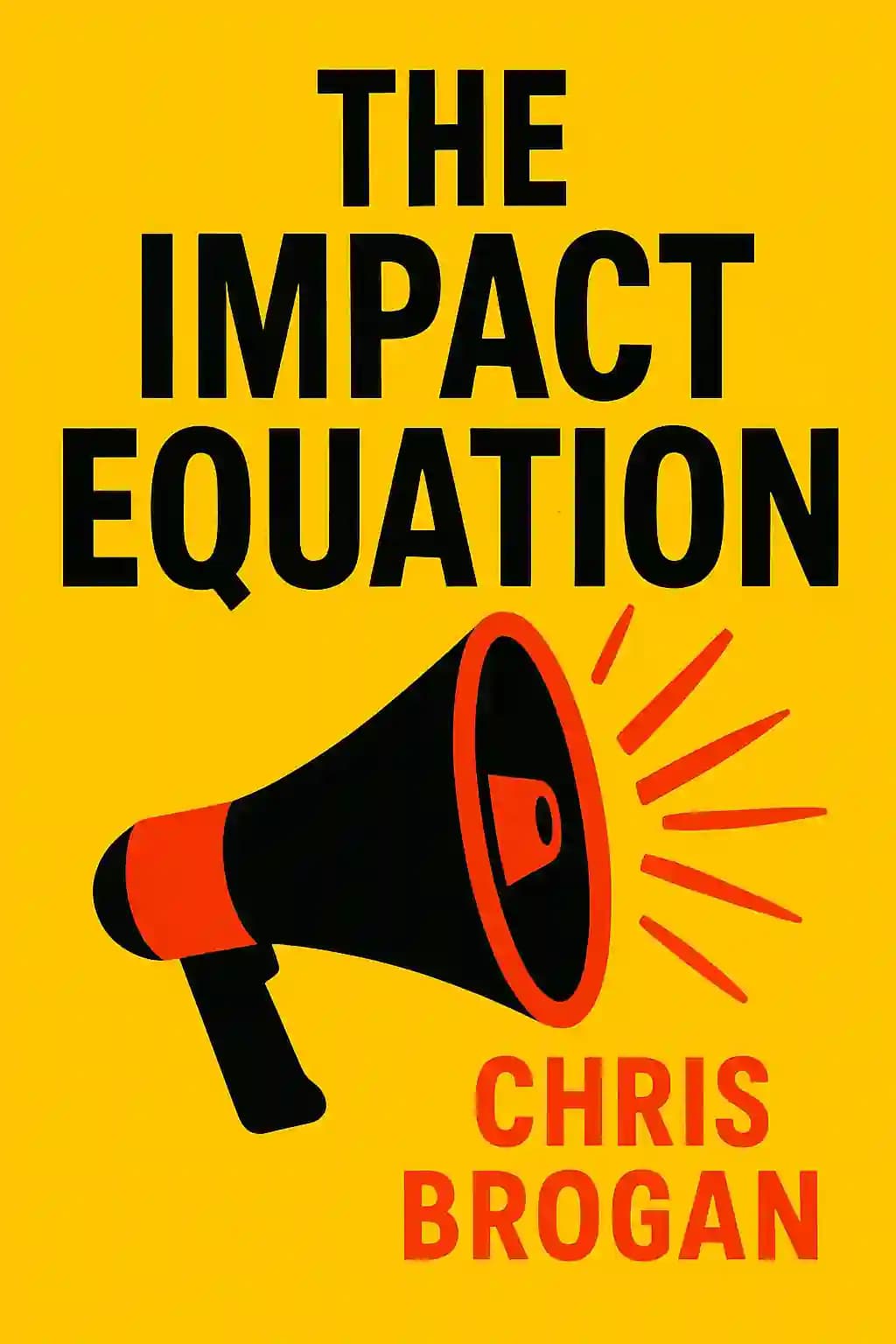
In a world where everyone has a platform but few have impact, Chris Brogan and Julien Smith offer a formula that transforms mere presence into genuine influence. This isn't just another social media guide - it's a comprehensive framework for making ideas matter. The book has garnered praise from business leaders like Tony Hsieh of Zappos and marketing guru Seth Godin, who called it "essential reading for anyone who wants to win in a world where consumers have real power." With over 50,000 copies sold in its first month and translation into 11 languages, the Impact Equation has become required reading in marketing departments at companies like Dell, Microsoft, and Disney. What makes this work particularly compelling is how it arrived just as businesses were realizing that social media presence alone wasn't enough - they needed a systematic approach to create meaningful connections in an increasingly noisy digital landscape.
Chapitre 2
Beyond Social Networks: The Real Path to Impact
Despite being known as "social media experts," Brogan and Smith clarify immediately that this book isn't about Facebook or Twitter. The Impact Equation focuses on something far more fundamental: how to get larger audiences to see and act upon your ideas, and how to build communities around those ideas. Social networks are merely tools in this process - focusing exclusively on them misses the point entirely, like saying Moby-Dick is about boats.
The authors introduce their core formula: Impact = C x R x E x A x T x E (Contrast, Reach, Exposure, Articulation, Trust, and Echo). This equation provides a systematic way to evaluate why some ideas spread while others languish in obscurity. To demonstrate its application, they analyze adventurer Brett Rogers, who travels rivers without using fossil fuels. His Contrast comes from being a unique documentary filmmaker with rare footage of the Gulf before the BP oil spill. His Reach extends through the Documentary Channel and web series. His Exposure improves through episodic content that helps audiences remember him. His Articulation is excellent - "an adventurer who travels down rivers without using a single barrel of oil" is clear and memorable. Trust comes from his raw, high-quality filmmaking style that makes viewers feel present on his journeys. His Echo - the emotional connection - is why audiences care about his adventures.
The democratization of media has fundamentally changed our culture. Unlike expensive traditional channels (TV, radio, newspapers), today's platforms cost nothing to create and maintain. This shift enables thirteen-year-olds to become millionaires faster than their fathers could earn a fraction as much. The tools used by Zuckerberg, Brin, and Page are available to everyone. This transformation represents a unique moment in history - those who leverage it gain unprecedented advantages.
We're the first generation who are both mass consumers and creators of media. Thinking of yourself as a TV station helps focus your content strategy. Most businesses create only autobiographical content, but would you watch a channel that talked about one company all day? People tune in for passion and variety within a theme. Your "TV station" might distribute content through email newsletters, blogs, videos, tweets - whatever platforms you develop.
Chapitre 3
Crafting Ideas That Cut Through the Noise
The modern marketplace of ideas resembles the South by Southwest conference - a chaotic carnival where everyone competes for attention with their latest innovation. As content creation becomes cheaper and more accessible, audiences grow increasingly discerning and cynical. Your ideas must be sharp enough to penetrate the mental armor protecting your audience's attention.
Ideas, like physical objects, have specific shapes that determine how effectively they can be received. Just as a baseball fits perfectly into a baseball glove, ideas need to be shaped to fit the mental frameworks of your audience. In our increasingly disconnected media landscape, we send ideas out blind, unable to see how they're received. The best idea-spreaders carefully design their concepts to be caught effectively.
Ideas compete like species in an ecosystem, fighting for survival and replication. The most successful ideas - like major religions - have shapes that help them spread effectively across generations. In our era of media democracy, idea creation has been democratized too. More ideas spread faster than ever before, with most dying natural deaths upon exposure.
Pattern recognition is why Contrast becomes one of the most important aspects of the Impact Equation. In marketing terms, Contrast is the unique sales proposition that differentiates offerings in a saturated market. Every Contrast is conformity somewhere else - we're not seeking universal uniqueness, just uniqueness within our field. When Contrast is low, nothing has impact; when it's high, visibility becomes immediate.
Most people have bad ideas because they were never taught how to create good ones. Creating successful ideas isn't accidental - it follows a process of recognizing potential and molding it until ready for public consumption. A framework for better ideas includes seven key questions: What's the goal? How does it fit your existing framework? How much work will it add? What will it take to accomplish? What additional resources are needed? How will you know whether to continue or pivot? When will you be done?
The concept behind "idea storms" is simple but powerful: let everyone share ideas, let everyone vote, and see what rises to the top. The "shotgun blast" approach embraces creating garbage to eventually produce genius - just as the Internet's tolerance for garbage enables the best content to emerge. Creating today's garbage is often necessary for creating tomorrow's gold.
Chapitre 4
The Art of Clear Communication
Articulation - the ability to express ideas clearly and compellingly - forms a cornerstone of the Impact Equation. Years ago, Chris learned an invaluable lesson from instructor Kenneth Hadge that would reshape his approach to communication: "Tell it to me like I'm six years old." This principle, while deceptively simple, carries profound implications. Using clear, straightforward language isn't about dumbing down content - it's about removing unnecessary complexity that creates barriers to understanding. Nike exemplified this perfectly with "Just do it" instead of complex marketing jargon about athletic achievement. Apple similarly mastered this with "Think Different" rather than elaborate technical specifications.
The authors present a challenging exercise that reveals the true difficulty of clear communication: describe complex concepts using no more than twenty words, with each word limited to two syllables. Try explaining what your company does, the plot of The Matrix, your plans for five million dollars, your life philosophy, or your ideal colleague qualities. This constraint forces precision and clarity, often revealing how much unnecessary complexity we add to our explanations. When people attempt this exercise, they typically discover that their initial descriptions contain redundant phrases and unclear metaphors that actually obscure their message.
Effective articulation demands ruthless editing - knowing not just which words to choose, but which to eliminate. The authors suggest a practical audit: review your sent emails from the past week. How many could be condensed to 100 words without losing their essential meaning? The two.sentenc.es movement takes this concept to an extreme, advocating for email responses limited to two sentences, pushing longer discussions to more appropriate formats like meetings or documents. This approach forces clarity and prevents the common problem of email bloat.
Chipotle provides a masterclass in practical articulation through their ordering system: four crystal-clear signs reading "ORDER," "WITH," "SALSAS," and "EXTRAS." This system guides customers effortlessly through what could otherwise be an overwhelming array of choices. Their commitment to clear communication extends beyond operations to their brand message, exemplified in their "Back to the Start" animation. This short film powerfully communicates their commitment to sustainable farming without complex terminology or lengthy explanations.
The "too many ideas" syndrome plagues many creative professionals, leading to scattered efforts and unfinished projects. While having numerous ideas indicates creativity, success requires a systematic approach to evaluation and selection. The authors recommend developing a structured framework for assessing ideas, considering factors like resource requirements, market potential, and alignment with core objectives. Just as a film trying to combine too many genres - say, sci-fi robots, Greek mythology, crime drama, and musical numbers - would likely fail from lack of focus, successful projects usually maintain a clear, singular vision. Constraints, rather than limiting creativity, actually enhance it by forcing more thoughtful development of truly promising concepts.
Chapitre 5
Building Your Platform: The Amplifier for Ideas
Platforms are the transmitters that amplify your ideas to the world. Like Angelyne who became famous simply by appearing on billboards throughout Los Angeles, or Gary Vaynerchuk who built an empire starting with wine videos, a powerful platform can create fame and influence. However, platforms don't appear magically - they must be built from the outside in, requiring consistent work beyond the platform itself. The key is understanding that platform building is a marathon, not a sprint.
Platform means the combination of tools used to reach others and communicate ideas. While traditional platforms were once limited to mainstream media like television, radio, and print, today's digital landscape offers numerous accessible options: websites, video platforms (YouTube, TikTok, Instagram), email marketing tools, podcasting networks, and social media channels. Success stories abound - from Kim Kardashian amplifying her TV fame through strategic social media presence and mobile apps, to Lucas Cruikshank parlaying YouTube videos into Nickelodeon movies, to Amanda Hocking self-publishing on Amazon and earning millions before landing a traditional book deal. Each leveraged different platform combinations to reach their audience.
Reach - the coveted ability to connect with large audiences - is what many content creators truly desire. While it's tempting to fake Reach by buying followers or email lists, authentic Reach requires persistent effort and genuine connection with your audience. It's rarely built quickly; even successful musicians and comedians like Louis C.K., Joe Rogan, and Dave Chappelle developed their audiences painstakingly over years, one fan at a time. Ideas without Reach are like plants without sunlight - they wither and die regardless of quality. The key is consistency and authenticity in building genuine connections.
The primary purpose of a new platform is audience building - expanding your Reach exponentially to influence a significant population. But reaching people means nothing unless you provide enough value to make them stop, engage, and return. Your content must either introduce an interesting new voice (like Tim Ferriss did with the 4-Hour Work Week), validate what readers already believe (as Dave Ramsey does with financial advice), or present something they've never considered before (similar to Malcolm Gladwell's counterintuitive insights).
Understanding how and when to extract value from your platform is where many creators stumble. "Value" isn't always monetary - it might mean access, social proof, speaking opportunities, book deals, or consulting work. Ricky Gervais learned this lesson the hard way when he attempted to monetize his world's-most-popular podcast by implementing a paywall. He immediately plummeted from the top spot, earned minimal revenue, and couldn't recapture his audience even after returning to free content. Adam Carolla took a different approach with his podcast, using the traditional sponsor model to extract value from advertisers rather than listeners. Similarly, Pat Flynn built his Smart Passive Income platform by first providing immense free value through his blog and podcast, then monetizing through affiliate marketing and digital products.
Modern platform building requires a delicate balance between providing value and monetization. Successful creators like Casey Neistat and Peter McKinnon built massive YouTube followings by consistently delivering high-quality content before introducing sponsored content and products. The key is to build trust first, then carefully introduce revenue streams that align with your audience's interests and needs.
Chapitre 6
Exposure: Being Seen Without Being Annoying
Exposure is about repeatedly reaching your audience until they take action, but it requires a delicate balance of persistence and value. Unlike hype which creates a temporary spike of attention that quickly flatlines, building your own channel creates lasting, growing impact that compounds over time. When done right, exposure isn't even noticed - it's your ideas spreading through different means and being remixed by participants, creating an organic ecosystem of engagement.
The key to meaningful exposure lies in creating content that genuinely resonates. To determine if your content matters rather than just being hype, ask: Would someone be delighted to discover it? Do people look forward to what you send? Is your content like a television show rather than an advertisement? Unlike advertising which interrupts what people actually want, owning your own channel means building something people genuinely care about. This might mean creating in-depth tutorials, sharing unique insights, or offering solutions to common problems in your field.
Through extensive testing, Chris and Julien discovered that platform size doesn't necessarily mean bigger impact - a revelation that challenged conventional wisdom. Their experiments showed that quality connections matter more than quantity, particularly in specialized fields. For instance, having 100 engaged followers in your specific industry often proved more valuable than 10,000 passive followers. The real value came from nurturing relationships with high-quality connectors rather than maintaining a vast audience. They found that commenting and replying to others proved more valuable for engagement than posting original content, often leading to collaborative opportunities and deeper professional relationships.
The eternal question "How often should I blog?" has no one-size-fits-all answer, but their research revealed clear patterns. From their experiments, Chris and Julien found that daily blogging typically increases subscribers by 25-40%, multiple daily posts can increase them by up to 60%, weekly posting maintains subscribers, while monthly posting might cause losses of up to 15%. Sundays proved mysteriously effective for engagement, showing 30% higher interaction rates, but ultimately, posting frequency matters less than content quality and consistency.
Many people misunderstand the fundamental difference between Exposure and attention. Exposure combines opportunity with platform access, while attention must be earned through consistent value delivery. People often mistake superficial access (like the ability to tweet at celebrities or comment on popular posts) for actual Exposure, leading to ineffective "look at me" behaviors that rarely succeed. This misunderstanding often results in wasted effort and missed opportunities for meaningful connection.
For the unknown person seeking Exposure, targeting the biggest names is usually ineffective, with success rates below 1%. Better strategies include: starting with like-minded people who share your passion, particularly in smaller, more focused communities; telling stories that relate to people outside your cause through universal themes; crafting narratives that make the audience the hero of their own journey; and helping others first before seeking attention. Success often comes from building a reputation as a valuable community member rather than someone solely focused on self-promotion.
The most effective exposure strategies focus on creating value chains - where each piece of content leads naturally to the next, building a coherent body of work that attracts and retains an engaged audience. This approach creates a sustainable growth pattern that compounds over time, rather than the boom-and-bust cycle typical of viral marketing attempts.
Chapitre 7
Building Trust in a Skeptical World
At one end of the Exposure spectrum is personal conversation - not scalable but deeply influential because it leverages relationship and trust rather than repetition. At the opposite end is spam - massively scalable but with minimal impact. Between these extremes are effective approaches like Wikipedia's annual donation drive, which works because it builds Trust all year through free value before briefly turning up Exposure during fundraising.
Never mistake an audience for a community. An audience merely receives information, while a community actively maintains ongoing interaction. You aren't the king or queen of your community - you have the privilege to serve people who've gathered around your ideas. Communities are loosely joined and quick to disperse. Most people belong to multiple communities simultaneously, identifying with various interests rather than just one.
Trust can be quantified as: C x R x I / S = TRUST, where C is Credibility (backed by credentials), R is Reliability (doing what you promise), I is Intimacy (personal connection), and S is Self-interest. Credibility comes from qualifications like degrees or industry recognition. Reliability - delivering consistently - is "the Web's secret sauce" because online reliability is rare. Intimacy drives decisions based on personal connection rather than credentials. Self-orientation is the denominator - the lower your self-interest appears, the higher the trust.
During the 2010 FIFA World Cup, the vuvuzela became infamous for its deafening sound. YouTube's response was brilliant - they added a vuvuzela button to every video that played the sound at full volume with no way to adjust it. This seemingly counterintuitive business decision worked because it was fundamentally human - it was a joke. Companies struggle with humanity because they aren't people. The secret to building trust online is actually being human rather than emulating human behavior.
The online social experience mirrors a cocktail party. Just as you wouldn't hand business cards to strangers asking them to distribute to friends, online interactions require relationship-building steps: making a good first impression through your avatar/profile, initiating contact by asking about the other person rather than talking about yourself, qualifying business opportunities tactfully, making introductions without expectation of return, and eventually inviting promising contacts to continue the conversation elsewhere.
Chapitre 8
Creating Emotional Resonance Through Echo
Adele exemplifies the power of Echo - the ability to resonate with audiences by creating genuine connections. At her Royal Albert Hall performance, she attracted a diverse audience because her songs about love and heartbreak resonated universally. Between songs, she spoke to the audience not as a celebrity but as a friend, sharing personal feelings and experiences in a way that made each listener feel individually addressed.
Echo can backfire when celebrities try to commiserate about everyday challenges while clearly living privileged lives - like wealthy musicians supporting Occupy Wall Street while belonging to the very 1% being protested against. The "I know how you feel" approach risks creating dissonance rather than connection when your circumstances clearly differ from your audience's.
Adele masters Echo by sharing relatable experiences - like being the sober friend dealing with drunk friends' messes - that most audience members have experienced. Echo works by finding common ground that demonstrates understanding of your audience's lives. To create Echo effectively: use your audience's language (like making Star Wars references to technologists), but avoid using terms you don't fully understand; find genuine common ground in conversations; and share your feelings, even if it contradicts traditional business advice. Vulnerability and emotional honesty create powerful connections with your audience.
Sacrifice is underrepresented in social interactions because we mistakenly believe everything must be win-win. Yet it's during lean times that true friends emerge - those willing to give when they barely have enough themselves. Consider two community strategies: the hoarder guards connections selfishly, while the prolific connector freely introduces people without concern for personal gain. The connector ultimately gains more social capital.
Electronic music star deadmau5 (Joel Zimmerman) creates Echo by transforming fans into collaborators. He invites followers into live video feeds, shares creative struggles, and maintains a relatable human presence - losing things and joking around like anyone else. Crucially, he never calls his followers "fans," avoiding the separation this creates. Similarly, author Paulo Coelho shifts attention back to his readers - his Twitter background features a mosaic of his readers' faces, and he engages in genuine two-way conversations about their interests.
Creating emotional connection transcends mere information sharing. The internet overflows with how-to content, but what's lacking is motivation, inspiration and faith. When you make people feel something positive, they associate that feeling with you or your brand. To inspire effectively: 1) Distill your message to its emotional essence; 2) Identify the core emotion behind your message; 3) Deliver this feeling repeatedly from multiple angles; 4) Ground inspiration with specific examples; and 5) Practice constantly - anticipating audience emotions requires significant experience.
Chapitre 9
Putting It All Together: The Complete Impact Equation
The Impact Equation contains an apparent contradiction: Contrast (standing out) and Echo (resonating with others). These elements actually complement each other, much like comedy. Comedians create situations that stand out while resonating with common experiences. Chris demonstrates this by joking about our attachment to phones - comparing us to Gollum from Lord of the Rings with "My preciousssss" - making audiences laugh because they recognize the behavior.
Critics come with the territory when building ideas with Contrast and platforms with Reach. Today's critics aren't professionals offering constructive feedback - they're anyone who can type and press send. Eminem avoids Twitter because critics would get him down, while Seth Godin disables blog comments to avoid arguing rather than creating. The best approach is to accept all criticism and praise equally as just opinions, thank commenters, and develop a simple policy for handling negative feedback.
To create true impact, you must untangle your sense of worth from external validation - not just from strangers but from loved ones, employers, and others with power over you. Serve people who matter from your own sense of value rather than reacting to external feedback. This is challenging because our negative feelings about others can cloud our judgment and make fair assessment difficult.
Among the seven billion people on Earth, someone has the exact solution to your current problem - but you can't connect with them yet. Eventually, technology will enable perfect connections, making this book irrelevant. Until then, you need these tools to refine ideas in a cluttered marketplace, build platforms for your ideas, and understand the human element of communication.
Life isn't like the movies with perfect dramatic conclusions where everything wraps up neatly. Real life is messy, filled with mistakes, missteps, and mispronunciations. Yet thankfully, people tend to remember your home runs and big hits rather than your failures. They remember the work that helped them achieve breakthroughs or make a difference. Though there's rarely a standing ovation, the satisfaction lies in the act itself and knowing you've had an impact. Your fingerprint remains in the places you labored and the people you influenced. In our increasingly connected world, everyone will have this chance to make a difference.