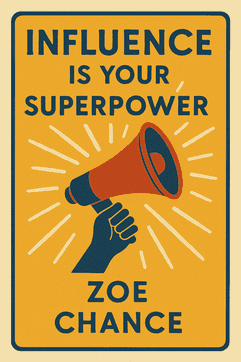
The New Currency: Mastering Modern Digital Influence
Explore why 91% of consumers trust creators over brands and learn the psychological frameworks—from social debt to identity fusion—shaping the $250 billion creator economy.

Meilleure citation de The New Currency: Mastering Modern Digital Influence
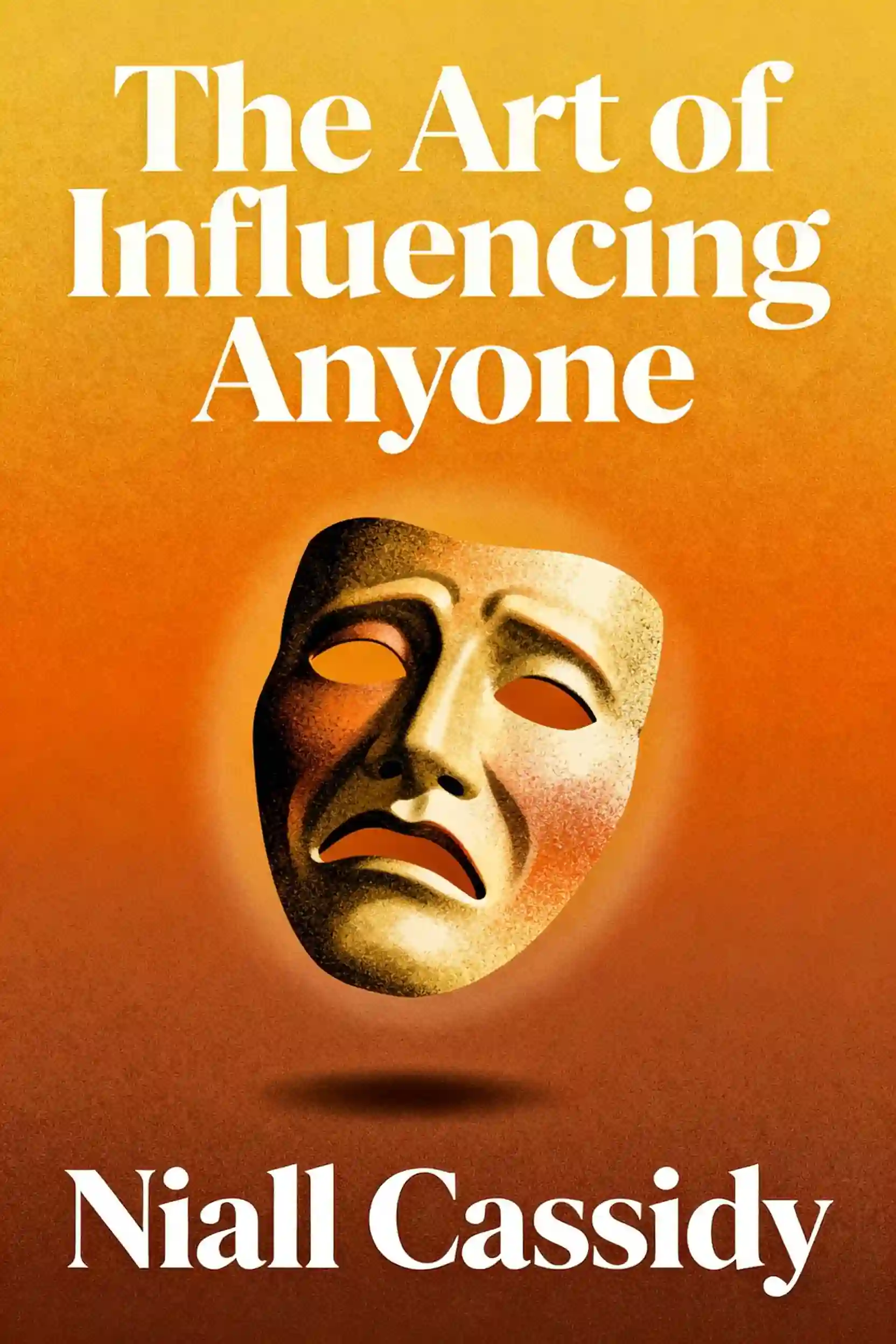
Influence is not just about what you do to others—it’s about understanding what’s being done to you. If you know how the 'click, whirr' of psychological triggers works, you can pause before the response takes over.
Generated by Vish
Influence

Foire aux questions
Heuristics are mental shortcuts or "rules of thumb" that the brain uses to process information efficiently. Because humans are bombarded with thousands of pieces of information daily, we lack the cognitive bandwidth to analyze every detail rationally. Instead, our brains use "fixed-action patterns"—a "click, whirr" response—where specific triggers like a "Bestseller" badge or an expert's uniform cause us to say "yes" automatically. While these evolved as survival mechanisms, in the modern world, they often lead us to make decisions without fully engaging our analytical faculties.
The "Door-in-the-Face" technique, also known as Rejection-then-Retreat, works by making a large initial request that is certain to be rejected. When the influencer then "concedes" by making a much smaller, more reasonable request, the other person feels a psychological sense of obligation to reciprocate that concession. Because the influencer moved from a big ask to a small one, the respondent feels a social debt to move from a "no" to a "yes," often feeling more responsible for and satisfied with the final agreement.
This technique relies on the principle of Commitment and Consistency, which states that once we take a small stand or action, we feel internal pressure to align our future behavior with that initial move to avoid appearing hypocritical. By getting someone to agree to a tiny, inconsequential request—like placing a small sticker in a window—an influencer can change that person's self-image. Once a person views themselves as a "supporter" of a cause, they are significantly more likely to agree to much larger, more demanding requests later to remain consistent with their new identity.
While both principles deal with human connection, they operate at different depths. Liking is the "grease" of influence, where we say yes to people we find attractive, similar to us, or who give us compliments. Unity, however, is the "We" factor; it is about shared identity and "identity fusion." It goes beyond mere similarity to define someone as a member of our specific tribe—such as family, religion, or a shared alma mater. In Unity, the influencer's interests are perceived as the group's interests, making persuasion feel like a collective benefit rather than a transaction.
Ethical influence is defined by "removing friction" from a good decision rather than creating a trap. The script suggests using the "Ethical Litmus Test": ask yourself if the person would still be delighted with their decision 24 hours later if they knew exactly which tactics were being used. To remain ethical, influencers should use honest constraints for scarcity, provide genuine value first for reciprocity, and use verifiable data or citations to establish authority. The goal is to align the influence triggers with the actual needs and benefits of the person being influenced.
Cree par des anciens de Columbia University a San Francisco
"Instead of endless scrolling, I just hit play on BeFreed. It saves me so much time."


"I never knew where to start with nonfiction—BeFreed’s book lists turned into podcasts gave me a clear path."


"Perfect balance between learning and entertainment. Finished ‘Thinking, Fast and Slow’ on my commute this week."
"Crazy how much I learned while walking the dog. BeFreed = small habits → big gains."
"Reading used to feel like a chore. Now it’s just part of my lifestyle."

"Feels effortless compared to reading. I’ve finished 6 books this month already."
"BeFreed turned my guilty doomscrolling into something that feels productive and inspiring."

"BeFreed turned my commute into learning time. 20-min podcasts are perfect for finishing books I never had time for."
"BeFreed replaced my podcast queue. Imagine Spotify for books — that’s it. 🙌"

"It is great for me to learn something from the book without reading it."
"The themed book list podcasts help me connect ideas across authors—like a guided audio journey."
"Makes me feel smarter every time before going to work"
Cree par des anciens de Columbia University a San Francisco
"Instead of endless scrolling, I just hit play on BeFreed. It saves me so much time."
"I never knew where to start with nonfiction—BeFreed’s book lists turned into podcasts gave me a clear path."
"Perfect balance between learning and entertainment. Finished ‘Thinking, Fast and Slow’ on my commute this week."
"Crazy how much I learned while walking the dog. BeFreed = small habits → big gains."
"Reading used to feel like a chore. Now it’s just part of my lifestyle."
"Feels effortless compared to reading. I’ve finished 6 books this month already."
"BeFreed turned my guilty doomscrolling into something that feels productive and inspiring."
"BeFreed turned my commute into learning time. 20-min podcasts are perfect for finishing books I never had time for."
"BeFreed replaced my podcast queue. Imagine Spotify for books — that’s it. 🙌"
"It is great for me to learn something from the book without reading it."
"The themed book list podcasts help me connect ideas across authors—like a guided audio journey."
"Makes me feel smarter every time before going to work"
"Instead of endless scrolling, I just hit play on BeFreed. It saves me so much time."
"I never knew where to start with nonfiction—BeFreed’s book lists turned into podcasts gave me a clear path."
"Perfect balance between learning and entertainment. Finished ‘Thinking, Fast and Slow’ on my commute this week."
"Crazy how much I learned while walking the dog. BeFreed = small habits → big gains."
"Reading used to feel like a chore. Now it’s just part of my lifestyle."
"Feels effortless compared to reading. I’ve finished 6 books this month already."
"BeFreed turned my guilty doomscrolling into something that feels productive and inspiring."
"BeFreed turned my commute into learning time. 20-min podcasts are perfect for finishing books I never had time for."
"BeFreed replaced my podcast queue. Imagine Spotify for books — that’s it. 🙌"
"It is great for me to learn something from the book without reading it."
"The themed book list podcasts help me connect ideas across authors—like a guided audio journey."
"Makes me feel smarter every time before going to work"
"Instead of endless scrolling, I just hit play on BeFreed. It saves me so much time."
"I never knew where to start with nonfiction—BeFreed’s book lists turned into podcasts gave me a clear path."
"Perfect balance between learning and entertainment. Finished ‘Thinking, Fast and Slow’ on my commute this week."
"Crazy how much I learned while walking the dog. BeFreed = small habits → big gains."
"Reading used to feel like a chore. Now it’s just part of my lifestyle."
"Feels effortless compared to reading. I’ve finished 6 books this month already."
"BeFreed turned my guilty doomscrolling into something that feels productive and inspiring."
"BeFreed turned my commute into learning time. 20-min podcasts are perfect for finishing books I never had time for."
"BeFreed replaced my podcast queue. Imagine Spotify for books — that’s it. 🙌"
"It is great for me to learn something from the book without reading it."
"The themed book list podcasts help me connect ideas across authors—like a guided audio journey."
"Makes me feel smarter every time before going to work"



![[963096e9-1622-4e5a-83f3-8857963d5952:c0000] Medium p1-1](/_next/image?url=https%3A%2F%2Fd1y2du6z1jfm9e.cloudfront.net%2Fassets%2Fpodcast%2Fgreen.png&w=1024&q=50)