Corrie ten Boom's memoir reveals how one Dutch family hid 800 Jews during WWII, risking everything for strangers. Honored by Israel as "Righteous Among Nations," her tale of faith amid Nazi horror continues to inspire millions. What would you sacrifice to save lives?
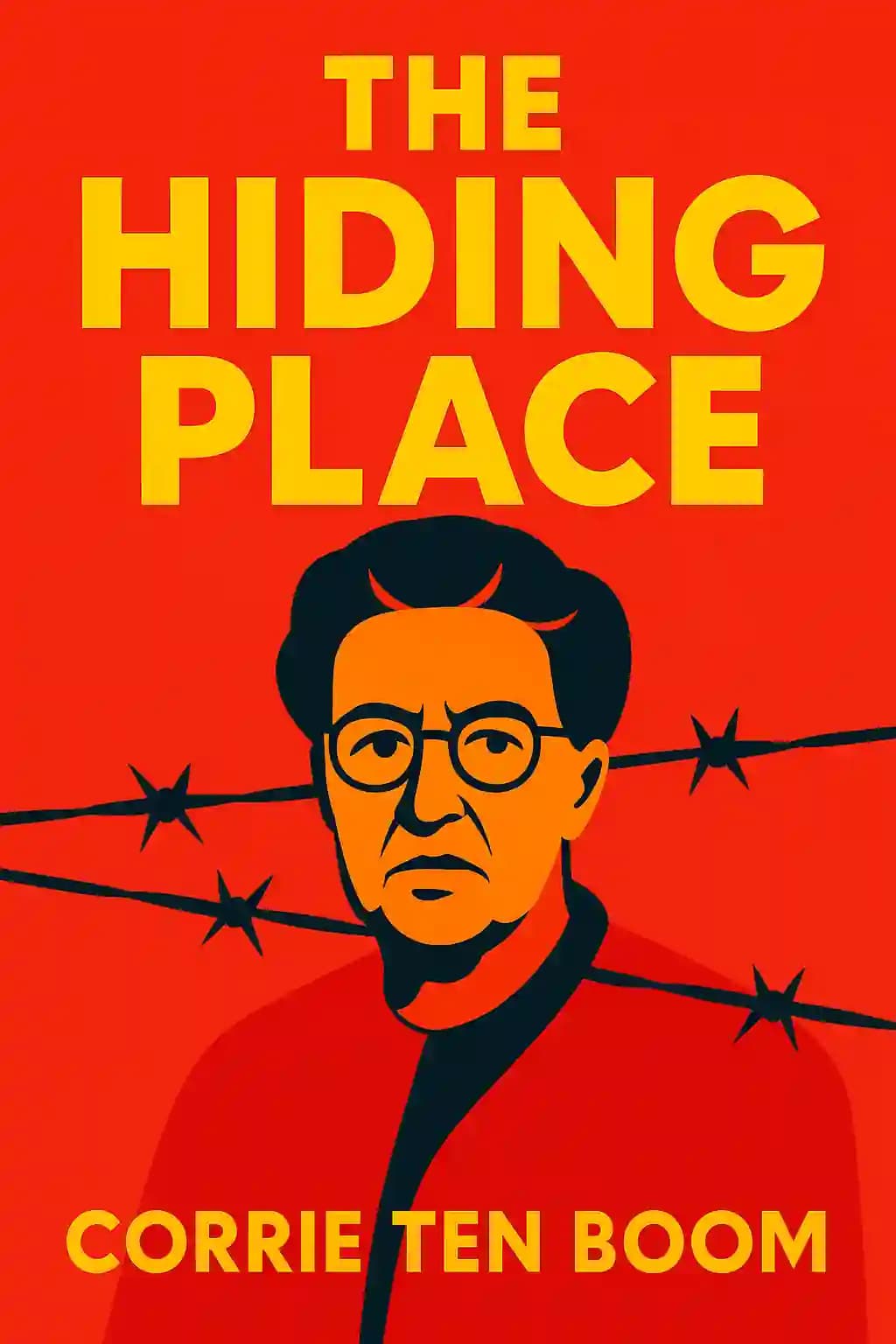
Cornelia Arnolda Johanna "Corrie" ten Boom (1892–1983) was a Dutch watchmaker, Holocaust survivor, and internationally renowned Christian writer. She is best known for her memoir The Hiding Place, a profound testament to faith and forgiveness during WWII.
The autobiographical work details her family’s courageous efforts to shelter Jews from Nazi persecution in a secret room built into their Haarlem home, culminating in their arrest and her imprisonment at Ravensbrück concentration camp.
A devout Christian, Ten Boom wove themes of spiritual resilience and reconciliation throughout her writing, drawing from her experiences as a resistance activist and postwar global evangelist. Her other notable works include Tramp for the Lord, chronicling her missionary travels across 60 countries to share messages of hope.
The Hiding Place became a New York Times bestseller and inspired a 1975 film adaptation, solidifying its status as a pivotal Holocaust narrative. Ten Boom’s legacy endures through her translated works and the 2023 biography The Watchmaker’s Daughter, which reaffirms her impact as a moral beacon.
The Hiding Place is Corrie ten Boom’s memoir of her Dutch family’s courageous efforts to hide Jews from the Nazis during WWII. It details their covert resistance work, arrest, and imprisonment in concentration camps, culminating in Corrie’s post-war mission of forgiveness and global advocacy for peace. The book intertwines harrowing survival with profound Christian faith and resilience.
This book is ideal for readers interested in Holocaust memoirs, Christian testimonies, or stories of moral courage. It resonates with historians, faith-based audiences, and anyone seeking insights into overcoming adversity through compassion. Educators and book clubs also value its themes of forgiveness and social justice.
Yes—The Hiding Place is widely praised as an inspirational true story of resilience and faith. Its enduring relevance lies in Corrie’s message of forgiveness amid unimaginable suffering, making it a cornerstone of Holocaust literature and spiritual growth. Critics and readers alike commend its emotional depth and historical significance.
Key themes include faith in adversity, forgiveness, resistance against oppression, and the power of hope. The ten Boom family’s Christian beliefs drive their actions, while Corrie’s post-war work underscores the transformative impact of mercy. The book also explores familial loyalty and the duality of human nature.
These quotes encapsulate the book’s focus on faith and moral choice.
The “hiding place” refers both to the physical secret room in the ten Boom home where Jews were sheltered and to the spiritual refuge Corrie finds in her faith during imprisonment. It symbolizes safety, divine protection, and the courage to resist injustice.
Unlike many Holocaust accounts, The Hiding Place emphasizes Christian theology and forgiveness as tools for healing. Its focus on a non-Jewish family’s resistance offers a unique perspective, bridging historical narrative with spiritual memoir. It’s often compared to Night by Elie Wiesel but distinct in its overtly religious framework.
The book amplified awareness of Dutch resistance efforts and the role of Righteous Among the Nations. Corrie’s post-war lectures and the 1975 film adaptation further solidified its cultural influence, leading to widespread use in schools and religious institutions for teaching ethics and history.
Some critics argue the book understates the horrors of concentration camps or idealizes forgiveness. Others note its heavy religious framing may limit appeal to secular audiences. However, most acknowledge its historical value and emotional authenticity.
A 1975 film adaptation, produced by Billy Graham’s World Wide Pictures, brought Corrie’s story to a broader audience. A 2013 sequel, Return to the Hiding Place, expanded on the Dutch Resistance network. Stage plays and educational dramatizations continue to keep the narrative alive.
Its lessons on resilience, combating prejudice, and choosing forgiveness resonate in modern contexts like social justice movements and global conflicts. The book’s emphasis on hope amid crisis offers timeless guidance for personal and collective challenges.
The memoir foreshadows Corrie’s post-war global ministry, detailed in Tramp for the Lord. Both works share themes of reconciliation, though The Hiding Place focuses on her wartime journey, while later writings expand on her evangelical missions and interactions with former Nazis.
Ressentez le livre à travers la voix de l'auteur
Transformez les connaissances en idées captivantes et riches en exemples
Capturez les idées clés en un éclair pour un apprentissage rapide
Profitez du livre de manière ludique et engageante
There is no pit so deep that God's love is not deeper still.
Social status meant nothing in God's eyes.
Don't run ahead of Him.
Happiness isn't something that depends on our surroundings-it's something we make inside ourselves.
Empty, empty! How can we bring anything to God?
Décomposez les idées clés de The Hiding Place en points faciles à comprendre pour découvrir comment les équipes innovantes créent, collaborent et grandissent.
Condensez The Hiding Place en indices de mémoire rapides mettant en évidence les principes clés de franchise, de travail d'équipe et de résilience créative.

Découvrez The Hiding Place à travers des récits vivants qui transforment les leçons d'innovation en moments mémorables et applicables.
Posez n'importe quelle question, choisissez la voix et co-créez des idées qui résonnent vraiment avec vous.

Cree par des anciens de Columbia University a San Francisco
"Instead of endless scrolling, I just hit play on BeFreed. It saves me so much time."
"I never knew where to start with nonfiction—BeFreed’s book lists turned into podcasts gave me a clear path."
"Perfect balance between learning and entertainment. Finished ‘Thinking, Fast and Slow’ on my commute this week."
"Crazy how much I learned while walking the dog. BeFreed = small habits → big gains."
"Reading used to feel like a chore. Now it’s just part of my lifestyle."
"Feels effortless compared to reading. I’ve finished 6 books this month already."
"BeFreed turned my guilty doomscrolling into something that feels productive and inspiring."
"BeFreed turned my commute into learning time. 20-min podcasts are perfect for finishing books I never had time for."
"BeFreed replaced my podcast queue. Imagine Spotify for books — that’s it. 🙌"
"It is great for me to learn something from the book without reading it."
"The themed book list podcasts help me connect ideas across authors—like a guided audio journey."
"Makes me feel smarter every time before going to work"
Cree par des anciens de Columbia University a San Francisco

Obtenez le resume de The Hiding Place en PDF ou EPUB gratuit. Imprimez-le ou lisez-le hors ligne a tout moment.
In the narrow streets of Haarlem, Holland stood the Beje-a quirky old house with a watch shop on the ground floor. Here lived the Ten Boom family: Father Casper, a masterful watchmaker known throughout town for his integrity; his daughters Corrie and Betsie; and a revolving cast of foster children and guests. Their home operated with an extraordinary open-door policy that seemed remarkable to outsiders but entirely natural to them. The family's centennial celebration in 1937 transformed their street into a microcosm of Dutch society-the mayor sharing coffee with postmen, wealthy and poor children playing together-reflecting their deeply held belief that social status meant nothing in God's eyes. Every evening without fail, they gathered for Bible reading, Father's deep voice bringing ancient wisdom into their daily lives. This foundation of faith would soon be tested beyond anything they could imagine.