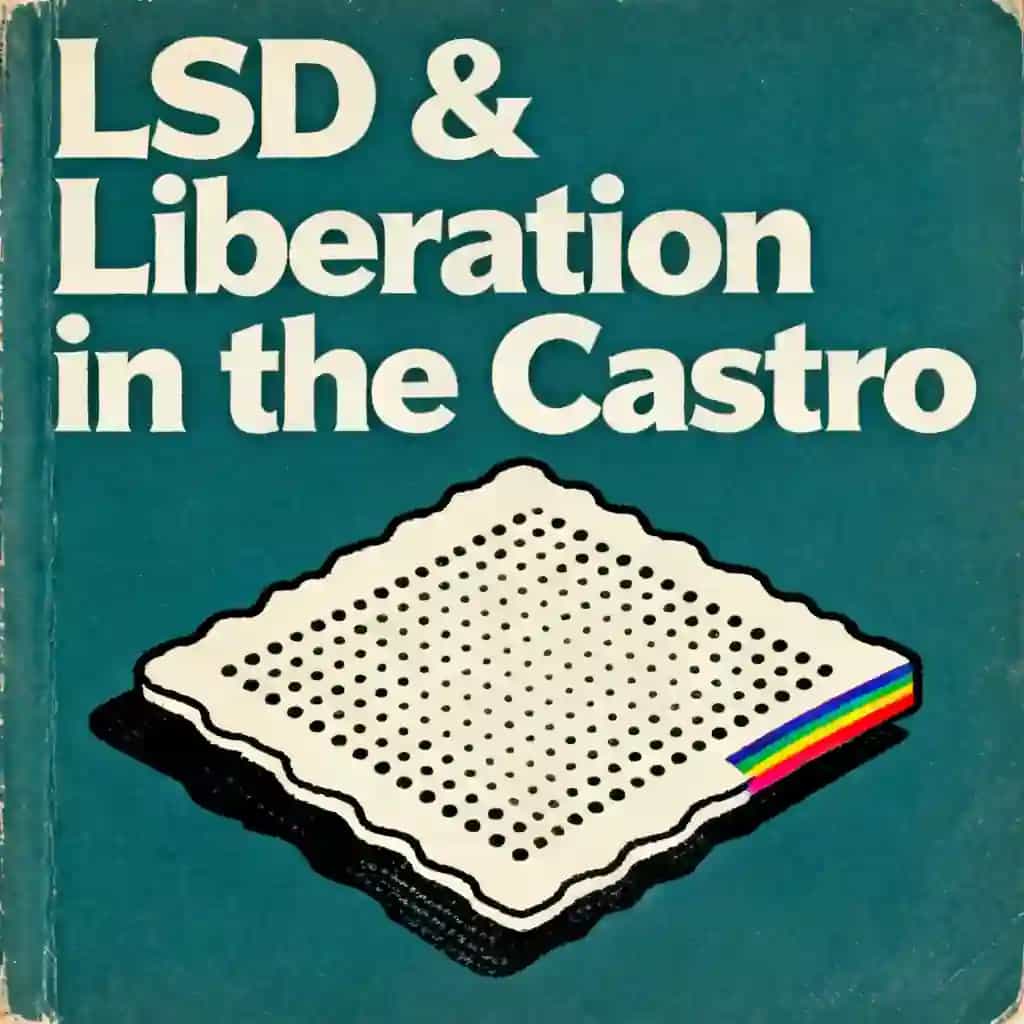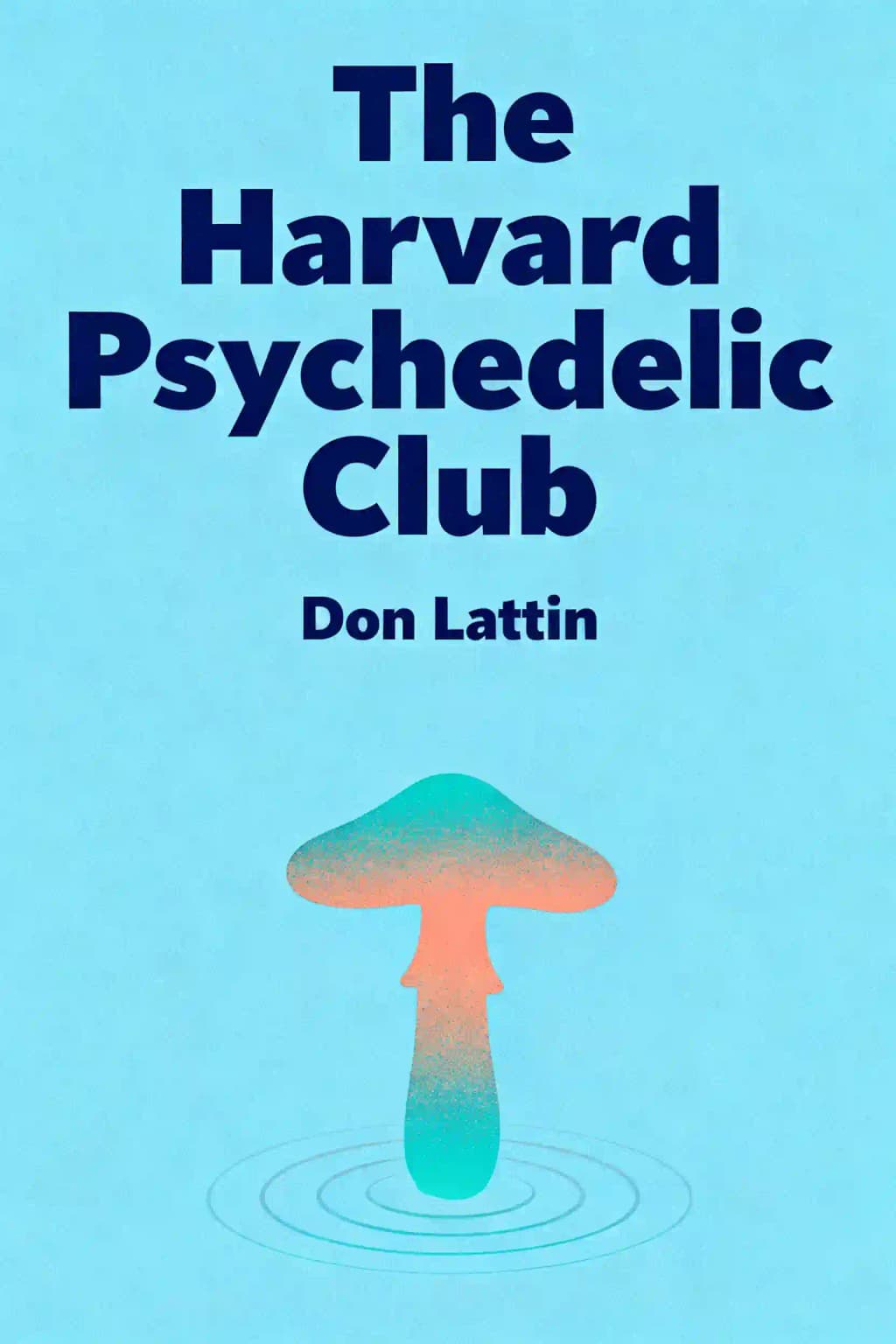
Four Harvard visionaries sparked America's consciousness revolution. How did Timothy Leary, Ram Dass, Huston Smith, and Andrew Weil transform spirituality, medicine, and culture? Their psychedelic experiments - praised by Eric Weiner as "an unforgettable head trip" - forever changed how we eat, pray, and love.
Ressentez le livre à travers la voix de l'auteur
Transformez les connaissances en idées captivantes et riches en exemples
Capturez les idées clés en un éclair pour un apprentissage rapide
Profitez du livre de manière ludique et engageante
Everything quivered with life, even inanimate objects.
Décomposez les idées clés de The Harvard Psychedelic Club en points faciles à comprendre pour découvrir comment les équipes innovantes créent, collaborent et grandissent.
Condensez The Harvard Psychedelic Club en indices de mémoire rapides mettant en évidence les principes clés de franchise, de travail d'équipe et de résilience créative.

Découvrez The Harvard Psychedelic Club à travers des récits vivants qui transforment les leçons d'innovation en moments mémorables et applicables.
Posez n'importe quelle question, choisissez la voix et co-créez des idées qui résonnent vraiment avec vous.

Cree par des anciens de Columbia University a San Francisco
"Instead of endless scrolling, I just hit play on BeFreed. It saves me so much time."
"I never knew where to start with nonfiction—BeFreed’s book lists turned into podcasts gave me a clear path."
"Perfect balance between learning and entertainment. Finished ‘Thinking, Fast and Slow’ on my commute this week."
"Crazy how much I learned while walking the dog. BeFreed = small habits → big gains."
"Reading used to feel like a chore. Now it’s just part of my lifestyle."
"Feels effortless compared to reading. I’ve finished 6 books this month already."
"BeFreed turned my guilty doomscrolling into something that feels productive and inspiring."
"BeFreed turned my commute into learning time. 20-min podcasts are perfect for finishing books I never had time for."
"BeFreed replaced my podcast queue. Imagine Spotify for books — that’s it. 🙌"
"It is great for me to learn something from the book without reading it."
"The themed book list podcasts help me connect ideas across authors—like a guided audio journey."
"Makes me feel smarter every time before going to work"
Cree par des anciens de Columbia University a San Francisco

Obtenez le resume de The Harvard Psychedelic Club en PDF ou EPUB gratuit. Imprimez-le ou lisez-le hors ligne a tout moment.
What happens when a closeted psychology professor, a charismatic researcher with a death wish, a botanically obsessed freshman, and a philosophy professor raised in China all converge at Harvard in 1960? They accidentally trigger a cultural earthquake that's still sending aftershocks through our world today. Steve Jobs credited LSD as "one of the most important experiences" of his life. The Beatles channeled their psychedelic sessions into "Tomorrow Never Knows." By 2018, Time magazine was asking a question that would have seemed absurd decades earlier: "Was Timothy Leary right?" This isn't just history-it's the origin story of how consciousness itself became something we could question, explore, and reimagine. Richard Alpert looked like he had won the game of life. A chauffeur drove his Triumph sports car. His Cambridge apartment screamed success. Yet inside, he was drowning. Despite degrees from Tufts, Wesleyan, and Stanford, he felt like a fraud among Harvard's elite. His student Jim Fadiman noticed something curious: Alpert seemed drawn to intelligent women but merely attractive men-a hint at the hidden homosexuality that would later contribute to his downfall. He lived fractured across three cities, playing businessman for his father's railroad company in New York, hip professor in California, maintaining secret relationships on opposite coasts. Timothy Leary arrived with a different kind of baggage. After his first wife's suicide, he'd earned a reputation as psychology's brilliant troublemaker, publishing research showing traditional therapy worked no better than doing nothing at all. After running out of money in Florence with his children, he landed at Harvard through a fortuitous connection-but colleagues increasingly saw him as showman rather than scholar. Andrew Weil entered Harvard as a freshman with an unusually active imagination and a childhood fascination with altered states. At seventeen, a scholarship trip brought him to a Calcutta temple where a sadhu produced the sacred sound of "aum"-vibrations he felt "deep down in his soul." Huston Smith completed this quartet with perhaps the most unusual background of all. Born to Methodist missionaries in 1919 China, his childhood mixed wonder with hardship-fevers inducing altered states, star-filled nights, exposure to Chinese folk religion's shamanism. By 1958, he'd pioneered teaching religions "from the inside out" and landed at MIT, where his 1960 lecture series with Huxley drew overwhelming crowds.