Chapitre 1
The Mind's New Doors: A Journey Through Psychedelic Science
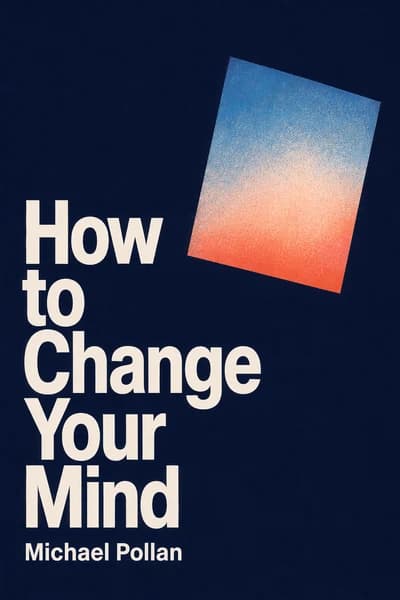
In the summer of 1943, a Swiss chemist named Albert Hofmann accidentally absorbed a tiny amount of a compound he had synthesized through his fingertips. What followed was history's first LSD trip-a cascade of "fantastic pictures, extraordinary shapes with intense, kaleidoscopic play of colors" that transformed not just Hofmann's afternoon but eventually the landscape of Western consciousness. This accidental discovery would go on to revolutionize brain science, inspire new approaches to psychotherapy, and fuel the counterculture of the 1960s before being driven underground by moral panic. Today, Michael Pollan's "How to Change Your Mind" arrives at a pivotal moment: the renaissance of psychedelic research after decades of prohibition. The book has become a cultural phenomenon, praised by everyone from spiritual leaders to scientists, and even inspired a Netflix documentary series. As Pollan guides us through this fascinating terrain, he transforms from skeptical journalist to experienced psychonaut, offering a deeply personal exploration of substances that may hold the key to understanding consciousness itself and treating our most intractable mental health conditions.
Chapitre 2
The Psychedelic Renaissance: Science Returns to the Sacred
In 2006, three seemingly unrelated events marked the rebirth of psychedelic research. First, Albert Hofmann celebrated his 100th birthday in Basel, Switzerland, where the LSD discoverer was honored by scientists, healers, and mystics from around the world. Though Hofmann never anticipated LSD becoming a "pleasure drug," he came to view youth culture's adoption of it as an understandable response to spiritual impoverishment in materialist society. The master chemist had evolved into something of a mystic, believing LSD offered not just therapeutic potential but spiritual renewal by opening "a crack in the edifice of materialist rationality."
That same year, the U.S. Supreme Court unanimously ruled that a small religious sect could legally import ayahuasca (a hallucinogenic tea) as their sacrament despite its Schedule 1 classification. This decision sparked an ayahuasca awakening across America, creating a religious pathway to legal psychedelic use firmly rooted in the Bill of Rights-the first significant crack in the edifice of the drug war.
Most consequentially, Roland Griffiths published a landmark paper in Psychopharmacology-the first rigorous, double-blind study in decades examining psychedelics' psychological effects. The paper, "Psilocybin Can Occasion Mystical-Type Experiences Having Substantial and Sustained Personal Meaning and Spiritual Significance," received enthusiastic endorsements from prominent drug researchers who had previously kept their distance from psychedelics.
Griffiths was an unlikely champion for this research. A straight-arrow scientist who had built his reputation studying caffeine addiction, he experienced what he modestly calls "a funny kind of awakening" through meditation in his fifties that left him increasingly alienated from colleagues uninterested in spiritual questions. His growing interest in "the mystery of consciousness and existence" made his scientific work seem hollow: "I could study a new sedative hypnotic, learn something about brain receptors, be on another FDA panel, go to another conference, but so what?"
Behind the scenes, two remarkable figures orchestrated this revival: Bob Jesse, a former Oracle executive who had experienced a transformative high-dose LSD trip that fundamentally altered his worldview, and Rick Doblin, founder of the Multidisciplinary Association for Psychedelic Studies (MAPS). Where Jesse worked quietly to establish rigorous research protocols, Doblin openly advocated for incorporating psychedelics into American society beyond medicine, following the cannabis legalization playbook where medical use changed public perception.
Through their efforts, psychedelic research has expanded dramatically. By 2015, Johns Hopkins had about twenty people working on various studies-unprecedented institutional support for research into mystical consciousness. Beyond exploring spirituality, the lab found promising therapeutic applications: a smoking cessation pilot study achieved an unprecedented 80 percent success rate, and their work with cancer patients showed one of the largest treatment effects ever demonstrated for a psychiatric intervention.
Chapitre 3
Nature's Mind Manifesting Molecules: The Mushroom Connection
The laboratory context of modern psychedelic research creates a deliberate distance from the remarkable natural origin of psilocybin in mushrooms. Scientists work exclusively with synthetic psilocybin pills rather than the actual fungi, maintaining strict pharmaceutical standards and precise dosing protocols. This clinical approach intentionally separates the compound from both its countercultural associations of the 1960s and its ancient roots in indigenous shamanic practices, where the whole mushroom was considered a sacred teacher plant.
The story of these substances' entry into Western consciousness represents a pivotal moment in ethnomycology. In 1955, R. Gordon Wasson, a respected Wall Street banker and amateur mycologist, ventured deep into the mountains of Oaxaca, Mexico. There, he participated in a traditional velada (nighttime mushroom ceremony) led by Maria Sabina, a renowned Mazatec curandera. His transformative experience, published in Life magazine as "Seeking the Magic Mushroom," reached millions of readers and ignited widespread interest in psychedelic mushrooms. Wasson meticulously documented the ceremony, including the traditional chants and rituals, before sending specimens to Swiss chemist Albert Hofmann. By 1958, Hofmann had isolated and named psilocybin and psilocin, developing the synthetic version that would become the foundation for modern research.
The ensuing publicity transformed Huautla de Jimenez from a remote village into a counterculture pilgrimage site. Notable visitors included Bob Dylan, John Lennon, and Mick Jagger, along with thousands of young seekers. For Maria Sabina and her community, this attention proved catastrophic. The influx disrupted traditional practices, strained local resources, and attracted unwanted government scrutiny. Wasson later expressed deep remorse for "unleashing on lovely Huautla a torrent of commercial exploitation of the vilest kind." Sabina suffered personal tragedy - her home was burned down, she faced imprisonment, and she ultimately lamented sharing the "saint children" (divine mushrooms) with outsiders, noting their loss of sacred power and purity.
The presence of psilocybin in nature raises intriguing evolutionary questions. Unlike typical defensive compounds found in fungal mycelium, psilocybin concentrates in mushroom caps, suggesting a different ecological role. Some ethnobotanists propose that this placement evolved because mushrooms with higher psilocybin content were preferentially consumed by animals, effectively expanding spore distribution. Various species - from horses and cattle to dogs and primates - have been observed deliberately seeking out these mushrooms, potentially for their consciousness-altering effects. At lower doses, these compounds might enhance sensory perception and hunting efficiency; higher doses could serve as what ethnobotanist Giorgio Samorini terms a "depatterning factor," generating novel behaviors that might prove advantageous during environmental challenges or periods of ecological stress.
Paul Stamets, a pioneering modern mycologist and spiritual successor to Wasson's work, has expanded on Terence McKenna's controversial "stoned ape theory." This hypothesis suggests that psilocybin mushrooms played a crucial role in human cognitive evolution by providing our ancestors access to expanded consciousness states and enabling complex language development through synesthetic experiences. While this theory remains speculative and outside mainstream scientific consensus, it exemplifies how these remarkable fungi continue to inspire profound theoretical exploration and intellectual passion among researchers and enthusiasts alike. The theory has sparked ongoing discussions about the potential role of naturally occurring psychedelics in human cultural and cognitive development.
Chapitre 4
From Promise to Prohibition: Psychedelics' First Wave
Contrary to popular belief, Timothy Leary's Harvard Psilocybin Project neither marked the beginning of serious psychedelic research, nor did his 1963 dismissal from Harvard signal its end. By the time Leary discovered psilocybin in 1960, LSD research had already flourished for over a decade with hundreds of academic papers and several international conferences.
The psychedelic story entered popular culture when Cary Grant publicly endorsed LSD therapy in 1959, declaring it had transformed him: "I'm no longer lonely and I am a happy man." His testimonial created a surge in demand for both therapeutic and recreational use, marking a cultural shift that some consider the true beginning of "the 1960s."
Two competing therapeutic approaches emerged: the psycholytic model (frequent low-dose sessions with psychoanalytic interpretation) and psychedelic therapy (single high-dose sessions in comfortable surroundings with minimal therapist intervention). The latter approach, developed in Saskatchewan by Humphry Osmond and Abram Hoffer with help from Aldous Huxley and Al Hubbard, aimed for spiritual epiphany rather than psychological insight.
Al "Captain Trips" Hubbard, a mysterious former bootlegger turned Catholic mystic, became a pivotal figure by establishing the Commission for the Study of Creative Imagination. Despite his dubious credentials, Hubbard planted psychedelic seeds in Silicon Valley that continue bearing fruit today. Through Myron Stolaroff, a gifted engineer at Ampex who experienced a life-changing LSD session with Hubbard in 1956, psychedelics infiltrated early tech culture.
This influence extended through Stewart Brand's Whole Earth Network, helping transform computers from military-industrial tools into instruments of personal liberation. Brand himself credits LSD as "an instigator of creativity" that fostered collaborative experimentation in West Coast computer culture. "It gave us permission to try weird shit in cahoots with other people," he explained. In one particularly consequential LSD experience, Brand had the insight that a round, finite planet requires careful management of resources, eventually leading to the iconic "whole earth" photograph from space and the influential Whole Earth Catalog.
Within just five years, however, a moral panic engulfed America, halting virtually all psychedelic research. While Timothy Leary is the easy scapegoat-and indeed did grave damage to legitimate research-the Dionysian power of these substances would likely have provoked societal backlash regardless.
When Harvard hired Leary in 1959, he was already halfway toward trading the "psychology game" for the "guru game." After discovering psilocybin, Leary and colleague Richard Alpert (later Ram Dass) formed the International Federation for Internal Freedom, declaring "a scientific underground" and asking provocatively: "Who controls your cortex?" The psychedelic research community reacted with dismay. Humphry Osmond traveled to Cambridge to reason with Leary about treating these "powerful chemicals as harmless toys." Al Hubbard's antipathy toward Leary surfaced dramatically during a shared psychedelic session when he became "preoccupied with the idea he ought to shoot Timothy."
By late 1966, psychedelic science had collapsed. Sandoz withdrew LSD from circulation, turning remaining stocks over to the U.S. government. The FDA ordered some sixty researchers nationwide to halt their work. Only one program survived: the Maryland Psychiatric Research Center at Spring Grove continued until 1976, likely due to director Albert Kurland's sterling reputation and Washington connections. After that, psychedelic research and therapy didn't truly end-it simply went underground.
Chapitre 5
Underground Journeys: Personal Explorations of Consciousness
The "psychedelic underground" isn't the world of illegal drug dealers but a network of perhaps two hundred guides or therapists working with psychedelics for healing or personal growth. Many are credentialed professionals risking their licenses-therapists, physicians, rabbis, ministers-plus practitioners from every corner of the human potential movement. Though not formally organized, these guides share practices and ethics through a wiki with documents including a draft charter, forms for legal releases, and a thoughtful "Code of Ethics for Spiritual Guides."
Their "Guidelines for Voyagers and Guides" represents half a century's accumulated wisdom about the psychedelic journey. Participants receive extensive preparation, including "flight instructions" advising mantras like "Trust the trajectory" and "TLO-Trust, Let Go, Be Open." This underground community operates professionally, drawing from traditions established by pioneers like Al Hubbard, Timothy Leary, and Leo Zeff. Their protocols and rituals form an Apollonian counterweight to the medicines' Dionysian force.
During a guided LSD journey, music becomes extraordinarily evocative-creating three-dimensional spaces to move through. Rather than encountering demons or angels, one might visit family members one by one, experiencing waves of admiration, gratitude, and compassion. The insights might sound banal-"Love is everything"-but a platitude is precisely what remains of a truth after it's drained of emotion. The psychedelic experience "resaturates that dried husk with feeling," revealing profound truths hidden in plain sight by stripping away the ego's defenses.
A psilocybin journey might begin with the sense of self disintegrating-first scattered like Post-it notes in the wind, then spreading across the landscape "like paint, or butter." This ego dissolution feels completely natural, leaving no desires and no anxiety about losing oneself. Though the familiar self falls apart, a different form of awareness remains-unbounded by body, supremely indifferent, and unperturbed. This disembodied consciousness gazes upon the ego's dissolution with calm benevolence, revealing that life exists after the death of the ego.
The most profound experiences often involve complete dissolution of self and merging with what feels like the fundamental ground of being. When smoking 5-MeO-DMT (from the Sonoran Desert toad), one might experience what feels like the big bang in reverse-dimensions collapsing until nothing remains but pure force. Then, gradually, reality reconstitutes-dimensions return, sense of self reassembles, and body reforms. As one returns, there's ecstatic relief and profound gratitude for the mere fact of being.
These experiences open doors to understanding mystical literature that previously seemed opaque. Passages from Emerson, Whitman, and Tennyson resonate with lived meaning rather than appearing as abstract hyperbole. Though these mystical experiences come through chemical means, they're no less legitimate-these molecules flow through the natural world and human brains alike.
Chapitre 6
Your Brain on Psychedelics: The Science of Consciousness
What exactly happens in the brain during a psychedelic experience? Classical psychedelics work by binding to a specific serotonin receptor called 5-HT2A, found in large numbers in the human cortex. But identifying the receptor is only the first step in understanding how these chemicals create such profound experiences. How does a molecular interaction lead to ego dissolution or hallucinations?
The most ambitious neuroscientific expedition using psychedelics is happening at Imperial College London, where Robin Carhart-Harris leads research in David Nutt's lab. Their first discovery was surprising: contrary to expectations of increased brain activity, psilocybin actually reduced blood flow and activity, particularly in the default mode network (DMN).
The default mode network, discovered accidentally by neurologist Marcus Raichle in 2001, forms a critical hub of brain activity linking the cerebral cortex to deeper structures involved in memory and emotion. It activates precisely when we're doing nothing mentally-when our minds wander, daydream, ruminate, time-travel, or reflect on ourselves. Standing in a seesaw relationship with attentional networks, the DMN functions as the brain's "orchestra conductor" or "corporate executive," exerting top-down control over other brain systems to prevent chaos.
Carhart-Harris's most striking discovery was that the steepest drops in DMN activity correlated with volunteers' experiences of "ego dissolution." When the DMN goes offline, the boundaries between self and world, subject and object, melt away-precisely what defines mystical experiences. Remarkably, brain scans of experienced meditators show the same quieting of the DMN, suggesting that the transcendence of self can be achieved through multiple pathways.
When the DMN's inhibitory influence diminishes, other brain regions-particularly limbic areas involved in emotion and memory-become more active. This disinhibition explains why normally inaccessible material surfaces during psychedelic experiences, including emotions, memories, and sometimes buried traumas. The DMN also functions as a filter or "reducing valve" that limits the information admitted to consciousness, allowing only what's necessary for survival.
Most neuroscientists now view the brain as a prediction-making machine that takes in minimal sensory information to make educated guesses about reality. This "predictive coding" model suggests our perceptions aren't literal transcriptions of reality but seamless illusions woven from sensory data and memory models-essentially controlled hallucinations. During psychedelic experiences, this usually firm handshake between brain and world breaks down.
Carhart-Harris's "entropic brain" theory proposes that psychedelics increase entropy in the brain, reverting it to a less constrained mode of cognition. While the ordered adult brain excels at reducing uncertainty through predictive coding, this achievement comes at a cost: constrained consciousness and rigid thinking patterns. Counterintuitively, many psychological disorders stem not from too little order but from excessive order-when self-reflective thinking hardens into destructive loops, as in depression's rumination cycles possibly caused by a hyperactive default mode network.
Brain scans reveal that psychedelics dramatically reorganize brain communication, creating thousands of new connections across previously segregated regions. This temporary rewiring explains many psychedelic phenomena: when memory and emotion centers communicate directly with visual processing centers, our wishes and fears can inform what we see; cross-wiring between sensory systems produces synesthesia; and novel connections manifest as fresh perspectives or transformed meanings.
Chapitre 7
The Healing Potential: Psychedelics in Therapy
For those facing death, psychedelics offer a profound gift: the power to imbue everything with heightened purpose and significance. Patrick Mettes, a television news director with terminal cancer who participated in a NYU psilocybin study, lived seventeen months after his session with a renewed focus on living fully rather than fearing death. His wife Lisa noticed profound changes: "He had a sense of patience he had never had before... It was as if he had been relieved of the duty of caring about the details of life... Now it was about being with people, enjoying his sandwich and the walk on the promenade."
In his final days at Mount Sinai Hospital, Patrick's room became a center of gravity, with staff wanting to spend time with him. "Everyone, the nurses and the doctors, wanted to hang out in our room," Lisa recalled. "Patrick would talk and talk. It was like he was a yogi. He put out so much love." A photo taken days before his death shows an emaciated man with an oxygen clip-yet beaming with bright eyes and a broad smile.
Psychedelics also show promise for treating addiction. Matthew Johnson at Johns Hopkins believes these substances can change all behaviors through their power to "dope-slap people out of their story"-essentially a "reboot of the system" that opens a window of mental flexibility where people can release rigid mental models. "So much of human suffering stems from having this self that needs to be psychologically defended at all costs," he explains. "We're trapped in a story that sees ourselves as independent, isolated agents." Psychedelics "knock the legs out from under that model," allowing new, more constructive narratives to emerge.
For depression, Robin Carhart-Harris's small "feasibility study" at Imperial College showed promising results: all twelve participants with treatment-resistant depression showed improvement after a week, with two-thirds becoming depression-free. Six months later, six remained in remission. Clinical psychologist Rosalind Watts found two "master themes" in follow-up interviews: patients described depression as a state of "disconnection" (from others, themselves, senses, values, nature) and reported new access to difficult emotions after treatment.
Researchers face a puzzling question: how could one treatment potentially help conditions as diverse as depression, addiction, cancer anxiety, OCD, and eating disorders? This broad applicability suggests these disorders share underlying mechanisms. Many researchers are moving toward a unified theory of certain mental illnesses, observing that psychedelics seem to work by targeting higher-order brain mechanisms, particularly the default mode network-the seat of self-referential thought and rumination. Mental illness often manifests as feeling "stuck" in destructive thought patterns, which psychedelics temporarily disrupt.
Chapitre 8
Neural Diversity: Expanding Our Conception of Mind
In April 2017, the psychedelic community gathered for the Psychedelic Science conference in Oakland-a testament to how far the movement had come. What was once a modest gathering of fringe researchers had evolved into a landmark six-day convention drawing researchers from twenty-five countries and over three thousand attendees, including clinicians, therapists, neuroscientists, and policy makers. The most notable panel featured establishment figures: Paul Summergrad, former head of the American Psychiatric Association, and Tom Insel, former head of the National Institute of Mental Health. Their presence signaled a seismic shift - formal recognition from the mental health establishment that had long dismissed psychedelic research as scientifically dubious.
Various models for future therapeutic access are emerging, each attempting to balance safety with accessibility. Bob Jesse envisions "longitudinal multigenerational contexts" similar to churches, where experienced guides shepherd individuals through transformative experiences within established community frameworks. Julie Holland proposes "mental health clubs" that would combine medical oversight with supportive community settings. Other researchers emphasize the need for certified guides trained in both clinical psychology and contemplative traditions, along with proper integration practices spanning weeks or months after the experience. Organizations like MAPS and Usona Institute are developing formal training programs for therapists, while indigenous groups advocate for protecting traditional ceremonial contexts. Rick Doblin remains optimistic, pointing out that many counterculture innovations from the 1960s-yoga, meditation, hospice care, acupuncture, organic food-have been successfully integrated into mainstream society despite initial resistance.
Psychedelics reveal that ordinary consciousness is merely one of many possible states, "separated by the filmiest of screens" from other modes of awareness. Research at Johns Hopkins and NYU shows how a single high-dose psilocybin session can occasion mystical experiences comparable to spontaneous spiritual epiphanies. Though the immediate aftereffects-heightened presence, emotional openness, enhanced creativity, and sense of wonder-gradually fade after several weeks, they leave lasting access to new mental territories and perspectives. The experiences become "landmarks to circle around and interrogate for meaning," providing reference points and spiritual signposts that continue to offer insights years later. Many participants report permanent positive changes in their relationship to death, meaning, and connection.
Perhaps most profoundly, psychedelics "reanimate the world," breaking "the human monopoly on subjectivity" and revealing the subject-hood of everything from animals to minerals. Users consistently report experiencing consciousness in plants, feeling empathic connection with other species, and sensing the alive presence of the natural world. Even quantum physics suggests consciousness might be fundamental to reality, with theorists like David Bohm proposing that mind and matter arise from a deeper order. Modern neuroscience increasingly views consciousness as an emergent phenomenon rather than something confined to human brains. These perspectives leave us with the certainty that "the mind is vaster, and the world ever so much more alive" than conventional wisdom acknowledges. These substances don't just change individual minds-they expand our collective conception of what mind itself might be, pointing toward a more enchanted and interconnected understanding of consciousness and reality.