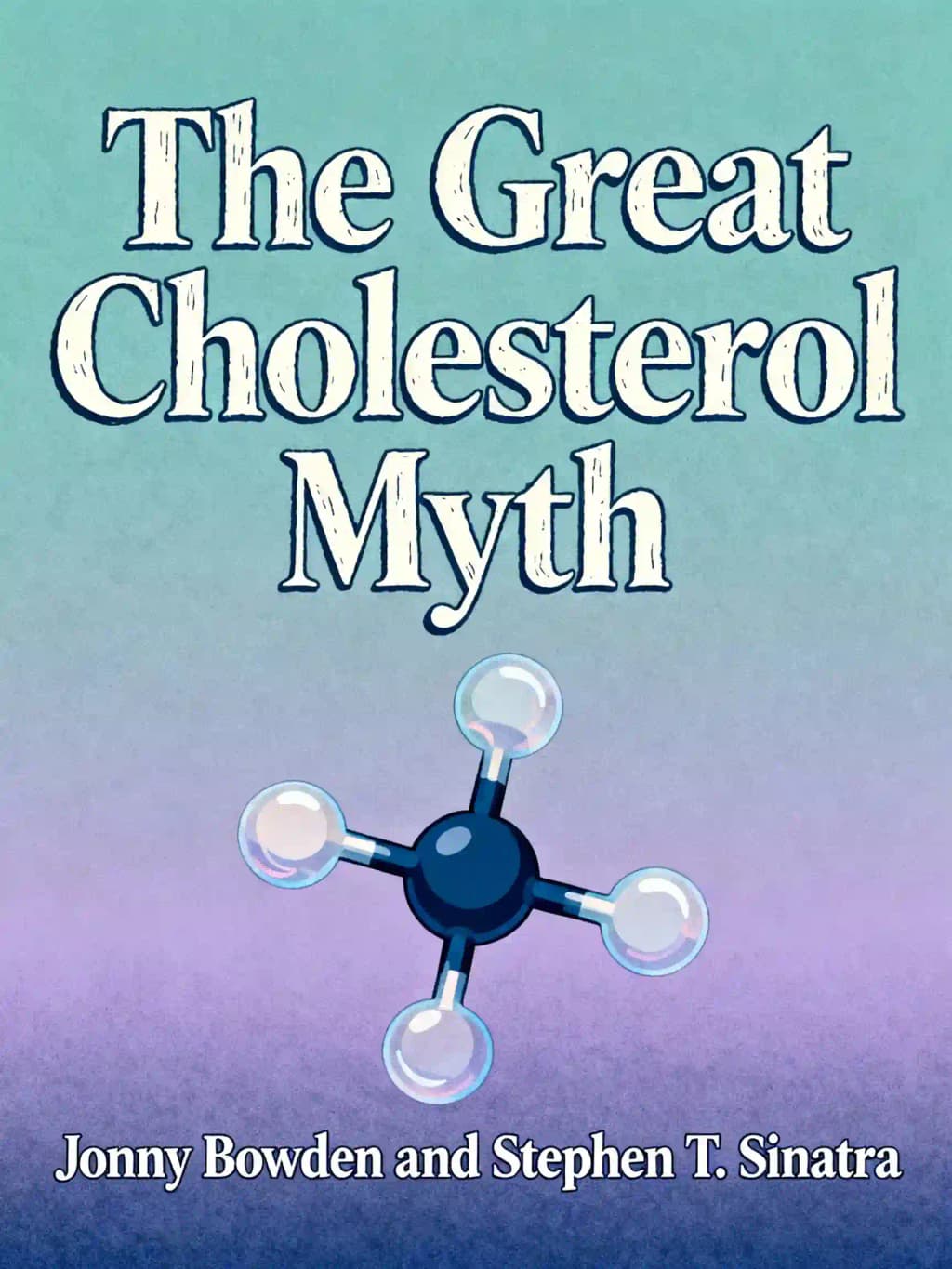
Challenge everything you thought you knew about heart health. "The Great Cholesterol Myth" exposes how statins might be unnecessary for millions while inflammation - not cholesterol - drives heart disease. This controversial bestseller has sparked medical debates and empowered readers to question Big Pharma's trillion-dollar narrative.
Jonny Bowden, PhD, CNS, and Stephen T. Sinatra, MD, co-authored the bestselling book The Great Cholesterol Myth: Why Lowering Your Cholesterol Won’t Prevent Heart Disease—and the Statin-Free Plan That Will. Bowden, a nationally renowned nutritionist and board-certified holistic health practitioner, brings decades of expertise in dietary science. Sinatra, a board-certified cardiologist and founder of the Heart MD Institute, contributes cutting-edge clinical insights on cardiovascular health. Their collaborative work merges nutritional and medical perspectives to debunk cholesterol misconceptions, emphasizing insulin resistance and inflammation as critical heart disease factors.
Bowden has authored over 15 health books, including Living Low Carb and The 150 Healthiest Foods on Earth, and is a frequent contributor to Men’s Health and The Huffington Post.
Sinatra, a pioneer in integrative cardiology, wrote Reverse Heart Disease Now and hosts the Heart MD Institute podcast. Their revised edition synthesizes peer-reviewed research and clinical experience, positioning it as a cornerstone of heart-health literature. The book has been featured on Dr. Oz’s show and praised by New York Times bestselling author Nina Teicholz, with its evidence-based approach resonating globally since its 2012 debut.
The Great Cholesterol Myth by Jonny Bowden and Stephen Sinatra exposes flawed theories linking cholesterol to heart disease, revealing inflammation, sugar intake, and stress as primary culprits. The book provides a 4-part statin-free plan focusing on anti-inflammatory nutrition, targeted supplements, stress reduction, and exercise to prevent and reverse cardiovascular issues.
This book is essential for anyone prescribed statins, low-fat diet advocates, or those with family heart disease history. It’s particularly valuable for readers seeking alternatives to conventional cholesterol-lowering approaches and individuals interested in metabolic health, nutrition science, and preventive medicine.
Key debunked myths include:
The book identifies inflammation, high triglycerides, oxidized LDL particles, elevated homocysteine, and chronic stress as primary heart disease triggers. It emphasizes glycemic control over cholesterol management, showing sugar damages arteries more than dietary fats.
The anti-inflammatory diet prioritizes:
Yes, key supplements include:
The book cites studies showing statins may increase diabetes risk by 49%, cause muscle damage in 40% of users, and potentially elevate suicide/accident rates by depleting brain cholesterol. It argues statins are overprescribed to low-risk patients.
The 4-step protocol includes:
Controversial claims include:
While both emphasize plant-based diets, Bowden/Sinatra reject low-fat extremism, allowing moderate animal proteins and emphasizing metabolic factors beyond cholesterol. Key differences include their stance on supplements and criticism of statins.
Practical tools include:
The authors cite 120+ peer-reviewed studies, including:
Ressentez le livre à travers la voix de l'auteur
Transformez les connaissances en idées captivantes et riches en exemples
Capturez les idées clés en un éclair pour un apprentissage rapide
Profitez du livre de manière ludique et engageante
Cholesterol is vital for life itself.
Total cholesterol is essentially worthless as a predictor of heart disease.
Heart disease begins with damage to the endothelium.
Inflammation is the body's natural response to injury or infection.
Dietary cholesterol has virtually no impact on blood cholesterol levels.
Décomposez les idées clés de Great Cholesterol Myth, Revised and Expanded en points faciles à comprendre pour découvrir comment les équipes innovantes créent, collaborent et grandissent.
Condensez Great Cholesterol Myth, Revised and Expanded en indices de mémoire rapides mettant en évidence les principes clés de franchise, de travail d'équipe et de résilience créative.

Découvrez Great Cholesterol Myth, Revised and Expanded à travers des récits vivants qui transforment les leçons d'innovation en moments mémorables et applicables.
Posez n'importe quelle question, choisissez la voix et co-créez des idées qui résonnent vraiment avec vous.

Cree par des anciens de Columbia University a San Francisco
"Instead of endless scrolling, I just hit play on BeFreed. It saves me so much time."
"I never knew where to start with nonfiction—BeFreed’s book lists turned into podcasts gave me a clear path."
"Perfect balance between learning and entertainment. Finished ‘Thinking, Fast and Slow’ on my commute this week."
"Crazy how much I learned while walking the dog. BeFreed = small habits → big gains."
"Reading used to feel like a chore. Now it’s just part of my lifestyle."
"Feels effortless compared to reading. I’ve finished 6 books this month already."
"BeFreed turned my guilty doomscrolling into something that feels productive and inspiring."
"BeFreed turned my commute into learning time. 20-min podcasts are perfect for finishing books I never had time for."
"BeFreed replaced my podcast queue. Imagine Spotify for books — that’s it. 🙌"
"It is great for me to learn something from the book without reading it."
"The themed book list podcasts help me connect ideas across authors—like a guided audio journey."
"Makes me feel smarter every time before going to work"
Cree par des anciens de Columbia University a San Francisco

Obtenez le resume de Great Cholesterol Myth, Revised and Expanded en PDF ou EPUB gratuit. Imprimez-le ou lisez-le hors ligne a tout moment.
For decades, we've been told a simple story: high cholesterol causes heart disease, so lower your cholesterol to prevent heart attacks. This narrative has shaped everything from our breakfast choices to our medicine cabinets. But what if this foundational belief in modern medicine is fundamentally flawed? Nearly half of all heart attack victims have "normal" cholesterol levels, and countries with higher average cholesterol often have lower rates of heart disease. Something doesn't add up. The cholesterol hypothesis began with Ancel Keys' Seven Countries Study in the 1950s, which selectively presented data suggesting countries consuming more saturated fat had higher heart disease rates. This correlation was quickly transformed into medical dogma despite significant flaws in the research methodology. The reality? Cholesterol is vital for life itself-essential for cell membrane structure, hormone production, vitamin D synthesis, and proper brain function. Your brain contains approximately 25% of your body's cholesterol despite being only 2% of total body weight. The landmark Framingham Heart Study eventually concluded that total cholesterol is essentially worthless as a predictor of heart disease, particularly in people over 47. Even more telling, nearly 75% of heart attack patients have normal LDL cholesterol levels. Our fixation on cholesterol has diverted attention from the real causes of heart disease: inflammation, oxidative damage, sugar consumption, and chronic stress.