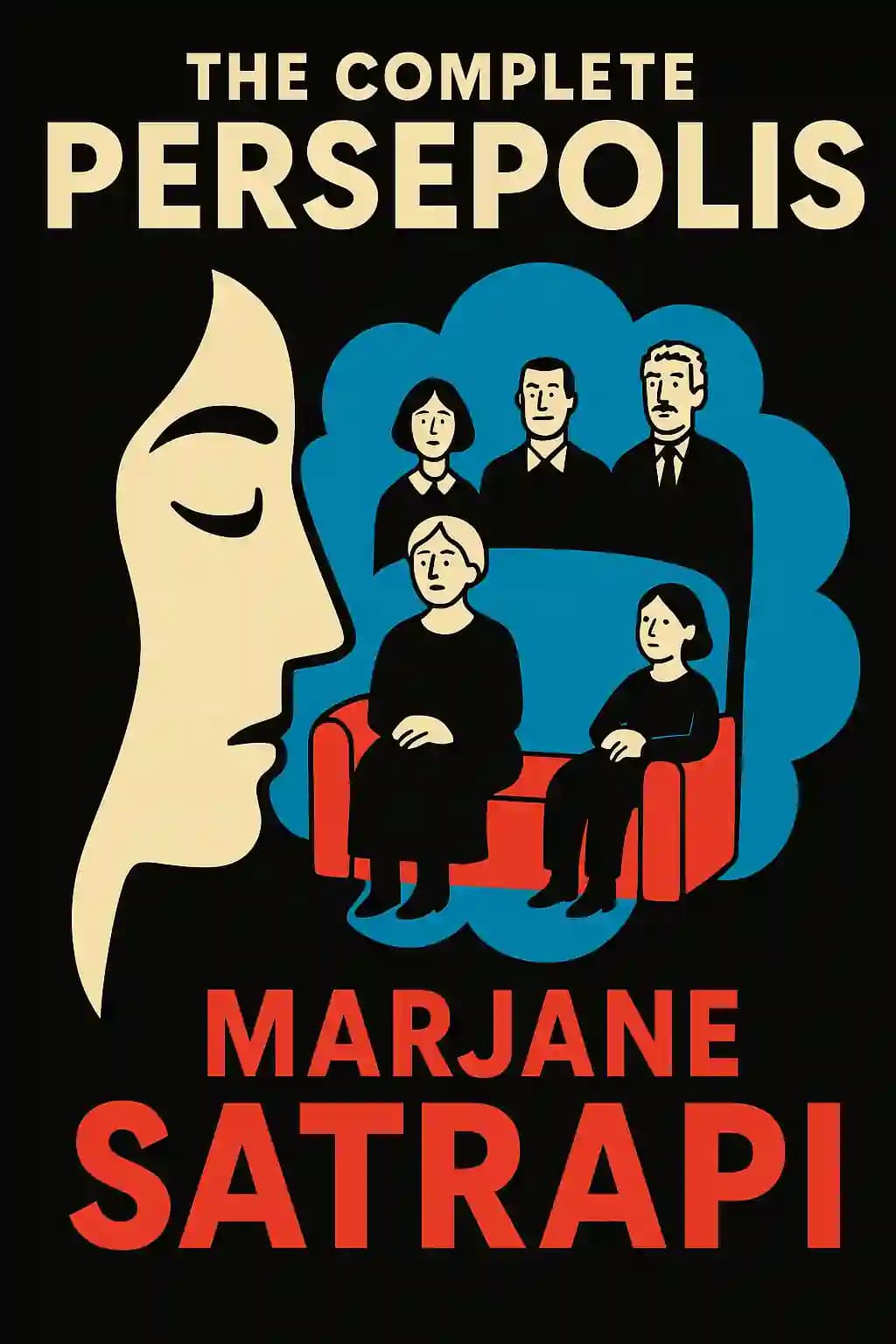
Aperçu de Persepolis
Le mémoire graphique révolutionnaire de Marjane Satrapi relate son enfance pendant la révolution islamique en Iran — une œuvre qui a suscité la controverse en Iran tout en recevant un accueil international élogieux. Désormais un incontournable de l'éducation, « Persepolis » a transformé notre compréhension de l'identité culturelle à travers des illustrations épurées en noir et blanc qui expriment des vérités universelles.
Thèmes clés dans Persepolis
- islamic revolution
- coming of age
- political resistance
- cultural displacement
- religious fundamentalism
Citations de Persepolis
The Revolution is like a bicycle. When the wheels don't turn, it falls.
I wanted to be justice, love and the wrath of God all in one.
In life you'll meet a lot of jerks. If they hurt you, tell yourself that it's because they're stupid. That will help keep you from reacting to their cruelty. Because there is nothing worse than bitterness and vengeance... Always keep your dignity and be true to yourself.
I realized then that I didn't understand anything. I had read all the books I could.
Freedom always has a price.
Personnages de Persepolis
- Marjane SatrapiThe protagonist and narrator growing up in Iran
- Uncle AnooshMarjane's uncle and a political revolutionary
- Marjane's motherA passionate advocate for women's rights
- Marjane's fatherA photographer who documents political protests
- Marjane's grandfatherA former prince and communist revolutionary
Telecharger le resume de Persepolis
Obtenez le resume de Persepolis en PDF ou EPUB gratuit. Imprimez-le ou lisez-le hors ligne a tout moment.











