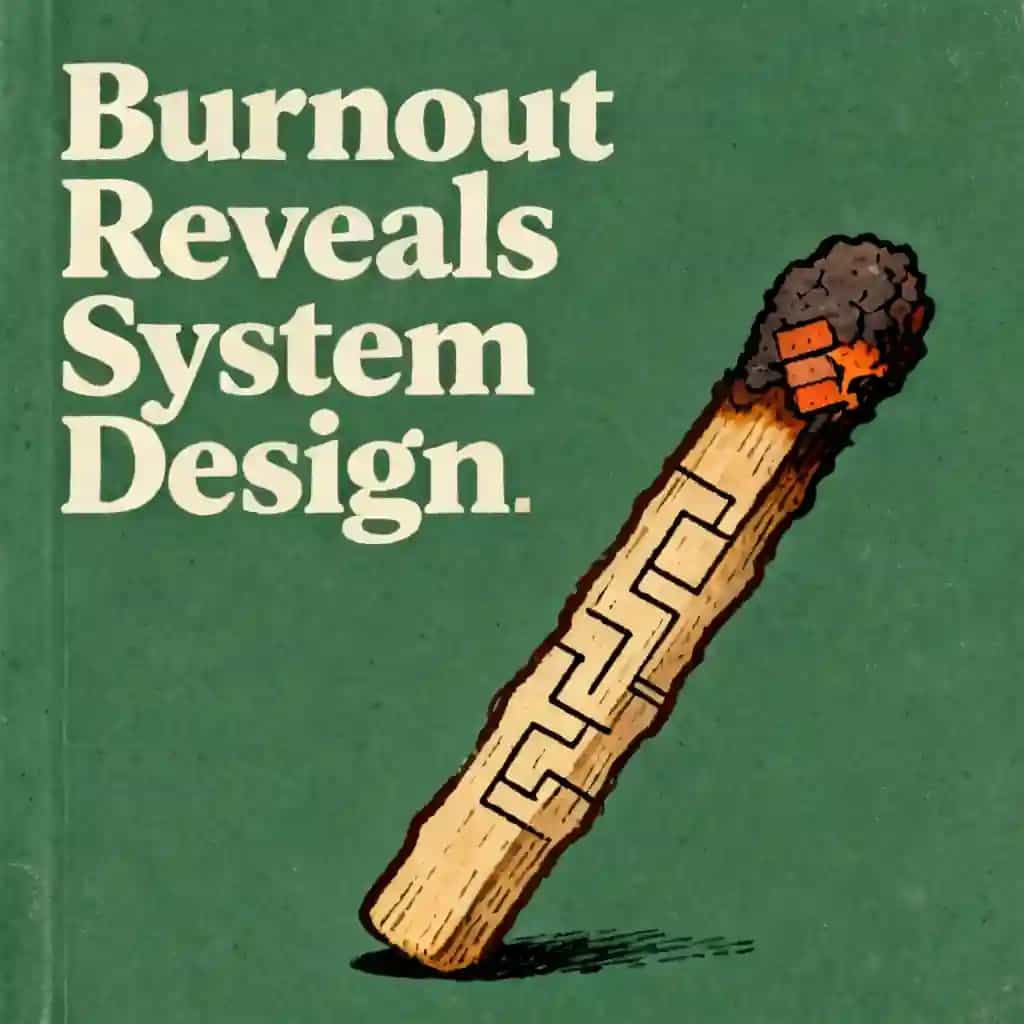
In "The Burnout Society," philosopher Byung-Chul Han dissects our exhaustion epidemic, where we've become both slave and master. With over 21,000 ratings, this cultural phenomenon reveals why our pursuit of achievement is killing us - and what contemplative negativity might offer as salvation.
Ressentez le livre à travers la voix de l'auteur
Transformez les connaissances en idées captivantes et riches en exemples
Capturez les idées clés en un éclair pour un apprentissage rapide
Profitez du livre de manière ludique et engageante
You wake up at 5 AM-not because anyone forces you, but because you've convinced yourself that successful people rise early. You meditate for productivity, exercise for performance, network for advancement. By noon, you're exhausted, yet you haven't stopped moving. Sound familiar? This isn't oppression in any traditional sense. No one is holding a gun to your head. Yet somehow, you feel more trapped than ever. Welcome to what philosopher Byung-Chul Han calls the achievement society-a world where we've become both master and slave, entrepreneur and exploited worker, all rolled into one exhausted package. The most disturbing part? We call this freedom. Every era has its signature afflictions. The Middle Ages had the plague. The 20th century battled viral epidemics. But today's defining illnesses-depression, ADHD, burnout-don't come from external invaders. They emerge from within, born not from scarcity but from excess. This is what makes them so insidious and so difficult to understand using traditional frameworks of health and disease. Think about how your grandfather's generation understood illness. There was always an enemy: bacteria, viruses, foreign agents attacking from outside. Society itself operated on this immunological model-clear boundaries between us and them, inside and outside, safe and dangerous. The 20th century was defined by this logic of exclusion, of protecting the self against the threatening other. But that world has vanished. Today, the "foreign" has been replaced by the "exotic"-difference without danger, otherness as entertainment rather than threat. We don't fear invasion; we fear irrelevance.
Décomposez les idées clés de The Burnout Society en points faciles à comprendre pour découvrir comment les équipes innovantes créent, collaborent et grandissent.
Condensez The Burnout Society en indices de mémoire rapides mettant en évidence les principes clés de franchise, de travail d'équipe et de résilience créative.

Découvrez The Burnout Society à travers des récits vivants qui transforment les leçons d'innovation en moments mémorables et applicables.
Posez n'importe quelle question, choisissez la voix et co-créez des idées qui résonnent vraiment avec vous.

Cree par des anciens de Columbia University a San Francisco
"Instead of endless scrolling, I just hit play on BeFreed. It saves me so much time."
"I never knew where to start with nonfiction—BeFreed’s book lists turned into podcasts gave me a clear path."
"Perfect balance between learning and entertainment. Finished ‘Thinking, Fast and Slow’ on my commute this week."
"Crazy how much I learned while walking the dog. BeFreed = small habits → big gains."
"Reading used to feel like a chore. Now it’s just part of my lifestyle."
"Feels effortless compared to reading. I’ve finished 6 books this month already."
"BeFreed turned my guilty doomscrolling into something that feels productive and inspiring."
"BeFreed turned my commute into learning time. 20-min podcasts are perfect for finishing books I never had time for."
"BeFreed replaced my podcast queue. Imagine Spotify for books — that’s it. 🙌"
"It is great for me to learn something from the book without reading it."
"The themed book list podcasts help me connect ideas across authors—like a guided audio journey."
"Makes me feel smarter every time before going to work"
Cree par des anciens de Columbia University a San Francisco

Obtenez le resume de The Burnout Society en PDF ou EPUB gratuit. Imprimez-le ou lisez-le hors ligne a tout moment.