Chapitre 1
A Tale of Unfortunate Schooling
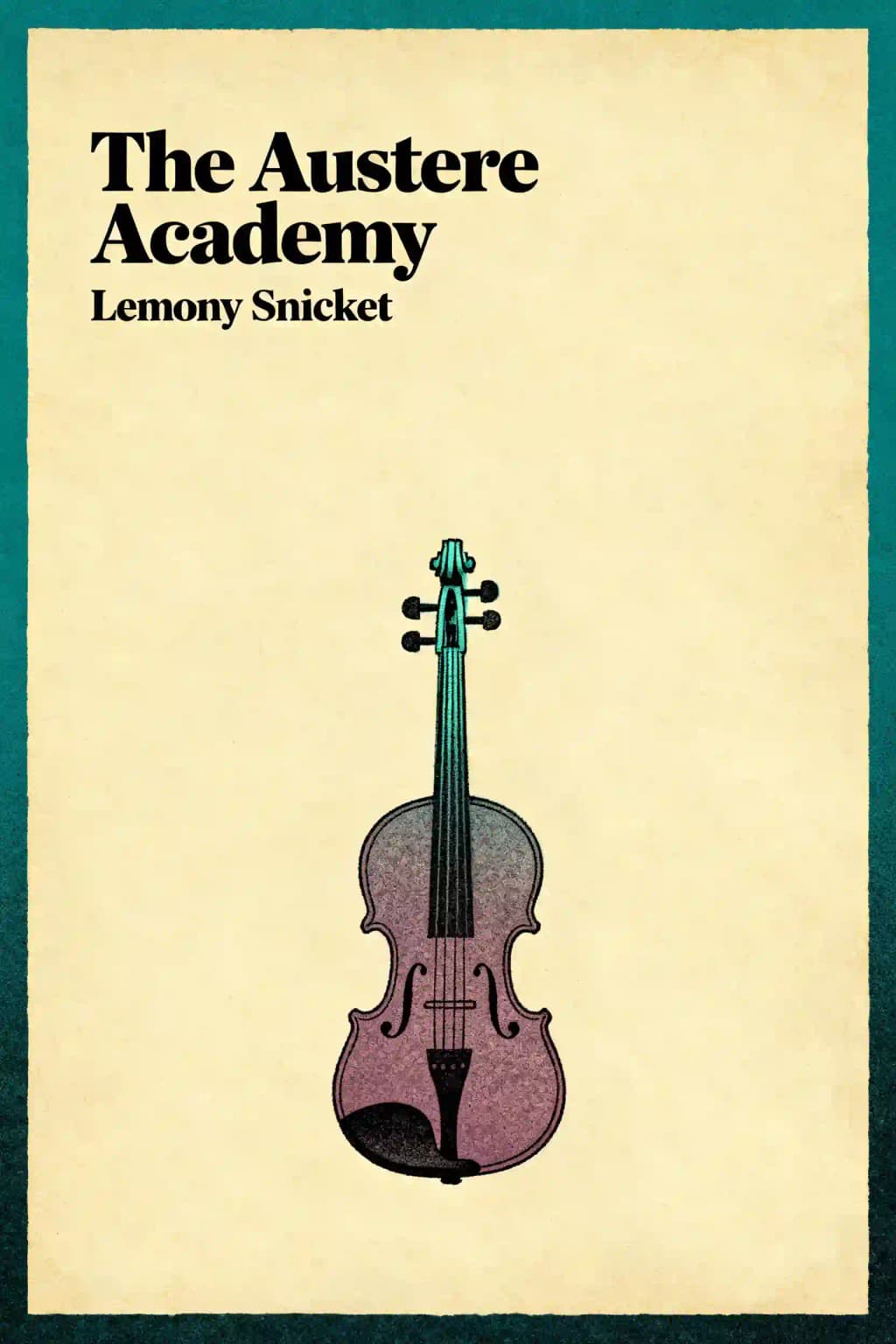
What happens when three intelligent orphans find themselves trapped in a school where misery is the primary lesson? Lemony Snicket's "The Austere Academy" continues the harrowing journey of the Baudelaire orphans with dark humor and gothic charm that has captivated millions worldwide. This fifth installment in the bestselling "A Series of Unfortunate Events" has become a cultural phenomenon, inspiring the Netflix adaptation starring Neil Patrick Harris and introducing generations of young readers to sophisticated vocabulary and literary techniques disguised as children's fiction. The book's popularity stems from its unique narrative voice-simultaneously warning readers away while pulling them deeper into the Baudelaires' world. Stephen King once praised Snicket (pen name of Daniel Handler) for creating "the most charming and clever children's books in years," while the series has sold over 65 million copies and been translated into 41 languages. What makes intelligent readers flock to these tales of woe? Perhaps it's the rare respect they show for children's capacity to handle difficult truths about the world.
Chapitre 2
Welcome to Prufrock Preparatory School
Imagine being shoved aside by the rudest child in the world on your first day at a new school. This is precisely what happens to Violet, Klaus, and Sunny Baudelaire when they encounter Carmelita Spats at Prufrock Preparatory School. The Baudelaire orphans have already endured unimaginable tragedy-their parents perished in a terrible fire, and they've been pursued relentlessly by the villainous Count Olaf, who will stop at nothing to steal their fortune. Through kidnapping, murder attempts, and elaborate disguises, Olaf has managed to follow them from guardian to guardian, always escaping justice at the last moment.
Standing on the mossy brick sidewalks of their new school, the shy Baudelaires hope for a respite from their misfortunes. The school's stone arch bears the motto "Memento Mori" ("Remember you will die"), a grim welcome that perfectly captures the atmosphere of their new educational home. Despite this ominous greeting, the siblings cling to the hope that here, surrounded by other children and watchful teachers, they might finally find safety from Count Olaf's machinations.
Their optimism quickly evaporates upon meeting Vice Principal Nero, a bald man with ridiculous pigtails who mocks their concerns about Count Olaf. He proudly displays the school's computer system, as if technology alone could protect them from a master of disguise. Peering from the ninth-floor window of the administrative building, Nero outlines the school's harsh rules: Violet will study with Mr. Remora in Room One, Klaus with Mrs. Bass in Room Two, and baby Sunny will serve as Nero's secretary. The punishments for rule-breaking are absurd-eating without silverware or like dogs, and mandatory attendance at Nero's six-hour violin recitals, performances so terrible they could make your ears bleed.
The final blow comes when Nero informs them that without parental permission slips, they cannot live in the comfortable dormitory. Instead, they must stay in a tin shack with hay bales for beds-the aptly named "Orphans Shack." As the children leave his office, they hear Nero's cruel laugh echoing behind them, a sound even more painful than his dreadful violin playing. The Baudelaires wonder: could this school possibly be worse than facing Count Olaf?
Chapitre 3
The Orphans Shack: A Study in Misery
Have you ever had a bad living situation? Perhaps a leaky ceiling or noisy neighbors? The Baudelaire orphans would trade places with you in a heartbeat. Vice Principal Nero had actually understated how truly awful the Orphans Shack was - and given his tendency for dramatic exaggeration, that was saying something. Beyond being tiny and furnished only with hay bales for beds that poked and scratched through their clothes, the shack harbored entire colonies of territorial matchbox-sized crabs that snapped their claws at anyone who disturbed them. These aggressive crustaceans had claimed every corner of the cramped space, forcing the children to tiptoe around their own living quarters.
Light tan fungus grew across the ceiling in elaborate patterns, constantly dripping moisture that the siblings had to dodge like some perverse game of musical chairs. The fungus gave off a peculiar musty odor that reminded Klaus of the time their father had forgotten about a wheel of cheese in the cellar for six months. Most offensively, the tin walls were painted bright green with tacky pink hearts - a decorative choice that somehow made their miserable accommodation even more depressing. The paint was peeling in places, revealing rusty patches underneath that suggested the structure might not survive a strong windstorm.
Despite these wretched conditions, the Baudelaires tried to maintain a positive outlook, just as their parents had taught them to do in difficult situations. Violet, the eldest at fourteen and a brilliant inventor, promised to create something to keep the crabs away, already sketching designs for a sonic repellent device using her trademark ribbon to tie back her hair. Klaus, the twelve-year-old researcher with a photographic memory, planned to study the fungus to determine if it posed any health risks, remembering a book he'd once read about beneficial mushrooms. Even tiny Sunny, barely out of infancy but with unusually sharp teeth, offered to scrape off the ugly paint with her four teeth, demonstrating by gnawing on a corner of the wall.
They reminded themselves that attending school, meeting children their own age, and most importantly, being somewhere without Count Olaf were all advantages worth enduring discomfort for. After all, they had survived worse - a hurricane that nearly swept them out to sea, hungry leeches in Lake Lachrymose, and multiple murder attempts by their theatrical nemesis. Surely they could handle some crabs and fungus.
Yet no matter how they tried to reframe their situation, they couldn't transform this mountain of misery into a manageable molehill. The shack was simply unlivable by any reasonable standard - even the local building inspector would have condemned it on sight. The drafty gaps in the walls let in cold air and small insects, while the roof creaked ominously with every gust of wind. Still, mindful of Nero's bizarre punishments, which included hours of listening to his screeching violin performances, they dutifully headed toward the cafeteria for lunch, their stomachs rumbling as they remembered a giant lasagna they'd once seen at a county fair years ago, when their parents were still alive and their lives made sense. Little did they know that the cafeteria would bring both their first taste of friendship at Prufrock and a glimpse of the troubles to come.
Chapitre 4
Finding Friendship in Unexpected Places
The cafeteria scene at Prufrock Preparatory School unfolded like a miniature social nightmare. After receiving enormous portions of lasagna served by someone wearing a peculiar metal mask, the Baudelaires faced that universal school dilemma: where to sit. When they approached a table, Carmelita Spats immediately began chanting "Cakesniffing orphans in the Orphans Shack!"-a nonsensical but cruel taunt that spread through the cafeteria like wildfire.
Just when all seemed lost, salvation came in the form of Duncan Quagmire, who invited them to sit with him and his sister Isadora. In these fellow orphans, the Baudelaires discovered kindred spirits who understood their pain in ways no one else could. The Quagmires had also lost their parents in a terrible fire and had once lived in the Orphans Shack themselves.
"We know what it's like to be newcomers here," Duncan explained, his kind eyes reflecting a depth of understanding that immediately put the Baudelaires at ease.
Duncan carried a green notebook everywhere, practicing his journalistic aspirations by taking detailed notes on everything he observed. Isadora, with her artistic soul, wrote poetry in a black notebook, specializing in couplets-two-line poems that rhyme. The five orphans quickly bonded over their shared experiences of loss and resilience.
When Violet mentioned the crab problem in the shack, Duncan flipped through his notebook and shared his research on scaring them away with loud noises. This information inspired Violet to invent "noisy shoes" with metal pieces that would keep the crabs at bay-a perfect example of how friendship can spark innovation in even the bleakest circumstances.
The Baudelaires accidentally called the Quagmires twins, only to learn they were actually triplets-their brother Quigley had died in the same fire that killed their parents. This revelation deepened the connection between the two sets of orphans, bound together by similar tragedies.
After lunch, the Quagmires led them to the library, a pleasant sanctuary with brass fish lamps and bright blue curtains. As they explored the stacks together, the Baudelaires felt the world growing smaller and safer in the company of true friends who understood their experiences. For the first time since arriving at Prufrock, they felt a glimmer of hope-perhaps school wouldn't be so terrible after all. But as we often discover in life, moments of happiness can be tragically brief, especially for the Baudelaire orphans.
Chapitre 5
The Dreadful Education of Prufrock Prep
If you've ever visited a museum, you may have seen a triptych-a three-paneled painting with different images on each panel. Similarly, the Baudelaires' educational experience at Prufrock Prep could be depicted as a triptych of misery featuring Mr. Remora, Mrs. Bass, and a box of staples.
Mr. Remora was Violet's teacher, a man with an unhealthy banana obsession who constantly ate the yellow fruit while teaching, dropping peels on the floor and smearing pulp in his gorilla-like mustache. Between banana bites, he told pointlessly short stories that students had to memorize verbatim for later tests-stories like "One day I went to the store to purchase milk. When I got home, I poured the milk into a glass and drank it. Then I watched television. The end." The monotony of his storytelling and disgusting banana-eating habits made Violet almost prefer staying in the Orphans Shack with her hands tied behind her back.
Klaus fared no better with Mrs. Bass, whose obsession with the metric system dominated every minute of class time. Students spent hours measuring random objects with rulers, recording the length in millimeters. "This pencil is one hundred and eighty millimeters long! This book is two hundred and fifty-seven millimeters long! This desk is five hundred and ninety-four millimeters long!" The tedium of these measurements drove Klaus-a boy who normally loved learning-to the brink of madness.
Baby Sunny's job as administrative assistant to Vice Principal Nero involved tasks impossible for an infant: answering phones, taking dictation, and making staples. Yes, making staples. Nero refused to buy them, insisting his secretary should produce them by hand. How an infant was supposed to manufacture metal office supplies remained unexplained, but Sunny was expected to deliver a full box by the end of each day.
The absurdity of these educational demands highlighted everything wrong with Prufrock's approach to learning. Rather than nurturing curiosity or critical thinking, the school demanded rote memorization and mindless tasks. For children as intellectually gifted as the Baudelaires, this environment was particularly torturous. Violet's inventive mind withered under Mr. Remora's pointless stories. Klaus's research skills went unused while measuring pencils. Sunny's remarkable abilities were squandered on impossible administrative tasks.
Yet despite these educational horrors, the Baudelaires persevered. They completed their assignments, supported each other, and found small moments of intellectual stimulation in conversations with the Quagmires. Their resilience in the face of such educational malpractice speaks to their extraordinary character-a quality that would soon be tested in ways they couldn't imagine.
Chapitre 6
The Return of Count Olaf
"Following suit" means doing the same thing somebody else has just done-a potentially dangerous practice that could lead you to jump off a cliff simply because someone else did. This was precisely the dilemma Klaus and Sunny faced when Violet stood and politely greeted "Coach Genghis" in the Orphans Shack one evening.
The siblings were puzzled by their sister's failure to expose Count Olaf-for the new gym teacher was clearly him, disguised in a turban that covered his distinctive unibrow and running shoes that hid his ankle tattoo. Yet they trusted Violet completely. She had saved them from Olaf's marriage plot and helped them escape hungry leeches, so they followed suit, greeting the villain with forced politeness.
Olaf, pleased with his deception, examined the children "as if they were an all-you-can-eat salad bar" and declared the Baudelaires perfect for his needs while dismissing the Quagmires as mere "twins." His eyes gleamed with malevolent satisfaction as he announced his new role as athletic coach.
Later, when the children could speak privately during one of Nero's dreadful violin concerts (the one advantage to someone who cannot play insisting on doing so anyway is that the shrieking sonata was so loud they could talk freely), Violet revealed her strategy: rather than expose Olaf immediately and risk his escape, they would gather evidence and approach Nero privately with proof.
The Quagmires, despite the Baudelaires' warnings about danger, insisted on helping their friends. Duncan took detailed notes about Olaf and his various disguises while they formulated a plan to convince Nero to use his computer to identify the villain, hopefully forcing him to remove his turban or shoes, revealing his single eyebrow or ankle tattoo.
As Nero performed his sonata for the sixth excruciating time, the children enjoyed a rare moment of companionable comfort-Duncan sharing stories with Violet, Isadora showing Klaus her poem about libraries, and Sunny contentedly chewing the armrest of her seat. None of them realized this would be their last happy moment together for a very long time.
That night, meeting "Coach Genghis" on the darkening lawn, the Baudelaires discovered his true scheme: Special Orphan Running Exercises, or S.O.R.E. He ordered them to paint a large luminous circle on the grass, then commanded them to run laps around it all night, every night. The exhausted children complied, unable to discern his true intentions despite their growing fatigue. What baffled them most wasn't the physical exertion but the apparent pointlessness-surely Olaf's scheme involved more than making them run in circles? The question "What?" echoed in their minds as they completed lap after lap, their bodies growing weaker while their confusion grew stronger.
Chapitre 7
The Sinister Scheme Revealed
For nine consecutive nights, the Baudelaires ran endless laps around the luminous circle, which began to symbolize both the zero they knew about Genghis's plan and the zero energy they had left. Their schoolwork suffered dramatically-Violet couldn't remember Mr. Remora's stories, Klaus fell asleep instead of measuring objects, and Sunny neglected her secretarial duties. All three received zeros on their assignments.
The exhaustion made them irritable, leading to a brief argument between Klaus and Isadora at lunch that they quickly resolved. Their misery was interrupted by Carmelita Spats delivering two messages: another night of running laps and an immediate summons to Vice Principal Nero's office.
Inside his office, Nero demanded payment for their missed violin recitals-nine bags of candy from each orphan-plus ten pairs of earrings with precious stones as tips for Carmelita Spats. When the Baudelaires tried to explain their exhaustion was due to Coach Genghis forcing them to run laps every night, Nero mocked them and announced they would face comprehensive exams the next morning. If they failed, they would be expelled and turned over to Coach Genghis for "home-schooling."
The desperate Baudelaires finally realized this was Olaf's plan all along-to exhaust them until they failed and were handed over to him. The scheme was brilliant in its simplicity: force the children to run all night, ensuring they would fail their exams and be placed directly into his custody. No kidnapping required, no disguise to maintain long-term-just the exploitation of school rules and the children's exhaustion.
In this moment of clarity, the Baudelaires felt a familiar despair washing over them. Once again, Count Olaf had manipulated circumstances to his advantage, and once again, the adults who should protect them were blind to the danger. Vice Principal Nero, like so many authority figures before him, dismissed their warnings about Olaf as childish nonsense.
The siblings exchanged glances, their eyes communicating what words couldn't-they needed a plan, and quickly. With comprehensive exams looming and another night of running ahead, their situation seemed hopeless. But as readers of their unfortunate tale know well, the Baudelaire orphans possess remarkable resourcefulness in the face of adversity. And this time, they had something they'd never had before: friends willing to risk everything to help them.
Chapitre 8
A Daring Plan and Its Consequences
The five orphans gathered in the improved Orphans Shack (now featuring crab-repellent noisy shoes and fungus-absorbing hay arrangements) to face their impossible situation: passing comprehensive exams after another exhausting night of running laps. The Quagmires proposed a daring plan-they would disguise themselves as the Baudelaires for the evening's S.O.R.E. session, with Duncan wearing Klaus's glasses and Isadora taking Violet's ribbon. For Sunny, they'd drag a bag of flour from the cafeteria.
"This is sort of exciting," Duncan said, putting on Klaus's glasses while Isadora tied Violet's ribbon in her hair and recited an imperfect poem about the thrill of being disguised. But when the Baudelaires examined their friends, they realized just how risky this plan truly was. The Quagmires simply didn't look much like them-different colored eyes, different hair, and identical heights unlike the Baudelaires' varying ones.
"We'll keep our heads down when we're running, so our faces won't give us away. We won't speak a word to Coach Genghis, so our voices won't give us away," Duncan explained, trying to sound more confident than he felt.
When Violet suggested they could just run away instead, Isadora insisted this was their only chance: "If you pass the exams without arousing Genghis's suspicion, you will be out of danger."
As the Quagmires prepared to leave, the Baudelaires felt a haunting similarity to the last time they saw their parents. Violet began, "If something goes wrong-" but Duncan firmly interrupted: "Nothing will go wrong at all. We'll see you in the morning, Baudelaires."
With the Quagmires gone, the Baudelaires turned to their half of the plan. Violet revealed her ingenious method for making staples using a fork, creamed spinach, a potato, and one of the Orphan Shack crabs. Throughout the night, their plan worked perfectly. Sunny kept the crab cornered with her noisy shoes while Violet tricked it into cutting metal rods into staple-sized pieces. Meanwhile, Klaus mastered measurements from Mrs. Bass's class and Mr. Remora's stories.
As they worked through the night-Violet tapping metal strips, Klaus reciting stories, and Sunny stomping her shoes to keep crabs away-the evening became almost cozy. It reminded them of evenings in the Baudelaire mansion when their parents were alive, and as dawn approached, they felt a rare thrill: the hope that their plan might actually work.
But assumptions are dangerous things to make-like bombs or strawberry shortcake-because even the tiniest mistake can lead to terrible trouble. As morning arrived, their assumptions were shattered when Vice Principal Nero arrived with Mr. Remora and Mrs. Bass to administer their comprehensive exams. Despite Nero's obvious disappointment, both children answered every question correctly, and Sunny's homemade staples worked perfectly.
Just as the Baudelaires began to feel relief, Coach Genghis appeared, holding Violet's ribbon and Klaus's glasses. His eyes shone with triumph, and small clouds of flour rose from his shoes with each step. The Baudelaires realized with horror that their assumption about the Quagmires' safety had been terribly wrong.
Chapitre 9
The Mystery of V.F.D.
The Baudelaires sank to the brown lawn, weeping with frustration and exhaustion as Mr. Poe (their banker and incompetent guardian) and Nero argued fruitlessly. They knew from experience that by the time the adults decided on a course of action, Count Olaf would be long gone-this time with their friends. They wept thinking of the Quagmires' kindness, how they had risked their lives to help them escape Olaf, and the research they hadn't had time to share.
As they cried themselves out (while Olaf, unbeknownst to them, was forcing the Quagmires into puppy costumes to smuggle them onto an airplane), the Baudelaires felt a surge of hidden energy. Violet asked Klaus what Duncan had shouted from the car as he was being kidnapped.
"V.F.D.," Klaus replied, "but I don't know what it means."
"Ceju," Sunny said, meaning "We have to find out."
The older Baudelaires nodded in agreement. They had to discover the secret of V.F.D. and what the Quagmires had uncovered. Perhaps it could help rescue the triplets, bring Olaf to justice, and make clear the mysterious way their lives had become so unfortunate.
Looking up at the school arch with its motto "Memento Mori"-"Remember you will die"-the Baudelaires vowed that before they died, they would solve this dark and complicated mystery that cast a shadow over their lives. The introduction of these three enigmatic letters-V.F.D.-marks a turning point in the series, hinting at a larger conspiracy behind the Baudelaires' misfortunes.
What could V.F.D. stand for? Very Frightening Discovery? Villainous Fiendish Deception? Volunteers Fighting Deviousness? The possibilities seemed endless, but one thing was certain: the answer was somehow connected to the fires that had destroyed both the Baudelaire and Quagmire homes, to Count Olaf's relentless pursuit, and to secrets their parents might have kept from them.
As the Baudelaires prepared to leave Prufrock Preparatory School-yet another temporary home that had failed to provide them safety-they carried with them not just their few belongings but also this new mystery. The quest to understand V.F.D. would drive them forward through increasingly perilous adventures, forcing them to question everything they thought they knew about their parents, their enemies, and themselves.
The Austere Academy ends not with resolution but with new questions, new dangers, and a renewed determination. The Baudelaires have lost their friends but gained a purpose beyond mere survival. They will find the Quagmires. They will uncover the truth about V.F.D. And perhaps, just perhaps, they will finally understand why their lives became so unfortunate on that terrible day when Mr. Poe arrived at Briny Beach with news that would change their lives forever.