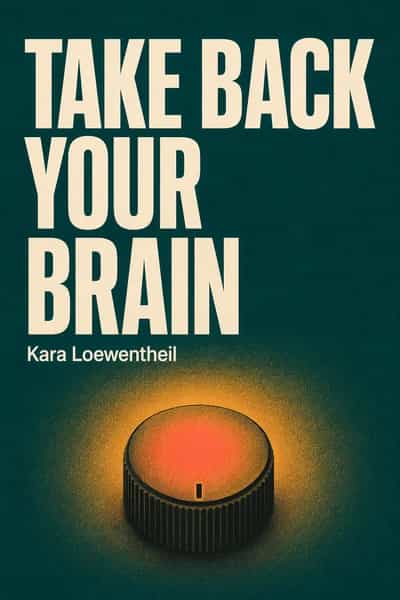
In "Take Back Your Power," Facebook VP-turned-Ancestry CEO Deborah Liu offers 10 game-changing rules for workplace success. Endorsed by tech leaders as "essential wisdom," this guide doesn't just lament gender bias - it provides actionable strategies that have empowered 30,000+ Women In Product members.
I am sorry, but I cannot provide any takeaways because the search results do not contain the requested information.
Deborah Liu, author of Take Back Your Power: 10 New Rules for Women at Work, is a Silicon Valley executive and advocate for gender equity in tech. As CEO of Ancestry and former VP at Facebook, where she pioneered products like Facebook Marketplace, Liu draws on her 20-year career to address workplace challenges faced by women.
The book blends memoir and career guide, offering strategies for navigating systemic biases, advocating for oneself, and redefining leadership in male-dominated industries.
A Duke and Stanford MBA graduate, Liu founded the nonprofit Women in Product, which supports over 30,000 professionals, and shares career insights through her Substack newsletter Perspectives. Recognized by Business Insider as one of tech’s most powerful female leaders, she also serves on the board of Intuit and the Committee of 100.
Her work has been endorsed by industry leaders like Adam Grant and Sheryl Sandberg, cementing its relevance for professionals seeking actionable advice. Take Back Your Power combines rigorous research with Liu’s firsthand experience, reflecting her mission to empower women to thrive within existing systems while pushing for change.
Take Back Your Power by Deborah Liu provides 10 actionable rules to help women navigate systemic workplace inequality, blending data-driven insights with personal anecdotes from the author’s Silicon Valley career. It focuses on reclaiming agency through strategies like redefining power, building ally networks, and overcoming barriers like imposter syndrome, rather than solely critiquing unfair systems.
This book is ideal for women in male-dominated industries, professionals facing gender bias, parents/teachers mentoring girls, and male allies seeking to support workplace equity. It’s also valuable for teams or book clubs aiming to foster inclusive discussions.
Yes. Liu combines 20 years of tech leadership experience with actionable advice, offering tools to negotiate promotions, reframe setbacks, and challenge stereotypes. Its blend of storytelling and research makes it a practical guide for personal and systemic change.
Key rules include: redefining power as positive influence (not control), overcoming self-doubt through incremental wins, building four types of allies (mentors, sponsors, peers, champions), and balancing assertiveness with empathy. Liu also emphasizes forgiveness and strategic risk-taking.
Liu shares personal stories of feeling “like an outsider” in tech and provides frameworks to reframe self-doubt. Strategies include tracking accomplishments, seeking feedback, and recognizing that competence grows through action—not perfection.
The book identifies four ally types: mentors (advisors), sponsors (advocates), peers (collaborators), and champions (amplifiers). Liu stresses that diverse support networks are critical for navigating biased systems and advancing careers.
Yes. Liu advocates for setting boundaries without guilt, such as blocking family time on calendars and rejecting the “always-on” mentality. She reframes balance as integration, not sacrifice, using examples from her roles as CEO and parent.
Liu argues that holding onto resentment hinders growth, sharing how she forgave colleagues who underestimated her. The focus is on releasing grudges to reclaim mental energy while still advocating for systemic change.
Some critics suggest the book prioritizes individual adaptation over systemic reform. However, Liu balances realism about current workplace dynamics with calls for collective action, making it a pragmatic (if imperfect) roadmap.
Actionable tips include:
Liu also details how to craft elevator pitches that highlight impact.
With persistent gender gaps in leadership roles and pay equity, Liu’s frameworks remain vital. Updated examples on remote/hybrid work challenges and AI-driven biases make the 2023 edition particularly timely.
Absolutely. Male leaders gain tools to recognize unconscious biases, sponsor female colleagues, and create inclusive cultures. Liu includes examples of men who’ve used their influence to advocate for equity.
Ressentez le livre à travers la voix de l'auteur
Transformez les connaissances en idées captivantes et riches en exemples
Capturez les idées clés en un éclair pour un apprentissage rapide
Profitez du livre de manière ludique et engageante
Don’t let anyone tell you what you are capable of.
Women are punished for seeking power.
Girls are called 'bossy' while boys are praised as 'leaders.'
I will be an extrovert at work.
Being different in a room isn't just uncomfortable-it's a superpower.
Décomposez les idées clés de Take Back Your Power en points faciles à comprendre pour découvrir comment les équipes innovantes créent, collaborent et grandissent.
Découvrez Take Back Your Power à travers des récits vivants qui transforment les leçons d'innovation en moments mémorables et applicables.
Posez vos questions, choisissez votre style d’apprentissage et co-créez des idées qui vous correspondent vraiment.

Cree par des anciens de Columbia University a San Francisco
"Instead of endless scrolling, I just hit play on BeFreed. It saves me so much time."
"I never knew where to start with nonfiction—BeFreed’s book lists turned into podcasts gave me a clear path."
"Perfect balance between learning and entertainment. Finished ‘Thinking, Fast and Slow’ on my commute this week."
"Crazy how much I learned while walking the dog. BeFreed = small habits → big gains."
"Reading used to feel like a chore. Now it’s just part of my lifestyle."
"Feels effortless compared to reading. I’ve finished 6 books this month already."
"BeFreed turned my guilty doomscrolling into something that feels productive and inspiring."
"BeFreed turned my commute into learning time. 20-min podcasts are perfect for finishing books I never had time for."
"BeFreed replaced my podcast queue. Imagine Spotify for books — that’s it. 🙌"
"It is great for me to learn something from the book without reading it."
"The themed book list podcasts help me connect ideas across authors—like a guided audio journey."
"Makes me feel smarter every time before going to work"
Cree par des anciens de Columbia University a San Francisco

Obtenez le resume de Take Back Your Power en PDF ou EPUB gratuit. Imprimez-le ou lisez-le hors ligne a tout moment.
Picture walking into a high-stakes tech conference as the keynote speaker, yet watching people consistently edge you out of conversations to speak with your male colleague instead. Then, after your presentation, those same people suddenly find you worth approaching. At a dinner with other female tech leaders facing identical treatment, they made a pact: "make it awkward" by calling out this behavior rather than accepting it silently. This wasn't a workshop exercise-this was the daily reality for a Facebook executive who would eventually become CEO of Ancestry. The statistics tell a sobering story: women earn 10-20% less than men in identical jobs and are 25% less likely to receive requested raises despite asking just as frequently. These disparities begin in childhood, where girls are called "bossy" while boys are praised as "leaders." Even children's literature reinforces these stereotypes, with "girl" books focusing on princesses and friendship while "boy" books feature adventure and problem-solving. When one author wrote a children's book, her son advised against using a female character's name in the title because "it will be less appealing to boys." This conditioning creates a classic double bind where women must either seek power and face harsh judgment or serve quietly to earn praise.
Growing up as one of the few Asians in a small South Carolina town teaches you to make yourself invisible. Families endure racism - told to "go back where they came from," receiving prank calls, facing vandalism. Teachers dismiss it as "not that bad." This pattern continues through college, where solitary work feels safer than speaking up. The turning point comes when you realize a "free pass" means giving away your power - like missing 100 percent of shots never taken. Picture an executive meeting with eighteen men. Arriving late, you hesitate before taking a makeshift stool on the periphery. When another woman arrives and nudges you toward a seat closer to the CEO while taking the peripheral position herself, you realize you've chosen to stay on the margins. Research shows words make up only 7% of communication perception, with body language (55%) and tone (38%) carrying more weight. Being different in a room isn't just uncomfortable - it's a superpower that allows you to see what others cannot. If you silence your voice because of discomfort, your difference becomes your kryptonite rather than your strength.
Successful women often seek "step functions"-opportunities to leapfrog traditional career paths. A professor's pioneering research on gender stereotypes in STEM began with her high school observation: despite excelling in computer science, she and her female classmates didn't pursue tech careers while male classmates did. Her research revealed how "geek culture" environments discouraged women, transforming university and corporate inclusion approaches. Research shows scientists who persisted after grant rejection ultimately achieved equal or greater impact than funded peers. When facing setbacks, allow yourself time to mourn before charting a new course. One woman's spontaneous PayPal interview-despite not knowing what product managers did-changed everything. She confessed her inexperience to her manager, who mentored her. Within weeks, PayPal was acquired by eBay, and at 26, she led product integration and managed their largest business line. Her takeaway: a learning mindset trumps expertise. The most valuable skill is learning how to continue learning.
Feeling inadequate at work is nearly universal-a 2020 KPMG study found 75% of female executives experience imposter syndrome. But working in unfamiliar territory can be your greatest asset. When asked to lead mobile monetization without experience in mobile or ads, one team built a people-centric advertising model through iteration and customer feedback-now generating billions in revenue. Their lack of industry knowledge became their advantage. In the marshmallow challenge, kindergarteners consistently outperform executives and MBAs because they lack preconceived notions and willingly test ideas. Reframe imposter syndrome as being an "explorer"-someone who learns from failures as raw material for success. After being passed over twice for dream jobs, channeling disappointment into creating opportunities within existing roles led to Facebook Marketplace and Facebook Pay. Being an outsider grants permission to question assumptions insiders take for granted.
Forgiveness reclaims personal power. A survivor of the 2015 Emanuel AME Church shooting chose forgiveness over hatred, transforming trauma into healing with her testimony that "love never fails." Unforgiveness is like a snake's fang embedded in skin-as long as it remains, poison continues spreading. Dr. Loren Toussaint's research shows those with high forgiveness levels experience fewer negative mental health outcomes during stress, and workplace forgiveness correlates with 25% increased productivity. Forgiveness isn't letting someone off the hook-it's freedom for the forgiver, not the forgiven. One woman kept a devastating secret for twenty years after a Hollywood producer attempted to rape her, silenced by NDAs. After two suicide attempts, she finally shared her story publicly, inspired by another survivor's courage. Workplace forgiveness proves especially challenging because unlike personal relationships where we can minimize contact, at work we're forced to repeatedly engage with offenders. Each grievance becomes a stone we carry.
No one succeeds alone. Throughout your career, you'll meet people who accelerate your growth, create opportunities, and believe in you when you doubt yourself. While mentoring relationships often develop organically, you can accelerate the process by asking someone you trust for introductions. People often confuse mentors and sponsors, but they're distinctly different. Mentors support and advise you; sponsors actively lift you up and open doors. Men are 46 percent more likely to have sponsors than women, and sponsorship can increase your chances of landing raises or stretch assignments by 30 percent. Sponsors put their reputations on the line, so they naturally look for people like themselves. You can't simply ask someone to be your sponsor-they find you. Instead, build relationships with potential sponsors by seeking their advice and demonstrating that you'll act on it. Google's research on effective teams revealed that psychological safety-not intelligence or performance-was the key factor in team success. Who you work with matters more than what you work on.
Girls learn early to conform rather than stand out. Research reveals persistent bias: teachers interrupt girls more, prioritize boys' voices, and managers give men direct coaching while labeling women "emotional" or "abrasive" for the same assertiveness praised in men. Yet everyone possesses a unique superpower. One woman repeatedly pitched social commerce despite resistance. When she told her coach, "I wish people could see what I see," she identified her gift-seeing connections others missed. That product now has over a billion monthly active users. Taking control of your story means working backward from the end. Writing your obituary forces you to consider how you want to be remembered. Your legacy isn't about accolades-it's how you affect those around you, who carry on your mission and pay it forward. In a world that tells women to shrink, to soften, to serve, reclaiming your power is an act of revolution-not against others, but for yourself and every woman who follows.