Chapitre 1
Behind the Veil: Sex, Politics, and Power in the Arab World
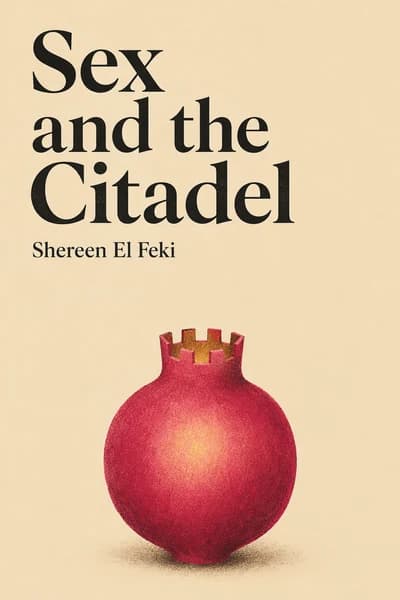
In the heart of Cairo, a simple linguistic slip transformed "women's center" into "center for sluts," causing momentary confusion and later laughter. This innocent mistake reveals the power of language in a culture where sexual discourse remains largely taboo. Shereen El Feki's groundbreaking exploration takes us beyond headlines and stereotypes to examine how sexuality functions as a mirror reflecting the deeper conditions that sparked the Arab Spring. Through five years of research across the region, El Feki discovered that bedrooms provide a revealing window into Arab society-where religion, tradition, politics, and economics converge in the most intimate spaces of people's lives.
The book has garnered attention from scholars and cultural critics alike, with The Economist calling it "remarkably brave, accessible, nuanced, and wise." Time magazine praised it as "an essential addition to our understanding of the modern Arab world." What makes this work particularly significant is its timing-arriving as the region undergoes its most profound transformation in generations, offering insights into whether political liberation might eventually extend to sexual liberation as well.
Chapitre 2
When East and West Traded Sexual Places
How did the Arab world transform from a culture that once produced explicit erotic manuals to one where sexuality is strictly confined to marriage? This remarkable reversal represents one of history's great ironies-a sexual trading of places between East and West.
In the mid-nineteenth century, two journeys perfectly illustrate this shift. When French novelist Gustave Flaubert visited Egypt in 1849, he documented explicit sexual encounters with prostitutes and observed Cairo's bawdy street life with fascination. Meanwhile, Egyptian scholar Rifa'a Raffi' al-Tahtawi spent five years in Paris beginning in 1826, praising French society's strict stance against homosexuality while criticizing their lax attitudes toward relations between men and women.
During the Islamic golden age, the Arab world embraced remarkable sexual openness. Religious scholars wrote frankly about sexuality, covering topics that wouldn't appear in Western literature for a millennium. The great Arab philosopher Abdelwahab Bouhdiba argues that this sexual open-mindedness was inseparable from the intellectual blossoming of the era-suggesting that sexual and intellectual freedom are deeply intertwined.
By the late 19th century, this sexual openness had disappeared, part of a broader intellectual decline accelerated during colonial times. After Napoleon's 1798 invasion of Egypt, Arab intellectuals developed what Egyptians call "foreigner complex"-a sense of inferiority to the West. Some began to wonder if their sexual proclivities, especially homosexuality, contributed to their decline.
This rewriting of sexual history gained momentum with Islamic fundamentalism, notably through the Muslim Brotherhood founded by Hassan al-Banna in 1920s Egypt. Later, Sayyid Qutb, whose ideas influenced al-Qaeda, developed his anti-Western views after visiting America in the 1940s, where he was appalled by what he saw as sexual licentiousness and moral decay.
Today's conservative sexual attitudes in Egypt reflect decades of dictatorship, with people turning to Islam for solace and as a form of protest. The emergence of ultraconservative Salafi movements post-Mubarak has intensified focus on sexual morality, with preachers like Mahmoud al-Masry advocating strict gender segregation and female modesty.
Wilhelm Reich's theories about the "sexual misery of the masses" apply remarkably to today's Arab world: young people unable to afford marriage or find privacy; women's sexual needs ignored; double standards of virginity; and sexual education suppressed. Reich argued that sexual repression creates individuals "adjusted to the authoritarian order" who submit despite "misery and degradation"-perhaps explaining why Egyptians tolerated poor governance for so long.
Chapitre 3
Marriage: The Sun at the Center of the Sexual Universe
In the Arab world's sexual landscape, marriage is the sun at the center, with various forms of non-marital sexuality orbiting at increasing distances. This central institution shapes everything from personal identity to social status, economic stability to sexual expression.
Azza's story illustrates the complexities of modern Egyptian marriage. Despite being university-educated with a job at a foreign firm earning triple her husband's salary, she faces bedroom problems and conflicting expectations. While covering most household bills for their family of five, her sexual relationship has deteriorated, with her husband now afraid to approach her sexually. Like many Egyptian women of her generation, Azza lives in a bind-benefiting from increased education and legal rights while still constrained by patriarchy reinforced by Islamic conservatism.
Marriage forms the foundation of Egyptian society, with over 90% of Egyptians considering it the natural and desirable state. Religious imperatives drive this cultural priority-the Qur'an encourages believers to marry quickly and simply, while hadiths emphasize marriage as safeguarding half one's faith. The Arabic linguistic connection between marriage (nikah) and sexual intercourse highlights how matrimony legitimizes sexuality in Islamic culture. Outside marriage, sexual relations constitute zina (illicit relations) with severe religious penalties.
Despite widespread anxiety about declining marriage rates in Egypt, the reality is more nuanced. While marriage rates did fall by a third between the 1950s and mid-2000s, they've recently rebounded, with about 90% of Egyptians married by age thirty-five. The real shift is in timing-Egyptians are marrying later, with men averaging 29 years and women 24, about three years later than what young people consider optimal.
This "waithood" phenomenon extends across the Arab region. Economic factors heavily influence marriage delays. Men, who traditionally bear most marriage costs, complain about materialism and excessive demands from brides' families. The average marriage cost in Egypt ranges from EGP 20,000 (USD 3,300) for poorer families to EGP 60,000 for wealthier ones-requiring about seven years of savings for the poorest men.
When official marriage becomes unattainable, couples turn to alternative forms like 'urfi marriage-a simplified arrangement that maintains Islamic permissibility while circumventing financial barriers. Though religiously debated, these marriages exist in legal limbo. Women have no rights to financial support during or after such marriages, including inheritance, and children face potential complications.
Chapitre 4
The Bedroom: Pleasure, Power, and Problems
Despite her impressive credentials-medical training, pioneering research on sexuality, and a doctorate from the US on sexuality in Islam-Heba Kotb remains somewhat conservative in her approach to sexual counseling. While she inspires many followers who appreciate her modest yet informative style, her advice often reinforces traditional gender roles. Though she encourages women to claim their "sexual rights," she ultimately prioritizes men's needs, advising wives to "be available to please him" and not give husbands "a reason to make a choice between you and hellfire."
This relatively restrained approach contrasts sharply with the sexual openness found in classical Arabic literature like the 11th century "Encyclopedia of Pleasure" by 'Ali ibn Nasr al-Katib. This comprehensive work covers virtually every sexual practice imaginable with humor and frankness, emphasizing that sex is "God's gift to mankind." The Encyclopedia portrays women with robust sexual appetites and offers detailed advice on female pleasure, including the importance of foreplay, cunnilingus, and post-coital intimacy-presenting a remarkably female-friendly perspective for its time.
Today's Arab female writers continue the tradition of sexual expressiveness that once flourished in classical Arabic literature. Among the most provocative is Joumana Haddad, a Lebanese poet, writer and newspaper editor who embodies what she calls "an orgasmic act of ejaculation" in her writing. With her striking appearance and unapologetically sexual self-expression, Haddad challenges traditional Arab expectations of women. In 2008, she launched "Jasad" (meaning "body"), a glossy quarterly magazine exploring sexuality through essays, reportage, and art.
For ordinary women like Azza and her friends, seeking sexual advice is challenging without English language skills, money for specialists, or internet access. When asked to browse online sex toy catalogs, they are completely bewildered by the products. Their confusion about ben-wa balls reveals deeper issues-many Egyptian women avoid tampons due to concerns about virginity and menstrual blood, and remain afraid to touch their genital area even after marriage.
While hesitant about toys, Azza's circle enthusiastically embraces lingerie. Downtown Cairo's boutiques offer provocatively outlandish undergarments-from crotchless panties to musical bras-purchased even by conservative hijab-wearing women. This seeming contradiction makes sense: conservative women use lingerie as one of their few available tools for sexual expression and to keep husbands faithful.
Heterosexual anal intercourse emerges as a significant marital issue for Egyptian women like Azza. Despite being generally considered haram (forbidden) by Sunni Muslims, the practice continues to be debated among religious authorities. Egyptian migrant workers in Gulf countries appear to be bringing back changed sexual practices, with some men manipulating religious fatwas to justify these behaviors.
Chapitre 5
Youth in Sexual Limbo
In post-uprising Egypt, Tahrir Square became a youth-dominated space where traditional social boundaries temporarily dissolved. Young people manned barricades, smoked hashish openly, defied religious authorities, and displayed public affection-behaviors previously confined to shadows. But opinions about whether political freedom should extend to sexual liberation varied dramatically.
With nearly 100 million Arabs aged 15-29 representing almost a third of the region's population, their intimate lives remain largely hidden despite their public political grievances. Research attempts to gather data about young people's sexual behaviors face significant obstacles-when the Population Council launched a survey of 15,000 young Egyptians in 2009, government authorities rejected almost all questions about premarital sexual activity.
Marwa Rakha, Egypt's "agony aunt for the online generation," offers insight into Arab youth sexuality through her popular advice platforms. Her perspective reveals that boyfriend-girlfriend relationships are common in middle-class Cairo, with men often testing women's sexual boundaries while expecting virginity. Technology has revolutionized dating-from Adult Friend Finder to Bluetooth flirtation in Saudi malls-giving youth unprecedented privacy despite family surveillance through "robot leash" mobile phones.
Female virginity remains a critical issue across the Arab world, with religious authorities debating the permissibility of hymen repair surgery. Some Islamic scholars forbid it as deceptive and potentially leading to mistaken paternity, while others permit it under the principle of satr al-'ird (protecting a woman's honor). Doctors face ethical dilemmas when performing these procedures-are they enabling deception or helping vulnerable women?
Young Arabs' independence is constrained by deep family ties, both financial and emotional. In Egypt, most unmarried people under thirty live with parents, complicating romantic relationships-with no private space, couples resort to friends' apartments, cars, or public places for intimacy. Hotels typically demand marriage certificates.
Sexual harassment (taharrush jinsi) pervades Egyptian streets, ranging from lewd remarks to physical assault. Over half of young urban women report experiencing harassment, with Cairo being particularly notorious. Many blame economics: unemployed youth with sexual frustration and no marriage prospects, combined with women's increasing public presence. Remarkably, most women themselves believe "provocatively dressed" women invite harassment, despite 90% wearing modest clothing with heads covered.
Chapitre 6
The Knowledge Gap: Sex Education and Reproductive Health
In a region where young people are simultaneously celebrated as the future yet denied the tools to shape it, sexuality education represents a critical gap. Despite official statements and conferences extolling youth potential, authorities from parents to presidents have failed to provide basic sexual knowledge and resources. The fear is that accurate information and access to contraception would encourage zina (fornication), despite international evidence to the contrary.
With schools providing minimal sexual education and parents reluctant to discuss intimate topics, many young Egyptians turn to media for information. Television, movies and pornography have become primary sources of sexual knowledge, despite the illegality of explicit content. Egyptian cinema, the center of production for the Arab world, increasingly depicts previously taboo sexual topics like premarital relations, sexual harassment and sex work, despite operating within strict censorship frameworks.
One alternative approach comes from Sahar Talaat, a pathologist turned sex counselor who teaches young Arabs about sexuality within an Islamic framework. In her classroom in Doha, Qatar, she presents anatomical information, dispels fears about wedding night pain, and encourages sexual communication between spouses. Her students, young women preparing for marriage, find the information valuable in contrast to the frightening or confusing messages they received from family or found online.
For Arab youth engaging in premarital sex, protection is as scarce as information. While contraceptives like the Pill are easily available in Egypt without prescription for about $2.50, knowledge about proper usage is lacking. Despite contraception being historically discussed in classical Arabic texts, today it's viewed primarily as a female responsibility, creating problems for unmarried women who face stigma for planning sexual activity.
Tunisia stands alone in the Arab world by providing legal abortion on request for women eighteen or older, married or single, up to the end of the first trimester without requiring spousal consent. This policy, established over forty years ago under President Bourguiba's development plans, has proven successful. Contrary to fears that legalization would lead to widespread abortion use, rates have actually declined from 20,000 annually in the late 1970s to about 15,000 today, despite population growth.
In Egypt, abortion is widespread yet illegal, with penalties including imprisonment for both patients and practitioners. Access varies dramatically by social class: wealthy women pay around $500 for safe procedures at private clinics, middle-class women get cheaper "cleanings" with minimal care and frequent moral judgment, while poor women resort to dangerous DIY methods like drinking boiled onion tea, inserting plant stalks into the uterus, or taking massive doses of contraceptive pills.
Morocco offers a potential path forward for abortion reform in the region. Dr. Chafik Chraibi, head of gynecology at a major Rabat maternity hospital, founded AMLAC (Moroccan Association for the Fight Against Clandestine Abortion) after witnessing countless complications from botched procedures. Rather than advocating outright legalization, Chraibi strategically pushes for "softening" laws to permit terminations in cases of rape, incest, minors, fetal malformation, psychiatric disturbance, or dire social situations.
Chapitre 7
The Shadow Economy of Sex
In Cairo, the historic neighborhood of al-Batniyya once housed prostitutes who catered to clients with religious formulas like "I give you the right to own me"-echoing Islam's historical accommodation of concubinage. These practices reflected complex religious and social negotiations around sexuality, with practitioners attempting to reconcile traditional Islamic values with commercial sex work. While slavery was officially abolished in the nineteenth century, similar practices continue through "summer marriages" (zawaj misyaf) where wealthy Gulf tourists contract temporary unions with poor Egyptian women, often lasting just weeks or months.
Hawamdiyya, a working-class district once known for its sugar refinery, has become infamous for supplying young women for temporary marriages to wealthy Gulf visitors. These "marriages" involve proper contracts written "in the name of God and in the tradition of the Prophet" but are routinely torn up when the couple separates. Local matchmakers, known as "khatbas," facilitate these arrangements for substantial fees. Samia, a 22-year-old participant, endures these relationships to fund her sister's education, describing disturbing sexual demands from her "husbands"-including forced anal sex, mandatory pornography viewing, and physical abuse. Her story reflects the broader exploitation inherent in this system.
Despite government efforts to crack down on these arrangements by linking them to human trafficking and raising the legal marriage age to eighteen, the industry persists through elaborate networks of corruption. Marriage registrars accept bribes ranging from 500 to 2000 Egyptian pounds to certify underage girls, while local police often turn a blind way. Even high-profile arrests of facilitators and occasional raids on known establishments have done little to deter wealthy clients or protect vulnerable women.
Summer marriage represents just one facet of Egypt's thriving sex work industry-a perverse "success story" of economic liberalization offering services for all tastes and budgets. Cairo's sex work landscape spans high-end hotel escorts charging hundreds of dollars per night to street workers accepting as little as fifty pounds, featuring Russian, Chinese, Sudanese, Moroccan and Egyptian women across at least eight hundred known hotspots. Different districts specialize in different services and price points, creating an informal but well-understood hierarchy.
For centuries, prostitution in Egypt was regulated primarily for taxation purposes, reflecting pragmatic governance rather than moral considerations. In early Islamic Cairo (10th-13th centuries), women worked in established areas under supervision, with taxes collected for the regime through designated officials called "sheikhs of the prostitutes." Under Ottoman rule, sex work fell under the empire's comprehensive taxation system alongside other pleasure trades like music and dance. British colonization in 1882 formalized prostitution through mandatory registration and weekly medical examinations-primarily to protect British soldiers from venereal disease.
Today, some voices like filmmaker Inas al-Degheidy advocate for licensing sex workers to protect public health and worker safety, arguing, "We have to face reality rather than escape from it." Morocco offers the region's most progressive model for HIV prevention through organizations like ALCS (Association de Lutte Contre le Sida), whose outreach workers distribute condoms and health information in Casablanca's thriving sex trade districts. Their harm reduction approach has shown promising results in reducing disease transmission while providing essential support services to sex workers.
Chapitre 8
Beyond the Binary: Sexual and Gender Diversity
The author explores how historical Arabic attitudes toward homosexuality echo in modern experiences. Despite a rich history of same-sex relations in Arab culture, most of it has been forgotten or buried during the past century, with today's intolerance often misrepresented as traditional when it may actually reflect colonial influence.
Religious condemnation provides the foundation for societal rejection of homosexuality in the Arab world. The Qur'an's story of Lot and the destruction of his people is traditionally interpreted as divine punishment for homosexual acts. The Arabic terms for male sodomy (liwat) and its practitioner (luti) derive directly from Lot's name. Various hadiths reinforce this view with vivid descriptions of divine wrath against men who "mount" other men.
However, some voices question these interpretations. Olfa Youssef, a Tunisian professor and former National Library director, challenges contemporary religious authorities who present their interpretations as absolute truth. In her book "Hayrat Muslima" (A Muslim Woman's Confusion), she argues that while the Qur'an is perfect, human readings are relative and influenced by historical context and psychological biases. She specifically questions whether the "outrage" of Lot's people was homosexuality itself or rather their violent attempt to sexually assault Lot's angelic guests-a violation of hospitality codes.
The representation of homosexuality in Egyptian media reinforces societal prejudice. Studies of Egyptian films from 1979-2009 show less than 10% portraying homosexual characters sympathetically. Most depictions rely on harmful stereotypes: homosexuals as camp comic relief, victims of childhood abuse, or predatory deviants. Even these superficial portrayals provoke conservative backlash, with accusations that filmmakers are corrupting youth through American or Israeli influence.
While gay men in the Arab world face harsh scrutiny, lesbian relationships remain largely invisible-a double-edged sword offering both protection and isolation. In Beirut, this contrast is evident in the different approaches of organizations like Meem (for women) and Helem (for men). Meem operates confidentially, with membership by invitation only, while Helem maintains a visible public presence at Zico House in central Beirut, reflecting broader gender norms where "men can strut and women are expected to keep silent."
Gender-bending has deep historical roots in Arab society. In seventh-century Medina, the Prophet Muhammad regularly interacted with mukhannathun-anatomically male individuals who behaved as women. Though allowed special access to women's spaces and recognized as matchmakers and entertainers, they weren't necessarily assumed to be sexually attracted to men.
LGBT activists in the Arab region increasingly recognize that fighting for their rights in isolation is counterproductive. Rather than focusing narrowly on "gay rights"-which risks conservative backlash-they see their struggle as part of a broader movement for diversity and nonconformism across ethnic, religious, racial and sexual lines. As activist Moumneh argues, progress limited to LGBT issues alone would benefit only "a privileged few." She questions how effective an LGBT rights discourse can be in a culture centered on family without simultaneously addressing women's bodily autonomy.
Chapitre 9
The Road Ahead: Sexual Revolution or Evolution?
From Cairo's Citadel fortress, one can appreciate the city's vast diversity-a metaphor for the complexity of understanding Arab sexuality. Despite the region's outward appearance as an impregnable fortress of heterosexual marriage and family values, the author found countless openings for change and surprising willingness among ordinary people to discuss intimate matters.
Egypt's fundamental problem isn't the laws themselves but their implementation. During decades of dictatorship, Emergency Law created a chilling effect on sexuality and all aspects of society. Real reform requires transforming law enforcement, the judiciary, and changing how ordinary people view the law-as a tool of protection rather than control.
Education needs complete overhaul to foster critical thinking rather than conformity, especially regarding religion. Economic reform is equally crucial-less uncertainty might temper appeal of stringent forms of Islam and ease stress on families. Better job prospects could empower women while easing male insecurities, potentially reducing sexual harassment.
Media-both new and old-serves as a powerful tool for transformation. Before the uprisings, the culture of disclosure around sexual taboos became a relatively safe space to challenge received wisdom. Now, artists and writers are testing the boundaries of expression in the new political climate, with implications beyond artistic freedom to health and welfare issues like STIs and sexual violence.
The author argues that Egypt desperately needs more sexual research, drawing parallels to how the Kinsey reports transformed American understanding of sexuality in the 1940s and '50s. Despite many willing researchers in Egypt, they've struggled with training, approval, and collaboration in a climate of suspicion.
What's urgently needed is a coherent, positive intellectual framework for sexuality-one that accommodates both religion and science for the 21st century. The current medicalization of sex provides some cover for discussion but remains limiting. The challenge is transforming sex from a problem to be solved into a source of pleasure and creativity.
Despite fears that political upheaval and rising Islamism might restrict freedoms further, the author remains optimistic that Egyptians will eventually return to a more pragmatic, joyful interpretation of their religion. She points to the 2011 protests where personal piety was visible but the uprising was political, not religious.
Unlike the West where sexual revolution coincided with declining church influence, the Arab world's path will differ. The author believes religious adherence isn't regression-sexual rights can exist within an Islamic framework when people have freedom to think for themselves. While skeptical of any immediate sexual revolution, she anticipates a gradual "sexual reevaluation" where people will eventually have the education, inclination and freedom to reconsider their sexual past, present and future.