Aperçu de Reality Is Not What It Seems
Rovelli's bestselling quantum gravity journey, translated into 41 languages, transforms complex physics into poetic exploration. Benedict Cumberbatch narrated his work, while physicists praise how it elegantly bridges scientific knowledge and everyday understanding - making the invisible architecture of reality suddenly visible.
- Reality is a network of granular quantum events, not continuous processes.
- Time emerges from thermodynamic averages, not as a fundamental dimension.
- Loop quantum gravity resolves black hole singularities with quantized spacetime.
- The universe’s apparent infinity dissolves into finite, discrete quantum building blocks.
- Information theory bridges quantum mechanics and thermodynamics as cosmic foundations.
- Space and time lose meaning at the Planck scale’s quantum foam.
- Carlo Rovelli’s relational reality defines objects through interactions, not intrinsic properties.
- Ancient atomist philosophy foreshadows modern physics’ discrete universe model.
- Quantum gravity’s spin networks replace Einstein’s continuous spacetime fabric.
- The illusion of cosmic time mirrors Earth’s flatness misconception.
- Thermodynamic irreversibility creates time’s arrow from timeless quantum events.
- Embracing science’s evolving nature requires shedding Platonic idealist assumptions.
À propos de l'auteur de Reality Is Not What It Seems
Carlo Rovelli is a theoretical physicist and the internationally bestselling author of Reality Is Not What It Seems: The Journey to Quantum Gravity. He is a pioneer in loop quantum gravity and a leading voice in bridging physics with philosophy.
His book explores the nature of spacetime, quantum mechanics, and the evolution of scientific thought, themes grounded in his decades of research at institutions like France’s Aix-Marseille Université and his role as a Distinguished Visiting Research Chair at Perimeter Institute.
Rovelli’s other acclaimed works, including Seven Brief Lessons on Physics (translated into 41 languages) and The Order of Time, distill complex concepts into lyrical prose loved by millions. A Foreign Policy "100 Most Influential Global Thinker," he frequently appears on platforms like TED and science podcasts. Seven Brief Lessons on Physics has sold over a million copies, cementing Rovelli as one of modern science’s most accessible and profound communicators.
FAQ sur Reality Is Not What It Seems
What is Reality Is Not What It Seems about?
Reality Is Not What It Seems by Carlo Rovelli explores the evolution of physics from ancient Greek philosophy to modern quantum gravity. It delves into loop quantum gravity—a theory Rovelli co-developed—which reimagines spacetime as granular rather than continuous. The book combines scientific history, conceptual breakthroughs, and Rovelli’s insights to challenge traditional views of reality.
Who should read Reality Is Not What It Seems?
This book is ideal for readers interested in theoretical physics, philosophy of science, or accessible explanations of complex concepts. It suits both science enthusiasts and those new to quantum mechanics, offering poetic analogies and historical context without heavy mathematical formulas.
Who is Carlo Rovelli?
Carlo Rovelli is an Italian theoretical physicist, a founder of loop quantum gravity, and a bestselling author. A professor at Aix-Marseille University, he blends rigorous science with lyrical prose to make abstract concepts like spacetime quanta relatable. His works, translated into over 40 languages, bridge academia and public understanding.
Is Reality Is Not What It Seems worth reading?
Yes, praised for its clarity and depth, the book distills quantum gravity into engaging narratives. It’s been hailed as a “masterpiece” for making cutting-edge physics accessible, though some find its abstract sections challenging. Ideal for readers seeking a fresh perspective on cosmology.
What is loop quantum gravity?
Loop quantum gravity (LQG) is a theoretical framework where spacetime is quantized into discrete, granular units. Unlike string theory, LQG doesn’t require extra dimensions and aligns with Einstein’s general relativity. Rovelli presents it as a key solution to unifying quantum mechanics and gravity.
What are the key concepts in Reality Is Not What It Seems?
Key ideas include:
- Discrete spacetime: Reality’s fabric is woven from finite “quanta” of space.
- Timeless physics: Time emerges from quantum interactions rather than existing fundamentally.
- Scientific continuity: Links ancient thinkers like Democritus to modern theorists like Einstein.
What is a memorable quote from the book?
“Science is about reading the world from a gradually widening point of view.” Rovelli emphasizes science as an evolving dialogue, not a fixed set of answers, reflecting his focus on curiosity over dogma.
What are criticisms of Reality Is Not What It Seems?
Some readers find its quantum gravity explanations overly abstract, particularly without visual aids. Critics note it prioritizes conceptual clarity over mathematical rigor, which may frustrate advanced physics students.
How does Rovelli’s book compare to A Brief History of Time?
While both demystify cosmology, Rovelli focuses on quantum gravity’s implications for spacetime structure, whereas Hawking explores black holes and the Big Bang. Rovelli’s prose is more philosophical, weaving history with speculative ideas.
How does the book challenge traditional physics?
It argues that spacetime isn’t smooth but composed of tiny “atoms” of space—a shift likened to realizing matter is made of particles. This challenges Newtonian and Einsteinian assumptions of continuous reality.
Why is Reality Is Not What It Seems relevant in 2025?
As quantum gravity research advances, Rovelli’s work remains a primer for understanding emerging theories. Its themes also resonate with AI-era debates about consciousness, simulation, and reality’s nature.
What does Rovelli say about time?
He describes time as an emergent property stemming from quantum interactions, not a fundamental dimension. This radical view draws from thermodynamics and quantum mechanics, suggesting time’s flow is a product of human perception.
Can non-scientists grasp the book’s ideas?
Yes—Rovelli avoids equations, using metaphors like “space is a network of relations” to explain quantum gravity. However, sections on spin networks or granular spacetime may require rereading for clarity.
How does the book address philosophy?
Rovelli connects physics to philosophical questions about reality’s nature, arguing science and philosophy are intertwined. He critiques positivism and highlights links between ancient atomism and modern quantum theories.
What practical implications does quantum gravity have?
While theoretical, Rovelli suggests understanding spacetime’s quantum structure could revolutionize technologies like quantum computing or dark energy research. It also reshapes humanity’s cosmic perspective.
Ressentez le livre à travers la voix de l'auteur
Transformez les connaissances en idées captivantes et riches en exemples
Capturez les idées clés en un éclair pour un apprentissage rapide
Profitez du livre de manière ludique et engageante
Personnages de Reality Is Not What It Seems
- DemocritusAncient Greek philosopher who proposed atomism
- Michael FaradaySelf-taught scientist who conceived of fields
- James Clerk MaxwellMathematician who formalized field equations
- LucretiusRoman poet who preserved atomistic philosophy
Thèmes clés dans Reality Is Not What It Seems
- quantum gravity
- loop quantum gravity
- discrete space
- ancient atomism
- granular reality
Citations de Reality Is Not What It Seems
The world is not made of things, it is made of events.
The difference between past and future, between cause and effect, between memory and hope, between regret and intention… in the elementary laws that describe the mechanisms of the world, there is no such difference.
What we call ‘time’ is a complex collection of structures, of layers, over which, in certain regions, we can identify variables that behave as a time.
There is no universal "now" that applies across the universe.
Space IS the gravitational field.
Explorez Votre Façon d'Apprendre
 Mode Résumé Rapide
Lisez ou écoutez le résumé de Reality Is Not What It Seems en 10 minutes
Décomposez les idées clés de Reality Is Not What It Seems en points faciles à comprendre pour découvrir comment les équipes innovantes créent, collaborent et grandissent.

 Mode Fun
Leçons de Reality Is Not What It Seems Racontées en Histoires de 24 Min
Découvrez Reality Is Not What It Seems à travers des récits vivants qui transforment les leçons d'innovation en moments mémorables et applicables.
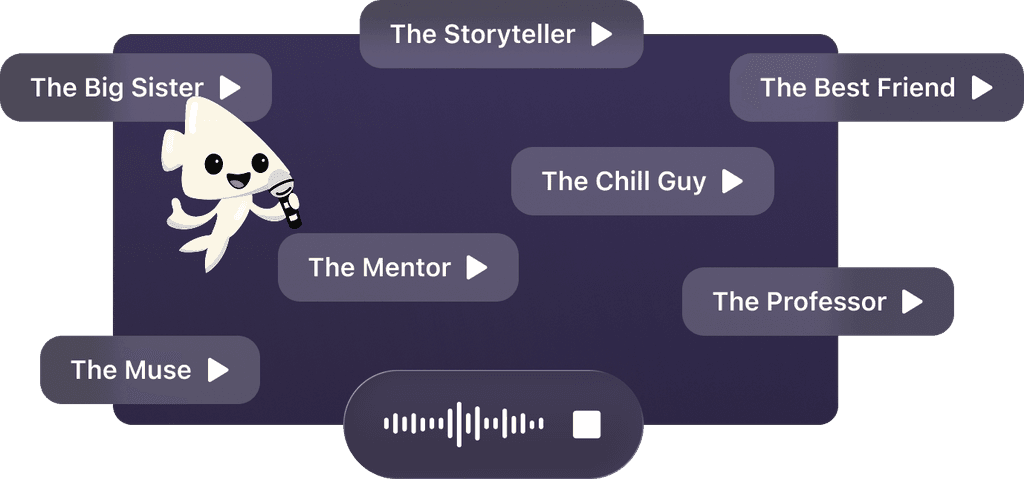
 Mode Personnaliser
Découvrez Reality Is Not What It Seems dans votre propre style d’apprentissage
Posez vos questions, choisissez votre style d’apprentissage et co-créez des idées qui vous correspondent vraiment.
Cree par des anciens de Columbia University a San Francisco
"Instead of endless scrolling, I just hit play on BeFreed. It saves me so much time."


"I never knew where to start with nonfiction—BeFreed’s book lists turned into podcasts gave me a clear path."


"Perfect balance between learning and entertainment. Finished ‘Thinking, Fast and Slow’ on my commute this week."
"Crazy how much I learned while walking the dog. BeFreed = small habits → big gains."
"Reading used to feel like a chore. Now it’s just part of my lifestyle."

"Feels effortless compared to reading. I’ve finished 6 books this month already."
"BeFreed turned my guilty doomscrolling into something that feels productive and inspiring."

"BeFreed turned my commute into learning time. 20-min podcasts are perfect for finishing books I never had time for."
"BeFreed replaced my podcast queue. Imagine Spotify for books — that’s it. 🙌"

"It is great for me to learn something from the book without reading it."
"The themed book list podcasts help me connect ideas across authors—like a guided audio journey."
"Makes me feel smarter every time before going to work"
Cree par des anciens de Columbia University a San Francisco
"Instead of endless scrolling, I just hit play on BeFreed. It saves me so much time."
"I never knew where to start with nonfiction—BeFreed’s book lists turned into podcasts gave me a clear path."
"Perfect balance between learning and entertainment. Finished ‘Thinking, Fast and Slow’ on my commute this week."
"Crazy how much I learned while walking the dog. BeFreed = small habits → big gains."
"Reading used to feel like a chore. Now it’s just part of my lifestyle."
"Feels effortless compared to reading. I’ve finished 6 books this month already."
"BeFreed turned my guilty doomscrolling into something that feels productive and inspiring."
"BeFreed turned my commute into learning time. 20-min podcasts are perfect for finishing books I never had time for."
"BeFreed replaced my podcast queue. Imagine Spotify for books — that’s it. 🙌"
"It is great for me to learn something from the book without reading it."
"The themed book list podcasts help me connect ideas across authors—like a guided audio journey."
"Makes me feel smarter every time before going to work"
"Instead of endless scrolling, I just hit play on BeFreed. It saves me so much time."
"I never knew where to start with nonfiction—BeFreed’s book lists turned into podcasts gave me a clear path."
"Perfect balance between learning and entertainment. Finished ‘Thinking, Fast and Slow’ on my commute this week."
"Crazy how much I learned while walking the dog. BeFreed = small habits → big gains."
"Reading used to feel like a chore. Now it’s just part of my lifestyle."
"Feels effortless compared to reading. I’ve finished 6 books this month already."
"BeFreed turned my guilty doomscrolling into something that feels productive and inspiring."
"BeFreed turned my commute into learning time. 20-min podcasts are perfect for finishing books I never had time for."
"BeFreed replaced my podcast queue. Imagine Spotify for books — that’s it. 🙌"
"It is great for me to learn something from the book without reading it."
"The themed book list podcasts help me connect ideas across authors—like a guided audio journey."
"Makes me feel smarter every time before going to work"
"Instead of endless scrolling, I just hit play on BeFreed. It saves me so much time."
"I never knew where to start with nonfiction—BeFreed’s book lists turned into podcasts gave me a clear path."
"Perfect balance between learning and entertainment. Finished ‘Thinking, Fast and Slow’ on my commute this week."
"Crazy how much I learned while walking the dog. BeFreed = small habits → big gains."
"Reading used to feel like a chore. Now it’s just part of my lifestyle."
"Feels effortless compared to reading. I’ve finished 6 books this month already."
"BeFreed turned my guilty doomscrolling into something that feels productive and inspiring."
"BeFreed turned my commute into learning time. 20-min podcasts are perfect for finishing books I never had time for."
"BeFreed replaced my podcast queue. Imagine Spotify for books — that’s it. 🙌"
"It is great for me to learn something from the book without reading it."
"The themed book list podcasts help me connect ideas across authors—like a guided audio journey."
"Makes me feel smarter every time before going to work"

Telecharger le resume de Reality Is Not What It Seems
Obtenez le resume de Reality Is Not What It Seems en PDF ou EPUB gratuit. Imprimez-le ou lisez-le hors ligne a tout moment.