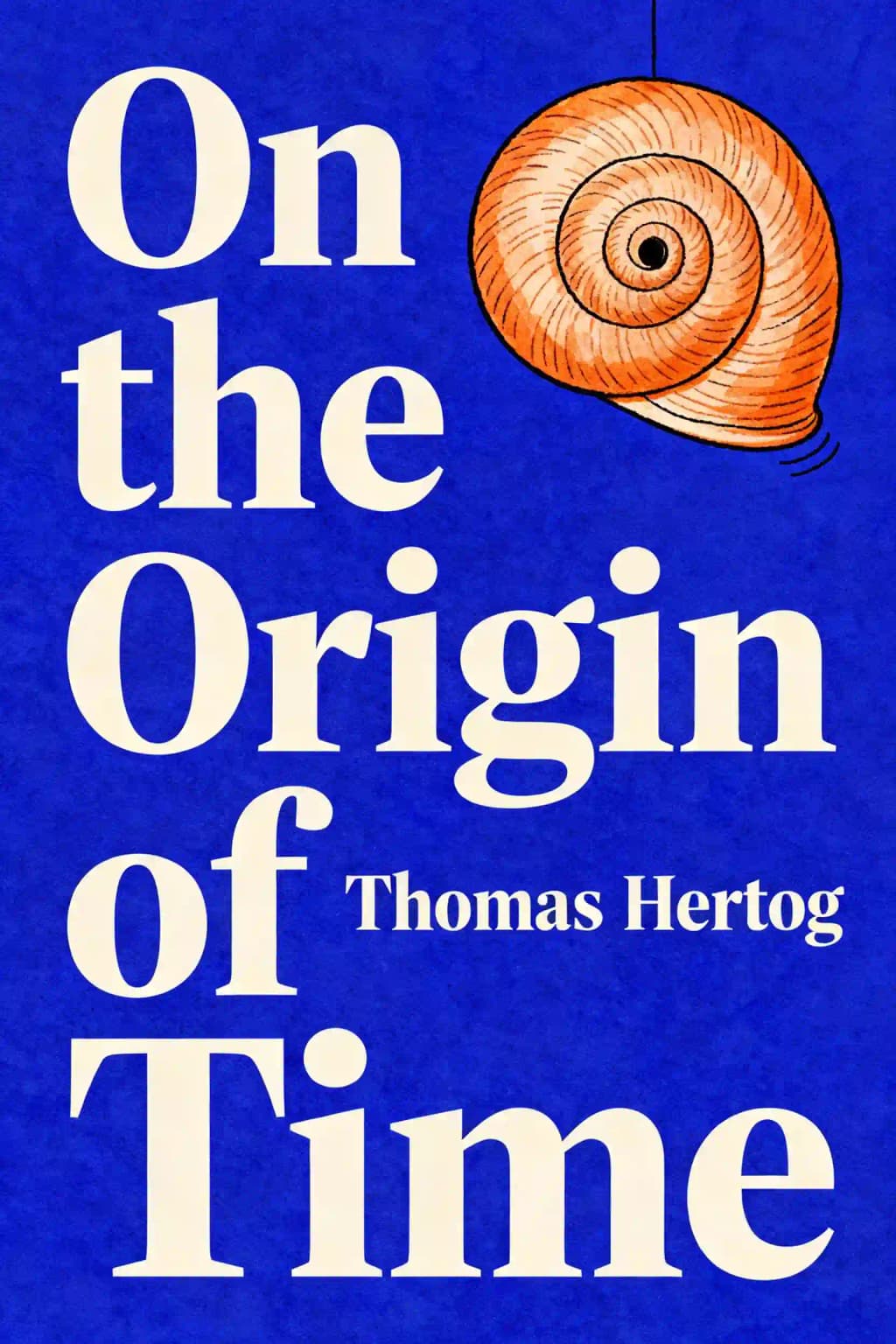
Stephen Hawking's final cosmological vision, co-developed with physicist Thomas Hertog, challenges our understanding of time itself. Like "McCullough-esque storytelling," this mind-bending journey explores how our universe's laws seem suspiciously perfect for life - leaving readers with profound questions about existence.
Ressentez le livre à travers la voix de l'auteur
Transformez les connaissances en idées captivantes et riches en exemples
Capturez les idées clés en un éclair pour un apprentissage rapide
Profitez du livre de manière ludique et engageante
A computer screen glowed in a Cambridge office, displaying a single line: "To boldly go where Star Trek fears to tread." Stephen Hawking sat motionless in his wheelchair, ALS having stolen his movement decades earlier, yet his mind burned with a question that would reshape our understanding of existence itself. On his wall hung a photo of him playing poker with Einstein and Newton on the Enterprise's holodeck-a playful reminder that the biggest gambles happen not in cards, but in cosmology. His greeting that June day in 1998 was characteristically blunt: "Andrei claims there are infinitely many universes. This is outrageous." When asked why other universes should matter, his answer cut to the heart of everything: "Because the universe we observe appears designed. Why is the universe the way it is? Why are we here?" This wasn't idle curiosity. It was the beginning of a twenty-year collaboration that would challenge the multiverse, redefine cosmic origins, and place humanity back at the center of the cosmic story-not through arrogance, but through a radical new understanding of how observation itself shapes reality. Imagine adjusting the universe's settings like tuning a radio. Turn gravity slightly stronger, and stars collapse into black holes before life can emerge. Weaken it, and stars never ignite. Our universe sits in an impossibly narrow sweet spot. The cosmic expansion history reads like a perfectly choreographed dance: rapid initial inflation, a slowdown allowing galaxies to form, then acceleration again. Each phase arrived exactly when needed. The precision goes deeper. Temperature variations in the cosmic microwave background-the afterglow of the big bang-measure exactly one part in 100,000. Slightly larger, and the universe would have collapsed into black holes. Slightly smaller, and galaxies would never have formed. Most staggering is dark energy's value: 10^-123 of what physics predicts it "should" be. This incomprehensibly small number allowed the universe to "hesitate" for eight billion years before accelerating again-creating the window for galaxies, stars, planets, and eventually us. It's like discovering that a hurricane randomly arranged grains of sand into a working computer.
Décomposez les idées clés de On the Origin of Time en points faciles à comprendre pour découvrir comment les équipes innovantes créent, collaborent et grandissent.
Condensez On the Origin of Time en indices de mémoire rapides mettant en évidence les principes clés de franchise, de travail d'équipe et de résilience créative.

Découvrez On the Origin of Time à travers des récits vivants qui transforment les leçons d'innovation en moments mémorables et applicables.
Posez n'importe quelle question, choisissez la voix et co-créez des idées qui résonnent vraiment avec vous.

Cree par des anciens de Columbia University a San Francisco
"Instead of endless scrolling, I just hit play on BeFreed. It saves me so much time."
"I never knew where to start with nonfiction—BeFreed’s book lists turned into podcasts gave me a clear path."
"Perfect balance between learning and entertainment. Finished ‘Thinking, Fast and Slow’ on my commute this week."
"Crazy how much I learned while walking the dog. BeFreed = small habits → big gains."
"Reading used to feel like a chore. Now it’s just part of my lifestyle."
"Feels effortless compared to reading. I’ve finished 6 books this month already."
"BeFreed turned my guilty doomscrolling into something that feels productive and inspiring."
"BeFreed turned my commute into learning time. 20-min podcasts are perfect for finishing books I never had time for."
"BeFreed replaced my podcast queue. Imagine Spotify for books — that’s it. 🙌"
"It is great for me to learn something from the book without reading it."
"The themed book list podcasts help me connect ideas across authors—like a guided audio journey."
"Makes me feel smarter every time before going to work"
Cree par des anciens de Columbia University a San Francisco

Obtenez le resume de On the Origin of Time en PDF ou EPUB gratuit. Imprimez-le ou lisez-le hors ligne a tout moment.