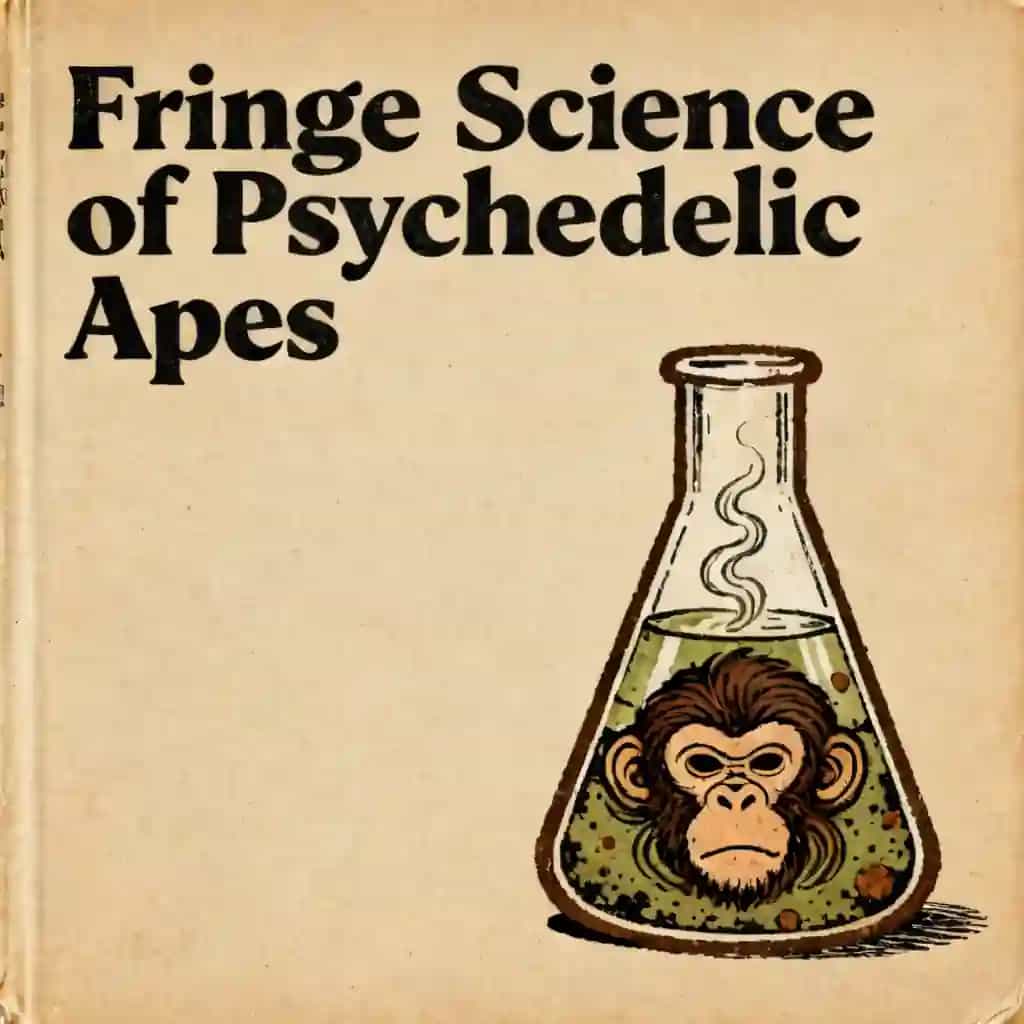
On the Fringe
Where Science Meets the Paranormal
Aperçu de On the Fringe
Where does science end and pseudoscience begin? Princeton historian Gordin's fascinating exploration challenges Karl Popper's falsifiability criterion and reveals how fringe ideas shape mainstream thought. Essential reading in an era where climate denial and anti-vaccination movements blur scientific boundaries.
Thèmes clés dans On the Fringe
- demarcation problem
- scientific legitimacy
- pseudoscience history
- boundary work
- institutional gatekeeping
Citations de On the Fringe
Today's pseudoscience might become tomorrow's breakthrough.
Boundaries aren't fixed barriers but dynamic interfaces.
Science is a human endeavor, subject to social forces.
Science's legitimacy is negotiated through social processes.
Peer review reflects existing power structures.
Personnages de On the Fringe
- Michael D. GordinAuthor and historian of science
- Alfred WegenerGeophysicist who proposed continental drift
- Barbara McClintockNobel-winning scientist who discovered jumping genes
- Stanley PrusinerScientist who identified prions as disease agents
- Barry MarshallPhysician who proved bacteria cause ulcers
À propos de l'auteur
À propos de l'auteur de On the Fringe
Michael D. Gordin, author of On the Fringe: Where Science Meets Pseudoscience, is a Rosengarten Professor of Modern and Contemporary History at Princeton University. He is a leading authority on the historical interplay between legitimate science and marginalized knowledge systems.
A Harvard-trained historian of science specializing in Russian history and nuclear weapons, Gordin explores how pseudoscience emerges and evolves alongside mainstream scientific paradigms. His acclaimed works include A Well-Ordered Thing (a cultural biography of Dmitrii Mendeleev) and Five Days in August (on the nuclear bombing of Japan), both praised for blending rigorous scholarship with accessible narratives.
A Guggenheim Fellow and member of Germany’s National Academy of Sciences, Gordin has contributed to The Los Angeles Review of Books and appeared on Carnegie Council podcasts. On the Fringe was named a top science book of 2021 by Science News and translated into German, cementing its role in debates about scientific legitimacy.
Telecharger le resume de On the Fringe
Obtenez le resume de On the Fringe en PDF ou EPUB gratuit. Imprimez-le ou lisez-le hors ligne a tout moment.
FAQ sur ce livre
On the Fringe examines the blurred line between science and pseudoscience, analyzing historical cases like Soviet-era technologies, astrology, and eugenics. Gordin argues that terms like "pseudoscience" lack fixed definitions and are shaped by cultural and political contexts. The book explores how once-respected fields become marginalized and how ideology influences scientific legitimacy.
This book is ideal for readers interested in the history of science, Cold War politics, or the sociology of knowledge. Academics, students, and enthusiasts of science communication will appreciate Gordin’s analysis of how societal forces categorize ideas as "mainstream" or "fringe".
Yes. Gordin’s nuanced exploration challenges assumptions about scientific legitimacy, offering fresh perspectives on historical and modern debates. Its accessible style balances scholarly rigor with engaging case studies, making it valuable for general readers and experts alike.
Gordin discusses vestigial sciences (e.g., astrology), hyperpoliticized projects (Nazi “German science”), and counterestablishment movements (creationism). He also examines Soviet biological weapons programs and the ideological suppression of genetics under Stalin.
The book rejects a universal definition, instead showing how pseudoscience is a fluid label applied to ideas contradicting dominant paradigms. Gordin emphasizes that disciplines like alchemy were once mainstream, while others gain pseudoscientific labels due to political or social pressures.
Vestigial sciences are fields like astrology or phrenology that lost scientific credibility but persist culturally. Gordin highlights how these were once integral to academic study, demonstrating how scientific validity shifts over time.
The book details Soviet achievements in the space race and bioweapons, framed as tools of political ambition. Gordin also analyzes the collapse of USSR scientific institutions and their global impact, emphasizing how state ideology shaped research priorities.
Some reviewers note limited depth on modern pseudoscience (e.g., climate denial) and uneven coverage of topics like ESP. However, these gaps don’t diminish the book’s core analysis of historical cases.
Unlike works focusing on debunking pseudoscience, Gordin’s historical approach reveals how societal power structures define scientific legitimacy. This contrasts with method-centric critiques, offering a unique lens on science’s cultural dimensions.
- Context matters: Scientific validity depends on era and culture.
- Politics shape science: Ideology often determines research trajectories.
- Boundaries are fluid: Fields like eugenics transition from mainstream to fringe
While focused on historical cases, Gordin’s framework applies to modern issues like anti-vax movements or AI hype. The book underscores how labeling ideas as “pseudoscience” often reflects power dynamics rather than objective truth.
Gordin’s expertise in Soviet history and nuclear science informs his analysis of state-driven research. His prior work on Russian science and Cold War politics enriches the book’s exploration of ideology’s role in shaping scientific discourse.