Chapitre 1
The Universe Doesn't Care What You Believe
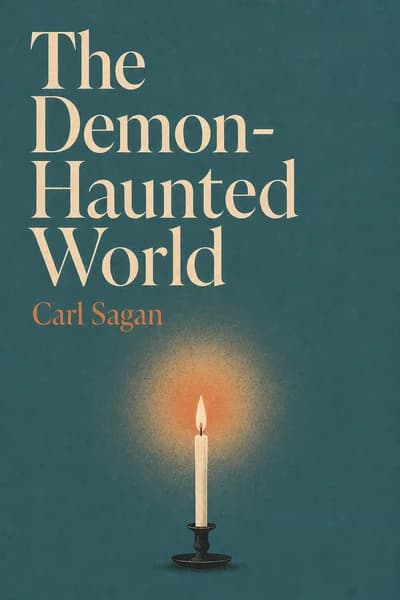
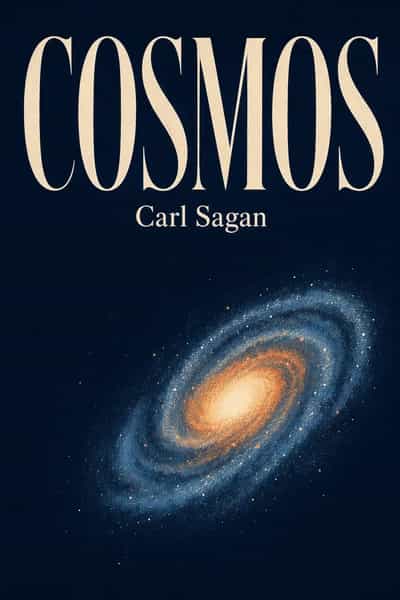
In the early 1990s, as the Cold War ended and America stood as the world's sole superpower, a book appeared that would become both cultural touchstone and urgent warning. "The Demon-Haunted World" arrived at a pivotal moment when science seemed ascendant yet pseudoscience flourished in popular culture. Carl Sagan-already famous from his "Cosmos" television series which had reached 500 million viewers worldwide-crafted what many consider his most important work. The book resonated so deeply that it remains on reading lists of luminaries from Barack Obama to Neil deGrasse Tyson. Though written before the internet age transformed information consumption, its warnings about the dangers of scientific illiteracy seem almost prophetic today. As Richard Dawkins noted, "If we could teach just one book to every citizen, this might be the one to choose." Through accessible prose that never condescends, Sagan builds a compelling case for why scientific thinking matters not just for technological progress, but for the very survival of democracy itself.
Chapitre 2
The Candle in the Darkness
As a scientist, I've experienced countless moments when someone excitedly asks me about aliens, psychics, or conspiracy theories rather than actual scientific discoveries. This pattern reveals something troubling: our educational system has failed to convey the wonder of genuine science while letting pseudoscience flourish unchecked. While hundreds of books promote myths like Atlantis, evidence from plate tectonics showing such a continent couldn't have existed remains largely inaccessible. With 95% of Americans "scientifically illiterate," pseudoscience fills the void that poor science popularization creates.
This ignorance becomes dangerous when citizens remain uninformed about global warming, pollution, population growth, and technological issues affecting jobs and wages. How can we make intelligent decisions without understanding these underlying issues? Yet rarely has even 1% of Congress had significant scientific background.
Medicine demonstrates science's value perfectly. While Hippocrates tried to bring medicine from superstition into science, the European Dark Ages saw knowledge lost and prayer replacing treatment. Today, diseases that once killed countless children have been mitigated through microbiology, sanitation, antibiotics, and genetics. Human lifespan has increased dramatically-from 20-30 years in pre-agricultural times to nearly 80 today.
Science isn't merely beneficial-it's necessary for our survival. Without science and technology, how could we address global population growth, develop efficient food production systems, or create contraception? Yet science has its dark side too-nuclear weapons, radiation experiments, environmental damage. Nearly half of scientists work for militaries. This explains why the mad scientist haunts our culture from Dr. Frankenstein to Jurassic Park.
But we can't simply reject science. Medical advances have saved more lives than all wars have taken. In polls, science remains among the most trusted professions. Science's power demands responsibility-long-term thinking beyond nationalism. Truth matters, even when uncomfortable. As Edmund Way Teale wrote, "It is morally as bad not to care whether a thing is true or not, so long as it makes you feel good, as it is not to care how you got your money."
Pseudoscience persists because it's easier than science-it avoids confrontation with reality and speaks to emotional needs science often leaves unfulfilled. It offers spiritual satisfaction, promises cures, and assures cosmic importance. At its heart lies the seductive idea that wishing makes it so, like childhood stories of genies granting wishes.
Chapitre 3
The Scientific Mindset: Wonder and Skepticism in Balance
Science doesn't understand everything-in a universe billions of light years across and billions of years old, mysteries will always remain. Yet contrary to some claims, scientists don't believe "what they find is all there is." Science is an imperfect instrument of knowledge, but it's the best we have-like democracy in this respect.
The scientific mindset balances imagination with discipline, inviting us to consider facts even when they contradict our preconceptions. It maintains alternative hypotheses while applying rigorous skepticism to both new ideas and established wisdom-an essential approach for democracy in changing times.
Science's power comes from its built-in error-correction. Every time we test ideas against reality, we're doing science; when we're uncritical, we slide into pseudoscience. Scientific papers include error bars-reminders that no knowledge is perfect. Scientists carefully characterize their understanding from tentative hypotheses to repeatedly confirmed laws of nature, though even these may need correction in extreme circumstances.
One great commandment of science is "Mistrust arguments from authority"-authorities must prove their contentions like everyone else. This independence makes science dangerous to less self-critical doctrines.
Science reveals how the world is, not how we wish it to be, requiring mental restructuring that may not be immediately satisfying. Yet when we overcome this barrier and understand science, we feel deep satisfaction-especially children born with natural curiosity.
In its encounter with nature, science elicits reverence and awe. Understanding becomes a celebration of joining with the cosmos's magnificence. The cumulative build-up of knowledge transforms science into something approaching a trans-generational meta-mind.
Science may be challenging to understand and may threaten cherished beliefs. When misused by politicians or industrialists, it can create weapons of mass destruction. But one thing is certain: science delivers results.
Not every scientific discipline can predict the future, but many do with stunning accuracy-from eclipses calculated to the minute a millennium in advance to medical treatments that actually work. While religions attempt to validate themselves through vague prophecies, science demonstrates reliable predictive power repeatedly before committed skeptics.
Chapitre 4
The Culture of Scientific Criticism
From PhD examinations where students face withering questions to contentious scientific meetings where speakers are immediately challenged, criticism permeates scientific culture. Manuscript submissions undergo anonymous peer review asking: Is this stupid? Is it interesting? Is it original? Has the author actually demonstrated what they claim?
Scientists don't enjoy criticism-everyone feels proprietary affection for their ideas. But the hard rule is: if ideas don't work, discard them. As Michael Faraday warned, we're tempted "to seek for such evidence and appearances as are in the favour of our desires, and to disregard those which oppose them... whereas the very reverse is required."
Some consider science arrogant, especially when it contradicts long-standing beliefs or introduces bizarre concepts. But science embodies humility-scientists don't impose their needs on Nature but instead humbly interrogate it. We acknowledge that revered scientists have been wrong, understand human imperfection, and insist on independent verification. We reward those who disprove established beliefs.
Even Newton's magnificent laws of motion weren't immune to scrutiny. Scientists persistently sought weaknesses in Newtonian physics, eventually finding that at high speeds and strong gravities, it breaks down-one of Einstein's great discoveries. General Relativity itself is now being tested, with physicists like Joseph Taylor and Russell Hulse verifying its predictions about gravitational waves through binary pulsar observations. This willingness to question even our most successful theories defines science, contrasting sharply with organized religions that rarely establish institutes to uncover doctrinal deficiencies or systematically test their teachings.
Science deserves widespread communication to every citizen for four essential reasons. First, it offers emerging nations a path out of poverty, making economies function while abandoning it leads to backwardness. Second, science provides crucial early warnings about the perils of our world-altering technologies, especially environmental dangers. Third, it teaches us profound truths about our cosmic context-our origins, nature and fate as a species. Finally, science's values mirror democracy's: both began in ancient Greece, both thrive on free exchange of ideas, both reject privileged positions, and both demand rigorous evidence and honest debate.
Chapitre 5
Seeing Faces in the Clouds
When we gaze at the Moon, our pattern-seeking minds connect the irregular bright and dark markings into familiar shapes-most commonly the Man in the Moon. Different cultures see different images: a woman weaving, an elephant, a rabbit, a jaguar. The bright features are ancient cratered highlands dating back 4.5 billion years, while the dark areas (maria) are younger lava flows. The "face" we perceive-with Mare Imbrium as the right eye and Mare Humorum as the mouth-is actually a record of ancient cosmic violence, yet we instinctively humanize these random patterns.
Humans are hardwired to recognize faces-an evolutionary advantage for social mammals where parent-child bonding is essential. This efficient pattern-recognition machinery sometimes leads us to see faces where none exist. Beyond the Moon, we find faces in geological formations like New Hampshire's Old Man of the Mountain, in clouds, vegetables, wood grain, and more. When these resemblances appear in religious contexts-like Jesus on a tortilla-believers often interpret them as divine signs, though they're merely statistical inevitabilities given enough samples.
Perhaps the most famous pattern-recognition error was the Martian "canals" first reported in 1877. Professional astronomers worldwide mapped hundreds of straight lines crisscrossing Mars, suggesting an advanced civilization managing water resources on a dying planet. Oddly, these canals rarely appeared in photographs. When Mariner 9 and Viking spacecraft finally mapped Mars in detail, no canals existed-they were merely an illusion created by the human visual system straining at the limits of resolution through Earth's turbulent atmosphere.
Our tendency to see meaningful patterns extends beyond Mars. On Venus, geologists found a Stalin-like portrait in Soviet radar imagery. Uranus's moon Ariel appears to show Bugs Bunny, while Titan displays a world-sized smiling face in infrared. The Milky Way contains nebulae resembling horses, owls and other forms, while galaxy distributions create "the Stickman." Mars itself offers a "happy face" crater and pyramid-shaped mountains in Elysium. These pyramids, reminiscent of Egypt's Giza plateau, are likely natural formations similar to Antarctica's wind-sculpted dreikanters-order emerging from chaos through natural processes.
In Cydonia on Mars lies a kilometer-wide formation resembling a stone face staring skyward. This feature, discovered by Viking orbiters in 1976, sparked extraordinary claims when NASA initially dismissed it as a trick of light and shadow. Some enthusiasts digitally enhanced the images and declared it a monumental sculpture within an ancient city with temples and fortifications. The tabloid press eagerly promoted these claims, suggesting Martian civilizations, interplanetary wars, and NASA cover-ups.
When examined carefully, however, the mystery quickly evaporates. In a landscape of 150 million square kilometers, finding one mesa that vaguely resembles a face isn't surprising, especially given our innate face-recognition abilities. The "nostril" proves to be merely missing data in the transmission, and enhancing the shadowed side reveals something decidedly un-facelike. While worth examining with better imaging technology, the formation is almost certainly natural geological sculpting over millions of years.
Chapitre 6
The Alien Abduction Phenomenon
Millions of Americans believe they've been visited by extraterrestrial beings, with many reporting similar experiences: paralysis while in bed, encounters with small gray beings, medical examinations focusing on reproductive organs, and missing time. The typical alien abduction narrative follows a pattern: waking paralyzed in bed, encountering small gray beings with large heads and expressionless faces who transport you through walls into a spacecraft. There, medical examinations focus on reproductive organs, sometimes involving sperm or egg collection. Abductees may see hybrid babies before being returned to bed.
Many don't immediately recall these experiences but recover "memories" later. A 1992 Roper poll claimed that based on reported experiences like sleep paralysis and missing time, 2% of Americans have been abducted-extrapolating to over 100 million people worldwide.
This raises critical questions: Why would advanced beings capable of interstellar travel use such primitive medical procedures? Why not simply clone cells rather than conduct repeated examinations? How could humans result from alien breeding when we share 99.6% of our genes with chimpanzees? The poll's methodology was fundamentally flawed, never directly asking about abductions but inferring them from unrelated experiences. Despite these issues, thousands have sought therapy or joined support groups for abductees, convinced their experiences were real.
The idea of flying saucers had dubious origins, tracing back to Richard Shaver's conscious hoax "I Remember Lemuria!" published in Amazing Stories in 1945. The magazine's editor, Ray Palmer, promoted the notion of disc-shaped alien spacecraft and government cover-ups before Kenneth Arnold's famous 1947 sighting. Arnold described objects that "flew like a saucer across water" rather than being saucer-shaped, but his misquoted description gave birth to the term "flying saucer."
Despite my fascination with extraterrestrial life and involvement in searching for it through spacecraft missions and radio signals, I've found no compelling evidence for alien visitation. Many UFO sightings from the 1950s can be attributed to high-altitude military balloon systems like "Skyhook," "Mogul," "Moby Dick," "Grandson" and "Genetrix." These balloons, used for weather measurements, radar reflection, and secretly for espionage with high-resolution cameras, can appear saucer-shaped from the ground.
The famous 1947 Roswell incident initially produced debris consistent with a crashed high-altitude balloon, though later accounts included exotic materials, hieroglyphics, and military threats to witnesses. A 1994 Air Force report identified the Roswell debris as remnants of "Project Mogul," a secret balloon-borne acoustic detection system designed to sense Soviet nuclear weapons explosions. The radar targets on these balloons were manufactured by toy companies, whose decorative icons were later misremembered as alien hieroglyphics.
Chapitre 7
Dreams, Hallucinations, and Memory
Hallucinations are remarkably common human experiences. Since the 1894 International Census of Waking Hallucinations, surveys have consistently shown that 10-25% of ordinary, functioning people experience vivid hallucinations at least once in their lifetime-typically hearing voices or seeing forms when no one is present.
Most of us recall being terrified as children by imaginary "monsters" that seemed absolutely real. This evolutionary adaptation makes sense-in a world once stalked by predators, such terror prevents defenseless toddlers from wandering away from guardians. In the West, we compound this by making children sleep alone in dark rooms, contrary to our entire evolutionary history where children nestled safely with adults.
Sleep paralysis explains many alien abduction accounts. This common syndrome occurs in the twilight between wakefulness and sleep, causing immobility, acute anxiety, labored breathing, and vivid hallucinations that can include strange beings, sexual components, and a weight on one's chest. These experiences have "the full force and impact of reality." Alien abductions notably occur mainly when falling asleep, waking up, or during monotonous activities like long drives.
Neurological factors also contribute. Temporal lobe epilepsy can trigger hallucinations nearly indistinguishable from reality, including encounters with strange beings, floating sensations, sexual experiences, and missing time. In one case, antiepileptic medication eliminated a woman's recurring alien abduction experiences.
The content of these hallucinations evolves with cultural knowledge. When Mars was thought habitable, people reported Martian visitors. After space probes revealed Mars and Venus to be uninhabitable, aliens conveniently began arriving from elsewhere. This cultural adaptation reveals much about their origin.
In an age when traditional religions face challenges from science, it seems natural that ancient gods and demons would be recast as aliens. Throughout history, humans have populated their cosmology with powerful non-human entities that mediate between mortal and divine realms.
Medieval belief held that demons ("powers of the air") could come down from the skies and have sexual relations with humans. These demonic seducers were called incubi (male) and succubi (female). During these encounters, the demons were perceived as a weight bearing down on the sleeper's chest-the Old English word "mare" meant incubus, and "nightmare" originally referred to the demon sitting on sleepers' chests.
Medieval demonology bears striking parallels to modern alien abduction accounts. According to Thomas Aquinas and Bonaventura, demons could collect human semen and transfer it to women. The Malleus describes devils "interfering with normal copulation and conception." These sexually obsessive non-humans who live in the sky, walk through walls, communicate telepathically, and perform breeding experiments mirror alien abduction narratives-minus the spacecraft.
Chapitre 8
The Malleability of Memory
Hypnosis blurs the line between imagination and memory, eliciting fantasy alongside true recollections with neither patient nor therapist able to distinguish between them. Courts have banned hypnotic testimony, and medical authorities consider memories surfacing under hypnosis less reliable than those recalled without it.
In controlled studies, subjects pre-screened to eliminate UFO enthusiasts readily produced detailed alien abduction narratives when simply told under hypnosis that they had been abducted. Even without hypnosis, memory proves highly malleable-Elizabeth Loftus demonstrated that subjects easily incorporate false information into their recollections of events, often with vivid conviction. Children prove especially vulnerable to suggestion, but adults remain susceptible too.
Even public figures demonstrate this fallibility-Ronald Reagan vividly described liberating Nazi concentration camp victims during WWII, though he spent the war in Hollywood, apparently confusing a movie plot with reality. Our memories are not pristine recordings but rather stories undergoing constant revision, with fragments stitched together on a fabric of our own devising.
Some alien abduction accounts may be disguised memories of sexual abuse, with the alien replacing a trusted abuser. Both sexual abuse therapists and alien abduction therapists use similar methods to recover supposedly repressed memories. While childhood sexual abuse is tragically real and widespread-with compelling physical evidence in many cases-most genuine cases have been continuously remembered, not suddenly recovered.
Psychologist Ulric Neisser notes that while repressed memories exist, false memories and confabulations are common, especially when suggestion is possible. Holocaust survivors demonstrate that even monstrous abuse can be continuously remembered. Richard Ofshe explains how therapists may inadvertently lead patients to construct false memories by reinterpreting vague sensations as evidence of abuse. The American Psychiatric Association warns it's impossible to distinguish with complete accuracy between true memories and those from other sources.
The Paul Ingram case exemplifies how "recovered memories" can destroy lives. As a respected Republican Party chairman and sheriff's deputy in Washington, Ingram's nightmare began when his daughter made accusations after an emotional religious retreat. Though he had no recollection of abuse, investigators, psychotherapists and his minister convinced him offenders often repress memories. Under hypnotic techniques, Ingram produced vague "memories" that were reinforced and expanded. When Berkeley's Richard Ofshe conducted a control experiment, suggesting a false scenario that Ingram then "remembered" with equal conviction, it demonstrated his extreme suggestibility. Despite this and the lack of physical evidence, Ingram pleaded guilty and received twenty years imprisonment, only later recognizing his memories were coerced.
Chapitre 9
The Fine Art of Baloney Detection
In our baloney detection kit, we need tools for skeptical thinking-methods to construct reasoned arguments and recognize fallacious ones. The kit includes: requiring independent confirmation of facts; encouraging substantive debate among knowledgeable advocates; recognizing that arguments from authority carry little weight; developing multiple competing hypotheses; avoiding attachment to your own hypotheses; quantifying claims when possible; ensuring every link in an argument's chain works; applying Occam's Razor to choose simpler explanations; and demanding falsifiability. Carefully designed experiments are essential-mere contemplation isn't enough, as Francis Bacon noted when he said "the subtlety of Nature is greater many times than the subtlety of argument." Control experiments and double-blind testing help eliminate bias.
A proper baloney detection kit identifies common logical fallacies including: misunderstanding statistics (like President Eisenhower's surprise that half of Americans have below average intelligence); inconsistency (planning for military threats while ignoring environmental dangers); non sequitur fallacies ("our nation will prevail because God is great"); post hoc reasoning (attributing aging to contraceptive pills); meaningless questions (irresistible force meeting immovable object); false dichotomies ("either you love your country or hate it"); short-term versus long-term thinking (ignoring children's programs to fight immediate crime); confusing correlation with causation (claiming education makes people gay); straw man arguments (misrepresenting evolution as "things fell together by chance"); suppressed evidence; and weasel words (calling wars "police actions" or "operations").
At science's borders lurk appealing but unexamined ideas-from Earth being inside rather than outside a sphere, to levitation through meditation, to the concept of an immaterial soul. Pseudoscience and superstition thrive in many forms: astrology, the Bermuda Triangle, Bigfoot, ghosts, auras, ESP, unlucky numbers, bleeding statues, lucky rabbit's feet, dowsing, communication with the dead, Nostradamus's prophecies, lunar effects on crime, palmistry, and countless other beliefs that persist without withstanding critical scrutiny. The list extends to examining entrails and smoke patterns, photographing past events like the crucifixion, talking elephants, people reading books with fingertips, failed prophets like Edgar Cayce, diet quackery, faith healers, and perpetual motion machines. Despite biblical prohibitions against divination and witchcraft, and despite Moses Maimonides explicitly calling these practices "lies and deceptions," pseudoscientific beliefs persist. The burden of proof rests on those making extraordinary claims, yet proponents often consider skepticism a liability rather than essential to scientific inquiry.
Chapitre 10
Science and Democracy: Twin Pillars of Freedom
The framers of the Constitution were students of history who sought to design a system that would keep us free despite our human weaknesses. Scientific thinking was fundamental to America's founders-the Declaration of Independence cited "the laws of nature and of nature's God" as the supreme authority. Benjamin Franklin was revered for his electrical physics work, while John Adams wrote that "All mankind are chemists from their cradles to their graves." The American revolutionaries were products of the European Enlightenment, which provided the intellectual foundation for the United States.
Thomas Jefferson identified himself as a scientist, evidenced by his home at Monticello filled with cutting-edge technology, scientific instruments, and an extensive library. Though nature destined him for science, pre-revolutionary Virginia offered no such opportunities, so he devoted himself to the revolutionary cause. Jefferson championed the radical idea that ordinary people, not kings or priests or dictators, should rule nations. He believed in the "light of science" that showed mankind wasn't born with "saddles on their backs" for a favored few "booted and spurred" to ride them. His study of history taught him that the rich and powerful would oppress if given opportunity, calling European governments systems that divided nations into wolves and sheep.
Jefferson worried that people are easily misled, so he advocated constitutional safeguards-separation of powers where various groups pursuing their interests would balance each other: Executive, Legislative and Judicial branches; House and Senate; States and Federal Government. He passionately insisted that citizens must understand government's risks and benefits, educate themselves, and participate in the political process. Without this engagement, "the wolves will take over."
Jefferson advocated freedom of speech so even unpopular views could be expressed. Though personally amiable, he believed skepticism was essential for responsible citizenship, arguing that education costs were trivial compared to the cost of ignorance. Part of citizenship is refusing intimidation into conformity-citizens should question everything leaders claim, develop independent thought, and educate themselves to make personal judgments. The Constitution's strength lies in allowing for continuing change, even of government itself, while guaranteeing the fullest expression of views.
The Constitution permits remarkable freedoms, even protecting those who would undermine its principles. The system founded by Jefferson and Madison offers expression to those who don't understand its origins and wish to replace it with something different. Some advocate for intolerance and religious nationalism rather than pluralism, yet their views remain protected under the Bill of Rights. The protection for everyone else is to use that same Bill of Rights to communicate its indispensability to all citizens. As John Stuart Mill argued, silencing opinions robs us of either truth or a deeper understanding of truth through its collision with error. Jefferson similarly warned that a society trading liberty for order would lose both.
Science and freedom are interdependent-science requires openness while freedom in technological society requires scientific skepticism. When states supervise the formation of public opinion, truth becomes malleable. With absolute media control, it's possible to rewrite the memories of millions within a generation, typically to maintain power or serve leaders' psychological needs. Today, with realistic fabrication of images technologically feasible, critical thinking in decline, and media concentrated in few hands, restructuring societal memories seems increasingly possible.
Science naturally challenges established institutions and transcends national boundaries. Scientists are cosmopolitan in attitude and often see through efforts to divide humanity. "There is no national science," said Anton Chekhov, "just as there is no national multiplication table." Scientists like Andrei Sakharov, Albert Einstein, Leo Szilard, and Fang Li-zhu have disproportionately served as social critics, challenging their own nations' policies despite personal risk. Science's commitment to truth independent of cultural bias makes it naturally resistant to ethnocentrism, xenophobia, and nationalism.
Chapitre 11
The Path to Freedom Through Knowledge
Frederick Bailey, a slave child in 1820s Maryland, experienced the brutality of slavery firsthand. Slaves were deliberately kept illiterate, as reading was recognized as the pathway to mental freedom. When sent to work in Baltimore for the Auld family, young Frederick secretly began learning to read with help from his master's wife until her husband discovered and stopped the lessons. Captain Auld's angry outburst-that literacy would "spoil" a slave and make him unfit for bondage-revealed to Bailey the liberating power of reading. He continued teaching himself and other slaves before eventually escaping to New England, changing his name to Frederick Douglass, and becoming a great orator and leader.
Books transformed human knowledge by allowing accurate preservation of information across generations. They permit us to interrogate the past, understand diverse perspectives, and access humanity's greatest insights. Books are patient teachers that accompany us everywhere. While African-American literacy has risen dramatically since Emancipation-from 5% in 1860 to 96% by 1969-questions remain about education quality. A national survey reveals over 40 million barely literate American adults, with literacy strongly correlated with economic status. The marginally literate are less likely to vote or understand ballot initiatives that might help them, undermining democracy at its roots.
Despite Frederick Douglass's remarkable self-education, literacy remains elusive for many. Children naturally learn to read when surrounded by readers who take joy in books. Without this environment, mastering the complex rules of written language seems pointless. When education is inadequate, content feels culturally alien, or children face neglect and exploitation, many conclude reading isn't worth the effort. Beyond these obstacles, poverty creates additional barriers through malnutrition. Even mild undernourishment causes cognitive impairment as the body prioritizes survival over learning. Iron-deficiency anemia affects a quarter of low-income American children, damaging attention span and memory. With childhood poverty rates the highest in the industrialized world, programs like WIC and Head Start help but reach too few children. Though America once boasted exceptional literacy rates that drove its prosperity, today many "literate" Americans struggle with basic reading tasks. Illiteracy perpetuates poverty across generations, creating enormous social costs in healthcare, crime, education, and lost potential.
After escaping slavery at twenty, Frederick Douglass settled in New Bedford with his bride Anna Murray, working as a laborer. Four years later, on August 16, 1841, he delivered a stunning debut speech to the Massachusetts Anti-Slavery Society that demolished myths about African-Americans' "natural servility." His eloquent analysis moved abolitionist William Lloyd Garrison to ask the audience if they'd been listening to "a thing or a man?" The crowd roared back "A man!" and pledged never to return him to bondage. Douglass became an influential author, editor, speaker, and the first African-American to hold a high government advisory position. During the Civil War, he consulted with President Lincoln, advocating for arming ex-slaves and making emancipation a war objective. Though scathing in his criticism of Southern Christianity as "a mere covering for the most horrid crimes," Douglass recognized that Northern Christian communities, especially Quakers, fueled the abolitionist movement. He championed not only Black freedom but also Native American rights and women's suffrage, supporting Elizabeth Cady Stanton at the 1848 Seneca Falls Convention. He died on February 20, 1895, after appearing at a women's rights rally.
The story of Frederick Douglass exemplifies the power of knowledge to liberate minds and transform society. Like science itself, literacy offers a path to freedom-not just for individuals, but for entire civilizations struggling against the darkness of ignorance, superstition, and oppression. The candle of science, with its twin flames of wonder and skepticism, illuminates our way forward through a universe that remains largely unknown. By embracing both the humility to question our deepest convictions and the courage to follow evidence wherever it leads, we might yet fulfill the promise of both science and democracy: a world where truth matters, where reason prevails over dogma, and where the light of understanding continues to push back the shadows of our demon-haunted world.