Chapitre 1
When Truth Becomes Fiction, and Fiction Becomes Reality
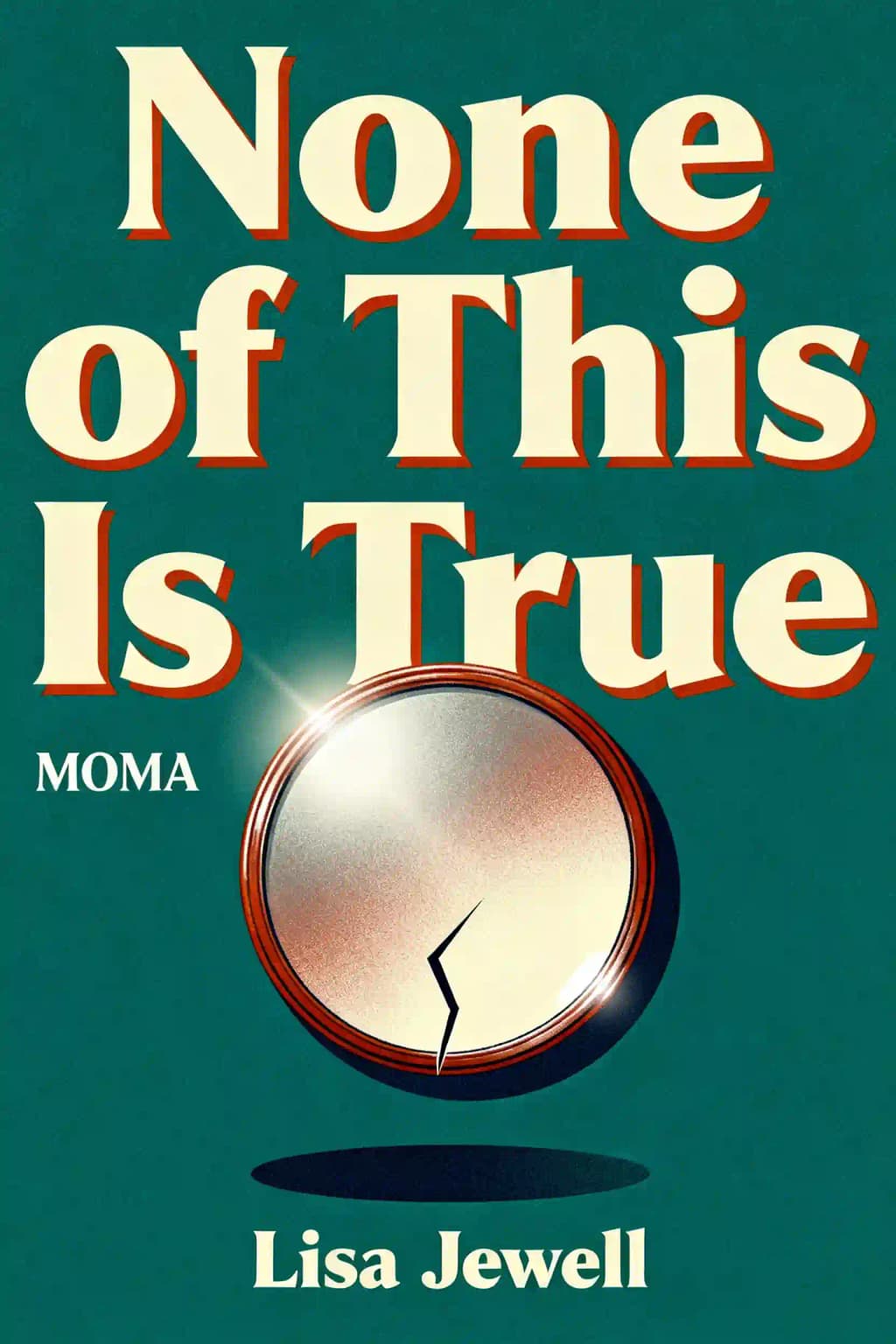
Imagine meeting someone who shares your exact birthday-not just the date, but the same hospital, same year. A cosmic coincidence that feels like fate. For podcaster Alix Summer, this chance encounter with Josie Fair at a pub becomes the catalyst for a story so twisted and dark that it will eventually be adapted into a Netflix true crime series. What begins as a simple podcast concept spirals into a deadly obsession, leaving a trail of manipulation, violence, and death. Lisa Jewell's psychological thriller "None of This Is True" has captivated readers worldwide, becoming a New York Times bestseller and earning praise from Stephen King, who called it "the best suspense novel I've read this year." The novel's exploration of truth, perspective, and the dangers of letting strangers into our lives resonates deeply in our social media age, where we constantly navigate the blurry lines between public personas and private realities.
Chapitre 2
The Fatal Connection of Birthday Twins
On June 8, 2019, Alix Summer and Josie Fair cross paths in a pub bathroom, discovering they were born on the same day, in the same year, at the same hospital. For Alix-a successful podcaster with a beautiful home, handsome husband, and two adorable children-this is a mildly interesting coincidence. For Josie-a plain, denim-clad alterations shop worker trapped in a marriage with a much older man-this meeting feels monumental, as if the universe has finally offered her a connection to something better.
When they meet again outside their children's school, Josie seems desperate to speak with Alix. Despite initial reluctance, Alix agrees to visit Josie at her workplace. There, Josie proposes an unusual podcast concept: instead of interviewing women who have already transformed their lives (Alix's usual format), why not document someone about to change their life? Josie hints at dark secrets in her thirty-year marriage to Walter, a man twenty-seven years her senior whom she met when she was just fifteen and he was forty-two.
The premise intrigues Alix's journalistic instincts. Unlike her polished, successful previous subjects, Josie represents something raw and authentic-a woman trapped in stasis, ready to break free. What begins as professional curiosity soon becomes something more complex as Alix invites Josie into her recording studio, her home, and ultimately her life.
"I'd probably tell thirteen-year-old me to run for the hills and not look back," Josie admits during one recording session, her eyes suddenly sharp and clear as she reflects on meeting Walter. This vulnerability draws Alix deeper into Josie's world, even as subtle warning signs begin to appear-Josie's unexplained disappearance from a cafe, her peculiar fixation on Alix's possessions, her increasingly probing questions about Alix's marriage.
The birthday connection that initially seemed like a charming coincidence gradually transforms into something more sinister-a carefully calculated entry point that Josie has seized upon to infiltrate Alix's life. Their shared birthday isn't just a coincidence; it's the first thread in a web of manipulation that will ultimately trap them both.
Chapitre 3
The Predator in Plain Sight
Walter Fair emerges as a complex figure whose true nature remains elusive throughout the narrative. Initially presented through Josie's testimony as a predatory older man who groomed her as a teenager, Walter appears to embody the classic abuser archetype. "I was fourteen years old when I realized Walter wanted me," Josie tells Alix during their recording sessions. "It was like an invisible monster in the room."
Josie describes how Walter pursued her when she was underage, eventually proposing on her sixteenth birthday before taking her virginity. Their relationship progressed quickly into marriage, with Walter maintaining strict control over her movements and relationships. According to Josie, this pattern of predatory behavior continued decades later when Walter allegedly seduced Brooke Ripley, her daughter Roxy's sixteen-year-old friend.
Yet when Walter appears in person at Alix's dinner party, he presents differently than Josie's description-a "nondescript, balding, faded, bespectacled" man whom Alix had initially mistaken for Josie's father. During a private conversation with Alix, Walter offers a contradictory perspective, warning her that Josie has "an elastic relationship with the truth" and tends to create her preferred reality when she doesn't like actual reality.
"She gives this impression of being simple," Walter tells Alix, "but there's actually too much going on in her head." His warning-"Keep your wits about you"-takes on increasing significance as the narrative unfolds.
The complexity deepens when we later learn from Roxy that Walter wasn't the monster Josie portrayed. Rather than abusing his daughters, he appears to have been their protector, even supporting Erin's successful gaming career as "Pops" in her online persona "Erased and Pops." What initially seemed like a clear case of predatory behavior becomes murkier with each new revelation, forcing readers to question whose version of events to believe.
This ambiguity surrounding Walter's character serves as a microcosm for the novel's central theme: truth is subjective, malleable, and often distorted by the lens through which we view it. Walter may be both victim and villain, just as Josie may be both perpetrator and prey.
Chapitre 4
Fractured Families and Buried Secrets
The Fair family's dysfunction runs deep, with layers of trauma, resentment, and hidden truths that gradually unravel throughout the narrative. Josie and Walter's daughters, Roxy and Erin, become central to understanding the family's complex dynamics.
Initially, we learn about the daughters through Josie's perspective and the recollections of others. Mandy, the school office manager, describes Roxy as "wild" and "oppositional," while Erin was "the sweetest thing" but possibly "on the autism spectrum." She recalls a disturbing incident where Erin came to school with a broken arm allegedly caused by Roxy, leading to social services involvement and "horrible scenes" with Walter while Josie remained oddly detached with a "blank look."
As the story progresses, we discover the shocking extent of Josie's neglect toward Erin. She confesses to Alix that she's been feeding Erin by leaving pureed baby food outside her bedroom door for months, never actually entering the room despite the growing smell and squalor inside. "I just get to the door and I can't do it," Josie admits, revealing her complete abdication of parental responsibility.
When Roxy finally appears in person, she offers a radically different perspective on the family dynamics. She portrays her mother as pathologically jealous and "sick in the head," claiming that Josie resented any relationship her daughters formed with their father or others. Roxy reveals that her father was simply part of Erin's gaming stream as "Pops"-a popular element of her sister's online persona-not the abuser Josie described.
Most shockingly, we eventually learn that Josie may have been responsible for the disappearance of Brooke Ripley, Roxy's girlfriend, whom Josie had claimed was seduced by Walter. The truth appears to be far more disturbing-that Josie, not Walter, was the family's true monster.
This complex family portrait illustrates how secrets fester within domestic spaces, how abuse can wear many faces, and how the stories we tell about our families can both reveal and conceal the truth. The Fair family's dysfunction serves as a dark mirror to Alix's own family struggles, suggesting that the line between functional and dysfunctional families may be thinner than we care to admit.
Chapitre 5
The Seductive Power of Other Lives
Throughout the novel, Jewell masterfully explores the human tendency to covet others' lives-to peer through windows, both literal and metaphorical, into existences that seem better than our own. This theme manifests most prominently in Josie's obsession with Alix's seemingly perfect life.
When Josie first visits Alix's home, she's overwhelmed by its beauty-the ink-blue walls, golden lights, spacious kitchen with stone-gray cabinets and creamy marble countertops. She marvels at how Walter would remove their daughters' artwork from the fridge because it looked "messy," while Alix's home has an entire wall dedicated to children's art. The enchanting garden with fairy lights, the professional studio shed, even the cartoon-like Siberian cat-everything about Alix's world seems magical compared to her own.
This coveting extends beyond material possessions to lifestyle and relationships. Josie envies Alix's sisterly bonds, watching from outside as Alix and her sisters arrive at her house "with laughter and warmth that Josie deeply envies." She begins stealing small items from Alix's home-a Nespresso pod, a teaspoon, hand soap-tucking them away in her underwear drawer like talismans that might somehow transfer Alix's charmed life to her own.
"Walking home from Alix's house, Josie's head spins as she reflects on the stark contrast between their lives," Jewell writes, capturing the intoxicating allure of glimpsing a life that seems superior to one's own. This envy eventually transforms into something more sinister-a determination to not just observe Alix's life but to infiltrate it, dismantle it, and perhaps even replace it with her own narrative.
The novel suggests that social media has amplified this tendency, making others' lives more visible while often presenting curated, idealized versions of reality. Josie describes herself as "a consummate lurker who just looks without engaging," spending hours scrolling through Alix's Instagram, seeing the expected lifestyle content-"kitchen islands, redheaded children on beaches, cocktails and cats." This passive consumption of others' highlight reels feeds her dissatisfaction with her own existence.
This theme resonates powerfully in our current cultural moment, where the boundaries between public and private have blurred, and where the gap between how lives appear and how they're actually lived has never been wider or more psychologically damaging.
Chapitre 6
Truth, Lies, and the Stories We Tell Ourselves
"None of This Is True" is fundamentally about the malleability of truth and the stories we construct to make sense of our lives. The novel's title itself challenges readers to question every narrative presented, to recognize that truth is rarely absolute and often depends on perspective.
Josie's relationship with truth is particularly complex. Walter warns Alix that Josie has "an elastic relationship with the truth" and tends to create her preferred reality when she doesn't like actual reality. This becomes increasingly evident as inconsistencies emerge in her stories-timeline gaps in her account of fleeing Walter's abuse, contradictory claims about her daughter Erin's capabilities, and shifting narratives about her relationship with Walter.
Even in the novel's final pages, as Josie reflects on what she believes is the truth-finding Roxy kneeling over Brooke Ripley's body, saying "I didn't mean to do it"-we're left uncertain whether this is genuine memory or another self-serving fabrication. "I am so incredibly sure that this is the truth," Josie insists, yet her certainty only heightens our doubt.
Alix, too, constructs narratives that serve her needs. She initially ignores her instincts about Josie's strange behavior because the podcast project offers an escape from her marital dissatisfaction and professional stagnation. Later, she admits to Roxy: "I was filled with anger and resentment... and your mum came along with her stories that made my problems pale in comparison." She confesses she deliberately ignored her instincts, comparing it to "closing your eyes while driving just to see what happens."
The novel's structure reinforces this theme by presenting multiple perspectives-Josie's podcast testimonies, Walter's warnings, Roxy's contradictory account, and eventually a Netflix documentary that attempts to piece together the truth from these conflicting narratives. This kaleidoscopic approach suggests that truth is rarely singular or simple, but rather a composite of competing versions, none entirely reliable.
In our "post-truth" era, where facts are increasingly contested and subjective experience is prioritized, Jewell's exploration of how easily truth can be manipulated feels particularly relevant. The novel suggests that the stories we tell-about ourselves, our relationships, our pasts-shape our reality in profound ways, sometimes with devastating consequences.
Chapitre 7
The Dark Side of Motherhood
One of the novel's most disturbing themes is its unflinching examination of maternal failure and the societal expectation that motherhood automatically confers virtue. Through Josie, Pat O'Neill, and to some extent Alix, Jewell explores how mothers can damage their children through neglect, jealousy, and self-absorption.
Josie's relationship with her daughters represents the most extreme maternal failure. She admits to leaving pureed baby food outside Erin's bedroom door for months without entering the room, despite the growing smell and her daughter's obvious need for intervention. When Alix expresses concern about Erin walking alone at 3 a.m. after fleeing their home, Josie displays a strange certainty that her daughter is safe, revealing a profound disconnection from maternal instinct.
More disturbing is Josie's apparent jealousy toward her daughters' relationships with others. Roxy describes her mother as pathologically envious of anyone her daughters cared about, including Brooke Ripley. This jealousy may have culminated in violence, with evidence suggesting Josie might have been responsible for Brooke's disappearance.
Pat O'Neill, Josie's mother, represents another form of maternal failure. Described as a narcissist who prioritized her community work over her daughter's needs, Pat speaks about Josie with thinly veiled loathing. She describes being "terrified" upon seeing her newborn and feeling trapped by motherhood, which derailed her academic ambitions. This generational pattern of maternal ambivalence suggests how damage can be transmitted from mother to daughter.
Even Alix, presented as a more attentive mother, shows moments of disconnection. During her children's important milestones-Eliza's final primary school assembly, for instance-she's mentally absent, consumed by her own problems. "What should be a significant milestone-the end of Eliza's primary education-barely registers with Alix, who's consumed by Nathan's disappearance."
Through these portraits of maternal failure, Jewell challenges the romanticized notion that motherhood automatically transforms women into selfless nurturers. Instead, she presents motherhood as a complex, sometimes dark experience that can bring out both the best and worst in women, particularly those carrying their own unresolved trauma.
Chapitre 8
The Exploitation of Tragedy
As the novel progresses, it evolves into a sophisticated meta-commentary on true crime entertainment and the complex ethical questions surrounding the transformation of real tragedies into consumable content. This theme becomes particularly prominent after Nathan's death, when Alix decides to create a podcast from the recordings and interviews she's gathered - a decision that carries profound implications about the commodification of personal trauma.
Initially, Alix approaches Josie's story with genuine journalistic curiosity and a degree of professional detachment. She envisions creating an innovative podcast about a woman on the cusp of transformation rather than the typical true crime narrative of past events. Her original concept focuses on redemption and change - themes that become increasingly complicated as events spiral into tragedy. The shift in her approach reflects a larger industry pattern where human suffering becomes content, packaged and produced for mass consumption.
When tragedy strikes, Alix faces a pivotal choice about how to use her accumulated material. Rather than stepping away from the project, she deliberately leans into the true crime angle, partnering with "famous true crime podcaster Andrea Muse" to produce something "completely unforgettable." This collaboration marks a significant shift from her initial vision to a more commercially viable format, raising questions about artistic integrity versus commercial success.
The podcast achieves immediate viral status, drawing an ever-expanding circle of participants into its narrative web. "Brooke Ripley's mother, Josie's school friend Helen, and Walter's son from Canada" all come forward, each adding layers of complexity to the story. The podcast's success demonstrates the public's insatiable appetite for true crime content, while simultaneously highlighting the ethical implications of this hunger. Each new interview, each additional perspective, while making the series "increasingly multilayered and gripping," also raises questions about the boundaries between documentation and exploitation.
This success culminates in a Netflix adaptation titled "Hi! I'm Your Birthday Twin!" - a choice that transforms an innocent greeting into something darkly ironic. The adaptation represents the ultimate commercialization of personal tragedy, taking intimate moments of pain and loss and reformatting them for mass entertainment.
Josie's scathing response to the podcast, dismissing it as "tacky true crime rubbish," serves as a powerful indictment of the genre itself. While Josie's moral authority is questionable, her criticism cuts to the heart of the ethical dilemma: Can true crime ever be more than exploitation? Does the genre's educational or cautionary value justify its existence, or does it inevitably reduce human suffering to entertainment?
The novel's structure cleverly implicates readers in this ethical quandary by partially presenting the narrative as a Netflix documentary. This format forces readers to confront their own role as consumers of true crime content, challenging them to examine their participation in what might be considered a form of collective voyeurism. Jewell's approach suggests that the true crime genre's ethical problems extend beyond creators to encompass the audience that demands and consumes such content.
Through this multilayered examination, the novel raises fundamental questions about responsibility, ethics, and the fine line between documentation and exploitation in an age where personal tragedies can become global entertainment with frightening speed.
Chapitre 9
When Strangers Become Dangerous Intimates
Perhaps the most chilling aspect of "None of This Is True" is its masterful exploration of how easily strangers can infiltrate our lives, particularly when we're vulnerable or seeking connection. The novel serves as a haunting cautionary tale about the dangers of letting down our guard too quickly with people we don't truly know - a theme that resonates powerfully in our digital age where the line between public and private life increasingly blurs.
Alix's initial decision to work with Josie seems perfectly reasonable - a professional choice driven by journalistic interest and the potential for compelling content. Yet she gradually allows Josie deeper access to her life: first inviting her into her home studio for podcast recordings, then introducing her to her children during casual encounters, later confiding about her marital problems over wine-filled evenings, and eventually even housing her after Josie claims to have been violently abused by Walter. Each step seems logical in isolation, yet together they form a dangerous pattern of escalating intimacy.
This progression from professional acquaintance to intimate confidante happens so gradually that Alix doesn't recognize the danger until it's too late. The novel expertly demonstrates how predators exploit social conventions and expectations - particularly those around supporting other women. When Josie appears at her door bloodied and claiming abuse, Alix's compassion overrides her growing concerns about Josie's inconsistent stories and boundary-pushing behavior. "Alix brings her inside, horrified, and begins cleaning her wounds," unable to turn away someone in apparent distress despite her misgivings. This scene perfectly captures how social conditioning to be helpful can override our instinctive warning signals.
Only after Nathan's disappearance does Alix fully comprehend how thoroughly she's been manipulated. "I was just a cog," she realizes. "And so was Nathan." She sees that Josie deliberately targeted them both, extracting information about their marriage during seemingly casual conversations, studying their daily routines through innocent-seeming visits, and methodically planning her intrusion into their lives. The revelation of Josie's calculated approach - from choosing Alix based on her public profile to manufacturing situations that would deepen their connection - is particularly disturbing.
The novel suggests that our modern emphasis on empathy and belief in victims' stories, while generally positive and necessary, can sometimes be weaponized by those with malicious intent. Alix's internal struggle exemplifies this dilemma: "Despite her instinct to believe women who claim abuse, something about Josie's story doesn't sit right." This tension between compassion and caution becomes a central theme, forcing readers to question their own boundaries and judgment.
In our increasingly isolated society, where many crave authentic connection and social media creates illusions of intimacy, Jewell warns of the vulnerability that comes with opening our lives to others. The boundary between healthy connection and dangerous enmeshment can be crossed before we recognize the threat, particularly when someone studies us carefully enough to present exactly what we need or want to see. The novel serves as a stark reminder that in an age of carefully curated online personas and instant connections, the art of true discernment becomes increasingly crucial.
Chapitre 10
The Aftermath of Shattered Lives
The novel's final sections explore how survivors attempt to rebuild after tragedy. Following Nathan's death, Alix faces not only overwhelming grief but practical challenges-raising her children alone, maintaining their home without Nathan's income, and deciding how to move forward professionally.
Initially, Alix cannot even enter her recording studio, feeling it's "full of Josie." She focuses on helping her children through grief and then navigating the additional challenges of the pandemic. Eventually, financial reality forces her to confront her recordings and create something from the "truly unbelievable story" she possesses.
The podcast becomes both a financial lifeline and a way for Alix to process her trauma, suggesting that creative work can sometimes offer a path through grief. Yet the novel doesn't present this as a simple healing narrative-Alix remains haunted by Nathan's absence and her own role in the events that led to his death.
When Katelyn Rand reveals that Nathan had been completely faithful-"You had a husband who adored you, adored his kids, adored his life. A husband who didn't want anyone else. Only you"-Alix must confront the painful irony that her suspicions about her marriage were unfounded, making Nathan's death even more tragic.
The novel's final image of Alix asking her son to help clasp Nathan's bracelet on her wrist and asking if they're "good" as a family of three captures both the enduring pain of loss and the tentative steps toward rebuilding. Leon's simple confirmation that they are "good" offers a small moment of hope amid the devastation.
For Erin and Roxy, too, there's a sense of possible healing as they reunite at Erin's hospital bedside. Despite the trauma they've endured, their reconnection suggests the possibility of recovery through genuine human connection-the very thing that Josie sought but could never authentically achieve.
Through these portraits of aftermath, Jewell suggests that while trauma permanently alters us, it doesn't necessarily define us. The characters who survive Josie's manipulation begin to forge new paths forward, damaged but not destroyed by their encounter with her particular brand of malevolence.