Chapitre 1
The Journey Within: Discovering Your Inner Family
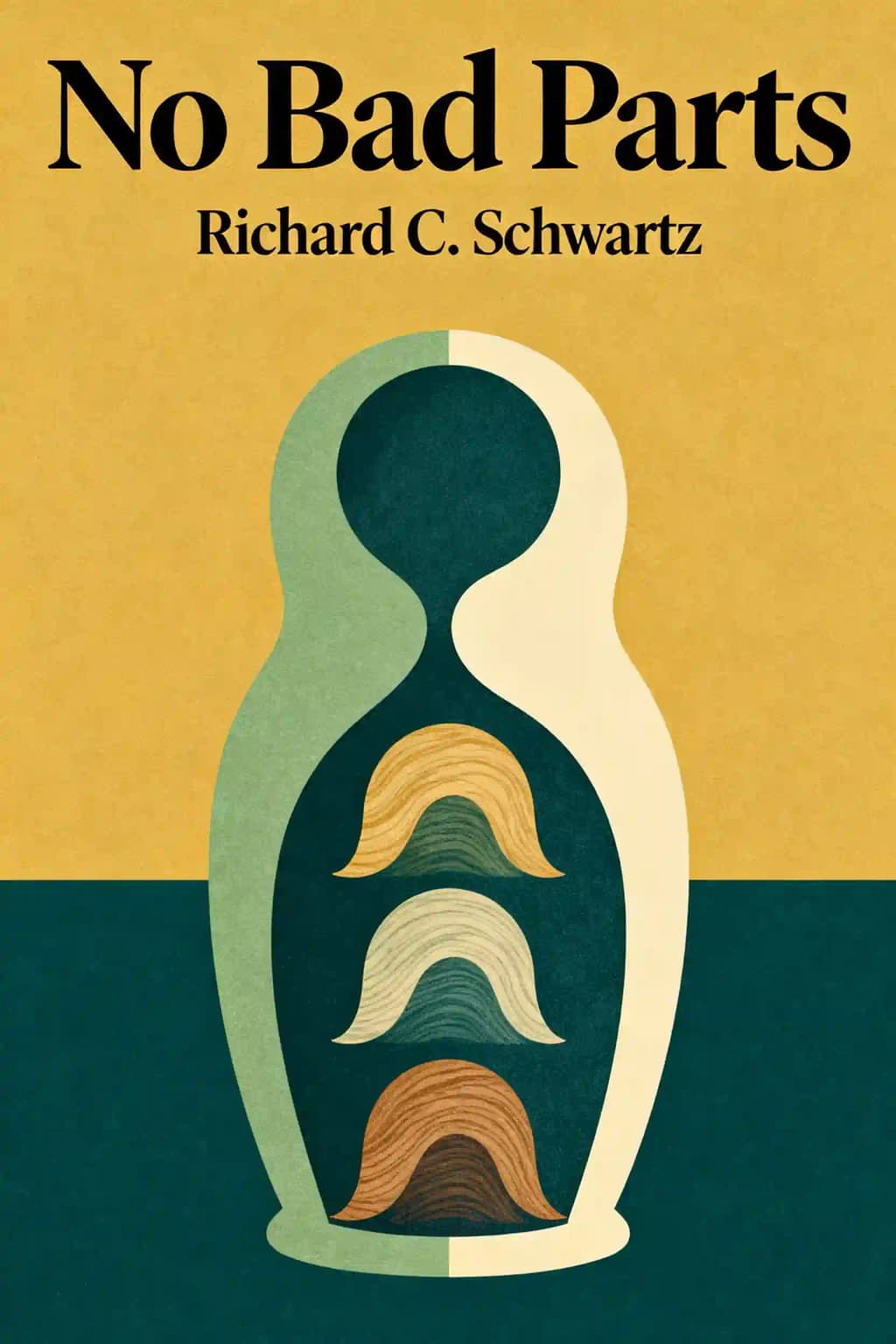
Have you ever felt at war with yourself? Perhaps you've experienced moments when one part of you wants to eat that chocolate cake while another part screams about your diet. Or maybe you've found yourself sabotaging a relationship even as another voice inside begs you to stop. According to Dr. Richard Schwartz, this inner conflict isn't a sign of weakness or mental illness-it's actually the natural state of being human. His groundbreaking therapeutic approach, Internal Family Systems (IFS), has revolutionized how we understand the human mind and has garnered enthusiastic endorsements from figures like Alanis Morissette, Bessel van der Kolk, and Gabor Mate. Featured on Oprah's SuperSoul Sunday and embraced by millions worldwide, IFS offers a radical proposition: there are no bad parts within us, only parts playing roles they were forced into by circumstance. This perspective doesn't just change therapy-it changes everything about how we relate to ourselves and others.
Chapitre 2
We Are All Multiple: The Reality of Our Inner Family
The dominant belief in Western psychology has long been that we possess a single, unified mind-what Schwartz calls the "mono-mind" paradigm. This view suggests that our various thoughts and emotions all emerge from one central consciousness. But Schwartz challenges this notion, arguing instead that we all contain multiple "sub-minds" or "parts" that interact within us like members of a family.
While this might initially sound alarming-reminiscent of multiple personality disorder-Schwartz insists it's actually empowering. The problem isn't our multiplicity but our culture's pathologizing of it. When we believe we should have one unified mind, we end up fearing our diverse inner voices and attempting to control "disturbing" thoughts and emotions through willpower, criticism, or avoidance. When these approaches inevitably fail, we adapt our lives to accommodate our fears, feel fundamentally defective, and hide behind masks.
This mono-mind perspective developed alongside religious and scientific theories about human nature's inherent darkness. John Calvin's doctrine of "total depravity" claimed humans are fundamentally sinful, while Freud similarly positioned selfish, aggressive impulses as lurking beneath our civilized veneer. The American emphasis on willpower stems from Victorian Christian values focused on resisting "evil impulses," justifying our habit of shaming ourselves for perceived weaknesses and recruiting inner "drill sergeants" to control unruly parts.
Schwartz discovered the reality of parts while working as a family therapist with bulimic clients. When his traditional approach failed, clients began describing their internal parts with surprising autonomy and detail. Initially concerned he was witnessing multiple personality disorder, Schwartz soon recognized he had parts too. A breakthrough came when he stopped trying to control a client's self-harming part and instead approached it with curiosity. The part revealed it had been protecting the client during childhood abuse and was still operating as though she were in danger.
This led to a profound realization: troublesome parts aren't what they seem-they're often forced into protective roles they don't want but believe are necessary. Even the most destructive parts have protective intentions, are often frozen in past traumas, and can become highly valuable when allowed to step out of their extreme roles.
Chapitre 3
Understanding Our Inner System: Exiles, Managers, and Firefighters
Our inner parts organize themselves into a complex system with distinct roles. Understanding this system is key to healing our inner fragmentation and achieving greater wholeness.
Exiles are often our youngest parts, frequently called "inner children" in popular psychology. Before trauma, they embodied our most delightful, playful, creative, and trusting qualities. Being highly sensitive, they absorbed the heaviest burdens from painful experiences-transforming from joyful children into chronically wounded parts frozen in the past. Their beliefs shifted from "I am loved" to "I am worthless," and when blended with us, these beliefs become our paradigm, overwhelming us with unbearable emotions.
Rather than recognizing these as hurt parts that can be healed, we lock them away-not realizing we're disconnecting from our most precious resources. Our culture's "rugged individualism" encourages us to "get over it" rather than attend to these wounded aspects. Consequently, these desperate exiles try to break free whenever we're vulnerable, while we mistakenly believe that losing access to joy, awe, and love is simply part of becoming an adult.
Managers are parentified inner children forced into protective roles when we have many exiles. Like adolescents pressed into military service, they control our outer world to prevent exile triggering. They manifest as inner critics who drive us to perform better, people-pleasers who neglect our own needs, hypervigilant monitors, or intellectualizers who keep us disconnected from our bodies. All managers share the goal of preempting exile activation through control, pleasing, or disconnection.
These young parts carry burdens of responsibility far beyond their capacity, working tirelessly to both contain exiles and keep the external world safe. Some managers deliberately keep us feeling bad about ourselves to prevent risk-taking that might lead to pain. They want us small and below the radar.
Unlike managers who work preventatively, firefighters activate after an exile has been triggered, desperately trying to extinguish emotional flames. They employ extreme measures with little regard for collateral damage-their only mission is immediate relief. Depending on how much we fear our exiles, firefighters may resort to addictions, self-harm, or even suicidal thoughts if other solutions fail.
Many people use spiritual practices as firefighter activities, achieving temporary transcendence without healing underlying wounds. Our culture provides countless firefighter distractions-drugs, entertainment, all-consuming jobs-that help numb the pain of moral injury and prevent us from fully witnessing societal suffering.
Chapitre 4
The Transformative Power of Self: Beyond Parts
The most revolutionary aspect of IFS is the discovery of what Schwartz calls "Self"-an essence of calm, clarity, compassion, and connectedness that exists in everyone. When clients asked certain parts to "step back" during therapy, they would shift into a distinctly different state characterized by curiosity, calmness, confidence, and compassion. This transformation was often dramatic and immediately observable, with clients displaying markedly different facial expressions, posture, and energy. When asked what part this was, clients would say, "That's not a part like these others, that's more myself" or "That's my core."
This Self, Schwartz believes, exists in everyone as an unchangeable spiritual center that cannot be damaged, doesn't need to develop, and possesses inherent wisdom about healing relationships. It emerges spontaneously when given space-when our protective parts temporarily step back or "unblend" from our consciousness. Like the sun behind clouds, Self is always present but can be obscured by our parts' activities.
Schwartz cataloged the qualities of Self as the Eight Cs: Curiosity (genuine interest in understanding), Calm (steady presence), Confidence (quiet knowing), Compassion (deep caring without attachment), Creativity (spontaneous problem-solving), Clarity (perspective without judgment), Courage (willingness to face difficulty), and Connectedness (feeling part of something larger). In Self, you can handle troubling situations that once paralyzed you and explore inner territories that once terrified you. For example, a person who normally freezes during conflict might find themselves calmly addressing issues, or someone usually afraid of emotional vulnerability might openly share feelings.
The Self isn't your ego, observing consciousness, or passive witness-it naturally wants to help suffering parts. Unlike a detached observer, Self actively engages with parts with genuine care and interest. Self isn't observable because it's your seat of consciousness, the place from which you see everything else - like trying to see your own eyes without a mirror. Unlike some spiritual traditions suggest, Self isn't ineffable-it manifests through tangible qualities that others can sense in you, such as a natural warmth, presence, and wisdom that others often immediately recognize.
When we're Self-led, our troubles diminish not just from the part attacks themselves, but from our panic about them. A person might still experience anxiety, for instance, but no longer becomes anxious about being anxious. Understanding that part attacks are temporary and don't define us brings enormous relief. The key is learning to unblend from these parts through techniques like focusing on physical sensations, mindful breathing, or gentle self-inquiry. As we help these parts heal through Self-leadership, we develop increasing trust that Self will return even when we temporarily lose access to it during triggering events or emotional upheavals.
Chapitre 5
Healing Through Unburdening: The Path to Transformation
Parts carry what Schwartz calls "burdens"-extreme beliefs and emotions that drive their behavior. These burdens come in two forms: personal burdens from direct traumatic experiences and legacy burdens inherited from parents, ancestors, or culture. The distinction between parts and their burdens is crucial because many therapeutic approaches mistakenly treat the burden as the part itself, leading to ineffective interventions.
Healing in IFS means liberating parts from their extreme roles rather than seeing them as defects or mental diseases. Our culture and psychotherapy have mistakenly labeled parts as merely destructive impulses or pathologies, when they're actually playing roles forced upon them by circumstance-similar to how children in alcoholic families take on roles like "lost child" or "scapegoat" that don't reflect their essence.
If raised in perfect harmony, our parts would work together seamlessly, connected to Self. Healing means retrieving exiles from where they're stuck in the past, allowing them to unburden and reintegrate with the system. This liberation reduces vulnerability and frees protectors to take on healthier roles, releasing energy previously spent on defense.
Consider the case of Cheryl, who experienced terror when her boyfriend proposed marriage despite loving him deeply. When exploring her fear, it revealed childhood memories of feeling trapped by her alcoholic, abusive father-experiences she had previously minimized. By helping her young exile unburden these traumatic memories, her adult protector parts no longer needed to create panic at the thought of marriage.
Even parts that seem truly destructive-those that have committed violence or abuse-can be transformed. Through work with sex offenders and other perpetrators, Schwartz discovered that even these parts have protective origins. When someone was being abused as a child, a protector part often took on the rage or sexual violence of their perpetrator as a way to protect themselves. These parts remained frozen in time, carrying the perpetrator's hatred. As Schwartz helped heal their early trauma, these perpetrator parts unloaded their violent burdens and transformed into valuable roles, leading him to conclude that "there are no bad parts"-only parts with painful histories.
Chapitre 6
Embodying Self: The Physical Dimension of Healing
When parts begin trusting your Self, they create space for you to inhabit your body more fully. This embodiment increases sensitivity to physical sensations and emotions, leading to better awareness of what foods and activities benefit or harm you. Your exiles no longer need to use your body to get attention because they can communicate directly, often resolving chronic medical issues.
Trauma is the primary reason people disembody. During trauma, protectors push Self out of the body to shield it, which is why many trauma survivors describe watching themselves being hurt from outside their bodies. These protectors later fear re-embodiment because they remain frozen in the trauma scene and believe they're still protecting a young, vulnerable being.
When Self is not in the driver's seat, parts run rampant with access to the body for their purposes. Managers' fear creates chronic muscle tension in the back, shoulders, forehead, and jaw as they struggle to control appearance, behavior, speech, and emotions. Some abuse survivors have managers who hate their bodies, blaming them for having needs that made them vulnerable targets.
Parts can deliberately target different organs or systems when unable to communicate directly, using nightmares, flashbacks, panic attacks, or physical symptoms. A published arthritis study showed how IFS therapy significantly improved physical symptoms when participants listened to the parts using pain to communicate. Refusing to listen can turn parts into "inner terrorists" who will destroy the body if necessary, while our medical system often tries to "kill the messenger" rather than helping us understand the message.
Consider TJ, a medic suffering from chronic back pain following a car accident seventeen years earlier. Through IFS work, she discovered several protective parts: a harsh critic who shamed her about weight and perceived laziness, a fearful part worried about uncovering trauma, and a "blocker" that prevented access to her anger. As TJ connected with her unexpressed anger about the accident (which occurred when she was pregnant with her two-year-old in the car), her parts revealed they'd been using back pain to get her attention because they "needed to be heard." By the end of the session, her back pain had temporarily disappeared.
Chapitre 7
Vision and Purpose: The Self-Led Life
As we become more Self-led, we gain clarity about our life's vision and purpose, often quite different from when protectors were in charge. When burdened with exiles, our protectors must be egotistic, hedonistic, or dissociative, using achievements, substances, entertainment, and other tools to keep us from pain and shame. As we unburden exiles, protectors transform, allowing us to hear from parts that value intimacy, creativity, play, and connection with nature.
This healing process means becoming whole through restored connections between parts. Rather than being driven by protectors' desires, we begin receiving heart-led visions that emerge naturally as protectors relax. Many spiritual traditions teach that we each have a true calling or purpose-what Aristotle called "entelechy," the coded essence containing patterns and possibilities for our life.
When glimpses of Self-led vision appear, parts often react with homeostatic resistance. The grander the vision, the bigger the backlash, with voices saying "Who do you think you are?" or "You can't make a living doing that!" Self-led people often make significant life changes-some quit lucrative careers to pursue meaningful work, like the corporate lawyer who became a gym teacher. While such moves require courage, especially when meaningful work pays less than meaningless work, Self-led people typically need fewer material things.
When Self-led, we can actually live in the present, no longer burdened by parts stuck in the past or anxiously planning the future. Self-led people act altruistically without inner debate because they recognize their connection to the larger body of humanity, just as parts within recognize how one part's suffering affects the entire system.
Consider Ethan, a social activist who experienced a profound shift in how his justice work manifested after an IFS session: "The fire for justice still burned fiercely, but that fire was shared with others instead of burning against others." He moved from "power over" to "power with," creating a more inviting, effective approach where people could choose their comfort level rather than being "dragged into a hot, suffocating room."
Chapitre 8
The Ripple Effect: Self in Relationship with Others
Our relationships with others directly mirror our relationships with our parts. When Self-led, we can remain centered even when others are angry at us because their judgments no longer trigger our inner critics. The greatest obstacles in relationships come from fearing the internal chaos someone else's behavior might create. For example, if someone criticizes our work, rather than immediately becoming defensive or self-doubting, we can maintain perspective and respond thoughtfully.
While we won't always be Self-led, we can learn to notice when we're not. After hurting someone, we can pause, get space, listen to the triggered part, and then speak *for* it rather than *from* it-making repairs from a place of Self. This might involve saying, "I notice I'm feeling defensive right now, and I need a moment to understand why" instead of lashing out reactively. When we return to the conversation, we can express ourselves more clearly: "The part of me that spoke harshly earlier was feeling threatened because..."
Our greatest teachers are often our "tor-mentors"-difficult people and events that trigger us, revealing parts that need healing. A challenging colleague who always seems to question our decisions might activate an insecure part that doubts our competence. A friend who frequently cancels plans might trigger abandonment fears from childhood. These triggers create valuable trailheads to exiles we might not otherwise discover. While not every difficult person offers a lesson (and abusive relationships should be left), triggered parts always deserve attention and understanding.
Self-leadership resembles servant leadership, which "begins with the natural feeling that one wants to serve, to serve first." This approach focuses on ensuring others' highest-priority needs are met and helping them grow healthier, wiser, and more autonomous. Leaders operating from Self naturally inspire trust and encourage growth in others. However, Schwartz cautions against self-sacrificing, caretaking manager parts that lead to burnout. For instance, constantly putting others' needs first while ignoring our own signals isn't true servant leadership - it's a pattern that ultimately diminishes our capacity to serve effectively. Effective servant leadership requires access to Self and all parts working in harmony.
The concept of "contagion" or "resonance" explains how leaders' internal states affect organizations-protector parts activate others' protectors, while Self-led people elicit Self in those around them, like one tuning fork setting off another at a distance. This phenomenon is particularly visible in team dynamics: when a leader approaches conflict from a reactive, protective stance, team members often mirror that defensiveness. Conversely, when a leader maintains curious, compassionate Self-energy, it creates space for others to access their own Self qualities. When embodying Self before client sessions, Schwartz finds the success directly proportional to how much Self he brings. This extends to all relationships - family interactions, professional collaborations, and even casual encounters can be transformed by the presence of Self-leadership.
Chapitre 9
Balancing Immanence and Transcendence: The Spiritual Dimension
Self-leadership involves balancing two seemingly contradictory truths: immanence (fully engaging our humanity) and transcendence (recognizing there's more to existence than our personal experience). As we retrieve exiles and liberate protectors, we feel more deeply-not just joy and awe, but also pain and fear. However, being Self-led means we can comfort these parts without being overwhelmed.
Simultaneously, experiences of the "wave state" of Self provide perspective that everything is ultimately okay. Denying vulnerability disconnects us from our heart, while ignoring our divinity costs us wisdom and perspective.
Some contemplative traditions encourage withdrawal from worldly concerns, which appeals to trauma survivors seeking relief. However, these approaches can create more exiles by suggesting personal history isn't important. Conversely, activists often criticize spiritual practitioners for meditating while "the house is burning down"-yet without inner Self-leadership, outer actions remain protector-driven and potentially harmful.
The solution is balance: examining motives for both inner and outer activities, finding a rhythm between personal practice and worldly engagement. As David Dellinger writes, "Never lose sight of either the internal world or the external world, the peace within and the peace based on justice on the outside."
Beyond ordinary flow experiences, many people have had unforgettable glimpses of pure, wave-state Self. These "peek experiences" typically include: sensing all things are one; awareness of a deeper, more stable self; compassion for all beings; clarity and wisdom with the sense that everything is okay; vibrating energy with intense joy; and diminished fear of death.
Research shows people who believe in oneness are more likely to feel connected to distant people and nature, and show greater compassion. As Ralph De La Rosa suggests from a Buddhist perspective, this expansiveness "is not something we go toward so much as it is what we are left with when all our running around ceases."
Chapitre 10
A New Paradigm for Healing Our World
Our inner world is real-parts aren't metaphors but inner beings existing in families or societies that profoundly affect our lives. Taking them seriously is essential to becoming an effective inner leader. When we love all our parts, we can love all people, lead from Self, and feel connected to Earth and the larger field of SELF. This connection helps heal polarizations, which are driven by protectors and their burdens.
Like water buffalo battling in a marsh while frogs suffer, our protectors hurt each other's exiles until Self calls them off. By caring for our parts, embodying Self, and communicating from Self, we contribute to a critical mass of Self energy that can spontaneously heal systems. Our individual Self connects to a larger field of SELF that harmonizes human interactions.
Building communities that support this paradigm shift is crucial, especially when facing cultural burdens like racism and materialism. When we're Self-led, we remember our connectedness to our parts, other people, Earth, and SELF-viewing each other as sacred beings and relating with love and respect.
The current paradigm views humans as fundamentally selfish and flawed, creating ruthless economic systems and non-systemic approaches to problems that often worsen conditions. Our inner worlds mirror this external system-filled with exiles, judgmental protectors, and burdens organizing our inner system instead of Self.
The alternative paradigm recognizes that within each person exists a wise, compassionate essence of goodness that knows how to relate harmoniously. We're not one messed-up mind but an internal system of parts that, once unburdened, return to their essential goodness. Making this shift brings more love, access to joy and authentic emotions, and meaningful activities with a fulfilling vision.
As Alanis Morissette shares from her personal journey with IFS during postpartum depression, this work provides a framework to engage with the many "parts" within ourselves-from the angry and maternal to the artistic and free-spirited. Through this work, we find a "seat of awareness" and self-compassion that may have previously eluded us, viewing even our most frightening internal parts as messengers with wisdom to offer, leading to greater integration and clarity.