Chapitre 1
From Humble Beginnings to Presidential Heights: A Journey of Unwavering Vision
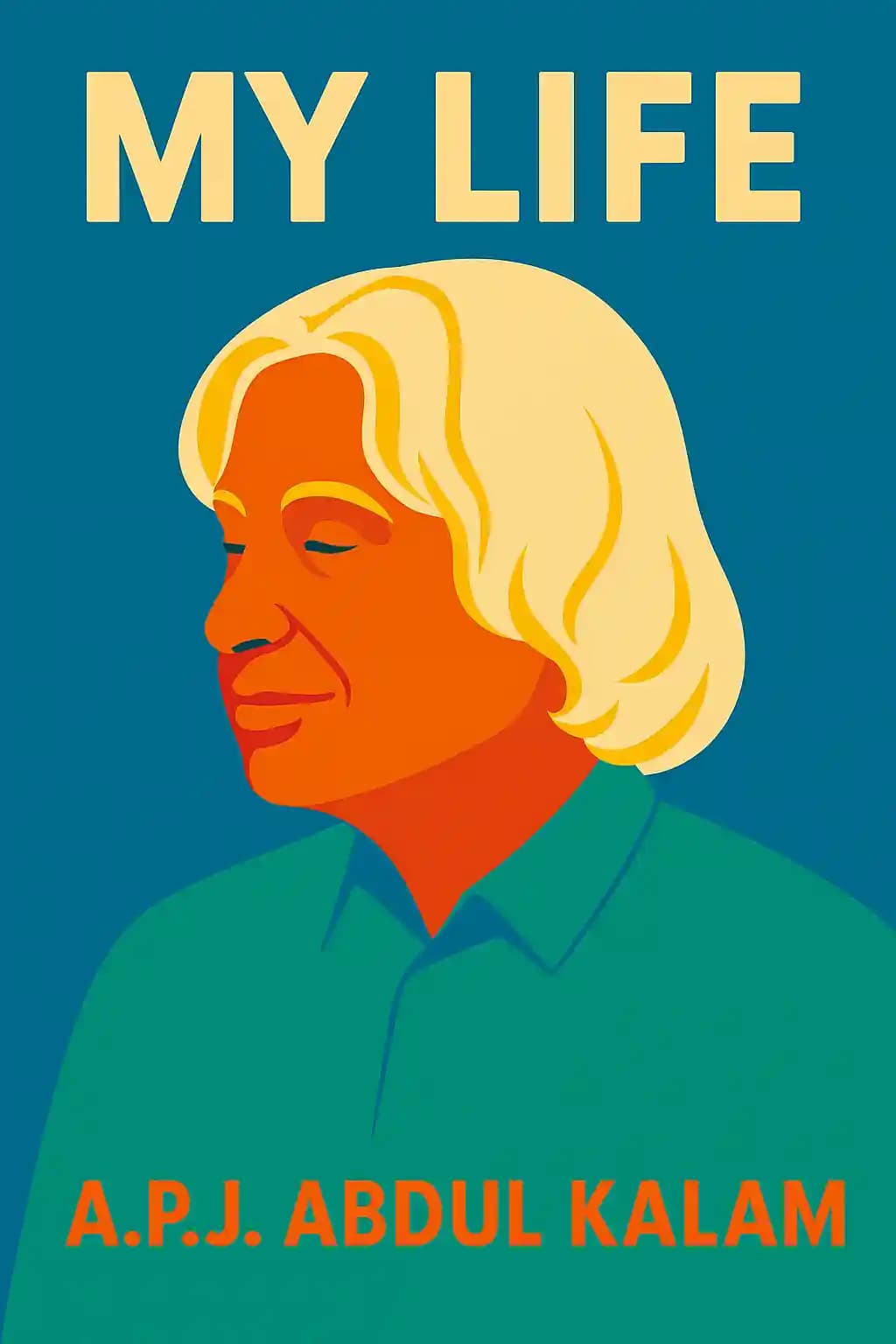
My earliest memories are bathed in the golden hues of Rameswaram's sunsets, where as a child I would stand transfixed watching the sky transform into vivid reds and golds before the sun disappeared into the sea. Born on October 15, 1931, in a modest home on Mosque Street built by my father, I was the youngest child in a family that wasn't wealthy but lived comfortably from my father's coconut grove and ferry business. The aroma of my mother Ashiamma's sambar and chutney served on banana leaves still lingers in my memory decades later. Those formative years were filled with curiosity-I bombarded my father with endless questions about nature during our pre-dawn walks to his coconut plantation and dreamed of scaling the tall trees like the skilled workers who made it look effortless. My sister Zohra took special care of me, recognizing the dreamy child full of questions about birds, waves, and celestial bodies. Little did anyone know that the boy who earned pocket money collecting tamarind seeds and newspaper bundles from passing trains would one day lead a nation of over a billion people and become known worldwide as the "People's President."
Chapitre 2
The Nurturing Power of Education and Mentorship
One day that forever changed my trajectory came when my Mathematics teacher personally visited our home with exciting news: I had scored full marks in both Mathematics and Science, with excellent performance in English and Tamil as well. This personal touch-a teacher taking time to share pride in a student's achievement-exemplified the care our small school's educators invested in us. That evening, my mother prepared special poli (a flat chapatti-shaped sweet) to celebrate, a treat I still cherish whenever friends prepare it during my travels across south India.
My daily routine began before sunrise with my mother's gentle wake-up call: "Abdul, wake up kanna." After attending Arabic tuition to learn the Koran, I'd participate in special Mathematics classes for promising students. Numbers fascinated me-their patterns, rules, and relationships made perfect sense in my young mind. I quickly mastered basic operations before tackling more complex problems, always rushing home afterward to enjoy my mother's hot meals.
After completing my education at Schwartz High School, I pursued physics at St Joseph's College in Tiruchirappalli, where I encountered teachers who would profoundly shape my intellectual development. Professor Thothatri Iyengar, a Mathematics teacher held in awe by everyone, made an indelible impression as he walked thoughtfully around campus. "Calculus" Srinivasan sometimes taught joint classes with Professor Thothatri on advanced mathematical concepts that stretched our minds beyond textbook learning.
What distinguished these educators wasn't merely their subject expertise but how they expanded our horizons. During one unforgettable lecture in 1952, Professor Iyengar spent an hour discussing three great Indian mathematicians and astronomers-Aryabhata, Bhaskara, and Ramanujam. Learning about their groundbreaking discoveries instilled in me the confidence that I too might someday contribute something meaningful to our nation's progress. Meanwhile, Father Sequeira introduced me to literary giants like Thomas Hardy, Leo Tolstoy, and Walter Scott, igniting my lifelong love of reading. The college library became my sanctuary, where I'd lose myself among towering bookshelves discovering forgotten treasures of human knowledge.
These formative educational experiences laid the foundation for everything that followed-teaching me not just academic subjects but also the value of curiosity, perseverance, and moral courage that would guide me through life's greatest challenges.
Chapitre 3
Dreams Take Flight: From Engineering Student to Rocket Scientist
Upon completing my physics degree, I realized my true passion lay in aeronautical engineering. With my sister Zohra pawning her gold jewelry to help with fees-a sacrifice I would never forget-I secured admission to the prestigious Madras Institute of Technology. The sight of two decommissioned airplanes on campus thrilled me; finally, I could study aircraft up close rather than just dreaming about them.
After graduating and completing an internship at Hindustan Aeronautics Limited in Bangalore, where I gained invaluable hands-on experience with aircraft engines, I traveled north by train for two job interviews. My heart was set on joining the Indian Air Force to fulfill my childhood dream of flying. Despite speaking passionately and demonstrating technical knowledge during the interview, I placed ninth when only eight candidates were selected-a devastating near-miss that momentarily crushed my spirits.
Seeking solace, I wandered to Rishikesh where I encountered Swami Sivananda, whose calming wisdom helped me accept that some paths in life are predetermined. Perhaps destiny had different plans for me. Returning to Delhi, I learned I'd been accepted at the Directorate of Technical Development and Production as a Senior Scientific Assistant, where my first assignment involved designing an aircraft capable of reaching the speed of sound.
Despite enjoying these roles, my fascination with flight and space remained undiminished. When news reached me about the new Aeronautical Development Establishment in Bangalore, I applied immediately and was put in charge of developing a hovercraft called Nandi for the Air Force. With minimal existing research to build upon, we sought guidance from Professor Satish Dhawan at the Indian Institute of Science while creating innovative solutions of our own. The project impressed Defense Minister Krishna Menon so thoroughly that he even took a ride in our creation despite concerns about my piloting abilities!
Though support for the hovercraft project waned after Menon's resignation, our work caught the attention of Dr. M.G.K. Menon from the Tata Institute of Fundamental Research. Days later came an unexpected interview call from the Indian Committee of Space Research for a position as a rocket engineer. After being interviewed by scientific luminaries including Dr. Menon, Vikram Sarabhai, and Saraf, I was selected to join INCOSPAR-marking the beginning of my journey from a boy gazing at stars in Rameswaram to becoming an architect of India's emerging space program. The universe had answered my prayers in ways I couldn't have imagined.
Chapitre 4
Building India's Space Program: From Bicycle to Rocketry
Picture this scene: a young scientist carefully wheeling a bicycle along a sandy road, balancing a precious rocket component while a colleague helps steady it, racing to reach the assembly center before rain falls. This humble image-a rocket part transported by bicycle-seems almost unbelievable compared to today's sophisticated ISRO operations that routinely send satellites into orbit and missions to the Moon and Mars. Yet India's space program began precisely this way, in the fishing village of Thumba near Thiruvananthapuram.
This location wasn't chosen randomly but for its scientific significance-proximity to Earth's magnetic equator made it ideal for the rocket facility envisioned by Dr. Homi Bhabha and Dr. Vikram Sarabhai for INCOSPAR. Our first "laboratory" was nothing more than the repurposed St. Mary Magdalene church, where rocket components were assembled on what was once the altar.
Those early days required tremendous ingenuity and resourcefulness. Without sophisticated equipment or extensive funding, we relied on creativity and determination. Components that today would be transported in specialized vehicles with temperature and humidity controls were then carefully moved by bicycle or carried by hand. Testing procedures that now involve complex computer simulations were performed with rudimentary tools and calculations done by hand.
What we lacked in resources, we made up for in dedication and vision. Dr. Sarabhai instilled in us the belief that India deserved a place among spacefaring nations not for prestige but for practical applications that could transform the lives of ordinary citizens. Space technology, he insisted, could revolutionize communication, weather forecasting, resource management, and education in our vast, diverse country.
The contrast between those humble beginnings and today's achievements is staggering. From launching simple sounding rockets to developing sophisticated satellite launch vehicles capable of placing payloads into various orbits, India's space program has evolved into a world-class operation. The same organization that once operated from a church now designs and builds complex spacecraft for lunar and Martian exploration.
This transformation didn't happen overnight but through decades of persistent effort, learning from failures, and building on successes. Each milestone-from the first Indian satellite Aryabhata to the Mars Orbiter Mission-represents thousands of hours of work by dedicated scientists and engineers who believed in the possibility of indigenous technological development despite skepticism from established space powers.
The journey from bicycle to rocketry embodies the essence of India's scientific spirit-starting with limited resources but unlimited determination, absorbing knowledge from around the world while developing uniquely Indian solutions, and always keeping sight of how space technology could benefit the common citizen. This approach has made India's space program one of the most cost-effective in the world, achieving remarkable results with budgets that are a fraction of those available to other space agencies.
Chapitre 5
Failure as a Stepping Stone: The SLV-3 Story
In the early morning hours before a crucial launch, sleep had eluded me entirely. With distinguished visitors watching from the gallery, my team conducted final checks as computers displayed data about the rocket's systems. Everything seemed perfect until, with just eight seconds remaining in the countdown, the computer detected an anomaly and automatically halted the launch sequence.
After thorough analysis, we determined the problem was minor and proceeded with the launch. The rocket took off with a thunderous roar, but disaster struck when the second stage activated-the rocket became unstable, tumbled out of control, and plunged into the Bay of Bengal. Years of painstaking work vanished in seconds due to a flaw in the control system that none of us had anticipated.
Overwhelmed by dejection, I retreated to my quarters, unable to face colleagues or the press. It was Professor Satish Dhawan, the chairman of ISRO, who personally came to wake me, took me to eat, and later stood beside me at the press conference. With remarkable composure, he explained that such failures happen in rocketry and that we would learn from this setback. "We failed! But I have very strong faith in my team that next time we will succeed," he declared, absorbing the failure as his own while ensuring I wasn't singled out for blame.
We immediately began work on the second SLV-3 flight, applying lessons learned from the failure. On July 18, 1980, we successfully launched the Rohini satellite into orbit. This time, Professor Dhawan insisted I address the press conference as the mission director. "You conducted the launch, you speak," he said simply, giving me full credit for the success.
From these experiences came two crucial lessons that shaped my leadership philosophy: first, the resilience to overcome setbacks by viewing them as valuable learning opportunities rather than terminal failures; and second, that a true leader takes responsibility when things go wrong but shares credit widely when things go right.
After this success, Prime Minister Indira Gandhi requested to meet me. When I worried about my ordinary clothes being inappropriate for such an occasion, Professor Dhawan offered words I've never forgotten: "You are beautifully clothed in your success." This simple statement encapsulated a profound truth-that genuine achievement transcends superficial appearances.
The SLV-3 story illustrates how failure, when approached with the right mindset, becomes not an endpoint but a crucial stepping stone toward success. Each setback contains within it the seeds of future achievement if we have the courage to learn, adapt, and persevere. This philosophy would serve me well throughout my career, especially during the challenging development of India's missile systems that lay ahead.
Chapitre 6
Wings of Fire: India's Missile Development Journey
Why do humans produce weapons? Though many question this pursuit, nations continue developing sophisticated arms for security. Could India afford not to have the latest technology for self-defense? Ironically, India once pioneered rocket weapons but failed to develop this knowledge further, allowing the British to adopt and deploy them against us centuries later-a historical lesson we couldn't afford to repeat.
When I moved to the Defense Research and Development Laboratory in Hyderabad to develop India's indigenous missile program, I found talented scientists demoralized by past setbacks and bureaucratic obstacles. My first task wasn't technical but psychological-inspiring these brilliant minds with a mission worthy of their capabilities. We established an ambitious plan to develop five missile systems simultaneously: the short-range Prithvi, the surface-to-air Trishul, the anti-tank Nag, the medium-range surface-to-air Akash, and the intermediate-range ballistic missile Agni.
My leadership formula was deceptively simple: clear goal-setting, positive thinking, visualization of success, and unwavering belief in our capabilities. We established the Research Centre Imarat in Hyderabad and a testing facility in Chandipur, Odisha-carefully designed to preserve nearby bird sanctuaries, reflecting our commitment to balancing defense needs with environmental responsibility.
Our efforts bore fruit when Trishul launched successfully, followed by Prithvi in 1988, gaining international attention. But the true test came with Agni-our most ambitious project. The first launch attempt aborted with fourteen seconds remaining in the countdown, and a second attempt failed due to technical issues. With team morale flagging, I gathered everyone together and shared a simple truth: "In the history of technology development, the road to success is always littered with failures. Those who can learn from failures and persist are the ones who ultimately succeed."
On May 22, 1989, Agni finally launched flawlessly, flying for the planned 600 seconds and demonstrating India's capability to develop a missile with 1,500-3,000 kilometer range and nuclear strike capability. I named it Agni not for its destructive potential but because it symbolized the latent fire within our nation-wings of fire that could destroy ignorance and backwardness while propelling India toward becoming a strong, developed nation.
The missile program transformed India's defense capabilities and international standing, but its greatest impact was perhaps psychological-proving that Indian scientists and engineers could achieve world-class results with limited resources when given clear direction and freedom from bureaucratic interference. The technologies developed spilled over into civilian applications, advancing materials science, electronics, guidance systems, and computer simulation capabilities across multiple industries.
More importantly, it changed how we viewed ourselves as a nation-no longer content to be followers but determined to be leaders in critical technologies. The "wings of fire" became a metaphor not just for missiles but for India's aspirations to soar beyond limitations imposed by history and geography.
Chapitre 7
From Missiles to Presidency: An Unexpected Journey
After Agni's success, my career evolved as I became scientific adviser to the defense minister, engaging more with government on science and technology matters. During this period, I wrote my autobiography "Wings of Fire," reflecting on the influences and experiences that had shaped my life's journey. Having witnessed the successful development of SLV-3, Agni, and various space and defense projects, my focus shifted to a broader vision-how technology could help transform India into a developed nation by 2020.
I recognized that scientific benefits needed to move beyond laboratories into government policies that would improve ordinary citizens' lives-from communication to farming, from defense to employment. This period also marked my rediscovery of teaching as a passion. Speaking at schools and colleges after Agni's launch, I shared knowledge about missiles and satellites while encouraging young people to pursue their dreams. These interactions filled me with new energy, and the overwhelming love and respect I received in return became a source of profound fulfillment.
In 1997, I was honored with the Bharat Ratna, India's highest civilian award. Though I believe awards cannot truly measure one's success as a human being, I felt this recognition acknowledged every Indian child's dreams and potential. Later, in 1998, when Prime Minister Vajpayee asked how long nuclear tests would take, I replied "T-30 days," leading to the top-secret Operation Shakti at Pokhran, jointly conducted by the Department of Atomic Energy and DRDO.
Operation Shakti required absolute secrecy. We worked in Pokhran's harsh desert conditions, with structures covered by sand to avoid satellite detection. I was given the code name "Colonel Prithviraj" while working in Army uniform. On May 11, 1998, after carefully monitoring wind conditions, I gave the final signal for detonation. The successful nuclear tests released energy equivalent to 53 kilotonnes of TNT, surprising the world with India's technological capability.
When questioned about reconciling India's non-violent principles with nuclear capability, I explained that while we remain committed to peace, we need the security to defend ourselves in an uncertain world. After Pokhran, I became principal scientific adviser to the government and chairman of TIFAC, creating the Technology Vision 2020 document to guide India's development journey.
Then came the most unexpected turn in my life's journey. While teaching at Anna University, enjoying my interactions with bright young minds, I received a call from Prime Minister Vajpayee informing me that I had been unanimously chosen as the nation's presidential candidate. I requested two hours to consider this proposal, weighing whether to continue my beloved teaching career or accept this platform to more effectively promote my vision for a developed India.
After consulting with thirty friends who offered varying perspectives, I called the prime minister back and agreed to be an all-party candidate. On July 18, 2002, I was declared elected as president. My family and friends in Rameswaram celebrated with special prayers at both the temple and mosque-a beautiful symbol of India's unity in diversity. For my July 25 swearing-in ceremony, I invited thirty-seven people from Rameswaram, including religious leaders from different faiths, my teachers, and one hundred children from across India to engage them in the democratic process.
At seventy years old, I became India's eleventh president, wearing a navy blue bandhgala suit for the first time in my life. In my inaugural speech, I emphasized the need for collective vision and speed in execution, quoting Kabir's wisdom about acting now rather than delaying. The journey from a newspaper delivery boy in Rameswaram to Rashtrapati Bhavan seemed almost unbelievable, yet perfectly aligned with India's promise that anyone, regardless of background, could rise to the highest office through dedication and service.
Chapitre 8
The People's President: Transforming Rashtrapati Bhavan
As president, I approached the role not as a ceremonial figurehead but as an active participant in national development. My vision centered on three key objectives: promoting India's transformation into a developed nation by 2020, implementing the PURA (Providing Urban Amenities in Rural Areas) concept to bridge the urban-rural divide, and inspiring engaged, compassionate citizenship among all Indians, especially the youth.
Rashtrapati Bhavan had traditionally been a somewhat remote institution, but I was determined to make it accessible to ordinary citizens, particularly children who represent our future. We implemented an open-door policy that welcomed school groups, artists, thinkers, and innovators to what I considered the people's house rather than just the president's residence. The ancient halls that once echoed with colonial footsteps now resonated with the excited voices of children discovering their heritage and potential role in shaping India's future.
We revolutionized operations through e-governance initiatives that improved efficiency and transparency. The presidential office, which had operated on paper files for decades, transitioned to digital systems that reduced response times from weeks to days or even hours. This wasn't merely about administrative convenience but demonstrated how technology could transform governance throughout the nation.
Perhaps the most substantive innovation was the introduction of regular breakfast meetings with Members of Parliament from each state to discuss development issues. Rather than protocol-heavy formal interactions, these sessions became working meetings where concrete problems were identified and solutions proposed. We covered everything from water management in drought-prone regions to educational opportunities in remote areas, from industrial development to environmental protection.
I made it a point to visit military units across the country, including the Kumar post at Siachen Glacier-the world's highest battleground where our soldiers serve in extreme conditions. These weren't ceremonial visits but opportunities to understand the challenges faced by our armed forces and express the nation's gratitude for their sacrifices. During one such visit, I fulfilled my childhood dream of flying in a Sukhoi-30 MKI fighter aircraft at the age of 74-becoming the oldest Indian to experience supersonic flight and demonstrating that age need not limit one's aspirations.
Throughout my presidency, I maintained direct contact with citizens through correspondence, personal meetings, and extensive travel to all corners of India. From tribal villages in the Northeast to fishing communities along the coastline, from industrial hubs to agricultural regions, I sought to understand the diverse challenges facing our people while sharing my vision of how technology and innovation could address them.
The five years I spent as president were both fulfilling and humbling. I encountered countless Indians from all walks of life who were committed to improving their communities and the nation as a whole. Their dedication reinforced my belief that India's greatest resource isn't its mineral wealth or geographical advantages but its people-especially the youth whose energy, creativity, and determination would ultimately determine whether we achieved developed nation status.
When visitors from abroad asked me about the secret of India's resilience and optimism despite numerous challenges, I would often point to our young people and say, "They are the living embodiment of our ancient wisdom and modern aspirations, the bridge between our glorious past and promising future." This faith in youth became the cornerstone of my presidency and continues to guide my work today.
Chapitre 9
Legacy of Learning: Life Lessons from a Lifelong Teacher
After completing my five-year presidential term on July 24, 2007, I packed my belongings into just two suitcases-a reminder that material possessions matter far less than the ideas, relationships, and contributions we leave behind. Though seventy-five years old, retirement never crossed my mind. My presidential experience had only strengthened my resolve to continue working toward a developed India by teaching and inspiring youth across the nation.
Now residing at 10 Rajaji Marg in New Delhi, I maintain an even busier schedule than before, traveling extensively to speak at schools, colleges, and professional conferences. I teach regularly at prestigious institutions like IITs and IIMs, and have written numerous books to spread messages of hope and knowledge. Despite being acutely aware of India's challenges-poverty, corruption, environmental degradation, and social divisions-I maintain unwavering faith in the country's greatness and its citizens' potential to overcome these obstacles.
My life story has become intertwined with India's narrative, shaped by interactions with millions of children who represent our collective future. To these young minds, I offer seven essential life lessons distilled from my journey:
First, set a clear aim early in life. Behind every successful venture lies an unflinching purpose established in youth. Having direction gives meaning to every action and result. I knew from childhood that I wanted to fly, and though my path took unexpected turns, that aspiration guided me toward space and rocketry.
Second, acquire the knowledge needed to achieve your aims. Education-formal and informal-provides the foundation for accomplishment. Make use of every resource available, from institutions to mentors to books. Knowledge brings greatness and helps overcome seemingly impossible challenges.
Third, work relentlessly toward your goals. Consistent effort combined with knowledge application helps overcome difficulties and reach great heights. I witnessed this truth repeatedly throughout my career-from developing India's first satellite launch vehicle to creating indigenous missile systems against tremendous odds.
Fourth, learn to manage failure as the essence of leadership. Difficult missions inevitably bring setbacks that may temporarily derail progress. True leadership lies in accepting failure while persevering until success is achieved. Remember Professor Dhawan taking responsibility for our failed rocket launch while giving me credit for the subsequent success.
Fifth, find the task that gives you true bliss. While I found happiness in launching SLV-3, testing Agni missiles, and creating Vision 2020, my deepest joy came from using missile technology to develop lightweight calipers for polio-affected children. Seeing these children suddenly able to walk, run, and ride bicycles gave me profound fulfillment unlike any other achievement.
Sixth, embrace books as lifelong companions. Good literature provides everlasting enrichment, guiding us through life's journey and continuing to inspire generations. The books I discovered in S.T.R. Manickam's library as a child and later in college shaped my thinking and expanded my horizons beyond Rameswaram's shores.
Finally, ask yourself what you will be remembered for. Shape your life by considering your legacy-whether through invention, innovation, discovery, social change, poverty alleviation, fighting injustice, or providing good governance. Create your unique page in human history.
My journey from a small fishing village to the highest office in the land demonstrates that in India, dreams can become reality through education, hard work, and unwavering commitment to larger purposes. The greatest satisfaction in my life comes not from titles or awards but from seeing the spark of possibility ignite in young eyes when they realize their own potential to transform themselves and their nation.
As I often tell students: India doesn't lack resources-it sometimes lacks resourcefulness. It doesn't lack talent-it sometimes lacks platforms for that talent to flourish. It doesn't lack dreams-it sometimes lacks the courage to pursue those dreams relentlessly. You are the generation that must provide that resourcefulness, create those platforms, and demonstrate that courage. The future belongs to those who believe in the beauty of their dreams and work tirelessly to make them reality.