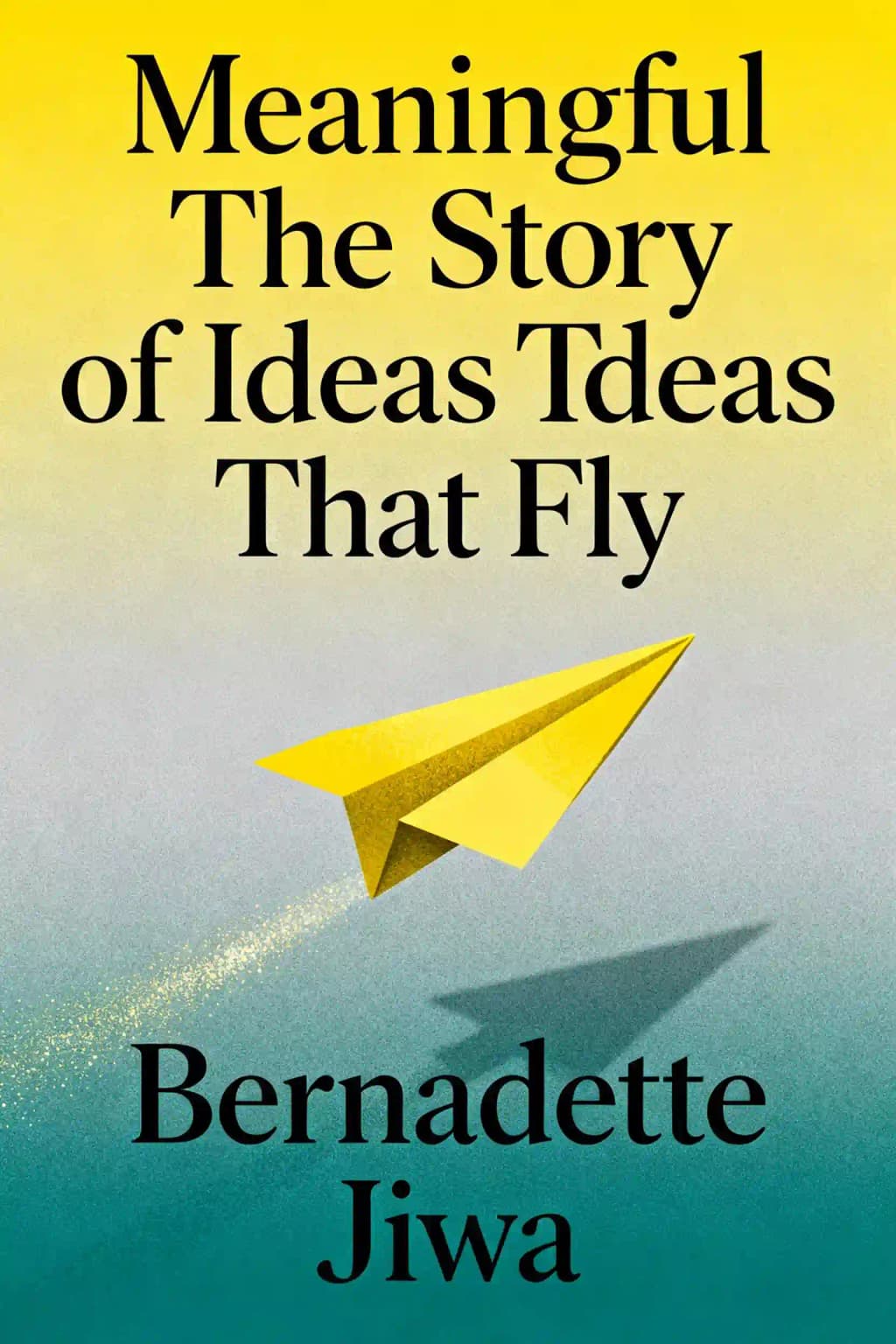
Chapitre 1
When Stories Take Flight: The Art of Creating Meaningful Connections
Have you ever wondered why some products become cultural phenomena while others fade into obscurity? Why did Airbnb transform travel while countless hotel booking apps disappeared? Why did the iPod revolutionize music when Sony-the creator of the Walkman-could have beaten Apple to market? The answer lies not in features or marketing budgets, but in meaning. In "Meaningful: The Story of Ideas That Fly," Bernadette Jiwa reveals how successful innovations transform customers' lives by addressing unspoken needs and desires. This book has become required reading in innovation departments at companies like Google and Nike, with Tim Ferriss naming it among his most gifted books. Jiwa's insights have resonated with entrepreneurs and corporate leaders alike because she articulates what many intuitively sense: in today's crowded marketplace, relevance isn't just a competitive advantage-it's survival.
Chapitre 2
The Relevance Revolution: From Awareness to Affinity
The most successful businesses don't simply create products-they create new kinds of customers whose lives are fundamentally changed. Consider how Apple transformed our relationship with technology. When Steve Jobs, Jony Ive, and Ron Johnson developed Apple's retail strategy, they didn't start with store layouts or product features. They began by thinking about who their products were for and what mattered to these people.
Every meaningful innovation creates a "before and after" story in customers' lives. Before iTunes, music lovers waited for physical CDs; before Nespresso, coffee came in jars; before Kindle, we needed bookcases; before Google, we relied on paper maps and phone books. The transformation needn't be monumental-even small shifts in habits matter. If there's no change in the customer's life, there's no innovation.
This shift represents a fundamental change in how businesses connect with customers. The traditional marketing paradigm focused on awareness and attention, hoping to drive action. But today's most successful brands have added a crucial third element: affinity. This earned connection-rather than bought attention-powers business growth in ways traditional advertising cannot.
The digital revolution hasn't diluted competitive advantages; it's redefined them. "Close" no longer means geographic proximity-it means emotional proximity. Whoever gets closest to understanding their customer wins. CEOs are one tweet away from customers, online stores can reach other continents instantly, and businesses can track customer behavior in unprecedented detail.
Yet digital tools aren't shortcuts to creating meaningful products-they're windows into customers' lives. "Build a better mousetrap" only works when "better" is defined by customers, not engineers. The opportunity isn't mastering digital tools as broadcasting platforms; it's using them to understand and serve customers better.
Chapitre 3
The Human Element: Understanding vs. Persuasion
We've long believed business success depends on persuasion. But will Microsoft's massive marketing budget make the Surface tablet succeed? Will more Segway ads convince pedestrians they need one? Will Land Rover owners switch to Toyota Prius because marketing says it's better for the planet?
Persuasion once seemed like a shortcut-telling customers what we wanted them to know while forgetting to consider what they wanted us to understand. We're realizing that understanding our customers' worldview is no longer the long way around-it's the only way forward.
Consider how a great hairstylist works. He doesn't just look at hair-he sees the whole person. Before cutting, he observes face shape, personal style, posture, confidence, and listens for contextual clues like "my son's wedding." He's not just looking; he's imagining possibilities and understanding what matters to the client. Similarly, when marketers truly see customers' problems, pains and frustrations-when we empathize with their circumstances and worldviews-we go beyond creating awareness of commodities and build brands on genuine affinity.
In our distracted age, getting momentary attention isn't difficult-a shoulder tap, a flashy ad. But meaningful attention is based on mutual respect and trust-it's wished for, welcomed and wanted; earned, not taken. The best way to get attention is to give it unconditionally first. To understand customers' worldviews. To anticipate needs without calculating immediate returns. To whisper "I see you" instead of screeching "LOOK AT ME."
Growing up in Dublin, I trusted food manufacturers like Mr. Kipling completely, imagining him as a kindly old man personally overseeing his "exceedingly good cakes." Forty years later, the packaged-cake industry struggles as informed consumers demand transparency about ingredients. Despite Mr. Kipling investing millions in new packaging and marketing, sales continue declining. Why? Because changing packaging without improving contents doesn't change the story. We don't need better marketing-we need better products made by trustworthy companies with leaders brave enough to genuinely put customers first.
Chapitre 4
The Legacy Trap: Why Industry Giants Fall Behind
Once-dominant industries can collapse with stunning speed. Newspaper advertising plummeted $40 billion between 2000-2013, not because quality declined but because relevance did. Traditional news editors decided what to publish based on their interests, while upstarts like BuzzFeed create content specifically for mobile-consuming, socially-sharing readers.
Similarly, Harry's grooming company attracted 100,000 direct customers within a year by making a bigger difference to fewer people, rather than trying to reach everyone. Legacy brands often fail because their size and scale create a false sense of security, making them slow to adapt while smaller, agile companies respond directly to customer needs.
Nick Woodman created GoPro when established camera companies missed what he saw-the need for wearable cameras that could capture action sports from the user's perspective. Starting with just $265,000 (mostly family loans), Woodman bootstrapped his company from $150,000 in first-year revenue to a $2.96 billion IPO valuation a decade later.
Similarly, Sony missed creating the iPod because its music division feared piracy while its hardware division operated in isolation. These stories reveal how corporate behemoths often fail to innovate because they're protecting today's revenue streams rather than building for tomorrow's reality. The "little guy" succeeds by starting with the customer's desires rather than maintaining the status quo.
"Meaningful" has become an overused marketing buzzword, interchangeable with "good" or "delightful." Yet every business-from software design to cab driving-is fundamentally in the meaning business. Without meaning, products become mere commodities. When Apple opened its first stores in 2001, only one visitor in a hundred bought anything. Most didn't own Apple products. Yet Apple focused on creating places where people "belonged" rather than just selling products. They succeeded not just by making beautiful things, but by making sense of the future and creating meaning for the people who would live in it.
Chapitre 5
Beyond the Obvious: Seeing What Others Miss
On Christmas Eve, men crowd perfume counters buying safe, expected gifts. This same mentality drives many business decisions-we make assumptions based on what we think is true rather than what could be. We choose safety over the extraordinary, doing "the done thing" because it feels less risky. Ironically, while building on what's familiar feels safer, it also has the least chance of becoming a runaway success.
What's meaningful today can become meaningless tomorrow, not because it no longer works but because people's beliefs and behaviors change. We can either keep giving customers what works today, or understand where they want to go and take them there.
When an architecture student began a project to repurpose an old department store, his tutor criticized him for not drawing anything. What he wanted to express was fundamental: we need to put down the pencil and start with the people. People are the architecture-the foundation and framework for everything we build. Without understanding them, there's no reason for walls or windows to exist. If we want to build anything useful or significant, we must spend twice as much time thinking about the people as we do on the technical drawings. It's why we build, not what we build, that matters.
Disruptive innovations succeed not because they disrupt industries, but because they disrupt people's lives for the better. Success comes from changing the user's story, not just making things that work. The history of shaving illustrates this-from prehistoric stone implements to Gillette's revolutionary disposable blades that transformed morning rituals and created a $19 billion brand. Now, after a century of dominance, Gillette faces disruption from startups offering subscription razor services. Just like King Camp Gillette did, they're converting one person at a time.
Chapitre 6
The Context Revolution: How Customer Expectations Are Evolving
Technological shifts don't happen randomly-they're created when innovation collides with changing cultural expectations. The things that survive do so because they fit within our evolving storylines. Across industries, we've seen massive transformations driven by our desire for personalization, convenience, and meaning.
In transportation, we now think less about ownership and more about sharing and outsourcing, using services like Lyft and Zipcar. We don't want to hope for a cab; we want to know exactly when our driver will arrive. These innovations represent capability finally catching up with our deep desire to eliminate uncertainties from our journeys.
iTunes wasn't just about making people pay for music in the age of illegal downloads-it addressed our long-standing desire to personalize our music collections. The revolution had its roots in the mix tapes of the '70s, evolving to give people what they truly wanted: just the songs that mattered to them.
The shift from local to global shopping was inevitable with the internet. Our unwillingness to wait in the digital world has manifested in the physical world-queuing and waiting are becoming obsolete. The on-demand business sector is booming because shopping is now about instant gratification, not just getting what we need.
Traditional book sales have plummeted as digital books captured 30% of the market. Amazon's Kindle changed how we read, who can publish, and how we value books. Books now compete with "digital infinity"-the vast amount of information created daily-making us more selective about where we invest our reading time.
Nest has created environments that respond to our lives rather than forcing us to adapt to them. Since no two families are alike, it makes sense that our environments should adapt to what happens within them, working within the context of our stories rather than being bound by device functionality.
Modern travelers want more than a comfortable bed-they seek unique experiences. Five-star hotels now feel like homogenous indulgences lacking soul. Airbnb succeeded by unlocking value in unused spaces and facilitating trust between strangers, allowing travelers to experience places like locals do.
Mass education struggles to accommodate different learning styles and paces. Khan Academy solved this by letting people learn at their own speed, rewinding when needed, filling knowledge gaps, or leaping ahead-personalizing education beyond the one-size-fits-all model.
Chapitre 7
From Data to Insight: Knowing vs. Understanding
UK supermarket giant Tesco pioneered customer analytics with its Clubcard loyalty program, gaining a 30% market share. But while they tracked what customers did, they missed the shift in how customers felt. Post-financial-crisis, customers wanted simple transparency and lower prices, not loyalty points. Discount stores like Aldi began eroding Tesco's market share as pounds became more meaningful than points.
Watching what people do isn't the same as understanding how they feel-data can measure relationships to a brand but not emotions in the moment. Loyalty cards can't replace genuine connection.
In the old world of mass marketing, business was about making things and finding ways to make people want them. Today, meaning and value are created at the intersection of the customer's worldview and your understanding of how your product aligns with that worldview. Great products are born by obsessing about users' feelings and frustrations-understanding the problem and its context.
IKEA exemplifies this approach, spending six years researching before opening in South Korea to understand the culture and customer worldviews. Their catalog comes in 67 versions and 32 languages because they know products are worthless if they don't fit the context in which customers will use them.
Edison didn't invent the light bulb-twenty-three versions existed before his-but he made it commercially viable. His genius wasn't just in the invention but in understanding how light bulbs would integrate into the entire electrical system and people's lives. Edison sought to make his discovery accessible and practical for everyone, recognizing that true value comes not just from innovation but from making that innovation work meaningfully in people's everyday lives.
Chapitre 8
Creating Emotional Capital in the Age of Abundance
We've moved from an era of scarcity, where quality and durability were paramount, to one where most products are "good enough" and standards are adequate across industries. What differentiates products now is emotional capital-the feelings they evoke and experiences they create.
We don't expect smartphones to last decades or sit on the same sofa for twenty years like our parents did. Instead, we value design, unboxing experiences, and personalization. As Cliff Kuang notes, "Innovation today is inextricably linked with design," which has become crucial for building emotional connections and avoiding commoditization. Today's customers expect products to be not just useful, but personalized and beautiful.
Understanding how people use products is now as crucial as how products work. In our "age of abundance," successful innovators pay attention to the context of product use, exemplified by Disney's MagicBand, which creates frictionless experiences through RFID technology. People seeking meaning are driving trends that require businesses to get inside customers' heads and hearts, not just their wallets.
Digital patronage has emerged through platforms like Kickstarter and Kiva, allowing people to support projects they believe deserve to exist and have personal investment in causes that matter to them. Our social networks powerfully influence purchasing decisions, with 71% of people more likely to buy based on social media referrals. Likes, tweets, upvotes and recommendations on platforms like Yelp and Product Hunt can dramatically change product perception.
Today's consumers expect tailored experiences reflecting their individuality. From Apple Watch's 38 band options to Starbucks' 80,000 possible drink combinations to bespoke perfumes, brands succeed by helping customers feel unique. As TrendWatching notes, digital experimentation and social networks allow greater personalization and brand identification across all demographics.
Products like Nest thermostats and Waze traffic apps exemplify the context revolution by capturing data to save users time and money. Despite privacy concerns, many consumers willingly trade some privacy for convenience and more meaningful experiences, with millennials particularly comfortable with this exchange.
Chapitre 9
The Story Strategy Blueprint: A Framework for Meaningful Innovation
The Story Strategy Blueprint centers on the equation "Love people + make something they love" rather than "Make something + make people love it." This approach puts the customer's story at the starting point of innovation, helping create products and services that satisfy customers' rational needs while speaking to their hearts.
Great innovators have muses who inspire their vision-real people whose lives will improve with their creation. Lock engineer Tor Srnes invented the recodable keycard after hearing about Connie Francis's motel room attack. Principal Linda Cliatt-Wayman transforms tough schools by deeply understanding her students. Adidas founder Adi Dassler obsessively studied athletes to create customized footwear for their unique abilities.
To create meaningful solutions, we must move beyond generic buyer personas and truly see through customers' eyes. As IDEO partner Fred Dust says, "You're a better designer if you love the people you're designing for." When you genuinely care about those you create for, your solutions become meaningful.
Worldviews are subjective, values-based perspectives shaped by our experiences and beliefs, not objective facts. They influence our attitudes, decisions, and actions. Innovators must avoid assumptions based on demographic categories-like assuming all 29-year-old suburban men share the same outlook. As Tim Graham of Integrity Fitness observed with older adults enjoying "young people's music" in fitness classes, people often defy the stereotypes we assign them. Understanding what people believe may influence their choices more than their financial capacity.
Successful products serve as catalysts for transformation in customers' lives. By understanding the "before and after" scenarios-how customers' stories unfold with your product-you can work backward to determine what features and functionality will create the necessary emotional shifts.
While established companies like vacuum manufacturers, taxi services, and hotel chains knew their customers' pain points, disruptors like Dyson, Uber, and Airbnb succeeded by focusing on creating difference first and growth later. They began not by designing products but by deeply understanding specific problems of people with particular worldviews.
Chapitre 10
The Innovation Trifecta: Form, Function, and Feeling
The most successful products and services succeed through a trifecta of form, functionality, and feeling. While how products look and work are non-negotiable requirements, what truly sets apart the most successful innovations is how they make people feel during use and experience. The innovation trifecta recognizes that we cannot separate the demands of the head and needs of the hands from the longing of the heart.
Creating ideas that fly requires starting with the customer's story rather than your own idea. This fundamental principle is challenging because we naturally fall in love with our ideas, become influenced by biases, and act on assumptions-the very reasons so many innovations fail. Even established organizations struggle to abandon current successes to bet on future opportunities, as demonstrated by Kodak and Blackberry.
When companies genuinely care about staff, suppliers, customers and their impact on the world, this caring manifests in their products and services. The "level of love" put into products creates a meaningful differentiation and competitive advantage. Brands like Chipotle, Warby Parker, Airbnb and many others demonstrate that giving a damn is underrated in business. In a world increasingly concerned with purpose, individuality, sustainability, provenance and ethics, how we make something becomes as important as what we make.
The Story Strategy Blueprint guides innovators through exploring customer problems, translating them into insights, and developing products that provide both functional and emotional benefits. It helps businesses frame every decision by asking "Is this product or service worthy of my customer and why?"
Chapitre 11
From Ideas to Impact: Meaningful Innovation in Action
Jodie Fox created Shoes of Prey after discovering her own frustration with finding shoes she liked. When friends admired her custom-designed shoes, she uncovered widespread dissatisfaction with traditional shoe shopping-from limited sizes to uncomfortable fits and uninspiring designs. Partnering with Mike Knapp and Michael Fox, she launched an online platform where women could design custom shoes in 38 sizes and 7 heel heights. Recognizing customers' desire to experience the shoes physically, they opened boutiques within department stores, first in Sydney and later across the U.S. Six years in, Shoes of Prey maintains its customer-centric approach by surveying customers daily and fostering a culture of "listening to her" in every business decision.
While teaching design at university, Melanie Perkins noticed students struggled to learn complex design programs, making little progress over an entire semester. This insight led her to create Canva, a tool to democratize design for non-experts. Early user testing revealed people were "scared to click on things" and left feeling "dejected" after creating mediocre designs. This epiphany showed Melanie that beyond simplifying tools, Canva needed to empower users to believe they could design. The team spent months perfecting the onboarding experience, focusing on users' emotional journey and building confidence. Canva also created a 24-hour customer support team with two-hour average response times and daily "customer happiness reports." By delighting users and exceeding expectations, Canva grew to 2.8 million users in just twenty months.
Beekeepers Stuart and Cedar Anderson intimately understood the challenges of honey harvesting-the protective gear, disturbing bees with smoke, disassembling hives, and often squashing bees in the process. This firsthand experience inspired their decade-long quest to create "the beekeeper's dream." Their patented Flow Hive system allows beekeepers to check honey readiness without disturbing bees and extract honey directly from special frames-essentially putting honey on tap without filtering or processing. Crucially, they recognized beekeepers still wanted connection with their bees, noting "we haven't taken all the fun away. You still get to use your smoker and beekeeper suit." Their Indiegogo campaign shattered records, reaching $2.1 million on the first day and ultimately raising $12.4 million from over 36,000 backers.
Chapitre 12
Show Them Their Wings: The Heart of Meaningful Innovation
After pouring ourselves into creating something, we naturally want to broadcast its brilliance to the world. But this approach misses the mark. Instead of saying "Look at the incredible wings we've made for you," successful innovators say "Can you see how amazing your wings are in this light?" The focus shifts from the creator's achievement to the user's transformation. Truly life-changing products don't need proclamations-they demonstrate their value through the difference they make. And rather than seeking universal appeal, meaningful innovations target specific audiences who will champion them first.
We all aspire to significance-to know our work matters and our time counts for something. The most effective path to this meaning is focusing outside ourselves, making others feel they matter. The true story of successful ideas isn't about the innovations themselves but about the people who adopt them-how these creations intersect with users' narratives, hopes and aspirations. By creating generously and showing people their own wings, we can succeed wildly while making a meaningful difference.
No innovator can know with absolute certainty how their idea will resonate before launch. Despite all the research, surveys, usability testing and expert advice, the only true test is putting your idea into the world and letting people decide if it's worthy of their attention, money or love. Creating meaningful work requires the courage to risk failure, as certainty would mean your idea is already commonplace rather than meaningful. The path to significance demands embracing the uncertainty inherent in innovation.
We often believe customers want complex solutions to big problems, but what they truly desire are thoughtful answers to ordinary challenges-even small solutions can feel magical to someone struggling with an unspoken problem. The most meaningful innovations aren't always grand solutions to massive problems-they're often thoughtful answers to everyday challenges that go unnoticed by others. By truly seeing people-their struggles, hopes, and unspoken needs-we can create products and services that feel like magic to those who need them most.