Chapitre 1
When Shadows and Flames Intertwine
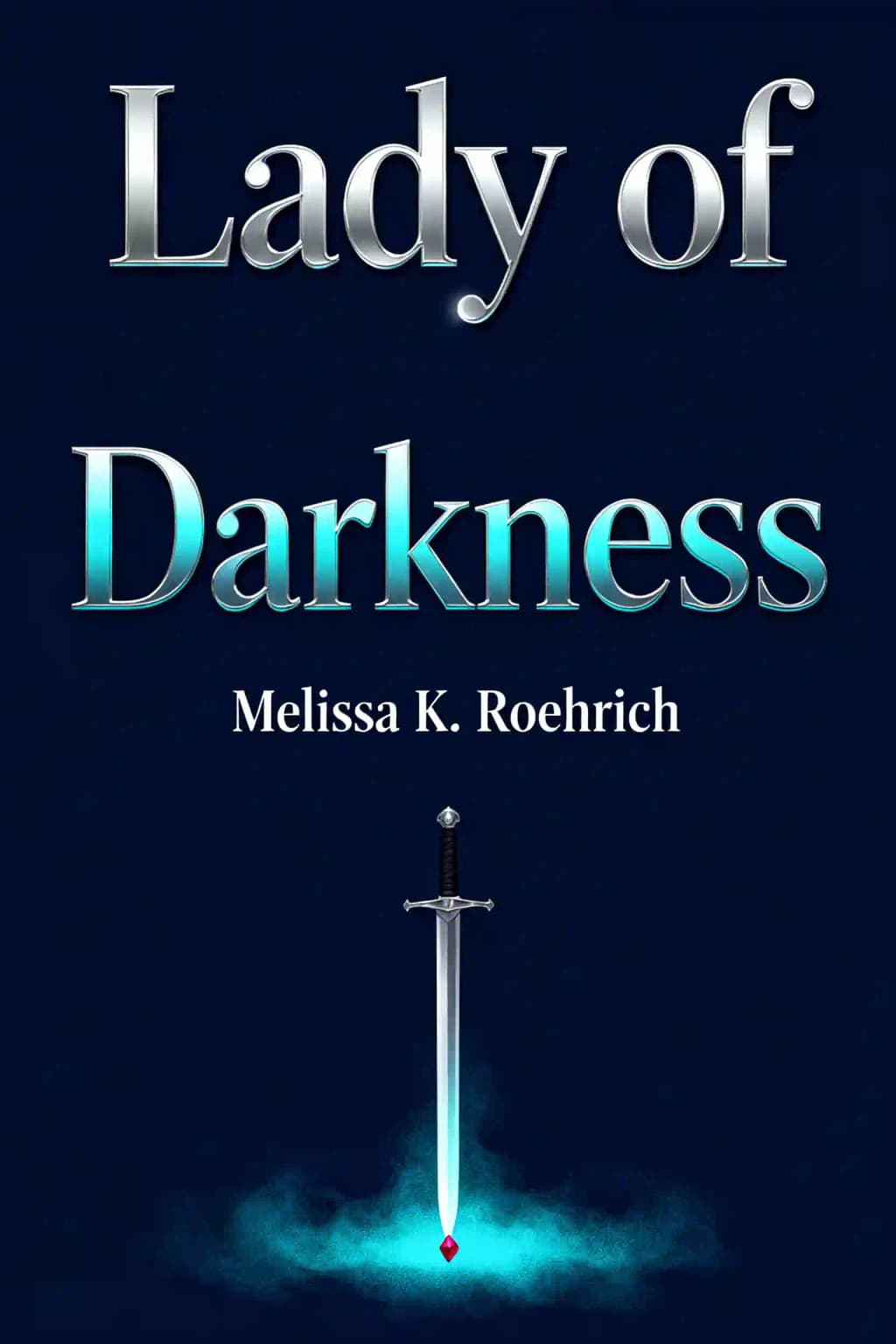
In the realm of dark fantasy romance, Melissa K. Roehrich's "Lady of Darkness" series has quietly become a phenomenon, captivating readers with its intoxicating blend of vengeance, passion, and supernatural intrigue. The third installment, "A Lady of Embers," follows Scarlett Monrhoe's journey as she navigates the complex world of Fae politics, forbidden love, and her own emerging powers. What sets this series apart is Roehrich's masterful world-building and character development-creating a universe where the line between villain and hero blurs with every page. The author, who homeschools her three boys on a small farmstead in North Dakota, has crafted a series that resonates deeply with readers seeking stories of powerful women who refuse to be defined by their circumstances. With BookTok communities dedicated to analyzing the complex relationships and plot twists, this series has become required reading for fantasy romance enthusiasts alongside works by Sarah J. Maas and Jennifer L. Armentrout.
Chapitre 2
From Death to Rebirth: The Power of Twin Flame Bonds
The story opens with a devastating scene-Scarlett's twin flame, Sorin Aditya, has fallen in battle. As she cradles his lifeless body, the depth of their bond becomes painfully clear. "You promised!" she sobs repeatedly, her grief so overwhelming that her Guardian, Cassius, fears she might follow Sorin to the After. This moment crystallizes the central theme of the novel: the transcendent power of twin flame connections.
When the mysterious Lord of Night appears in Scarlett's dreamscape, he offers a glimmer of hope-Sorin hasn't fully crossed the Veil yet. Drawing a special Source Mark on her arm, he explains that their twin flame bond works both ways; she can give to Sorin as he once gave to her. This pivotal moment reveals the first hints of Scarlett's extraordinary heritage and abilities.
What follows is a miraculous resurrection scene that showcases the extent of Scarlett's power. Drawing energy from Cassius until he's severely weakened, she channels everything into Sorin-"all her embers, water, ice, shadows, white flames"-until his heart begins beating again. This act of love and desperation establishes the novel's central conflict: Sorin's resurrection comes at a terrible cost. His magic is slowly depleting, and with it, their twin flame bond weakens.
The relationship between Scarlett and Sorin evolves beautifully throughout the narrative. Despite his diminishing powers, Sorin continues to serve as Scarlett's Source, prioritizing her strength over his own. Their intimate moments reveal a partnership built on mutual respect and unwavering devotion. "I never let myself think of the future," Scarlett confesses to Sorin in a rare vulnerable moment. "It held nothing I desired except the illusion of freedom I never thought I would see. But you make me want to plan a future, Sorin." Their love story transcends typical romance tropes, becoming instead a powerful exploration of sacrifice, identity, and the courage to envision a future worth fighting for.
Chapitre 3
The Gathering Storm: Politics, Betrayal, and Alliances
Against the backdrop of their personal struggles, a larger political conflict unfolds with far-reaching implications. The Western Courts, now under Scarlett and Sorin's rule, face threats from multiple fronts, testing the limits of their newfound alliance. Talwyn Semiria, the Eastern Fae Queen known for her cunning diplomacy and ruthless tactics, has formed a dangerous partnership with Alaric - a powerful being whose mysterious abilities once held Scarlett in thrall. Their combined forces have already overtaken the Fire Court, leaving a wake of destruction that serves as a warning to those who might oppose them. The strategic location of the Fire Court provides them with a crucial foothold, threatening the remaining territories loyal to Scarlett.
The political landscape grows increasingly intricate and treacherous as ancient allegiances dissolve and new ones form. When Azrael Luan, the Earth Prince traditionally loyal to Talwyn, seeks an unexpected audience with Scarlett's Inner Court, the ensuing debate reveals deep-seated tensions and conflicting loyalties. Cyrus, Sorin's fiercely loyal second-in-command, questions Luan's trustworthiness based on decades of observed duplicity in Earth Court politics. Meanwhile, Briar, the Water Prince whose own allegiances are complexly woven through generations of diplomatic ties, insists they need Luan's intelligence about Talwyn's movements. This heated exchange exposes how personal relationships might cloud judgment - from Briar's complicated romantic entanglement with Ashtine, the Wind Princess whose court remains neutral, to Luan's centuries-long history with Talwyn that ended in bitter betrayal.
Roehrich particularly excels at depicting the weight and cost of leadership through intimate character moments. When Callan Solgard, the exiled Crown Prince of Windonelle, confesses his deep-seated doubts about deserving his royal title after failing to protect his people from Talwyn's invasion, Scarlett's response reveals her own evolution as a leader. "If you feel you have not yet earned it," she tells him with hard-won wisdom, "there is nothing stopping you from starting the work to earn it now." This poignant exchange highlights a central theme of the narrative - true leadership is earned through action and sacrifice, not bestowed by birthright or circumstance.
The novel skillfully explores how alliances shift in response to changing power dynamics and moral choices. The powerful Shifter siblings, once considered potential allies by all sides, make a decisive statement by rejecting Talwyn's request for aid against Avonleya. Their rejection stems not just from political calculation but from bitter personal experience, pointing out her hypocrisy in aligning with those who once imprisoned their kind. "The light and the dark are intertwining," Arianna Renatus, the eldest of the siblings, tells Talwyn in a moment of prophetic clarity, "and you have chosen neither side. You will be left with nothing." This prophecy underscores one of the story's fundamental messages - those who refuse to take a moral stand, who try to play both sides, ultimately lose everything. The truth of this warning resonates throughout the narrative as characters face the consequences of their choices and allegiances.
Chapitre 4
Shadows and Secrets: Scarlett's Hidden Heritage
As the story progresses, Scarlett and her companions embark on a treacherous voyage west to Avonleya, a mysterious land shrouded in ancient magic and protected by powerful wards. Their journey across the Tempest Sea proves more perilous than anticipated - Alaric's forces launch multiple coordinated attacks on their ships, resulting in devastating casualties among both crew and passengers. The horror reaches its peak when Alaric delivers a grotesque message: dozens of severed Fae heads, each bearing expressions of terror, floating in enchanted preservation spheres. These brutal encounters demonstrate not only Alaric's ruthlessness but also reveal his terrifying ability to drain magical essence from others, strengthening himself with each victim - a power that mirrors Scarlett's own abilities in increasingly unsettling ways.
Upon finally reaching Avonleya's mist-shrouded shores, Scarlett receives a revelation that shatters her understanding of her identity. In the obsidian halls of the Night Court, the Lord of Night, Cethin Sutara - a being of shadow and starlight - introduces himself with words that change everything: "I am King of Avonleya and your brother." This shocking disclosure begins to unravel the complex tapestry of Scarlett's extraordinary powers. She learns that her identity extends far beyond being Death's Maiden; she is a princess of Avonleya with divine heritage flowing through her veins - her mother is none other than Saylah, the goddess of twilight and secrets.
The worldbuilding expands dramatically as Cethin unveils Avonleya's rich history. The Avonleyans, he explains, were born from unions between gods and demigods, making them vessels of incredible power. The original Seven Fae Courts were established through strategic marriages between Avonleyan royalty and powerful Fae, creating a complex web of magical bloodlines that shaped both realms. This revelation transforms Scarlett's understanding of the political landscape she inhabits. The Mark Cethin gave her is revealed to be a Melding Mark - an ancient magic that can only be wielded between blood relatives, explaining her unique ability to draw power from those around her and suggesting deeper connections yet to be discovered.
This cascade of revelations forces Scarlett to fundamentally reconsider everything she thought she knew about herself and her destiny. In a pivotal moment, Cethin shows her a nightstone statue of Sidora, the legendary Witch who created the Wards protecting Avonleya. The statue holds clues to an ancient prophecy speaking of shadows, stars, and darkness that seems to point directly to Scarlett's role in coming events. Her white starfire - a rare gift inherited from her grandmother Serafina - manifests dramatically as Cethin demonstrates his own ability to drain her power, a trait they both inherited from their father Arius. The disturbing parallels between Cethin's abilities and those of their enemy Alaric raise troubling questions about the true nature of their powers and the complex web of relationships connecting friend and foe alike. These revelations leave Scarlett grappling with the weight of her heritage and the dangerous potential that lies dormant within her blood.
Chapitre 5
The Price of Power: Magic, Sacrifice, and Consequences
One of the novel's most compelling aspects is its exploration of magic as a system with costs and consequences. Unlike many fantasy works where magic functions as a convenient plot device, Roehrich creates a world where power demands sacrifice and balance.
This is most poignantly illustrated through Sorin's diminishing magic-the cost of his return from the After. "Fire and shadows. Light and dark. Beginnings and endings," Beatrix explains to him. "In all things there must be balance." His power reserves shrink each time he uses them, yet he continues to serve as Scarlett's Source, believing she needs to remain at full strength for the battles ahead.
Similarly, Cassius faces his own magical crisis. Despite drinking Fae blood daily, he isn't fully replenishing his reserves. As a Legacy Fae, he eventually needs a Source to properly maintain his power-a lifelong commitment he's reluctant to ask of anyone, particularly Cyrus, with whom he shares a complex relationship. Without a Source, Cassius will eventually develop the uncontrollable thirst of the Night Children, losing his humanity in the process.
The novel also explores how power can corrupt through Talwyn's storyline. Once idealistic, she now finds herself manipulated by Alaric, who drains her magic while promising the revenge she craves. When she confronts him about his true intentions, he demonstrates his cruelty by killing four Fae to use their elemental blood in a ritual. Kneeling in her people's blood, Talwyn realizes too late the cost of her alliances.
This theme culminates in a powerful scene where Scarlett confronts her mother, the goddess Saylah, demanding she restore Sorin's power. When Saylah claims it would upset the balance, Scarlett delivers an ultimatum: "I am your salvation or your destruction. It appears I am your god now." This moment encapsulates the novel's central question: What price are we willing to pay for power, and what happens when we challenge the very gods who granted it?
Chapitre 6
Guardians and Bonds: The Power of Chosen Family
Throughout the narrative, relationships form the emotional core of the story. Beyond the central twin flame bond between Scarlett and Sorin, the novel explores various forms of connection-the loyalty between Guardians and their charges, the bonds of chosen family, and the complex dynamics of friendship forged in adversity.
The Guardian relationship receives particular attention through multiple pairings. Cassius serves as Scarlett's Guardian, a role that transcends mere protection to become a profound spiritual connection. Similarly, Razik functions as Cethin's Guardian and is revealed to be a dragon shifter from the Sargon bloodline. Through conversations with Commander Tybalt, we learn that Guardians are natural protectors who form lifelong bonds with those they serve.
The novel also depicts the formation of chosen family among disparate individuals united by common purpose. Cyrus, once consumed by vengeance for his lost love Thia, finds new meaning in his loyalty to Sorin and growing feelings for Cassius. When Scarlett reminds him of when he first shared about Thia with her, he recalls how he was willing to "drown with me" in her darkness. Their reconciliation highlights how shared trauma can forge unbreakable bonds.
Even antagonistic relationships reveal complex emotional dimensions. Talwyn's interactions with Azrael Luan show glimpses of the person she was before being corrupted by vengeance. When she expects execution, Azrael refuses to abandon her: "I will fight for you even if you will not," he insists. "You have made costly choices, but that does not mean you cannot do some good before you leave this world." His faith in her redemption offers a counterpoint to Scarlett's unyielding desire for vengeance.
Perhaps most touching is the development of Callan and Tava's relationship. Their courtship evolves from political arrangement to genuine connection as they navigate their uncertain futures. When Callan finally admits his feelings, he tells her: "I still don't know who I will be at the end of this, but I want to figure it out with you." Their relationship represents hope amid chaos-the possibility of building something new from the ashes of the old world.
Chapitre 7
The Weight of Vengeance: Moral Complexity and Forgiveness
Vengeance serves as a driving force throughout the narrative, raising profound questions about justice, forgiveness, and the toll of retribution. Scarlett's determination to kill Talwyn for her role in Sorin's near-death creates significant tension between the twin flames, revealing deep-seated trauma and conflicting moral imperatives. When Sorin asks her to spare Talwyn, Scarlett feels betrayed, her response visceral and immediate: "Of course I am going to kill her, Sorin. She nearly killed you!" This moment crystallizes the central conflict between love and revenge, mercy and justice.
This conflict forces both characters to examine their fundamental values and beliefs about redemption. Sorin argues that killing Talwyn won't heal Scarlett's trauma, drawing a powerful parallel between her reluctance to kill Nuri - despite his past crimes - with his own complex feelings toward Talwyn. "Just because her suffering looks different from ours doesn't mean she is not suffering," he tells her, highlighting the universal nature of pain and the cyclical nature of vengeance. Their heated arguments reveal how vengeance can become a destructive force that corrupts the avenger's soul while perpetuating cycles of violence.
Eliza's experience offers another poignant perspective on revenge's hollow promise. After finally killing Haniel, the seraph responsible for Nakoa's death, she confides in Scarlett that revenge brought no peace - the void left by loss remains unfilled. This conversation, taking place as they watch the sea where Briar released the Water Fae's ashes, becomes a meditation on grief and healing. The setting itself symbolizes the vastness of loss and the way pain, like water, can either drown or cleanse.
The novel doesn't offer easy answers to these moral dilemmas, instead exploring the psychological complexity of vengeance through multiple characters. When Callan kills Sybil in battle, his reaction is layered - satisfaction mingles with horror, victory with shame. The scene where Tava tends to his wounds becomes a crucial moment of reflection, as she shares ancient wisdom about how leaders must sometimes "taint their souls so those they care for do not have to." This nuanced approach to violence and its consequences elevates the narrative beyond typical fantasy tropes, examining how power, responsibility, and morality intersect.
Through Scarlett's character arc, the story explores how vengeance can evolve into something more meaningful. Her journey from seeking personal revenge to fighting for collective justice shows significant emotional and moral growth. While she hasn't abandoned her quest for justice, she begins to understand that true power lies not in destruction but in the courage to forge a different path than the one predetermined by gods and prophecies. This transformation is particularly evident in her final confrontations, where she must choose between satisfying her desire for revenge and protecting the greater good of both realms.
The narrative weaves together these various perspectives on vengeance - Scarlett's rage, Sorin's mercy, Eliza's disillusionment, and Callan's complexity - to create a rich tapestry of moral questioning. Through their intertwined stories, the novel suggests that while vengeance may be a natural response to pain, true healing often requires finding the strength to break free from its destructive cycle.
Chapitre 8
Ancient Mysteries and Divine Machinations
As the narrative unfolds, it becomes clear that the current conflict is merely one battle in a much larger war spanning multiple realms and millennia. The Sorceress imprisoned beneath the Black Halls - her silver chains etched with forgotten runes - reveals fragments of a cosmic struggle between sister goddesses Taika and Zinta, whose daughters were cursed to always be at odds. This ancient history, recorded in the crystalline memories hidden within the cavern walls, reshapes our understanding of the present conflict and suggests cycles of violence repeating through generations.
The novel skillfully interweaves mythology with current events, creating a rich tapestry of interconnected destinies. We learn that Taika worked with other deities to create Elemental Fae, gifting them mastery over fire, water, earth, and air. Meanwhile, Zinta created Fae with more unusual abilities like mind-reading, healing, and temporal manipulation - powers that proved both blessing and curse. This fundamental division echoes the current split between the Courts and suggests that the characters are unknowingly reenacting ancient divine conflicts, their choices shaped by celestial games set in motion centuries ago.
The revelation that Beatrix, the Fire Court's enigmatic healer, is actually a descendant of the goddess Zinta adds another layer of complexity to the unfolding drama. Her healing abilities - far stronger than any seen in generations - had always marked her as different. Before Fading away at sunset as prophesied in the ancient texts, she whispers a mysterious name to Sorin: "Khalindor." Telling him "knowledge is power" and that he has more to offer than just fire, her cryptic message hints at hidden knowledge buried in the forbidden libraries of the Shadow Realm that could change the course of the war.
Perhaps most intriguing is the discovery of mirror gates in the Eternal Necropolis, their obsidian surfaces rippling like liquid starlight. These portals suggest connections between realms that transcend conventional understanding of space and time, each one leading to different epochs and dimensions. When Scarlett encounters a mysterious green-eyed man with shadow powers observing her through one such gate - his ancient robes marked with symbols matching those in the prophecy scrolls - it raises questions about other players in this cosmic game who have yet to reveal themselves.
By the novel's conclusion, it becomes clear that the characters are pawns in a divine struggle they barely comprehend, their movements orchestrated by immortal beings playing a game spanning eons. Yet Scarlett's confrontation with her mother, the goddess Saylah, in the Chamber of Eternal Twilight represents a radical rejection of this predetermined fate. "I make my own fate," she declares before stepping through a portal of her own creation - a declaration of independence from divine machinations that sets the stage for the next chapter in this epic saga. Her defiance, marked by the shattering of her mother's crystal crown, suggests that even gods can be challenged when mortals refuse to accept their assigned roles.
Chapitre 9
The Courage to Defy Destiny
As "A Lady of Embers" reaches its climactic conclusion, Scarlett stands transformed - floating on a cloud of night, white flames and ice crystals winding through her silver hair, wearing a crown forged from starlight and accompanied by her spirit animals: the midnight wolf and the ember phoenix. This physical metamorphosis reflects her internal journey from pawn to player, from weapon to wielder of her own destiny. The very elements that once sought to control her now bend to her will, marking her evolution from Death's unwilling servant to a force that rivals the gods themselves.
The novel's final confrontation between Scarlett and her mother takes place in the ancient Temple of Shadows, where centuries of sacrificial magic have stained the marble floors black. When Saylah insists Scarlett cannot be there yet without finding "the lock," warning about destiny and balance, Scarlett coldly rejects her mother's plans, refusing to be a "sacrificial offering of repentance." Her ultimatum - restore Sorin's power or face Alaric - represents a fundamental challenge to divine authority. The scene crackles with tension as mother and daughter face off, their magic creating competing auroras of silver and crimson in the temple's sacred air.
This defiance resonates throughout the narrative's intricate web of relationships and choices. From Callan embracing his responsibility as king despite his crippling self-doubt and the weight of his father's legacy, to Cassius confronting his magical heritage in the forgotten libraries of the Obsidian Tower, to Tava choosing her own path despite royal expectations and centuries of tradition - each character must decide whether to accept their predetermined role or forge a new identity. Even Talwyn, corrupted by vengeance after the destruction of her homeland, faces this choice when Azrael urges her to "put your energy into living rather than self-loathing." Their struggles mirror the larger conflict between fate and free will that drives the story forward.
The novel weaves together multiple threads of rebellion against destiny. Through the ancient prophecies inscribed in the Halls of Time, the manipulative schemes of the gods in their celestial court, and the weight of generational curses passed down through noble bloodlines, characters repeatedly encounter forces that seem to dictate their paths. Yet in each instance, they find ways to subvert expectations and claim their agency.
The novel leaves us with a powerful message about personal agency and determination. In a world where gods manipulate mortals like pieces on a cosmic game board, where ancient prophecies seem to dictate outcomes with ironclad certainty, and where power always demands sacrifice, the true heroes are those who refuse to surrender their autonomy. As Melissa K. Roehrich writes in her note to readers, the ultimate triumph lies in making your own fate and "finding the beauty in your darkness" - not by denying the shadows within, but by embracing them as part of one's whole self.
Through Scarlett's journey from Death's Maiden to a power that challenges the gods themselves, we witness the transformative potential of love, loyalty, and the unwavering belief that destiny, like any other chain, can be broken by those with the courage to defy it. Her final transformation becomes a beacon for all who dare to question the roles assigned to them by fate, family, or divine decree.