Chapitre 1
The Invisible Puppeteers of Our Decisions
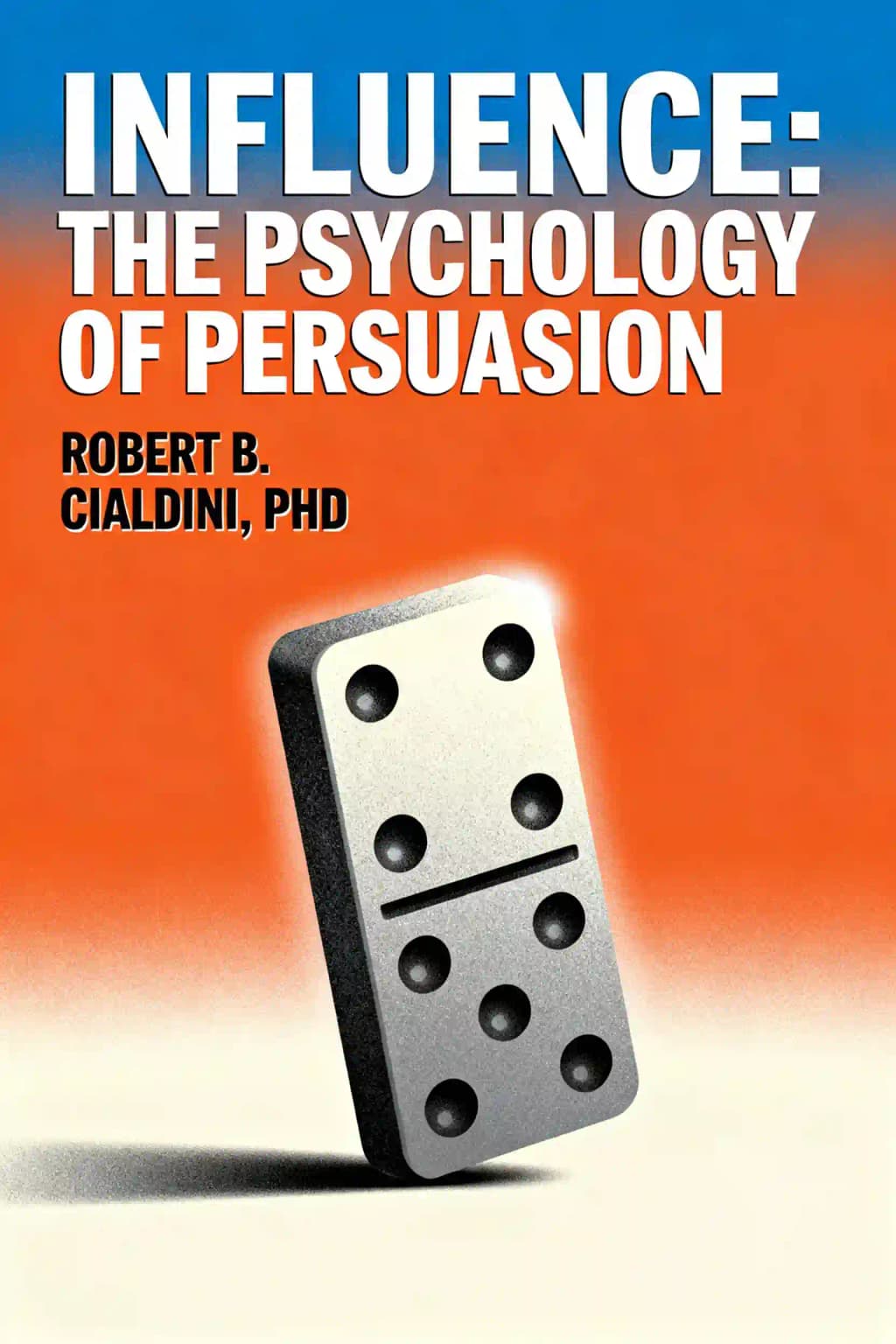
Ever wondered why you bought that unnecessary kitchen gadget at 2 AM? Or why you agreed to attend a party you had zero interest in? Welcome to the fascinating world of persuasion, where psychological triggers silently guide our choices without our awareness. Robert Cialdini's "Influence: The Psychology of Persuasion" has become the bible of behavioral psychology since its publication, selling over 5 million copies worldwide and translated into 30 languages. Even Warren Buffett credits this book for helping him understand market psychology. What makes this work so powerful is its revelation of the hidden mechanisms that drive our decision-making-mechanisms that operate beneath our conscious awareness.
The book emerged from Cialdini's three-year immersion as an "undercover researcher" in the world of compliance professionals-car dealers, telemarketers, fundraisers, and others whose livelihoods depend on getting people to say "yes." What he discovered was both illuminating and disturbing: our decisions are far less rational than we believe, often triggered by psychological shortcuts that evolved to help us navigate a complex world but can be weaponized against us by those who understand them. These shortcuts-which Cialdini calls "weapons of influence"-operate like hidden buttons that, when pushed, produce almost automatic compliance. Let's explore these powerful psychological principles that silently orchestrate our daily choices.
Chapitre 2
The Automatic Pilot of Human Behavior
We live in a world of overwhelming complexity. Each day, we're bombarded with thousands of decisions, from the mundane (what to eat for breakfast) to the momentous (whether to accept a job offer). To cope with this deluge of choices, our brains have developed shortcuts-automatic response patterns that allow us to navigate life without conscious deliberation at every turn.
These mental shortcuts serve us well most of the time. Imagine having to carefully analyze every decision you make throughout your day-you'd be paralyzed by indecision! When you see a red traffic light, you don't need to contemplate its meaning; you stop automatically. When someone smiles at you, you don't need to evaluate whether smiling back is appropriate; you just do it.
But these automatic patterns have a darker side. They can be exploited by those who understand them. Consider the jewelry store owner who accidentally doubled the price of turquoise jewelry that wasn't selling-only to find it sold out the next day. The customers, using the mental shortcut that "expensive = valuable," suddenly found the items irresistible.
This pattern mirrors what ethologists have observed in animal behavior. A mother turkey, for instance, will care for anything that makes a "cheep-cheep" sound (even a stuffed polecat, their natural enemy) while attacking anything silent (even her own chicks). The "cheep-cheep" sound triggers an automatic maternal response, bypassing rational evaluation.
Humans aren't so different. In one experiment, people in line for a copy machine were more likely to let someone cut ahead if they said, "because I'm in a rush"-but interestingly, they were almost equally compliant when the person simply said "because I need to make copies," a non-reason that provided no new information. The word "because" itself triggered automatic compliance, regardless of what followed it.
These mental shortcuts are nearly impossible to eliminate-they're hardwired into our cognitive architecture. But by understanding them, we can recognize when they're being used against us and make more conscious choices. The first step toward freedom from manipulation is awareness of the invisible strings that often guide our behavior.
Chapitre 3
The Reciprocity Rule: Why Free Samples Work
Have you ever wondered why supermarkets offer free samples? Or why charities send you address labels and greeting cards you never requested? These tactics leverage one of the most powerful principles of human behavior: reciprocity.
The rule of reciprocity states that we feel obligated to repay what another person has provided us. This principle is so deeply embedded in human culture that anthropologists have yet to find a society where it doesn't operate. From the Trobriand Islanders of Papua New Guinea to corporate America, the expectation that favors will be returned forms the foundation of social cooperation.
This rule developed for good reason-it allowed early human groups to share resources without fear of loss. One hunter could share meat with another, confident that the favor would be returned when fortunes reversed. Without this trust in reciprocation, human societies might never have evolved beyond subsistence level.
But this beneficial social mechanism can be weaponized against us. The Hare Krishna Society famously exploited reciprocity by giving airport travelers unwanted flowers or books, then requesting donations. Even travelers who disliked the gift often felt compelled to give something in return. The initial "gift" wasn't freely given-it was a strategic move to trigger the reciprocity rule.
What makes reciprocity particularly powerful is that it works even when:
1. We didn't ask for the initial favor
2. We don't particularly like the person who provided it
3. The return favor requested is larger than what we received
In one study, a researcher named Joe asked subjects to buy raffle tickets. Before asking, he would leave the room and return with either nothing, one soda for the subject, or two sodas. When he brought one soda, ticket purchases increased by 65%. When he brought two, purchases jumped by 107%. A small investment yielded significant returns.
A particularly sophisticated application of reciprocity is the "rejection-then-retreat" technique. A requester starts with a large request likely to be refused, then "retreats" to a smaller request-the one they wanted all along. This works because the retreat itself is perceived as a concession, triggering our obligation to reciprocate with a concession of our own.
This explains why a Boy Scout who first asks if you'd like to buy $5 tickets to their circus, then "retreats" to asking if you'll buy $1 chocolate bars instead, is so effective. You perceive his move from the larger to smaller request as a concession, which you feel obligated to match with your own concession-compliance.
To defend against unwanted reciprocity, we must redefine unsolicited "gifts" for what they often are: sales tactics. Once we recognize them as commercial ploys rather than favors, we can decline without feeling obligated. The key is distinguishing genuine gifts from manipulation disguised as generosity.
Chapitre 4
Commitment and Consistency: The Hobgoblins of Our Minds
Why do gamblers become more confident in their horse after placing a bet? Why do people stay in failing relationships long after it's clear they should leave? The answer lies in our powerful drive for consistency.
Once we make a choice or take a stand, we encounter personal and interpersonal pressures to behave consistently with that commitment. This drive is so strong that people will often act against their own best interests to appear consistent with their prior statements or actions.
In a revealing experiment, researchers staged a theft on a New York beach. An accomplice would set up a beach blanket near a subject, turn on a radio, and then leave for a walk. Shortly after, a researcher posing as a thief would grab the radio and run off. When the accomplice had previously asked subjects to "watch my things," almost all subjects became vigilant protectors, often chasing down and confronting the thief. Without that small commitment, virtually none intervened.
This commitment principle explains why seemingly minor actions can lead to major behavior changes. Chinese interrogators during the Korean War didn't start by demanding American prisoners write anti-American essays. Instead, they asked for tiny concessions: "Surely America isn't perfect, right? Could you make a list of some problems?" These small commitments gradually expanded until prisoners found themselves writing full propaganda pieces-and, remarkably, often began to believe what they had written.
The power of commitment is amplified by several factors:
1. Written statements are particularly binding. When homeowners were asked to place large, unsightly "Drive Carefully" signs in their yards, only 17% agreed. But when another group was first asked to sign a small petition for safe driving, 76% later agreed to the signs. The written commitment to the principle of safe driving made the later request consistent with their newly adjusted self-image.
2. Public commitments are stronger than private ones. We're driven to appear consistent in others' eyes. Weight loss clinics and addiction programs use this by having participants publicly announce their goals.
3. Effort strengthens commitment. This explains why fraternities with harsh hazing generate more loyal members-we value what we struggle to attain.
4. Internal attribution is crucial. When people believe they chose a course of action for their own reasons, rather than for external rewards or threats, the commitment becomes part of their self-concept.
This last point explains the effectiveness of the "lowball" technique used by car dealers. They offer an attractive deal to secure your commitment to buying the car. After you've mentally committed to the purchase, they "discover" an error and raise the price. Since you've already decided "I want this car" for your own reasons, many people still buy even at the higher price.
To resist commitment manipulation, listen to your body's signals. When you feel pressured to be consistent with a previous commitment, ask yourself: "Knowing what I know now, would I make the same choice again?" This simple question can break the spell of unwarranted consistency.
Chapitre 5
Social Proof: Following the Crowd
Why do TV shows use laugh tracks despite viewers claiming to hate them? Because they work. Studies show that audiences laugh longer and more often at humor accompanied by canned laughter-especially when the jokes are mediocre. This exemplifies the principle of social proof: we determine what's correct by finding out what others think is correct.
Social proof operates most powerfully under two conditions: uncertainty and similarity. When we're unsure about the proper course of action, we look to others for guidance. And we're most influenced by the actions of people similar to ourselves.
This principle explains why pluralistic ignorance occurs in emergency situations. When something potentially dangerous happens in a public setting-smoke filling a room, someone collapsing-people often look to others to determine if it's truly an emergency. If everyone appears calm (because they're also looking around for cues), no one acts. This explains the tragic case of Kitty Genovese, who was murdered while dozens of neighbors heard her screams but didn't call police-each assuming that if it were truly an emergency, someone else would have acted.
The power of social proof can have life-or-death consequences. Researcher David Phillips discovered that suicide rates spike in regions where a suicide has been highly publicized. Even more telling, the increase occurs primarily in demographic groups similar to the suicide victim. If the victim died in a car crash, fatal single-car accidents increase; if by jumping, jumping deaths increase. This "Werther effect" (named after a Goethe novel that triggered a wave of copycat suicides) demonstrates how powerfully we're influenced by the actions of people like us.
Perhaps the most chilling example of social proof gone wrong was the mass suicide at Jonestown, Guyana, where over 900 followers of Jim Jones died by drinking cyanide-laced Kool-Aid. By isolating his followers in a foreign country, Jones created conditions of extreme uncertainty where people became even more reliant on social cues. When some members began drinking the poison, others followed, creating a cascade of deadly compliance.
To defend against inappropriate social proof, we must recognize when social evidence has been manipulated. Laugh tracks, staged testimonials, and "manufactured" popularity are artificial forms of social proof designed to trigger our automatic following response. By consciously asking "Is this evidence real or manufactured?" we can avoid being led astray by this otherwise useful decision-making shortcut.
Chapitre 6
The Liking Rule: Why Friends Sell More
Why are Tupperware parties so effective at selling plastic containers? Because they leverage one of the most fundamental principles of influence: we prefer to say yes to people we like.
The genius of the Tupperware party isn't the product demonstration by a company representative-it's that the request to buy comes indirectly from a friend who hosts the party. We feel obligated to purchase not because we're convinced by sales arguments, but because we like the host and don't want to disappoint them.
Several factors reliably increase liking:
Physical attractiveness creates a halo effect, where we automatically assign favorable traits like talent, kindness, and intelligence to good-looking people. Studies show attractive people are twice as likely to persuade others and receive more favorable treatment in hiring, courtroom decisions, and helping situations.
Similarity powerfully triggers liking. We like people who are similar to us in opinions, personality traits, background, or lifestyle. This is why salespeople often search for areas of similarity with prospects ("You're from Philadelphia? So am I!") before attempting influence.
Compliments work even when transparently insincere. Car salesman Joe Girard, listed in the Guinness Book of World Records as "the world's greatest car salesman," sent over 150,000 greeting cards to customers each year with the simple message: "I like you." His success stemmed from tapping into our tendency to like those who like us.
Contact and cooperation can build liking, but only under certain conditions. When school desegregation placed students of different races in competitive classroom environments, prejudice often increased. However, when students worked cooperatively toward shared goals, as in the "jigsaw classroom" technique, interracial friendships flourished. This mirrors Muzafer Sherif's classic "Robbers Cave" experiment, where rival boys' camp groups only overcame hostility when faced with cooperative tasks.
Association links people to positive or negative things without logical basis. This explains why bearers of bad news are disliked ("shooting the messenger") and why companies pay celebrities millions to associate with their products. It's also why sports fans say "we won" when their team succeeds but "they lost" when the team fails-we want to associate with success and distance ourselves from failure.
To defend against the liking rule, we should mentally separate our feelings about a requester from the merits of their request. When you feel unusual liking for someone who stands to benefit from your compliance, ask yourself: "If I didn't like this person, would I still want this product/service/deal?" This simple question can protect you from being manipulated through the powerful but irrelevant factor of liking.
Chapitre 7
Authority: The Power of Titles and Uniforms
Why would intelligent hospital nurses prepare to administer clearly dangerous medication doses simply because a doctor ordered it over the phone? This disturbing reality, documented in a study where nurses received instructions from an unknown "doctor" to administer an obviously excessive amount of an unauthorized medication, reveals the extraordinary power of authority in directing human behavior.
Stanley Milgram's famous obedience experiments demonstrated this power most dramatically. When instructed by an authority figure (a scientist in a lab coat), 65% of subjects administered what they believed were potentially lethal electric shocks to innocent victims. These weren't sadistic individuals-they were ordinary people whose sense of personal responsibility had been overwhelmed by the pressure to obey legitimate authority.
This deference to authority has evolutionary roots. Hierarchical social structures with clear authority figures generally benefited human societies by providing organization and coordination. But this adaptive trait becomes dangerous when exploited or followed blindly.
Three symbols particularly trigger automatic deference to authority:
Titles carry immense weight, often disproportionate to the actual expertise they represent. In one study, a visitor introduced as "Dr." was consistently estimated to be taller than the same person introduced without the title. Con artists frequently use impressive titles to gain compliance, knowing few people will verify their credentials.
Clothes signal authority through uniforms and professional attire. Studies show that pedestrians are much more likely to follow a well-dressed individual across the street against the light than someone in casual clothes. More disturbing experiments revealed that people will comply with requests from strangers in guard uniforms, nurse uniforms, or even just a suit and tie at significantly higher rates than the same requests from those in everyday clothes.
Trappings like luxury cars and expensive accessories trigger deference. One experiment found that drivers waited significantly longer before honking at a luxury car blocking traffic than at an economy model. These status symbols act as shorthand for authority and power.
The danger of authority influence lies in its ability to bypass rational thought. When confronted with authority symbols, we often respond automatically rather than evaluating the actual expertise or legitimacy of the authority figure. This explains why con artists impersonating police officers, doctors, or other authorities can so effectively manipulate victims.
To defend against inappropriate authority influence, ask two critical questions: "Is this authority truly an expert in this specific matter?" and "How truthful can we expect this expert to be?" Even legitimate authorities may have conflicts of interest or expertise limited to narrow domains. By separating genuine, relevant expertise from mere symbols of authority, we can benefit from legitimate guidance while avoiding exploitation.
Chapitre 8
Scarcity: The Rule of the Few
Why do "limited time offers" prompt immediate action? Why do "exclusive" or "banned" items become instantly more desirable? The answer lies in the scarcity principle: opportunities seem more valuable when they appear less available.
This principle works through two mechanisms. First, we use an item's availability as a mental shortcut to gauge its quality. If something is difficult to obtain, we assume it must be better. Second, as opportunities become less available, we lose freedoms-and we hate to lose freedoms we already have. Psychologists call this "psychological reactance," and it begins around age two (the terrible twos) when children first discover the power of the word "no."
The scarcity principle manifests in several powerful patterns:
Newly experienced scarcity is especially motivating. When West German car buyers learned that delivery times for a BMW would increase from three to five months, orders jumped so dramatically that the wait increased to over a year. People are more motivated by the thought of losing something than by the thought of gaining something of equal value.
Competition for scarce resources intensifies the effect. When beef was described as "limited in supply" to shoppers, they bought significantly more. But when additionally told that this information was "not publicly announced" (implying they had exclusive access to this knowledge), they purchased twice as much as the first group.
Forbidden information becomes more valuable and believable. When a judge instructs jurors to disregard certain testimony, that testimony actually becomes more influential in their decisions. Similarly, when a book or film is censored, people not only want it more but also develop more favorable attitudes toward its message.
The scarcity principle explains why the "Romeo and Juliet effect" occurs in romantic relationships. When parents interfere with a teenage romance, the relationship often intensifies rather than dissolves. The perception of external barriers makes the relationship seem more valuable and desirable.
Perhaps most fascinating is how scarcity affects perceived value. In one experiment, participants rated cookies in a jar as more desirable when there were only two cookies rather than ten-even though the cookies were identical. Even more telling, the cookies were rated highest when their quantity had been reduced from ten to two (newly experienced scarcity) rather than when there had been only two all along.
To defend against scarcity tactics, recognize the emotional arousal that scarcity triggers. When you feel the sudden surge of desire for something scarce, take a deep breath and remind yourself that the item will likely be just as valuable to you if it's abundant. Ask yourself: "Why do I want this? For its utility to me, or simply because it's hard to get?" This simple reflection can help separate genuine value from the artificial allure of scarcity.
Chapitre 9
The Psychology of Automatic Influence in Modern Life
In today's information-saturated world, our reliance on mental shortcuts has only increased. We simply don't have the time, energy, or capacity to thoughtfully analyze every decision. As information multiplies and life accelerates, we increasingly resort to the simplest cues to guide our choices.
This trend makes understanding the principles of influence more crucial than ever. The six weapons of influence-reciprocation, commitment, social proof, liking, authority, and scarcity-aren't just academic curiosities. They're the psychological levers that move modern society, from marketing to politics to personal relationships.
What makes these principles so powerful is their ability to trigger automatic compliance. Like the mother turkey responding to "cheep-cheep" sounds without conscious thought, we often respond to trigger features in our environment without awareness. A request including the word "because," a white lab coat, a scarcity label-these can bypass our rational decision-making processes and activate programmed responses.
The ethical question isn't whether these principles should exist-they're natural outgrowths of our evolution as social beings and serve vital functions in a complex world. Rather, the question is how we respond when these natural tendencies are exploited by those who understand them better than we understand ourselves.
The most effective defense isn't to eliminate automatic responses-that would be neither possible nor desirable. Instead, we must learn to recognize when these natural principles are being used artificially to manipulate us. When we feel the pull of reciprocity from an unsolicited "gift," the pressure of consistency from a small initial commitment, or the urgency created by artificial scarcity, we can pause and ask: Is this a natural instance of this principle, or is it being manufactured to influence me?
By understanding these principles, we don't become immune to influence-nor should we want to be. Social influence facilitates the cooperation that makes human society possible. But we can become more discerning about when influence attempts deserve our compliance and when they deserve our resistance.
In a world of increasing complexity and accelerating pace, these automatic influence processes will only become more prevalent and more powerful. Our challenge is to harness their benefits while guarding against their misuse-to navigate a world of influence with awareness, intention, and wisdom.
Chapitre 10
Mastering Influence: Ethical Application and Defense
The principles outlined in this book aren't just academic theories-they're powerful tools that shape human behavior every day. Understanding them offers two significant benefits: the ability to recognize when you're being influenced, and the knowledge to ethically influence others when necessary.
For ethical influence, remember that these principles work best when applied naturally rather than artificially. Genuine reciprocity builds relationships; manipulative "gifts" with strings attached destroy trust. Authentic social proof based on real popularity works; manufactured testimonials backfire when discovered. True authority derived from expertise persuades; empty symbols of authority without substance eventually fail.
When defending against unwanted influence, the key is awareness. Most influence attempts succeed because they operate below our conscious radar. Simply recognizing the principle being applied often breaks its spell. When someone offers an unsolicited favor and immediately asks for something in return, naming the tactic ("I see you're trying to use reciprocity here") neutralizes much of its power.
Beyond awareness, specific defenses exist for each principle:
• For reciprocity, redefine unsolicited "gifts" as sales tactics, which removes the feeling of obligation.
• For commitment, ask yourself: "Knowing what I know now, would I make the same choice again?"
• For social proof, question whether the evidence of others' behavior is genuine or manufactured.
• For liking, separate your feelings about the requester from the merits of their request.
• For authority, distinguish between relevant expertise and mere symbols of authority.
• For scarcity, recognize the emotional arousal it creates and evaluate the item's true utility to you.
Perhaps the most universal defense is what Cialdini calls the "heart of hearts" test. When you feel yourself being pulled toward compliance, pause and ask: "What does my intuition tell me about this situation?" Often, our initial gut reaction detects manipulation before our conscious mind can articulate why.
The ultimate goal isn't to become resistant to all influence-that would make us unable to function in human society. Rather, it's to ensure that our compliance decisions are made consciously and voluntarily, based on the genuine merits of the request rather than psychological triggers being manipulated by others.
By understanding these principles, we reclaim agency over our decisions. We can appreciate the elegant psychological mechanisms that facilitate human cooperation while protecting ourselves from those who would exploit them. And perhaps most importantly, we can ensure that our own attempts to influence others remain within ethical boundaries-using these principles to inform and persuade rather than manipulate and coerce.



![[influence-the-psychology-of-persuasion-by-phd-robert-b-cialdini:c0000] Influence: The Psychology of Persuasion p1-1](/_next/image?url=https%3A%2F%2Fd1y2du6z1jfm9e.cloudfront.net%2Fassets%2Fpodcast%2Fgreen.png&w=1024&q=50)
![[influence-the-psychology-of-persuasion-by-phd-robert-b-cialdini:c0003] Influence: The Psychology of Persuasion p1-1](/_next/image?url=https%3A%2F%2Fd1y2du6z1jfm9e.cloudfront.net%2Fassets%2Fpodcast%2Fyellow.png&w=1024&q=50)


