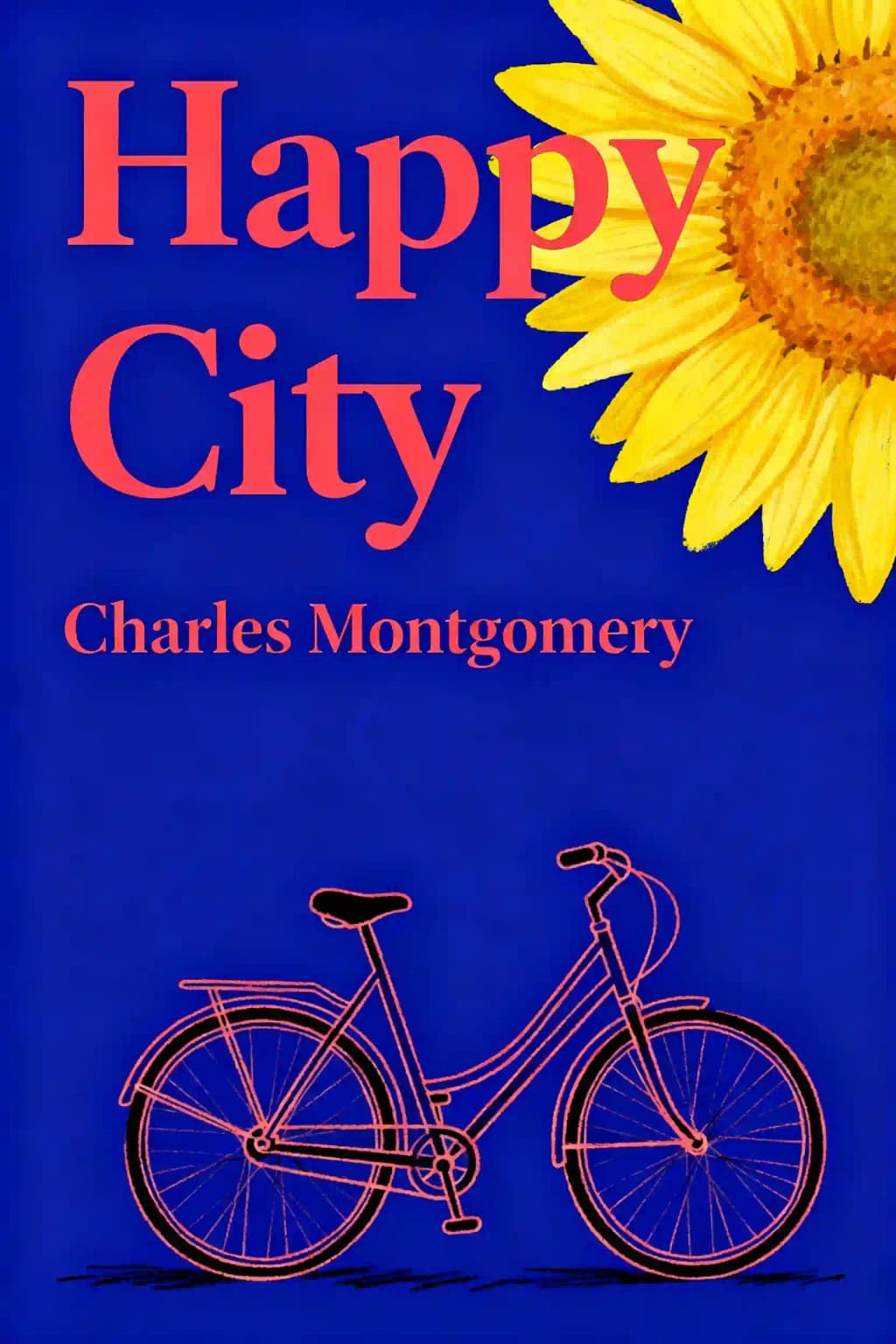
Happy City
Transforming Our Lives Through Urban Design
Aperçu de Happy City
In "Happy City," Charles Montgomery reveals how urban design shapes our happiness more than wealth. Endorsed by Richard Florida and David Suzuki, this award-winning guide shows how cities like Bogota transformed stress into joy - challenging us to reimagine our neighborhoods as engines of wellbeing.
Thèmes clés dans Happy City
- urban design psychology
- social connectivity
- car-free infrastructure
- hedonic urbanism
- commuter well-being
Citations de Happy City
The city can make them happier.
Sprawl wasn't a natural development but a designed, subsidized, and legally mandated urban form.
Social isolation may be the greatest environmental hazard of city living.
Personnages de Happy City
- Charles MontgomeryAuthor and urban design researcher
- Enrique PeñalosaVisionary former mayor of Bogotá, Colombia
- Richard DavidsonNeuroscientist who studied brain activity and joy
À propos de l'auteur
À propos de l'auteur de Happy City
Charles Montgomery is the award-winning author of Happy City: Transforming Our Lives Through Urban Design and a globally recognized urbanist specializing in the intersection of urban design, psychology, and human wellbeing. A Canadian writer born in North Vancouver, Montgomery combines investigative journalism with behavioral science to explore how cities shape happiness, trust, and social connection.
His work is informed by collaborations with institutions like the World Health Organization, the Guggenheim Museum, and governments worldwide, where he conducts urban experiments to reimagine public spaces.
Montgomery’s critically acclaimed The Last Heathen—winner of the Charles Taylor Prize for Literary Non-Fiction—showcases his narrative prowess in cultural exploration. His writing has appeared in The Guardian, The New York Times, and Canadian Geographic, earning accolades including National Magazine Awards.
Named among Planetizen’s 100 Most Influential Urbanists (2023), Montgomery founded Happy Cities, a consultancy driving wellbeing-focused urban policies across four continents. Happy City has been praised by The New York Times for reframing urban discourse and remains essential reading for planners, policymakers, and citizens alike. His forthcoming book on designing for trust is anticipated in 2026.
Telecharger le resume de Happy City
Obtenez le resume de Happy City en PDF ou EPUB gratuit. Imprimez-le ou lisez-le hors ligne a tout moment.
FAQ sur ce livre
Happy City explores how urban design impacts human happiness, arguing that cities can reduce isolation, improve health, and foster community through smarter planning. Charles Montgomery combines psychology, neuroscience, and global case studies—like Bogotá’s pedestrian zones and Copenhagen’s bike lanes—to show how walkability, green spaces, and social infrastructure create thriving communities.
Urban planners, policymakers, architects, and residents passionate about livable cities will find actionable insights. Environmental activists and anyone curious about the link between public spaces and well-being will benefit from its research-driven strategies for combating urban sprawl and car dependency.
Yes—it’s praised for blending academic rigor with engaging storytelling. The book offers practical solutions to modern urban crises, making it essential for understanding how design shapes social connectedness, equity, and sustainability. Critics highlight its global examples and advocacy for citizen-led change.
Montgomery links design to happiness through reduced commuting stress, increased social interaction, and access to nature. Car-centric layouts isolate people, while walkable neighborhoods and mixed-use zones promote spontaneity and trust among residents, boosting mental and physical health.
Key ideas include:
- Walkability and bike-friendly infrastructure.
- Mixed-use zoning to reduce commuting.
- Biophilic design integrating nature into urban spaces.
- Social equity through accessible public transit and parks.
- The “right to the city” concept, emphasizing citizen participation in planning.
Bogotá’s pedestrian-friendly La Septima, Vancouver’s green spaces, and Copenhagen’s cycling networks are featured. These cities demonstrate how prioritizing people over cars, fostering community hubs, and embracing density can enhance quality of life.
He critiques car-centric design for increasing isolation, pollution, and stress. Alternatives like public transit, cycling, and pedestrian zones reduce these harms while fostering healthier, more social communities.
- “The right to the city… is earned through the act of habitation” (Henri Lefebvre)
- “Social connectedness is the most powerful driver of human happiness”, underscoring how design shapes interactions.
Some argue it underplays economic barriers to urban transformation and the challenges of retrofitting existing cities. Others note its focus on Western case studies, though Montgomery addresses global applicability in later chapters.
Advocate for walkable neighborhoods, mixed-use developments, and green corridors. Support policies that prioritize pedestrians over cars and engage in local planning initiatives to demand inclusive, sustainable design.
Unlike Jane Jacobs’ The Death and Life of Great American Cities, Montgomery emphasizes happiness metrics and global examples. It bridges academic theory and real-world application, offering a holistic view of urban well-being.
As cities grapple with climate change, inequity, and post-pandemic recovery, its lessons on density, green infrastructure, and community-driven design remain vital for creating resilient, joyful urban spaces.