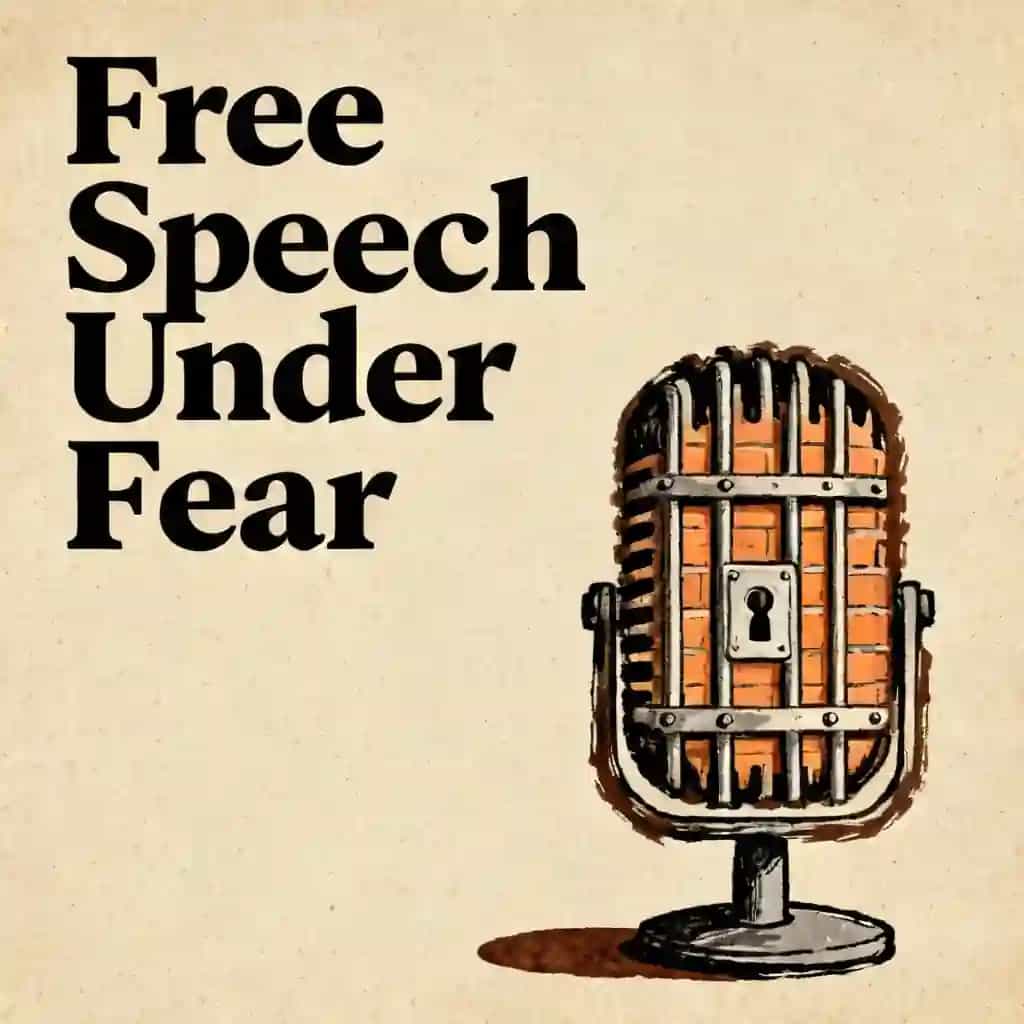
Free Speech
Ten Principles for a Connected World
Aperçu de Free Speech
In a world where everyone speaks globally, Timothy Garton Ash's "Free Speech" offers ten vital principles for navigating digital expression. Praised by scholars worldwide and sparking debate across 13 languages on freespeechdebate.com - can we balance free expression against harm in our connected age?
Thèmes clés dans Free Speech
- digital cosmopolis
- content moderation
- global communication ethics
- post-gutenberg media
- civilized conflict
Citations de Free Speech
Living well together in this world-as-city requires more and better free speech.
Villages are small, homogeneous, and often intolerant places.
City air makes free.
So long as I can communicate, I am still alive.
Our electronic neighborhood more closely resembles a global city—a cosmopolis.
Personnages de Free Speech
- Timothy Garton AshAuthor and Oxford professor of European studies
- Tony JudtHistorian who reflected on communication and life
- Theo van GoghDutch filmmaker murdered for his expressions
- Mohammed BouyeriAssailant who opposed free speech principles
- KanziBonobo used as a case study in communication
À propos de l'auteur
À propos de l'auteur de Free Speech
Timothy Garton Ash, acclaimed historian, political commentator, and author of Free Speech, is a leading voice on European integration, democratic transitions, and civil liberties. A Professor of European Studies at the University of Oxford and Senior Fellow at Stanford’s Hoover Institution, his work bridges academic rigor and accessible journalism.
His expertise stems from decades chronicling Central Europe’s transformation post-communism, notably captured in award-winning books like The Polish Revolution: Solidarity and The File: A Personal History. Themes of political freedom, diversity, and the tension between national identity and globalized democracy permeate his writing, including his Guardian columns and the critically praised Homelands: A Personal History of Europe.
Awarded the 2017 Charlemagne Prize for contributions to European unity, Garton Ash combines firsthand experience of Cold War-era dissent with incisive analysis of contemporary challenges. His insights are shaped by years embedded in divided Berlin, collaborations with figures like Václav Havel, and advisory roles in transatlantic policy debates.
Free Speech reflects his lifelong commitment to defending open societies, informed by his Stasi-monitored research in East Germany and global advocacy for human rights. A trusted authority for policymakers and readers alike, his works are translated into over 20 languages and cited as essential reading on modern Europe.
Telecharger le resume de Free Speech
Obtenez le resume de Free Speech en PDF ou EPUB gratuit. Imprimez-le ou lisez-le hors ligne a tout moment.
FAQ sur ce livre
Timothy Garton Ash’s Free Speech: Ten Principles for a Connected World examines the challenges and ideals of free expression in a globally interconnected digital age. The book argues for balancing unrestricted speech with ethical norms, addressing issues like online harm, censorship, and the role of the internet. It proposes ten principles to navigate conflicts between free expression, diversity, and security in modern societies.
Timothy Garton Ash is a renowned historian, political commentator, and Professor of European Studies at the University of Oxford. A prolific author, he has written extensively on democracy, free speech, and European transformation. His works, including The Magic Lantern and Facts Are Subversive, blend academic rigor with accessible analysis. He also writes a syndicated column for The Guardian.
This book is ideal for policymakers, journalists, academics, and anyone interested in the ethics of free expression in the digital era. Its interdisciplinary approach appeals to readers exploring the intersection of technology, human rights, and governance. Ash’s global case studies—from China’s censorship to online abuse—make it relevant for understanding contemporary debates.
Yes. Critics praise the book as a “master class in political analysis” for its depth, historical context, and timely examination of internet-era free speech. While dense, its insights into balancing free expression with societal harms offer enduring value. The Guardian calls it “essential reading for navigating 21st-century discourse.”
Ash identifies four ideals: free speech enables individuals to realize their humanity, discover truth, hold governments accountable, and foster coexistence amid diversity. These principles underpin his argument for minimizing legal restrictions while cultivating ethical speech norms globally.
Ash highlights the internet’s dual role as a tool for amplifying both “courageous reason” and harmful content like hate speech. His ninth principle urges defending digital communication systems from undue control by governments or corporations, emphasizing transparency and accountability in tech governance.
The Catch-22 refers to the paradox where people in unfree societies cannot openly discuss free speech’s merits because they lack the freedom to do so. Ash argues this creates a knowledge gap, as their perspectives remain silenced even as global debates unfold.
The ten principles include defending free expression across borders, respecting human dignity, reducing fear of violence, fostering open-mindedness, and promoting robust yet civil discourse. These aim to create a “framework for civilized conflict” in diverse societies.
Ash acknowledges speech can “hurt as well as heal” but cautions against conflating harm (e.g., inciting violence) with mere offense. He advocates legal limits only for direct harms, while addressing offensive speech through social norms and counter-speech.
Some scholars note the tension between Ash’s idealistic norms and the realities of enforcing them globally. Critics argue his framework risks underestimating systemic power imbalances, though most praise his balanced, pragmatic vision.
Unlike narrower legal analyses, Ash’s book combines philosophy, global case studies, and tech policy. It stands out for its accessible synthesis of thinkers like John Stuart Mill with modern challenges like online surveillance and misinformation.
As debates over AI moderation, deepfakes, and global censorship intensify, Ash’s principles provide a roadmap for reconciling free expression with emerging digital risks. The book’s emphasis on ethical norms over state control remains critical for policymakers and tech leaders.