Chapitre 1
Progress Isn't Dead - Just Overlooked
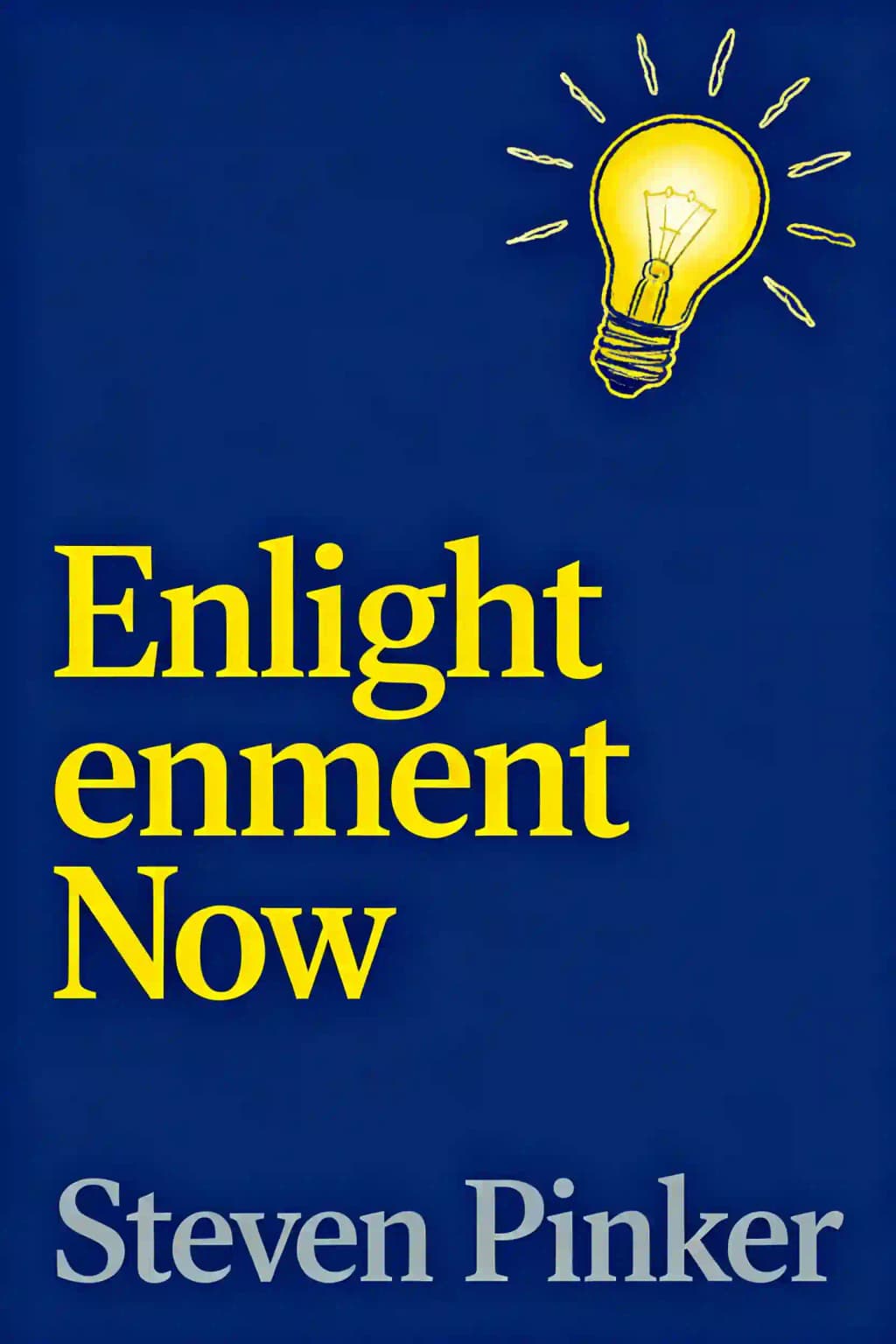
In a world dominated by doom-scrolling and catastrophic headlines, Steven Pinker's "Enlightenment Now" delivers a radical message: life is actually getting better. Named Bill Gates' "favorite book of all time," this data-driven masterpiece challenges our collective pessimism with overwhelming evidence of human progress.
Pinker, Harvard's rock star psychologist whose TED talks have amassed over 15 million views, meticulously documents how violence, poverty, and disease have plummeted while education, safety, and lifespans have soared globally. The counterintuitive brilliance? Our psychological bias toward negativity blinds us to these improvements.
What makes this book transformative isn't just its optimistic thesis - it's how it rewires your perception of reality. You'll gain an evidence-based framework for evaluating world events beyond sensationalist media narratives and discover why enlightenment values - reason, science, and humanism - remain our most powerful tools for continued progress.
This isn't toxic positivity or wishful thinking. It's a compelling case that understanding how far we've come is essential for solving the challenges that remain.
Chapitre 2
Entropy, Evolution, Information: The Modern Framework
To truly grasp the human condition, we need to understand three fundamental concepts that even the brilliant Enlightenment thinkers couldn't fully comprehend: entropy, evolution, and information. These modern insights provide the framework for understanding both our challenges and our triumphs.
Entropy, emerging from 19th-century physics, reveals how isolated systems inevitably slide toward disorder. It's why your coffee cools, why buildings crumble without maintenance, why life itself requires constant energy to maintain its complex structures. The Second Law of Thermodynamics isn't just about physics-it's a profound insight into why existence itself requires effort. Every ordered structure in the universe, from stars to civilizations, exists in defiance of entropy's relentless pull toward chaos.
Have you ever wondered why maintaining anything-your home, your body, your relationships-requires constant effort? That's entropy at work. It explains why creating is harder than destroying, why organization requires energy, why life itself is such an improbable miracle.
Evolution provides the second key insight. Before Darwin and Wallace, the complexity of living things seemed to demand a designer. Evolution revealed how natural selection, operating over vast timescales, could produce the appearance of design without a designer. Through countless iterations of variation and selection, nature generates astonishingly complex adaptations. This process doesn't contradict entropy-rather, living things use energy flows to create local pockets of increasing order.
The third concept, information, bridges the physical and mental worlds. Information isn't a physical substance but a pattern that can be encoded, transmitted, and transformed while maintaining its essential structure. Our DNA contains information that guides the development of our bodies. Our brains encode information about the world in neural patterns. Our cultures transmit information across generations through language and technology.
Together, these concepts explain humanity's unique ecological niche-what anthropologists call the "cognitive niche." We evolved oversized brains capable of processing and storing vast amounts of information. We developed language to share this information. We created technologies to extend our capabilities. And through cooperation and cultural evolution, we've been able to accumulate knowledge across generations, allowing each new generation to stand on the shoulders of those who came before.
This scientific understanding of our place in the cosmos doesn't diminish human achievement-it magnifies it. We are the species that can understand entropy and work against it, that can comprehend our evolutionary origins, that can consciously direct the flow of information to reshape our world. Knowledge becomes our greatest tool in the struggle against chaos.
Chapitre 3
Progressophobia: Why We Deny Progress
Why do we resist acknowledging progress? Despite overwhelming evidence of human advancement, many people-especially intellectuals and news consumers-remain convinced that the world is getting worse. This paradox requires explanation.
The negativity bias in our psychology plays a crucial role. Our minds evolved to give more weight to negative information than positive-an asymmetry that made survival sense for our ancestors. A single predator or poisonous plant could end your life, while a single meal or pleasant experience wouldn't significantly improve your survival odds. This cognitive bias makes us hyper-attentive to threats and problems while taking improvements for granted.
Consider how quickly we adapt to technological improvements. The miracle of instant global communication through smartphones quickly becomes mundane. Clean water from taps no longer amazes us. Yet one terrorist attack or natural disaster captures our complete attention. Our psychological wiring predisposes us to notice what's wrong rather than what's right.
The news media amplifies this tendency. As the saying goes, "If it bleeds, it leads." Journalists don't report on planes that land safely or children who don't go hungry. They report on crashes and famines because unusual, negative events make compelling stories. This creates a deeply distorted view of reality where progress is invisible while problems are spotlighted.
Intellectual culture often compounds this bias. Many academics and cultural critics have adopted a stance of reflexive pessimism, seeing optimism as naive or complacent. Acknowledging progress can seem like endorsing the status quo or diminishing the urgency of remaining problems. Critics often respond to evidence of improvement by changing the subject to areas where problems persist, creating a moving target that ensures perpetual dissatisfaction.
This "progressophobia"-a term coined by psychologist Steven Pinker-isn't just a matter of mood. It has real consequences for how we approach problems. If we believe things are getting worse despite our best efforts, we may conclude that our current approaches are failing and abandon them for untested alternatives or give up entirely. Conversely, recognizing where progress has occurred can help us understand which approaches work and build upon them.
What's the alternative to progressophobia? Not blind optimism, but conditional optimism-the belief that progress is possible but not inevitable, that it depends on human choices guided by Enlightenment values. By acknowledging past improvements while remaining clear-eyed about current challenges, we can approach problems with both urgency and hope.
Chapitre 4
Life's Great Escape: The Health Revolution
For most of human history, life was nasty, brutish, and short. The average person could expect to live only to their late twenties, with childhood mortality claiming roughly half of all children before their fifth birthday. Disease, famine, and violence were constant companions. Then something remarkable happened-what economic historians call "the Great Escape."
Beginning in the 19th century, life expectancy began to rise dramatically, first in Western Europe and North America, then spreading globally. Today, the average human can expect to live more than 70 years-a transformation so profound it's difficult to fully comprehend. This isn't just about adding years to life; it's about adding life to years, as people now spend more time in good health than ever before.
What drove this revolution? Clean water and improved sanitation played crucial roles, preventing the spread of deadly waterborne diseases like cholera and typhoid. Vaccines conquered killers like smallpox, polio, and measles. Antibiotics turned once-fatal infections into treatable conditions. Better nutrition strengthened immune systems. Public health measures from hand-washing to food safety regulations prevented countless deaths.
The global nature of this transformation is particularly striking. While significant gaps in life expectancy remain between countries, these gaps have narrowed dramatically. The poorest countries today have higher life expectancies than the richest countries did a century ago. Child mortality has plummeted worldwide, with the global under-five mortality rate falling from around 43% in 1800 to under 4% today. Maternal mortality has declined similarly, making childbirth vastly safer.
These improvements didn't happen by accident or through market forces alone. They required scientific research, public health infrastructure, and government action. The conquest of smallpox-a disease that killed hundreds of millions throughout history-came through a coordinated global vaccination campaign led by the World Health Organization. Clean water systems required public investment and regulation. Vaccination programs needed organization and funding.
The health revolution continues today, though the challenges have evolved. Infectious diseases have declined while chronic conditions like heart disease and cancer have become more prominent. Yet even here, progress continues-age-adjusted death rates from heart disease have fallen by more than half in many developed countries since the 1960s. Cancer survival rates continue to improve. New threats like COVID-19 emerge, but our scientific and public health tools for responding have never been more powerful.
Perhaps most remarkably, this health revolution has occurred alongside population growth rather than at its expense. Malthusian predictions that population growth would outstrip food supply and lead to mass starvation have been repeatedly disproven as agricultural productivity has increased even faster than population. The world now produces more than enough food to feed everyone, with hunger persisting due to distribution problems and poverty rather than absolute scarcity.
Chapitre 5
From Scarcity to Abundance: The Economic Miracle
For most of human history, extreme poverty was the norm. Even the wealthiest societies lived on the edge of subsistence, with the vast majority struggling to meet basic needs. Then came an economic transformation so profound that it's hard to grasp its magnitude-what economic historians call "the hockey stick of human prosperity."
This transformation began with the Industrial Revolution but has accelerated and spread globally, creating wealth on a scale our ancestors couldn't have imagined. The global economy has grown more than 100-fold since 1800, while the population has increased only about 7-fold. This means the average person today is dramatically wealthier than their ancestors.
More importantly, this growth has increasingly benefited the world's poorest people. The proportion of humanity living in extreme poverty-defined as living on less than $1.90 per day in 2011 purchasing power-has fallen from about 90% two centuries ago to less than 10% today. The sharpest decline has occurred in recent decades, with extreme poverty falling from about 36% in 1990 to under 10% today. This represents the fastest reduction in poverty in human history.
The global middle class has expanded dramatically, particularly in Asia. Countries like China, South Korea, and more recently India have achieved economic growth rates that have lifted hundreds of millions from poverty to relative prosperity within a single generation. The "Great Convergence" between developed and developing economies means that global inequality, while still significant, has actually decreased in recent decades as poorer countries have grown faster than rich ones.
What drove this economic miracle? The spread of market economies, allowing for specialization and trade, played a crucial role. Technological innovation continuously increased productivity. The rule of law and stable institutions created environments where investment and entrepreneurship could flourish. Education and health improvements created more productive workforces. International trade allowed countries to specialize in areas of comparative advantage.
The benefits extend far beyond mere numbers on a balance sheet. Economic growth has meant more food on tables, more children in schools, more medicines in clinics, more books in libraries. It has meant fewer children working in fields and factories, fewer women trapped in domestic drudgery, fewer elderly people abandoned to destitution. Material progress has enabled social progress.
Yet challenges remain. Economic growth has come with environmental costs that must be addressed. Inequality within many countries has increased even as global inequality has decreased. Economic insecurity remains a reality for many even in wealthy countries. The benefits of growth haven't reached everyone equally.
The solution isn't to abandon the engines of prosperity but to steer them toward more sustainable and inclusive outcomes. Environmental challenges require technological innovation and policy changes, not a rejection of modernity. Inequality calls for better education, social safety nets, and labor market reforms, not a dismantling of market economies. The goal should be to extend the benefits of economic growth to all while minimizing its costs.
Chapitre 6
The Environment: Beyond Apocalypse and Denial
Environmental concerns often polarize discussions about human progress. Some see environmental degradation as proof that modern civilization is fundamentally unsustainable. Others dismiss environmental concerns as exaggerated obstacles to economic growth. A more nuanced perspective-what some call "ecomodernism"-offers a third way.
This approach recognizes that environmental challenges are real and serious but solvable through human ingenuity and wise policy. It acknowledges that industrialization has brought environmental costs alongside its benefits but sees technology as potentially part of the solution rather than just the problem.
Consider air and water pollution. As countries industrialize, pollution typically increases initially but then decreases as they grow wealthier and implement environmental protections. This "environmental Kuznets curve" has played out in developed countries, where air and water quality have improved dramatically since the 1970s despite continued economic growth. Rivers that were once industrial sewers now support fish and recreation. Cities once choked with smog now have cleaner air. These improvements came through regulation, technology, and changing social values-not by abandoning industrial civilization.
Resource depletion fears have similarly proven overblown. Predictions that we would run out of various minerals, fuels, and metals have repeatedly failed to materialize as exploration, efficiency improvements, and substitution have expanded available supplies. The stone age didn't end because we ran out of stones; the oil age won't end because we run out of oil. Human ingenuity consistently finds alternatives before absolute scarcity forces our hand.
Population growth, once seen as an inevitable driver of environmental catastrophe, has moderated as countries develop. Fertility rates decline naturally as societies become more educated, urbanized, and affluent. World population growth has slowed dramatically and is projected to plateau or even decline later this century. This "demographic transition" happens without coercive policies-simply by giving people, especially women, more education, opportunities, and access to family planning.
Climate change represents a more complex challenge. Unlike local pollution, greenhouse gas emissions affect the global climate system regardless of where they occur. The benefits of emissions (energy services) accrue locally while the costs are distributed globally-creating a classic collective action problem. Yet even here, there are reasons for conditional optimism.
Renewable energy costs have fallen dramatically, making clean energy increasingly competitive with fossil fuels. Energy efficiency continues to improve. Carbon intensity (emissions per unit of economic output) is declining in many economies. Technologies for carbon-free energy, from advanced nuclear to enhanced geothermal to next-generation solar, continue to develop. Carbon pricing mechanisms are spreading, albeit too slowly.
The path forward requires neither apocalyptic pessimism nor complacent denial. It demands technological innovation, policy reform, and international cooperation. It means embracing the human capacity to solve problems rather than assuming either that markets will automatically solve everything or that catastrophe is inevitable. Environmental challenges are serious but solvable-if we apply Enlightenment principles of reason, science, and human welfare to addressing them.
Chapitre 7
Peace in Our Time: The Decline of Violence
We live in the most peaceful era in human history. This statement might seem absurd given the headlines about terrorism, civil wars, and mass shootings. Yet the evidence is clear: violence has declined dramatically across multiple dimensions and timescales.
For most of history, war between major powers was the norm, with peace as merely brief intervals between conflicts. Today, direct war between great powers has become virtually unthinkable-what historians call "the Long Peace" since 1945. Interstate wars of any kind have become increasingly rare. Civil wars continue but have generally declined since their peak in the early 1990s, though recent conflicts in Syria and elsewhere have partially reversed this trend.
The decline extends beyond organized warfare. Homicide rates in Europe have fallen by roughly 30-fold since the Middle Ages. Even in the United States, despite its relatively high murder rate among developed countries, homicide has fallen dramatically from its peaks. Other forms of violence-from capital punishment to corporal punishment, from domestic violence to hate crimes-have also declined in most regions.
What explains this remarkable transformation? Several factors have contributed. The rise of effective states with monopolies on legitimate violence reduced private vendettas and tribal warfare. Commerce created incentives for cooperation rather than conquest. Literacy and mass communication fostered empathy by allowing people to see the world through others' eyes. Democratic governance and international institutions created mechanisms for resolving disputes peacefully. Humanitarian ideas spread, delegitimizing violence as a solution to problems.
Steven Pinker calls this process the "civilizing mission"-a gradual expansion of the circle of moral concern and the development of institutions that channel human competition into non-violent forms. It's not that human nature has fundamentally changed; rather, our social arrangements have evolved to better control our violent impulses and channel our energies in more constructive directions.
This doesn't mean violence has disappeared or that progress is inevitable. Civil wars continue to devastate countries like Syria and Yemen. Terrorism, while statistically a minor cause of death, creates fear disproportionate to its actual toll. Criminal violence remains a serious problem in many regions. Nuclear weapons continue to pose an existential threat. Progress can be reversed if the institutions and values that support peace are undermined.
Yet the overall direction is clear. We have become less violent not despite modernity but because of it. The same Enlightenment values that have increased health and wealth have also promoted peace-by encouraging empathy, creating effective governance, fostering international cooperation, and providing non-violent means to resolve conflicts and achieve goals.
This perspective doesn't diminish the suffering of those who continue to experience violence. Rather, it provides hope that such suffering can be further reduced through the same processes that have made violence rarer already. By understanding what has worked to reduce violence, we can work to extend those benefits to more people and regions.
Chapitre 8
Democracy's March: Freedom's Uneven Progress
Democracy represents one of humanity's greatest achievements-a system that prevents both the chaos of anarchy and the oppression of tyranny. Throughout most of history, people lived under one of these two evils: either the unchecked power of despots or the violent disorder that erupted when authority collapsed. Democracy offers a third way, allowing societies to maintain order while protecting individual rights and enabling peaceful transfers of power.
The global spread of democracy constitutes one of the most significant developments of the past two centuries. In 1800, virtually no country qualified as a democracy by modern standards. Today, more than half the world's countries are democratic, and about two-thirds of the world's population lives in countries that are either democracies or at least partly democratic.
This transformation occurred in what political scientists call "waves." The first wave began in the 19th century with the expansion of suffrage in the United States, Britain, and parts of Europe. The second followed World War II, as decolonization and the defeat of fascism led to new democracies. The third wave began in the mid-1970s with democratization in Southern Europe, Latin America, and parts of Asia, accelerating after the Cold War ended in 1989-91.
The benefits of democracy extend beyond political freedom. Democracies rarely go to war with each other. They experience fewer civil wars and genocides. They suffer fewer famines, as governments accountable to their citizens have incentives to prevent mass starvation. They generally provide better education, healthcare, and environmental protection. While democracy doesn't guarantee prosperity, it creates conditions favorable to sustainable economic development.
Yet democracy remains imperfect and incomplete. Many democracies struggle with corruption, polarization, and the influence of money in politics. Some have backslid toward authoritarianism in recent years. Others maintain democratic forms while undermining democratic substance through media control, judicial manipulation, or electoral fraud-what scholars call "competitive authoritarianism" or "illiberal democracy."
Moreover, democracy in practice often falls short of democratic ideals. Voters may be poorly informed or manipulated. Special interests may capture the political process. Minorities may face discrimination despite formal equality. Elections may become personality contests rather than substantive debates about policy.
These challenges don't negate democracy's value but highlight the need to strengthen democratic institutions and cultures. Independent courts, free press, vibrant civil society, and constitutional protections for minority rights are essential complements to electoral democracy. Civic education, media literacy, and norms of political civility help democracy function effectively.
The global trend toward democracy has faced setbacks in recent years, with some countries experiencing democratic backsliding and authoritarian leaders gaining prominence. Yet the long-term trajectory remains positive. Each generation has seen more people living under democratic governance than the last. Even in countries that have experienced democratic reversals, the idea of democracy as the legitimate form of government remains powerful.
Democracy's advance represents not just a political change but a moral one-a recognition that governments derive their just powers from the consent of the governed, that all citizens deserve equal political rights, and that peaceful transfers of power through elections are preferable to violence or dynastic succession. These ideas, rooted in Enlightenment thinking, have transformed how we understand political legitimacy and human rights.
Chapitre 9
Knowledge Revolution: The Democratization of Learning
The expansion of knowledge and education represents one of humanity's greatest achievements. Throughout most of history, literacy and formal education were privileges of tiny elites. Today, more than 86% of adults worldwide can read and write, and basic education has become nearly universal in most countries.
This transformation began during the Enlightenment, which valued education not just for practical skills but for developing autonomous, rational citizens. Educational access expanded dramatically during the 19th and 20th centuries as nations established public school systems and made education compulsory. The trend continues today, with developing countries rapidly increasing educational access and quality.
The results are striking. Global literacy rates have risen from about 12% in 1800 to over 86% today. Average years of schooling have increased from less than 2 years in 1870 to more than 8 years globally today. Gender gaps in education have narrowed significantly, though they haven't disappeared. These trends continue, with literacy and educational attainment rising in virtually every region.
Beyond formal schooling, knowledge has become more accessible through other means. Public libraries, once rare, are now common in many countries. The internet has made vast amounts of information available to anyone with a connection. Smartphones have brought this capability to billions of people, including many in developing countries who never had access to traditional libraries or educational resources.
This democratization of knowledge has profound implications. It enables greater economic productivity as workers bring more skills and knowledge to their jobs. It promotes better health as people learn about nutrition, hygiene, and disease prevention. It strengthens democracy by creating more informed citizens. It empowers individuals to make better decisions about their lives and futures.
Perhaps most remarkably, there's evidence that cognitive abilities themselves have improved. The "Flynn effect"-named after researcher James Flynn-refers to the substantial and sustained increase in IQ scores across the world during the 20th century. While IQ tests are imperfect measures, this trend suggests that education, nutrition, cognitive stimulation, and other environmental factors have enhanced people's ability to think abstractly and solve problems.
These cognitive gains reflect not genetic changes but environmental improvements-better nutrition, more stimulating environments, and especially more education focused on abstract thinking. As societies have moved from concrete, immediate concerns toward more abstract, hypothetical reasoning, people's cognitive abilities have adapted and developed accordingly.
The knowledge revolution continues today, though challenges remain. Educational quality varies widely both between and within countries. Digital divides persist despite the spread of technology. Misinformation spreads alongside accurate information online. Critical thinking skills lag behind access to information for many people.
Yet the overall trajectory is clear: more people have access to more knowledge than ever before, and this access continues to expand. The Enlightenment vision of an educated citizenry capable of rational self-governance has progressed further than its originators could have imagined, though it remains incomplete. By continuing to invest in education, information access, and critical thinking skills, we can further advance this crucial dimension of human progress.
Chapitre 10
Quality of Life: Beyond Survival to Flourishing
Progress isn't just about living longer or having more possessions-it's about having greater opportunities to flourish as human beings. Modern life offers possibilities for fulfillment that our ancestors couldn't have imagined, from the mundane freedom of having leisure time to the profound liberty of choosing one's own path in life.
Consider time-our most fundamental resource. Throughout most of history, the vast majority of people spent nearly all their waking hours working just to survive. Today, working hours have declined dramatically in developed countries, creating unprecedented opportunities for leisure, learning, creativity, and relationships. The average American worked about 60 hours weekly in 1870 but less than 40 hours by 2000. Similar trends have occurred across developed countries.
Household technologies have transformed domestic life, particularly for women. Tasks that once consumed entire days-washing clothes, preparing meals, cleaning homes-can now be accomplished in minutes or hours thanks to appliances we take for granted. As Thomas Edison predicted, electricity has indeed "reorganized life" by freeing people, especially women, from endless domestic drudgery.
Retirement-the concept of an extended period of leisure after one's working years-is another modern innovation. Throughout most of history, people worked until they physically couldn't continue, then lived briefly in dependency before death. Today, many can look forward to decades of active, healthy retirement, supported by pensions, savings, and social security systems. The poverty rate among elderly Americans has fallen from about 35% in 1960 to under 10% today.
Communication technologies have transformed human connection. Distance once meant separation, with letters taking weeks or months to arrive if they arrived at all. Today, we can instantly connect with loved ones across the globe through voice, video, and text. Social media, despite its problems, allows people to maintain relationships that would have been impossible in earlier eras. For immigrants, refugees, and others separated from family, these technologies provide crucial lifelines of connection.
Travel has become accessible to ordinary people, not just elites. In 1950, air travel was a luxury few could afford; today, billions of passenger journeys occur annually. This mobility allows people to experience different cultures, maintain relationships across distances, pursue opportunities, and broaden their horizons in ways previous generations couldn't imagine.
Cultural experiences have similarly democratized. The variety of foods available to ordinary people today would astonish our ancestors, who typically ate the same limited diet throughout their lives. Music, film, literature, and art from around the world are accessible through digital platforms. Education and information on virtually any topic are available online.
These improvements haven't eliminated all problems. Many people still struggle with time poverty, working multiple jobs to make ends meet. Digital divides persist despite the spread of technology. Consumerism can create artificial wants that don't contribute to genuine well-being. Social isolation remains a challenge despite connectivity tools.
Yet the overall picture is one of expanding capabilities and choices. Philosopher Martha Nussbaum identifies fundamental human capabilities-including bodily health, senses and imagination, emotional attachment, practical reason, and control over one's environment-that constitute a flourishing life. By these measures, more people today have more opportunities to flourish than ever before.
This doesn't mean modern life is perfect or that everyone benefits equally. Significant disparities persist both within and between countries. Mental health challenges like anxiety and depression haven't disappeared despite material progress. Yet the expansion of human capabilities and choices represents genuine progress toward the Enlightenment goal of enabling human flourishing.
Chapitre 11
Existential Threats: Reason in the Face of Catastrophe
Humanity faces real threats to its continued existence-from nuclear weapons to climate change, from engineered pandemics to artificial intelligence gone awry. How should we think about these risks without succumbing to either complacency or paralysis?
The Enlightenment approach offers a middle path between denial and despair. It acknowledges serious risks while maintaining that rational analysis and coordinated action can address them. It recognizes human fallibility while affirming human agency. It sees catastrophic risks not as inevitable doom but as problems to be solved.
Nuclear weapons present perhaps the clearest existential threat. The destructive power of modern nuclear arsenals, combined with the potential for a "nuclear winter" that could devastate agriculture globally, means that a full-scale nuclear exchange could threaten human civilization or even survival. Yet despite these dangers, no nuclear weapon has been used in conflict since 1945. Nuclear deterrence, arms control agreements, and the strengthening of the nuclear taboo have helped prevent nuclear catastrophe.
Climate change presents different challenges. Unlike nuclear war, which would be an immediate catastrophe, climate change unfolds gradually with effects distributed unevenly across regions and generations. This makes coordinated action more difficult but not impossible. The combination of technological innovation (making clean energy cheaper), policy measures (like carbon pricing), and international agreements (like the Paris Agreement) offers pathways to limit warming while continuing human development.
Biological threats, from natural pandemics to engineered pathogens, represent another category of risk. COVID-19 demonstrated both human vulnerability to novel diseases and our capacity to develop countermeasures rapidly. Strengthening global health systems, improving biosurveillance, and developing technologies to detect and respond to outbreaks can reduce these risks.
Artificial intelligence has generated both excitement and anxiety about its long-term implications. While scenarios of superintelligent AI destroying humanity make for compelling fiction, they often rest on questionable assumptions about intelligence, motivation, and technological development. A more balanced approach recognizes both AI's potential benefits and risks, focusing on concrete safety issues and governance challenges rather than speculative doomsday scenarios.
Across these varied threats, several principles emerge. First, technological development is generally part of the solution, not just the problem. The same human ingenuity that created nuclear weapons also created verification technologies that help prevent their use. Clean energy innovations offer paths beyond fossil fuels. Biotechnology provides tools to detect and counter pathogens.
Second, international cooperation is essential for addressing global risks. No country can solve climate change or prevent pandemics alone. Institutions like the United Nations, the World Health Organization, and various arms control regimes, despite their imperfections, provide frameworks for coordinated action.
Third, open societies with free inquiry, democratic governance, and market economies have proven more resilient and adaptive than closed, authoritarian systems. The ability to acknowledge problems, debate solutions openly, and mobilize diverse talents and resources provides crucial advantages in addressing complex challenges.
Finally, maintaining perspective is vital. Throughout history, humans have faced existential threats-from ice ages to plagues to world wars-and survived through adaptation and innovation. Our current challenges, while serious, come at a time when we have more knowledge, resources, and capabilities than ever before.
This doesn't guarantee success. Progress isn't automatic or inevitable. It requires clear thinking, moral commitment, and effective action. But by approaching existential risks with the Enlightenment combination of rational analysis, scientific knowledge, humanitarian values, and belief in progress, we give ourselves the best chance of creating a future where humanity not only survives but thrives.
Chapitre 12
Reason, Science, and Humanism: The Path Forward
The Enlightenment values of reason, science, and humanism remain essential guides for addressing 21st-century challenges. These principles offer practical approaches to improving human welfare in our complex world.
While humans aren't perfectly rational, we can recognize and compensate for our limitations. Scientific practices like peer review and statistical analysis help overcome individual biases, while democratic institutions and markets provide systems that function despite human imperfections. As economist Thomas Schelling noted, those most aware of their intellectual limitations often best appreciate these systematic approaches.
Science strengthens reason through systematic testing of ideas against reality. Its power lies not in scientific authority but in the process of hypothesis testing, evidence gathering, and theory revision. The integration of scientific thinking with humanities and social sciences, through fields like cognitive psychology and behavioral economics, provides deeper insights into human nature and society.
Humanism provides the moral framework for applying reason and science, prioritizing human well-being while acknowledging our social nature and interdependence. This approach doesn't reject religious traditions but evaluates beliefs and practices based on their effects on human welfare rather than adherence to tradition or authority.
Together, these Enlightenment values offer a practical vision of progress that's neither naively optimistic nor pessimistic. They suggest that human problems, while serious, can be addressed through knowledge, reason, and goodwill. This perspective acknowledges complexity and tradeoffs while providing a proven path to improving human welfare.
By recommitting to these principles, we can address major challenges like climate change, inequality, and political polarization through evidence-based policies guided by human flourishing. The Enlightenment project remains unfinished but continues to offer a viable path forward.