Chapitre 1
When the Taps Run Dry: A Thirst for Survival
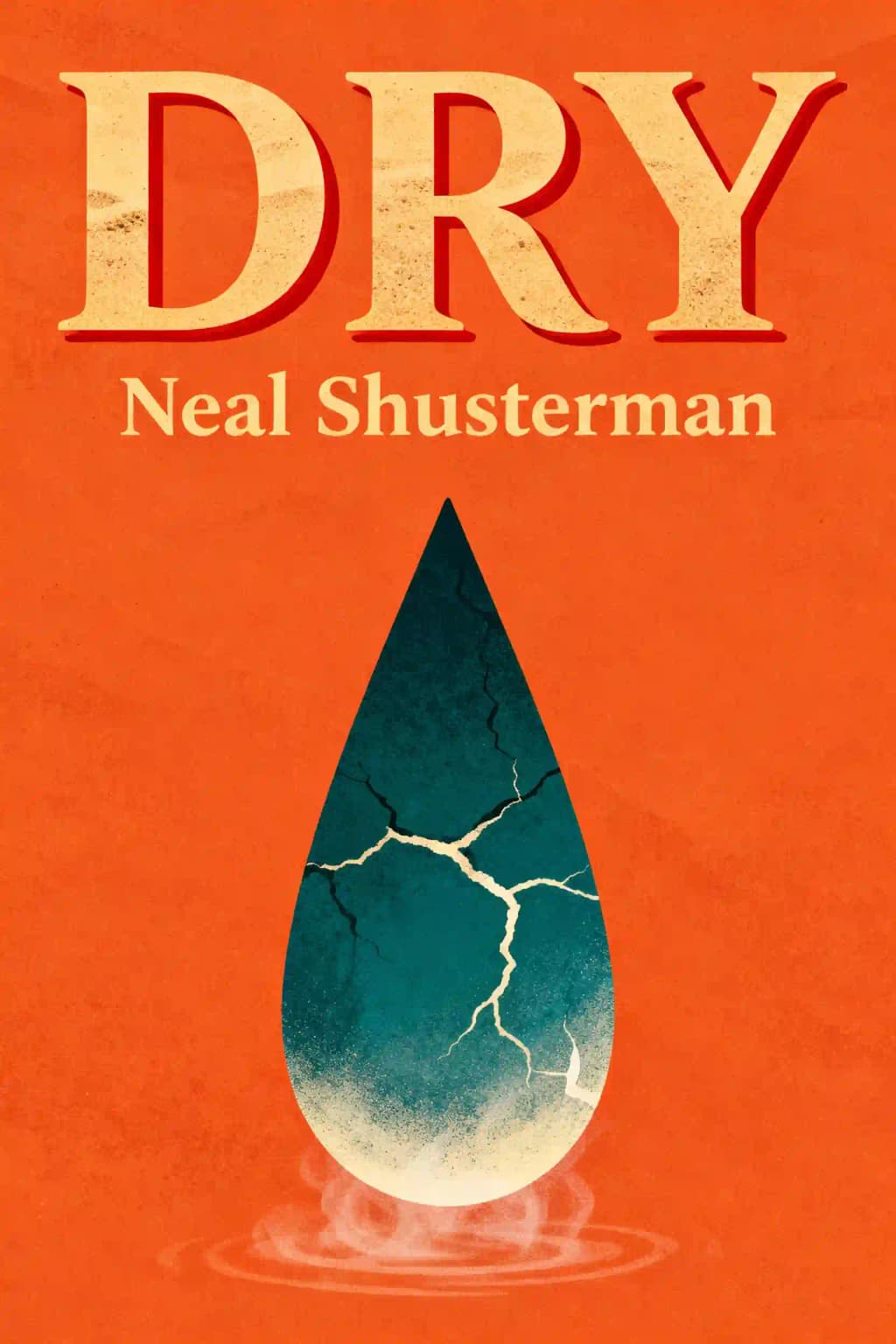
Imagine waking up one morning to find your faucets completely dry. Not just yours-everyone's. No warning, no timeline for restoration, just... nothing. This nightmarish scenario forms the heart of Neal and Jarrod Shusterman's gripping novel "Dry," which has captivated readers since its 2018 release. The father-son writing duo crafted a terrifyingly plausible disaster scenario that Stephen King called "all too real," while The New York Times praised its "haunting realism." The book has developed a cult following among climate activists and disaster preparedness communities, with celebrities like Leonardo DiCaprio reportedly recommending it to highlight water scarcity issues. As California continues to face historic droughts and water restrictions, "Dry" feels less like fiction and more like prophecy with each passing year. What happens when the most basic human need-water-suddenly disappears? How quickly would society unravel? And what would you do to survive?
Chapitre 2
The Tap-Out Begins: When Normal Life Evaporates
The Tap-Out strikes Southern California without warning, transforming everyday life into a desperate scramble for survival within hours. For teenager Alyssa Morrow, the crisis begins during what should have been a routine shopping trip to Costco. When she discovers the bottled water shelves stripped bare, she demonstrates remarkable adaptability by grabbing bags of ice instead - a resourceful solution that marks her as someone capable of lateral thinking under pressure. This quick-witted decision proves especially valuable as the crisis unfolds, though her triumph is short-lived when a businessman in an expensive suit attempts to commandeer their ice supply, offering empty promises of "sharing." This early incident serves as a harbinger of how rapidly social contracts can dissolve when basic resources become scarce.
The suburban landscape transforms with unsettling speed. Sprinklers fall silent, swimming pools become precious reservoirs, and neighbors who once chatted casually over garden fences now regard each other with suspicion. Against this backdrop, we meet Kelton McCracken, Alyssa's teenage neighbor whose family stands apart in their preparedness. The McCrackens, long dismissed as paranoid "preppers," have methodically prepared for catastrophe with military precision - their 35-gallon water tank, extensive food stores, and sophisticated filtration systems suddenly seeming less like paranoia and more like prophecy.
The media's response to the crisis reveals deeply troubling patterns in disaster coverage. While Hurricane Noah dominates national headlines with its dramatic footage of wind-battered coastlines, California's potentially more lethal water emergency receives minimal attention. News stations, driven by ratings and spectacular visuals, relegate the Tap-Out to brief mentions and sidebar stories. This skewed coverage demonstrates how modern media often prioritizes dramatic imagery over substantive threats, potentially delaying critical public awareness and emergency response.
By the crisis's second day, previously established social hierarchies begin to crumble. Mr. Burnside, the neighborhood's HOA president - who once wielded his authority to harass the McCrackens about their security installations and emergency preparations - arrives at their door clutching expensive Scotch as a peace offering. His suggestion about "pooling neighborhood resources" draws bitter amusement from Kelton's father, who savors the ironic role reversal. The water crisis rapidly reshapes community power dynamics, elevating practical preparedness above traditional status markers like wealth or social position.
The situation deteriorates dramatically by day three, as the veneer of civilization wears increasingly thin. Military vehicles requisition water from public facilities, including the high school swimming pool, while household taps run completely dry. The neighborhood's descent into chaos accelerates when Roger Malecki, desperate for water for his infant, confronts the McCrackens. Despite his emotional plea about his baby's needs, Kelton's father maintains his hardline stance on self-reliance, leading to a violent confrontation that demonstrates how quickly basic human needs can override social conventions and legal constraints. This incident marks a turning point, showing how rapidly a community can fracture when survival instincts override social bonds.
Chapitre 3
Society Unravels: Three Days to Animal
The Shustermans brilliantly illustrate society's rapid disintegration through a series of snapshots from different perspectives, each revealing how quickly civilization crumbles when water - humanity's most basic need - disappears. Activist Camille Cohen, who had predicted the water shortage by meticulously analyzing quarterly public water reports and infrastructure maintenance schedules, spots a water supply truck making selective deliveries to privileged locations. This inequitable distribution of resources - with the wealthy and politically connected receiving priority access - becomes a flashpoint for civil unrest, highlighting how disaster amplifies existing social inequalities.
Meanwhile, David Chen, an Orange County Water District employee of fifteen years, drives a truck of reclaimed water while wearing a bulletproof vest - standard issue now for all utility workers. His current delivery is to the Huntington Beach power plant, which has transformed into a makeshift fortress and refuge for utility workers and their families. The facility's chain-link fences are reinforced with razor wire, and armed security patrols the perimeter. But as he approaches, hundreds of desperate people from the beach notice his water truck, forming a human barricade and surrounding the vehicle with a mix of pleading and menace.
The scene escalates horrifically as Pete Flores, the power plant manager, watches from his second-floor office window. A desperate mob attacks the truck, stripping bottles from it like piranha stripping flesh, smashing the windshield with makeshift weapons, and violently pulling out the driver. When a security guard emerges with a shotgun and fires a warning shot, the mob - now operating with a hive mind born of desperation - disarms him and pulls him into the churning mass of bodies. Despite Flores's frantic calls for police backup, it's too late - hundreds of people flood into the plant in an unstoppable human tsunami, overwhelming the remaining security personnel.
These vignettes demonstrate how quickly civilization's veneer can crack when basic needs go unmet. As survival expert Kelton ominously explains, we're experiencing "Three Days to Animal" - the theory that humans are just three days of desperate thirst away from reverting to their most primitive state. The Tap-Out has become a brutal experiment in this theory, with Southern California as its unwilling laboratory.
The crisis reveals different survival strategies emerging among the population. Some flee northward, creating unprecedented gridlock on freeways stretching for hundreds of miles. Others form impromptu communities, like Charity's freeway commune that develops specialized roles - scouts who gather supplies, sentries who keep watch, and even a former nurse serving as their medic. Still others turn predatory, like the "water-zombies" who attack anyone they suspect of having resources, operating in packs and using increasingly sophisticated ambush tactics.
As Alyssa, her brother Garrett, and their neighbors Kelton and Jacqui navigate this increasingly dangerous landscape, they witness how quickly moral boundaries shift and social contracts dissolve. When confronted by three dehydrated teenagers attacking an elderly man for his water bottle, Alyssa intervenes, only to find herself threatened. The leader - a blue-eyed boy with cracked lips, sunburned skin, and a biohazard neck tattoo - demonstrates the depths of human desperation when he licks her spit off his fingers for hydration. This haunting image encapsulates how dehydration reduces humans to their most basic animal instincts, stripping away the civilized behaviors we take for granted.
Chapitre 4
The Desperate Journey: When Survival Trumps Morality
As water becomes increasingly scarce in Southern California, our protagonists form an unlikely alliance with Jacqui, a street-smart girl who saved them from violent attackers at an abandoned gas station, and Henry, a charismatic but manipulative teen who initially exploited the crisis by selling bottled water at extortionate prices from his family's convenience store. Their shared goal becomes reaching Kelton's family's "bug-out" - a hidden survival shelter stocked with supplies and water filtration systems in the remote reaches of Angeles National Forest.
Their harrowing journey reveals how quickly disaster strips away social pretenses and conventional morality. Alyssa, once preoccupied with AP English papers and varsity soccer practice, now finds herself calculating kill zones and contemplating using Kelton's spare Glock against human threats. Kelton, previously mocked as the weird "prepper" kid with his tactical gear and survival obsession, becomes the group's lifeline with his extensive knowledge of wilderness survival and defensive tactics. Henry's deceptive charm, which he once used to price-gouge desperate customers, becomes essential for negotiating safe passage through hostile territories. And Jacqui, hardened by previous trauma in foster homes and on the streets, provides the ruthless edge needed to survive in this brutal new reality.
The group's internal dynamics shift constantly as they navigate both physical dangers and escalating moral compromises. When they discover Henry has deceived them about having additional water supplies hidden in his backpack, the betrayal nearly results in his execution - only Alyssa's intervention saves him. Yet they remain bound together by desperate necessity, each bringing crucial skills to their collective survival: Kelton's tactical knowledge, Henry's social manipulation, Jacqui's street smarts, and Alyssa's medical training from summers as a camp counselor.
Their journey takes them through increasingly apocalyptic landscapes: abandoned suburban neighborhoods where bodies lie in driveways, FEMA evacuation centers that have devolved into militarized concentration camps, and raging forest fires that threaten to trap and incinerate them. At each turn, they face impossible choices that challenge their fundamental humanity. When Alyssa discovers an elderly woman with a jug of water in a stranded camper, she makes the terrible choice to assault her and steal it, knowing the woman will likely die in the approaching wildfire. She races back to save her dying brother Garrett, forcing the precious liquid down his throat while acknowledging she's become the very monster she once feared - all to save someone she loves.
Similarly, when Kelton confronts two predatory men threatening to assault the female members of their group, he kills them with a mechanical efficiency that surprises even himself - "just pop, pop and it was done." The clinical ease with which he takes human life reveals how quickly survival instincts can override years of moral conditioning and civilized behavior.
Perhaps most poignantly, Jacqui - who initially appeared the most hardened and selfish of the group - finds her humanity precisely when others are losing theirs. With severely burned hands from attempting to save water bottles from a burning vehicle, she watches Alyssa race back with a small cup of water for her brother. Though desperately thirsty herself, with cracked lips and a swollen tongue, Jacqui chooses not to take it. "In this moment of restraint," she reflects, "while everyone around me loses their humanity, I've somehow found mine." This moment marks a profound shift in her character, suggesting that maintaining one's moral compass might require more strength than surrendering to survival instincts.
Chapitre 5
Fire and Water: Nature's Brutal Extremes
The Shustermans masterfully employ California's natural extremes - drought and wildfire - as both literal and metaphorical forces in their narrative. As our protagonists flee toward San Gabriel Reservoir, they find themselves caught between these twin threats: dying of thirst or burning alive. The authors draw deeply from California's environmental history, where cyclical droughts and devastating wildfires have shaped both the landscape and its inhabitants for centuries.
The forest fire pursues them relentlessly, matching their pace as they climb a steep hill seeking escape. The fire becomes almost sentient, a predator hunting exhausted prey - its orange fingers reaching through the smoke, its heat breathing down their necks like a living creature. The description evokes primal fears, transforming a natural phenomenon into something mythically terrifying. When they reach the hilltop, they finally see the reservoir just a quarter mile away - but raging fire blocks their path, and their northern escape route ends in a fifty-foot cliff. They're cornered with no way out, trapped in nature's deadly embrace.
The physical environment mirrors their psychological state: the suffocating smoke represents their diminishing hopes, while the surrounding flames reflect their mounting desperation. The drought-parched landscape becomes a character itself - cracked earth, withered vegetation, and an atmosphere thick with ash and fear. Every step through this hellscape requires immense willpower, their bodies already weakened by days of dehydration.
In this moment of ultimate desperation, Alyssa makes the most horrific decision yet - preparing to shoot her brother rather than let him burn alive. The weight of the hidden gun against Garrett's head represents the impossible choices forced upon survivors in extreme circumstances. This moment crystallizes the novel's exploration of moral boundaries in crisis situations. With trembling fingers on the trigger, Alyssa embodies the ultimate question: what sacrifices are we willing to make for those we love?
Salvation arrives unexpectedly in the form of a water bomber plane, transforming certain death into sudden hope. The deluge drenches them, saving their lives and extinguishing the immediate threat. This dramatic intervention carries powerful symbolism - the life-giving water they've desperately sought throughout their journey now falls from the sky like divine intervention.
The water bomber pilot emerges as a crucial character, though never named. He typically maintains professional detachment by seeing evacuees as "ants from high altitude to preserve his sanity" - a necessary psychological defense mechanism for someone regularly witnessing disaster. Yet in this crucial moment, he makes a deeply human choice. Despite orders to drop water elsewhere, he intervenes after spotting people in danger, having "flown too low to jettison his humanity." His decision represents a victory of compassion over protocol, of individual conscience over institutional orders.
This moment of grace - one human choosing to help others despite protocol - offers a counterpoint to the many instances of cruelty and selfishness throughout the novel. It suggests that even in our darkest moments, humanity retains the capacity for compassion and sacrifice. The scene's resolution brings together the novel's central themes: the tension between survival and morality, the power of human connection, and the delicate balance between nature's destructive and life-giving forces.
Chapitre 6
The Aftermath: Living with What We've Done
Two weeks after water service is partially restored, survivors process their experiences in starkly different ways. Alyssa, now keenly attuned to human behavior, observes that people fall into four distinct categories: the oblivious who determinedly maintain their pre-crisis routines, shopping and socializing as if nothing changed; survivors with PTSD who jump at unexpected sounds and stockpile water bottles under their beds; the fulfilled who discovered their inner strength during the crisis and now walk with newfound purpose; and the shadows - those who move silently through their days, haunted by choices they made to survive.
School has resumed, but the atmosphere is heavy with absence. Empty chairs serve as silent memorials in every classroom - three teachers and thirty-eight students died during the Tap-Out, while dozens more remain unaccounted for. The halls feel eerily quiet between classes. Some survivors move like ghosts of their former selves. Hali Hartling exemplifies this transformation - once the queen bee who commanded attention in designer clothes, she now slips through hallways in oversized hoodies, her eyes downcast, carrying secrets that have stripped away her former confidence. Her closest friends whisper about what happened in her gated community during those dark days.
The physical infrastructure shows signs of recovery - water pressure is stabilizing, stores are restocking, and power runs consistently. But psychological scars run deep and manifest in complex ways. Alyssa spends hours in the shower but cannot watch water spiral down any drain without experiencing panic attacks. Garrett develops an obsessive relationship with faucets, repeatedly turning them on and off, sometimes for hours, as if reassuring himself of his control over this once-scarce resource. Kelton's family, once a model of preparedness and unity, is splintering - his parents are divorcing after fifteen years of marriage, their fortress-like house is on the market, and his father, Henry, has destroyed his extensive gun collection in a bonfire after accidentally killing Brady during a confused confrontation in their darkened basement.
These lasting psychological impacts reveal the true cost of disaster - not just in the immediate death toll but in permanently altered worldviews and fractured relationships. Yet amid this collective trauma, connections formed during the crisis provide unexpected strength. Alyssa and Kelton, who barely acknowledged each other as neighbors before, now share an unshakeable bond forged in survival. They describe their relationship as that of "old friends who've known each other for a hundred years - it's just that ninety-five of them happened in one week."
This compressed intimacy - relationships forged in extreme circumstances - offers a powerful counterbalance to the novel's darker themes. While the Tap-Out exposed humanity's capacity for selfishness and savage violence, it also demonstrated our remarkable ability to form meaningful connections precisely when they're most needed. These bonds, tested by fire and strengthened by shared trauma, become lifelines for survivors trying to navigate their new normal.
Chapitre 7
The New Normal: When Crisis Reshapes Reality
The novel concludes with a powerful juxtaposition - Disneyland reopening two weeks after the Tap-Out ended. The park has been meticulously cleaned of ash, vagrants, and graffiti, its iconic Main Street restored to pristine condition, though nearly forty percent of employees haven't returned to work. Over 200,000 people died during the crisis - the highest non-war fatality count in American history - yet people queue for hours to enter this symbol of normalcy and magic, desperate to reclaim a sense of pre-crisis innocence.
This image perfectly encapsulates America's complicated relationship with disaster - our simultaneous desire to memorialize and forget, to move forward and rebuild, often without fully processing collective trauma. The "Emerald Gates" open, welcoming humanity back to the Happiest Place on Earth, "where dreams never die and hope remains eternal." Yet this return to apparent normalcy occurs while morgues are still processing bodies, identification efforts continue, and survivors attend weekly therapy sessions to process their trauma. The contrast between celebration and mourning creates a distinctly American tableau.
The "new normal" encompasses both restoration and irreversible changes. Water service has resumed, but with strict twice-weekly rationing. People have developed entirely new habits around conservation - collecting shower water in buckets, maintaining emergency supplies, treating every drop as precious. These practices persist even as infrastructure recovers. Relationships have been permanently altered - some families and friendships strengthened through shared ordeal, others irreparably damaged by the choices made under pressure. Divorce rates spike in the aftermath, while paradoxically, so do marriage proposals.
Perhaps most significantly, fundamental priorities have shifted. The trivial concerns that once occupied Alyssa's mind - school papers, social media status, peer group dynamics - now seem absurdly superficial compared to basic survival. Yet human nature also demonstrates remarkable resilience and adaptability, with some people quickly reverting to pre-crisis behaviors despite everything they've witnessed. Shopping malls reopen to eager crowds, while memorial services continue in neighboring buildings.
This tension between remembering and forgetting, between learning from disaster and rushing back to comfort, forms the novel's final meditation. As Alyssa and Kelton playfully imagine checking in with each other at various milestone moments in their futures - graduations, weddings, children - we're left with a complex emotion. There's a bittersweet recognition that humans can endure terrible things and still find reasons to continue, to connect, to hope, even as the experience fundamentally reshapes their understanding of what matters. The novel suggests that true resilience lies not in returning to exactly what was, but in carrying forward both the scars and the wisdom gained from surviving.
Chapitre 8
When the Well Runs Dry: The Fragility of Civilization
"Dry" serves as a haunting thought experiment about civilization's precarious nature. By removing just one essential resource - water - the Shustermans demonstrate how rapidly social structures can unravel and moral boundaries blur. The novel's genius lies in its methodical exploration of how quickly ordinary people can transform when survival instincts take over. Neighbors turn against neighbors, friends become competitors, and previously unthinkable actions become justified through the lens of desperation.
These questions resonate beyond fiction because water scarcity represents an increasingly urgent global threat. Climate change, population growth, and aging infrastructure create a perfect storm of vulnerability. Cape Town's "Day Zero" water crisis in 2018 brought the city within weeks of completely depleted reservoirs, forcing residents to line up at water collection points under military supervision. California's ongoing mega-drought has forced unprecedented water restrictions, threatening agriculture and urban sustainability. The Colorado River Basin agreement teeters on the brink as seven states compete for dwindling resources. Meanwhile, countries like Yemen and Ethiopia face mounting tensions over water access, demonstrating how resource scarcity can catalyze conflict.
"Dry" succeeds not just as a thrilling narrative but as a prescient warning about infrastructure fragility. The systems we depend on - clean water flowing from taps, well-stocked grocery shelves, reliable electricity - operate on a knife's edge of complex interdependencies. The novel's preppers, initially portrayed as paranoid extremists, emerge as practical realists who recognized civilization's vulnerability. Their preparation highlights society's dangerous assumption that modern conveniences are permanent rather than privileges requiring constant maintenance and foresight.
The story weaves hope through its apocalyptic landscape through characters who maintain their humanity despite crushing circumstances. Charity, the "Water Angel," risks everything to help strangers when self-preservation would be easier. The water bomber pilot breaks protocol, choosing compassion over rules. Jacqui discovers her capacity for altruism precisely when others surrender to their basest instincts. These characters demonstrate that crisis can reveal humanity's noble qualities alongside its darker nature.
As environmental challenges intensify - from rising seas to extreme weather events - "Dry" offers both warning and wisdom. While systems may fail, human ingenuity and compassion remain powerful forces for survival. The novel suggests that true disaster preparedness isn't just about stockpiling supplies but about fostering community resilience. The strongest communities during the Tap-Out weren't those with the most resources, but those who maintained social bonds and shared what they had. This insight feels particularly relevant as we face increasing environmental uncertainties - no one survives alone, and our greatest strength lies in our connections to each other.