
Cut Costs Not Corners: A Practical Guide to Staying Competitive and Improving Profits

Aperçu de Cut Costs Not Corners
In "Cut Costs Not Corners," business guru Colin Barrow reveals how companies like Samsonite thrive by slashing expenses without sacrificing quality. What if the secret to surviving economic downturns isn't painful cuts, but strategic efficiency? Your competitive edge awaits.
- Shift cost-cutting from crisis mode to continuous strategic process
- Eliminate non-value-added activities while protecting core service quality
- Apply zero-base budgets to justify every expense annually
- Optimize capital cycle by reducing inventory and speeding collections
- Leverage technology for lean operations without sacrificing output standards
- Negotiate supplier consolidation for bulk purchasing discounts
- Implement activity-based costing to reveal hidden process waste
- Convert fixed assets to cash through strategic sell-leasebacks
- Audit space utilization to right-size office and storage needs
- Build crisis resilience through daily cash flow monitoring systems
- Balance short-term austerity with long-term efficiency investments
- Colin Barrow’s approach ties cost control directly to profit growth
À propos de l'auteur de Cut Costs Not Corners
Colin Barrow, author of Cut Costs Not Corners, is a renowned business strategist and bestselling authority on entrepreneurship and financial management. With over 25 books to his name, including The 30 Day MBA series and The Business Plan Workbook, Barrow distills decades of expertise into actionable frameworks for business efficiency.
His career spans leadership roles such as Head of the Enterprise Group at Cranfield School of Management, non-executive director of a venture capital fund, and strategic advisor to global firms—experiences that inform his pragmatic approach to cost optimization.
A visiting professor at universities in the US, Europe, and Asia, Barrow merges academic rigor with real-world insights. His works, widely used in MBA programs and corporate training, emphasize scalable strategies for sustainable growth. Recognized for his contributions to business education and public service, he was appointed CBE by Queen Elizabeth II in 2004.
Barrow’s Cut Costs Not Corners has become a go-to resource for leaders navigating economic uncertainty, praised for its balance of tactical precision and long-term vision. Explore his companion guides, Starting & Running a Business All-in-One and The 30 Day MBA in Business Finance, for further mastery of entrepreneurial fundamentals.
FAQ sur Cut Costs Not Corners
What is Cut Costs Not Corners by Colin Barrow about?
Cut Costs Not Corners provides actionable strategies for businesses to reduce expenses while maintaining quality. Colin Barrow emphasizes efficiency improvements through waste identification, lean manufacturing principles, and continuous improvement programs. The book combines tactical advice (like Six Sigma and just-in-time inventory) with tools for financial analysis and long-term cost management.
Who should read Cut Costs Not Corners?
This book is ideal for business owners, managers, and entrepreneurs seeking sustainable cost-reduction methods. It’s particularly valuable for those in manufacturing or operations roles, as well as leaders aiming to balance profitability with service quality.
What are the key concepts in Cut Costs Not Corners?
Key ideas include:
- Differentiating value-added, non-value-added, and unnecessary activities in business processes.
- Implementing zero-base budgeting to justify expenses annually.
- Adopting lean manufacturing and Six Sigma for operational efficiency.
- Prioritizing continuous improvement through performance metrics.
How does Cut Costs Not Corners approach cost reduction differently?
Barrow argues against one-time cost-cutting measures, advocating instead for embedding efficiency into daily operations. The book focuses on eliminating waste without compromising output quality, using tools like capital cycle optimization and space utilization analysis.
What practical frameworks does Colin Barrow provide?
The book includes:
- A three-step waste identification model (value/non-value/unnecessary activities).
- Guidelines for conducting financial statement analysis to pinpoint cost-saving opportunities.
- Strategies for supplier consolidation and distribution route optimization.
How does Cut Costs Not Corners address crisis management?
Barrow outlines crisis-specific tactics like renegotiating supplier contracts, liquidating redundant assets, and minimizing tax liabilities. These are framed as extensions of long-term cost management rather than reactive measures.
What are common criticisms of the book?
While praised for actionable advice, some readers note the examples lean heavily toward manufacturing. Smaller businesses or service industries may need to adapt certain strategies.
How does this book compare to Barrow’s The 30 Day MBA series?
Unlike his broader MBA guides, Cut Costs Not Corners drills deeply into operational finance and efficiency. It serves as a specialized companion for implementing cost-control strategies outlined in his other works.
Can the strategies apply to remote/work-from-home businesses?
Yes. Barrow’s principles on space optimization, technology budgeting, and process streamlining are adaptable to remote teams. The book’s emphasis on metrics aligns with distributed workforce management.
What role does technology play in Barrow’s cost-cutting approach?
The author advocates for targeted tech investments that automate repetitive tasks and reduce human error. However, he cautions against overpaying for underutilized platforms, emphasizing ROI-focused procurement.
How relevant is Cut Costs Not Corners in 2025?
With global supply chain disruptions and inflation, the book’s focus on resilient cost structures remains timely. Updated examples in newer editions address post-pandemic challenges like hybrid work models and AI-driven automation.
What are alternatives to Cut Costs Not Corners?
For complementary reads, consider The Lean Startup (Eric Ries) for small-business efficiency or Good to Great (Jim Collins) for broader operational excellence. Barrow’s work is more finance-focused than these titles.
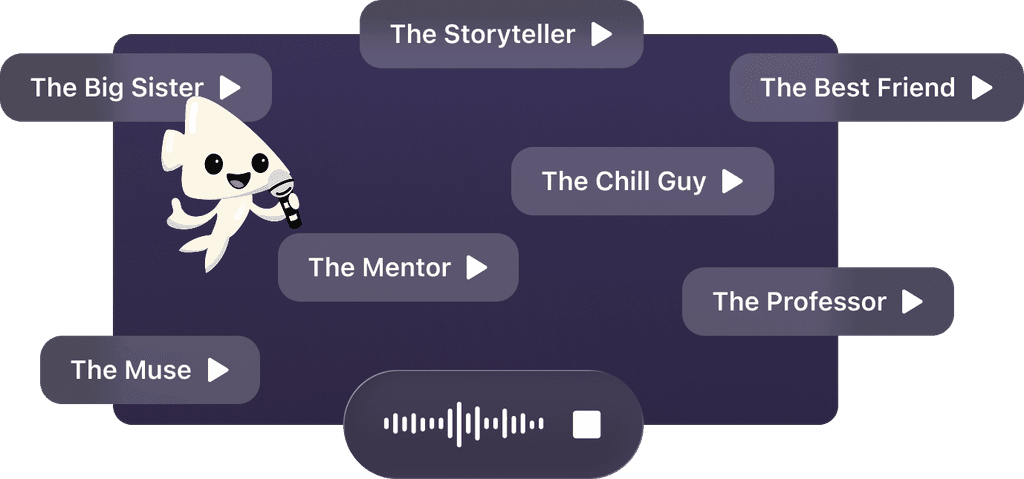
Ressentez le livre à travers la voix de l'auteur
Transformez les connaissances en idées captivantes et riches en exemples
Capturez les idées clés en un éclair pour un apprentissage rapide
Profitez du livre de manière ludique et engageante
Personnages de Cut Costs Not Corners
- Colin BarrowAuthor and expert on strategic cost management
- Michael PorterStrategist who identified cost leadership
- T.P. WrightDeveloper of the experience curve concept
Thèmes clés dans Cut Costs Not Corners
- strategic cost management
- operational efficiency
- frugal innovation
- sustainable business scaling
- overhead reduction
Citations de Cut Costs Not Corners
Cost cutting should be forever.
Cost cutting suffers from persistent misconceptions.
Cost leadership represents a primary strategic advantage.
Low cost shouldn't be confused with low price or quality.
Explorez Votre Façon d'Apprendre
 Mode Résumé Rapide
Lisez ou écoutez le résumé de Cut Costs Not Corners en 9 minutes
Décomposez les idées clés de Cut Costs Not Corners en points faciles à comprendre pour découvrir comment les équipes innovantes créent, collaborent et grandissent.

 Mode Fun
Leçons de Cut Costs Not Corners Racontées en Histoires de 21 Min
Découvrez Cut Costs Not Corners à travers des récits vivants qui transforment les leçons d'innovation en moments mémorables et applicables.
 Mode Personnaliser
Découvrez Cut Costs Not Corners dans votre propre style d’apprentissage
Posez vos questions, choisissez votre style d’apprentissage et co-créez des idées qui vous correspondent vraiment.
Cree par des anciens de Columbia University a San Francisco
"Instead of endless scrolling, I just hit play on BeFreed. It saves me so much time."


"I never knew where to start with nonfiction—BeFreed’s book lists turned into podcasts gave me a clear path."


"Perfect balance between learning and entertainment. Finished ‘Thinking, Fast and Slow’ on my commute this week."
"Crazy how much I learned while walking the dog. BeFreed = small habits → big gains."
"Reading used to feel like a chore. Now it’s just part of my lifestyle."

"Feels effortless compared to reading. I’ve finished 6 books this month already."
"BeFreed turned my guilty doomscrolling into something that feels productive and inspiring."

"BeFreed turned my commute into learning time. 20-min podcasts are perfect for finishing books I never had time for."
"BeFreed replaced my podcast queue. Imagine Spotify for books — that’s it. 🙌"

"It is great for me to learn something from the book without reading it."
"The themed book list podcasts help me connect ideas across authors—like a guided audio journey."
"Makes me feel smarter every time before going to work"
Cree par des anciens de Columbia University a San Francisco
"Instead of endless scrolling, I just hit play on BeFreed. It saves me so much time."
"I never knew where to start with nonfiction—BeFreed’s book lists turned into podcasts gave me a clear path."
"Perfect balance between learning and entertainment. Finished ‘Thinking, Fast and Slow’ on my commute this week."
"Crazy how much I learned while walking the dog. BeFreed = small habits → big gains."
"Reading used to feel like a chore. Now it’s just part of my lifestyle."
"Feels effortless compared to reading. I’ve finished 6 books this month already."
"BeFreed turned my guilty doomscrolling into something that feels productive and inspiring."
"BeFreed turned my commute into learning time. 20-min podcasts are perfect for finishing books I never had time for."
"BeFreed replaced my podcast queue. Imagine Spotify for books — that’s it. 🙌"
"It is great for me to learn something from the book without reading it."
"The themed book list podcasts help me connect ideas across authors—like a guided audio journey."
"Makes me feel smarter every time before going to work"
"Instead of endless scrolling, I just hit play on BeFreed. It saves me so much time."
"I never knew where to start with nonfiction—BeFreed’s book lists turned into podcasts gave me a clear path."
"Perfect balance between learning and entertainment. Finished ‘Thinking, Fast and Slow’ on my commute this week."
"Crazy how much I learned while walking the dog. BeFreed = small habits → big gains."
"Reading used to feel like a chore. Now it’s just part of my lifestyle."
"Feels effortless compared to reading. I’ve finished 6 books this month already."
"BeFreed turned my guilty doomscrolling into something that feels productive and inspiring."
"BeFreed turned my commute into learning time. 20-min podcasts are perfect for finishing books I never had time for."
"BeFreed replaced my podcast queue. Imagine Spotify for books — that’s it. 🙌"
"It is great for me to learn something from the book without reading it."
"The themed book list podcasts help me connect ideas across authors—like a guided audio journey."
"Makes me feel smarter every time before going to work"
"Instead of endless scrolling, I just hit play on BeFreed. It saves me so much time."
"I never knew where to start with nonfiction—BeFreed’s book lists turned into podcasts gave me a clear path."
"Perfect balance between learning and entertainment. Finished ‘Thinking, Fast and Slow’ on my commute this week."
"Crazy how much I learned while walking the dog. BeFreed = small habits → big gains."
"Reading used to feel like a chore. Now it’s just part of my lifestyle."
"Feels effortless compared to reading. I’ve finished 6 books this month already."
"BeFreed turned my guilty doomscrolling into something that feels productive and inspiring."
"BeFreed turned my commute into learning time. 20-min podcasts are perfect for finishing books I never had time for."
"BeFreed replaced my podcast queue. Imagine Spotify for books — that’s it. 🙌"
"It is great for me to learn something from the book without reading it."
"The themed book list podcasts help me connect ideas across authors—like a guided audio journey."
"Makes me feel smarter every time before going to work"

Telecharger le resume de Cut Costs Not Corners
Obtenez le resume de Cut Costs Not Corners en PDF ou EPUB gratuit. Imprimez-le ou lisez-le hors ligne a tout moment.


