Chapitre 1
The Great Reset: A World Transformed by Crisis
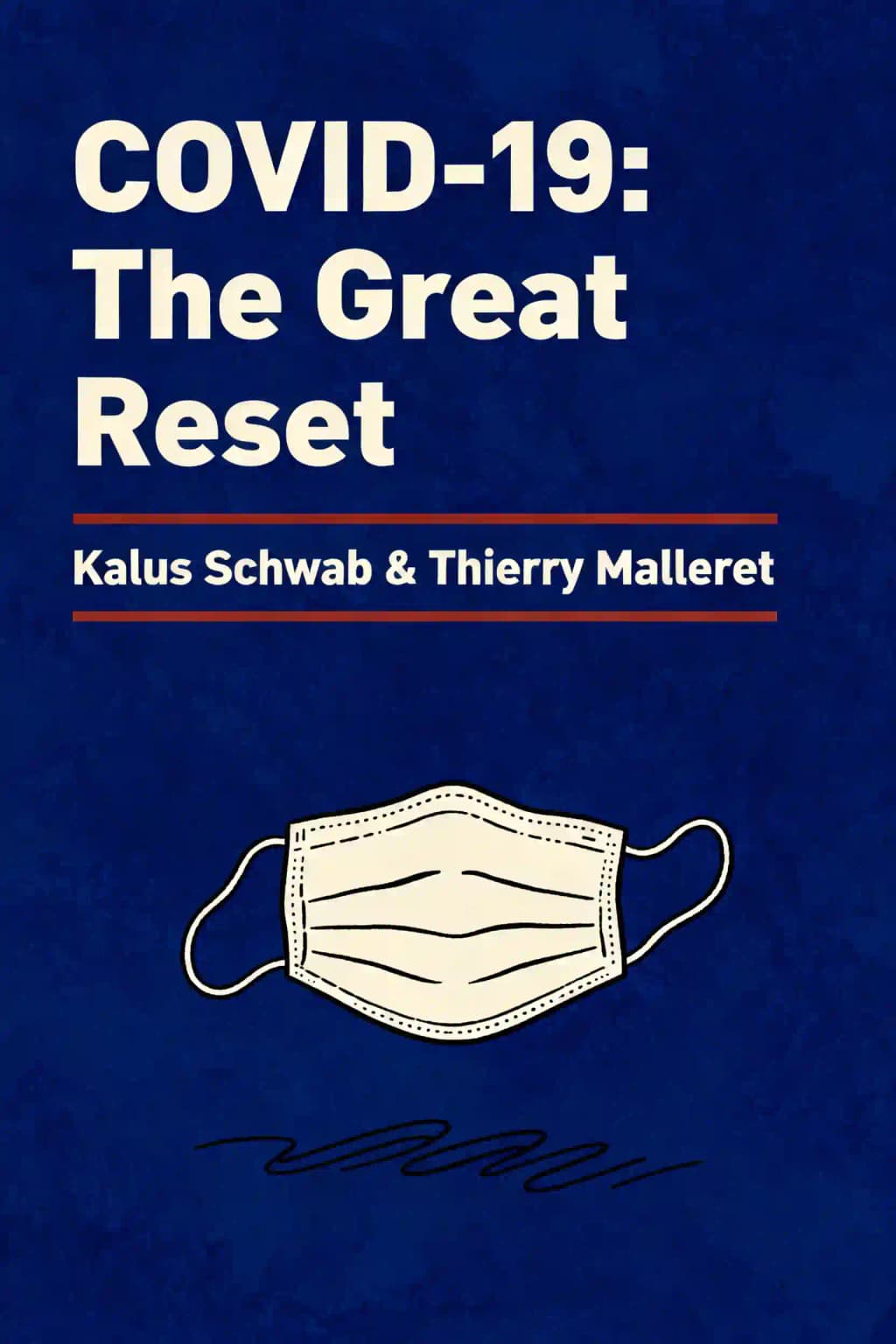
When Klaus Schwab and Thierry Malleret published "COVID-19: The Great Reset" in July 2020, the world was still reeling from the first devastating wave of the pandemic. While most leaders were scrambling to address immediate health and economic emergencies, Schwab-founder of the World Economic Forum-was already thinking decades ahead. The book quickly became required reading in policy circles and boardrooms worldwide, with business titans from Jamie Dimon to Bill Gates citing its insights. What makes this work particularly significant is its timing: written during the early stages of the pandemic, it correctly anticipated many of the profound transformations we're now experiencing. The book's central premise-that COVID-19 represents not just a crisis but a rare opportunity to fundamentally reimagine our economic and social systems-continues to shape global conversations about our collective future, making it one of the most influential frameworks for understanding our post-pandemic world.
Chapitre 2
A Crisis Unlike Any Other: The Pandemic's Unprecedented Impact
COVID-19 represents a watershed moment in modern history-a crisis fundamentally different from anything we've experienced before. While not comparable in death toll to the Great Plagues or World Wars, its economic fallout and global impact stand without historical parallel. The 2020 GDP decline of 3.5% in the US and 6.1% in the eurozone dwarfed even the 2008 financial crisis. The pandemic's uniqueness lies in its speed and comprehensive nature, simultaneously creating both supply and demand shocks while disrupting global supply chains in ways previous crises never did, from semiconductor shortages to medical supply constraints.
What makes this pandemic particularly consequential is how it functions as an accelerant of pre-existing trends rather than a complete reset button. It has dramatically intensified developments already underway: the partial retreat from globalization, growing US-China tensions, accelerating automation, expanding surveillance, increasing focus on well-being, rising nationalism, and technology's growing dominance. The pandemic hasn't created these shifts so much as compressed their timeline from years into months. For instance, e-commerce penetration in the US achieved ten years' worth of growth in just three months during 2020, while remote work adoption jumped from 6% to over 43% in mere weeks.
This acceleration occurs within a world defined by three prevailing forces: interdependence, velocity, and complexity. Our hyperconnected global system means problems can no longer be addressed in isolation-economic risks become political ones, technological risks mutate into societal ones. The pandemic demonstrates how individual risks create cascading effects, with "infectious diseases" directly impacting governance failures, social instability, unemployment, fiscal crises, and migration. When Italy entered lockdown, it triggered supply chain disruptions affecting manufacturers in Germany, retailers in France, and consumers worldwide. This interconnectedness makes "silo thinking" increasingly dangerous and ineffective.
Meanwhile, technological acceleration continues reshaping our world at an unprecedented pace. With over half the world's population now online (compared to less than 8% twenty years ago) and 22 billion devices connected through the Internet of Things, we live in what some call a "dictatorship of urgency." COVID-19 dramatically demonstrated this velocity through its exponential growth that doubled cases every few days, overwhelming both healthcare systems and our cognitive abilities to process such rapid change. The pandemic forced the adoption of digital technologies at a staggering rate - videoconferencing platform Zoom grew from 10 million to 300 million daily participants in just months.
Have you noticed how quickly society adapted to pandemic realities? Changes that might have taken years-from remote work to telehealth-were implemented within days. Telehealth visits increased by 154% in the last week of March 2020 compared to 2019, while digital payment adoption surged by 41% globally. This acceleration will continue shaping our post-pandemic world in ways we're only beginning to understand, from hybrid work models to transformed urban spaces and reimagined healthcare delivery systems. The crisis has permanently altered how we think about resilience, preparedness, and the delicate balance between efficiency and redundancy in our global systems.
Chapitre 3
Economic Transformation: Beyond GDP Growth
The pandemic has triggered an economic collapse more severe and rapid than anything in recorded history. While previous crises like the Great Depression took years to contract GDP by 10% and push unemployment above 10%, COVID-19 accomplished this in just three weeks in March 2020. In the United States alone, over 20 million jobs vanished within a month, while global supply chains fractured simultaneously across multiple continents. This unprecedented shock has forced a fundamental rethinking of economic priorities and policies, challenging long-held assumptions about resilience and interconnectedness.
One of the pandemic's most important lessons is that the supposed trade-off between "saving lives versus saving the economy" is demonstrably false. Countries like South Korea, New Zealand, and Taiwan that effectively controlled the virus generally performed better economically than those prioritizing business continuity over public health. Their GDP contractions were significantly smaller, and their recoveries faster. Why? Because sustainable economic recovery requires both consumer confidence that the pandemic is defeated and proof the virus is controlled. Without addressing the health crisis, no economic recovery can take hold-people simply won't resume normal economic activity while feeling unsafe, regardless of whether businesses are officially open.
This realization has profound implications for how we think about economic growth moving forward. The post-pandemic economy will likely operate at reduced capacity (the "80% economy") for an extended period, with businesses facing a triple challenge: fewer risk-averse customers, reduced spending due to precautionary savings, and higher transaction costs from distancing measures. Industries like tourism, entertainment, and hospitality may need to fundamentally restructure, while sectors like digital services, healthcare, and automation accelerate their growth. This new reality prompts fundamental questions about whether endlessly chasing GDP growth remains useful or even possible in a world where resilience and adaptability matter more than raw economic output.
The pandemic's disruption offers societies a chance to reflect on what truly matters and to make institutional changes toward a fairer, greener future-similar to the radical rethinking that followed World War II. This requires shifting focus from GDP to broader measures of well-being, updating economic metrics to reflect digital economy value, unpaid work, and environmental impacts, while emphasizing distribution of gains and access to opportunity rather than just aggregate growth. For instance, the rise of remote work has highlighted the economic value of unpaid domestic labor and digital infrastructure, neither of which is adequately captured in traditional GDP calculations.
Imagine if we measured success not just by how much our economy grows, but by how well it serves human needs and protects our planet. New Zealand's 2019 "well-being budget" exemplifies this shift, explicitly targeting social issues like mental health and child poverty rather than just economic growth. Other countries are following suit - Bhutan measures Gross National Happiness, while Iceland and Scotland have joined the Wellbeing Economy Alliance. These initiatives suggest a growing recognition that post-pandemic recovery must prioritize resilience, sustainability, and inclusive prosperity over traditional measures of economic success. The question isn't whether GDP will grow, but whether that growth translates into meaningful improvements in people's lives and long-term planetary health.
Chapitre 4
The Social Contract Reimagined
Far from being a "great leveller," COVID-19 has functioned as a "great unequalizer" that magnified pre-existing inequalities. The pandemic exposed stark class divides: upper and middle classes could telework from safe homes while working classes risked exposure on the frontlines. Society's most essential workers-nurses, cleaners, delivery drivers, food workers-proved to be among the worst paid and most precariously employed.
This glaring contradiction has accelerated the inevitable reconsideration of our social contracts-the implicit arrangements binding individuals and institutions. For decades, these contracts have evolved to place greater responsibility on individuals, leading many to conclude they were breaking down entirely. The erosion manifested in rising costs for essentials (housing, healthcare, education) while incomes stagnated, creating widespread distrust in institutions.
COVID-19 has crystallized these issues, making a return to the pre-pandemic status quo impossible. Though new social contracts will vary by country, they'll likely share common principles: broader provision of social assistance and healthcare, and enhanced protection for vulnerable workers, particularly in the gig economy. The pandemic exposed inadequate health systems and welfare gaps-with Scandinavian countries responding most inclusively while market-oriented economies struggled with protecting gig workers and contractors.
This reimagining of the social contract coincides with a decisive shift in the balance between government and markets. Governments have demonstrated their essential role by implementing unprecedented economic interventions-stimulus programs, central bank liquidity, direct cash transfers, wage coverage, and loan suspensions-without which economic calamity would have prevailed. Looking forward, governments will permanently expand their role with different degrees of intensity.
Health and unemployment insurance will be strengthened or created, social safety nets enhanced, and shareholder capitalism will give way to stakeholder capitalism. The financialization trend will reverse, with potential measures ranging from banning share buy-backs to preventing banks from incentivizing consumer debt. Public scrutiny of businesses will increase, especially those receiving public funds, with some companies facing nationalization or government equity stakes.
Haven't we already seen this shift beginning? Companies that prioritized shareholder returns over resilience or worker welfare during the pandemic have faced intense public criticism. Meanwhile, businesses that demonstrated commitment to their workers and communities have been rewarded with customer loyalty and positive brand perception. This suggests the stakeholder capitalism model-where businesses consider their impact on all stakeholders, not just shareholders-is gaining momentum.
Chapitre 5
Geopolitical Realignment: The US-China Rivalry
The pandemic is exacerbating and accelerating geopolitical trends that were already apparent before the crisis. The determining element of geopolitical instability is the progressive rebalancing from the West to the East, creating stresses captured in the "Thucydides' trap" between the US and China. With no absolute hegemon, power and influence will be redistributed chaotically, leading to what some analysts call a "global order deficit."
COVID-19 may mark the turning point that ushered in a "new type of cold war" between China and the US. Unlike the Soviet Union, China isn't seeking to impose its ideology globally, but tensions between these powers were already building before the pandemic across trade, property rights, South China Sea military bases, and technology investments. The pandemic exacerbated their rivalry rather than uniting them against a common threat.
Wang Jisi, Dean at Peking University's School of International Studies, believes US-China relations have reached their worst point since formal ties were established in 1979, with bilateral economic and technological decoupling "already irreversible." Singapore's Prime Minister Lee Hsien Loong publicly warned about the confrontation's perils for Asia and the emerging international order, noting that Southeast Asian countries are especially concerned about being "caught in the middle or forced into invidious choices."
Perspectives on which country will emerge stronger depend heavily on observers' origins, cultures, and personal histories. Like in quantum physics where two observers can have different but equally valid views of reality, both "Chinese" and "US" viewpoints coexist. China's worldview is influenced by historical humiliations like the Opium War, while America's perspective stems from its founding values and recent global dominance.
The most visible manifestation of this geopolitical shift will occur in global supply chains, driven by businesses seeking risk mitigation and political pressure from both right and left. Many governments now view certain trade dependencies as politically unacceptable. Rather than complete deglobalization, the most likely outcome is regionalization-where North America, Europe, and Asia focus increasingly on regional self-sufficiency rather than distant global supply chains.
What does this mean for the average person? Products may become more expensive but potentially more reliable, while companies will prioritize resilience over efficiency. The era of maximizing profits through complex global supply chains is giving way to an era of "just-in-case" rather than "just-in-time" inventory management.
Chapitre 6
Environmental Challenges: Pandemic Lessons for Climate Action
The pandemic and environmental challenges are more closely intertwined than they appear. COVID-19 offers a glimpse of what a full-fledged climate crisis might entail economically: combined demand and supply shocks with disruptions to trade and supply chains that amplify other risks. Pandemics, climate change, and ecosystem collapse share five key attributes: they are known systemic risks that propagate rapidly; they are non-linear with potential catastrophic effects beyond certain thresholds; their impacts are difficult to measure and constantly shifting; they require globally coordinated responses; and they disproportionately affect already vulnerable populations.
Zoonotic diseases like COVID-19 have quadrupled over the past 50 years as human activities disrupt natural ecosystems. The destruction of biodiversity, particularly through agriculture which covers more than one-third of land surface, creates conditions for infectious diseases to emerge. When we encroach on natural habitats or transport wildlife into densely populated areas, we essentially relocate disease reservoirs into human communities. Most scientists now agree that population growth, environmental disturbance, and intensive farming without proper biosecurity directly increase epidemic risks.
Air pollution, already linked to 7 million premature deaths annually, significantly worsens coronavirus impacts. Research shows regions with higher pollution levels experience greater COVID-19 hospitalization and mortality rates. The connection appears to be that particulate matter impairs the lungs' defensive capabilities, making people in highly polluted areas more vulnerable to infection and severe outcomes.
Despite unprecedented global lockdowns, carbon emissions are estimated to fall by only 8% in 2020-significant but still below the 7.6% annual reduction needed over the next decade to limit global temperature rise to 1.5C. This modest reduction reveals that individual consumption changes have limited impact compared to emissions from electricity, agriculture, and industry that continued operating during lockdowns.
The pandemic's impact on climate policy could move in two opposing directions. In one scenario, governments might sideline environmental concerns to focus on economic recovery, subsidizing fossil-fuel industries and rolling back environmental standards to stimulate rapid growth. In the alternative scenario, businesses and governments could seize this unique opportunity to redesign a more sustainable economy, encouraged by new social awareness that different ways of living are possible.
Which path would you prefer? The pandemic has shown us that rapid, coordinated action in response to scientific evidence is possible. Could we apply this same urgency to addressing climate change? The preservation of natural environments and biodiversity represents not just our primary defense against future pandemics, but also our best hope for a sustainable future.
Chapitre 7
The Digital Acceleration: Technology's Transformative Leap
The pandemic will accelerate innovation, catalyzing technological changes already underway and "turbocharging" digital businesses. With confinement, the "digital transformation" has found its catalyst, expanding the digital world permanently. Tech leaders observed how companies fast-forwarded by years in tech adoption within just one month.
During lockdowns, consumers reluctant to rely on digital applications were forced to change habits overnight: watching movies online instead of cinemas, food delivery instead of restaurants, remote conversations instead of in-person meetings, and screen-based exercise instead of gyms. While some old habits will return (personal contact being irreplaceable), many tech behaviors adopted during confinement will become natural through familiarity.
The digital transition has been supported and accelerated by regulators who previously slowed technology adoption through lengthy regulatory deliberations. During lockdowns, regulations hampering progress in domains where technology was already available were relaxed out of necessity. Telemedicine and drone delivery regulations were dramatically accelerated, and these changes are likely permanent.
The persistence of social and physical distancing measures beyond the pandemic will accelerate automation across industries as companies restructure workplaces to minimize human contact. Our lingering fear of viral infection will speed automation particularly in vulnerable sectors-Oxford University research suggests up to 86% of restaurant jobs, 75% of retail jobs, and 59% of entertainment jobs could be automated by 2035.
Robots and AI emerged as natural alternatives when human labor became unavailable during lockdowns, reducing health risks in warehouses, supermarkets, and hospitals through shelf scanning, cleaning, and delivery. Previously distant technologies like autonomous delivery are now being rapidly deployed in cities from Hangzhou to Washington DC.
Beyond physical robots, workplace automation via software and machine learning is seeing radical acceleration. Robotic Process Automation (RPA) is making businesses more efficient by replacing human actions with software, from Microsoft's finance group consolidating reports into automated portals to oil companies using AI to monitor pipeline images.
Have you noticed how many interactions that once required human involvement now happen entirely through digital interfaces? From banking to healthcare to education, the pandemic has compressed years of digital transformation into months. This acceleration brings both opportunities and challenges-greater convenience and efficiency, but also potential job displacement and privacy concerns that society must address.
Chapitre 8
Personal Transformation: Rethinking What Matters
The pandemic has profoundly disrupted individual lives, forcing isolation from loved ones, derailing personal and professional plans, and undermining economic and psychological security. This collective experience has reminded us of our innate human fragility, potentially changing how we relate to others and the world.
The pandemic forced us all to enter philosophical debates about maximizing the common good. It raised fundamental questions about what we value most-GDP growth, protecting the vulnerable, or something in between. Every pandemic-related decision, from mask-wearing to business closures, contains ethical dimensions that reveal our moral principles.
With enforced stillness and time for reflection, many have begun questioning whether they know what truly matters, if they're too focused on career, or if they've become slaves to consumerism. This collective pause may lead to significant behavioral shifts affecting how we socialize, care for others, and view our place in the world.
The pandemic fundamentally altered our perception of time, creating days that felt endless yet weeks that passed surprisingly quickly. For many in lockdown, time became amorphous as the distinctions between workdays and weekends disappeared. By forcing us to slow down, COVID-19 might have helped us become more mindful of time's passage and more appreciative of life's precious moments-from meaningful connections with loved ones to small pleasures like listening to birds or appreciating art.
The pandemic may fundamentally alter our consumption patterns, moving us away from conspicuous consumption toward more conscious choices. As awareness grows about environmental degradation, climate change, and extreme inequality, ostentatious displays of wealth may become socially unacceptable. Japan offers an instructive model with its relatively low inequality and emphasis on minimalism, finding meaning in life (ikigai), and connection to nature (shirin-yoku).
COVID-19 has highlighted nature's role as a powerful antidote to anxiety and uncertainty. Scientific research across multiple disciplines confirms that nature positively impacts our physical and mental wellbeing, while separation from it harms our minds and bodies. The pandemic has reset our relationship with the natural world, making its preservation increasingly paramount for personal and collective wellbeing.
What aspects of your pre-pandemic life do you truly miss, and which changes might you want to keep? This period of disruption offers a rare opportunity to consciously choose which elements of "normal" are worth returning to, and which new priorities might lead to more fulfilling lives.
Chapitre 9
A Narrow Window of Opportunity
The COVID-19 pandemic has dramatically altered our world in just months, serving as a powerful catalyst that has exposed and intensified long-simmering systemic problems. These include widening wealth gaps between social classes, deepening geopolitical tensions between nations, increasingly toxic political polarization within countries, unprecedented levels of public and private debt, the growing inadequacy of global governance structures, excessive financialization of the economy, and accelerating environmental degradation. This convergence of crises presents what the World Economic Forum calls "a rare but narrow window of opportunity to reflect, reimagine and reset our world."
The Great Reset isn't merely an idealistic proposal but an urgent necessity. Historical evidence shows that failing to address fundamental societal problems typically leads to one of two outcomes: violent revolution from below or systemic collapse from within. While many, especially those benefiting from the current system, may yearn for a return to pre-pandemic "normal," such passivity is increasingly untenable. Though aggregate statistics show impressive improvements in human welfare over centuries - from rising life expectancy to declining extreme poverty - these averages obscure profound disparities. Billions still lack access to basic healthcare, quality education, and economic opportunity, while the world's richest 1% continue to accumulate unprecedented wealth.
The choice facing humanity is stark and binary: either proactively reshape our world to be less divisive, less polluting, more inclusive, more equitable and fairer than before the pandemic, or passively allow ourselves to drift toward even greater inequality, ecological devastation, and social upheaval. History demonstrates that periods of crisis often catalyze the emergence of new social and economic paradigms - the New Deal emerged from the Great Depression, and the modern welfare state arose from World War II's ashes. Innovation often thrives in adversity, and the pandemic might ultimately transform our collective mindset in ways that would have seemed unthinkable in 2019.
The transition we face is unprecedented in both scale and urgency. The old normal, with its unsustainable practices and systemic inequities, has been irreversibly disrupted. The critical question isn't whether we'll return to that familiar but flawed past - it's what kind of future we'll consciously choose to build from this moment of crisis. Will we embrace this opportunity to construct more resilient, sustainable, and equitable systems? Or will we squander this moment, allowing the momentum for transformative change to dissipate as the immediate health crisis recedes? The window for meaningful action is finite - historical opportunities for systemic change typically last only 12-24 months after a major crisis. The time for bold, visionary action is now, before this crucial window closes and the possibility for peaceful, managed transition slips away.